 Preview
 Send
Send Share
Share
 Details

 Download
 Similars
 X-Ray
X-Ray Diaporama
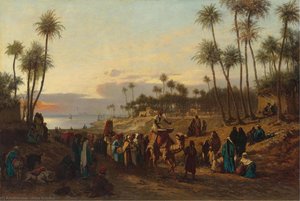
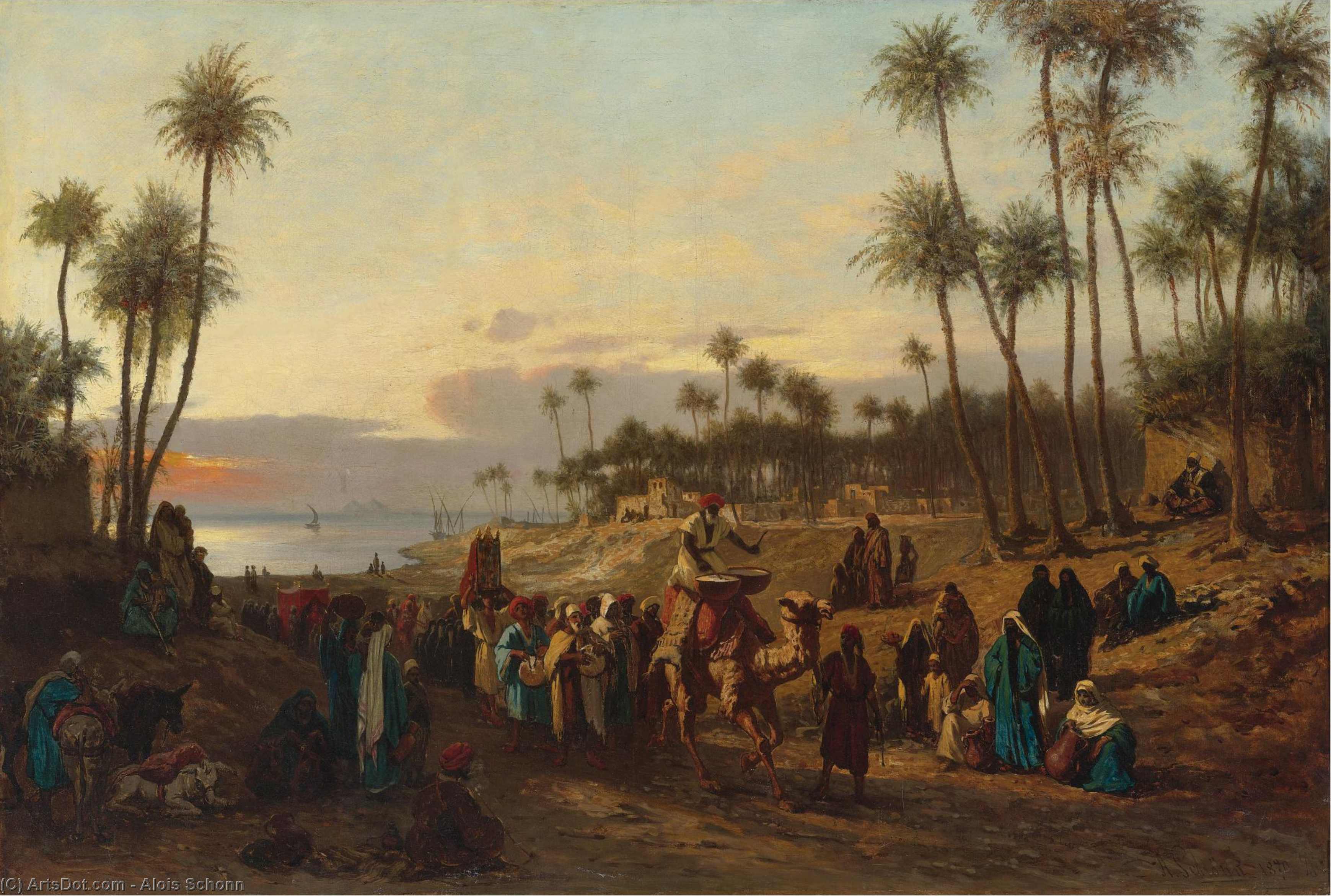
The arrival of the bride
 Read More
Hand Made Oil Reproduction
Hand-painted oil on canvas in your size and frame, made to order by our artists. ( Buy Print Buy Image)




































Pick from our preset sizes that match the artwork's original proportions.

You may enter your own dimensions to fit a specific frame or space. If your selected size does not match the original image's proportions, we will either crop the artwork or extend the painting with additional hand-painted elements. A digital mockup will be sent for your approval before production begins.
Please note that the on-screen preview does not reflect the actual cropping or extension. Only the mockup will accurately show the final composition.
While custom sizes are available, we recommend selecting a dimension from the predefined list to preserve the original proportions.
After order, ArtsDot.com team will email client for instructions and provide a mockup preview
Worldwide Delivery () in 3/4 weeks instead of standard 5 weeks. (22 August). No compromise on quality.

Free Worldwide Express Shipping

High-Quality Linen Canvas

Full Shipping Insurance

Customs Tax Refund Guarantee

True Color Matching Guarantee

60-Day Return Policy (Defects Only)

100% Money-Back Guarantee

Bulk Discount Offer
 Glass option is only available in size under 110 CM

The arrival of the bride
Reproduction Medium
Reproduction Size
-


Total Price
$ 263
Related Artworks









Artist Biography
A Viennese Chronicler of Distant Lands and Familiar Life
Alois Schönn (1826-1897) occupies a fascinating, yet often overlooked, position within the landscape of 19th-century Austrian art. He wasn’t a revolutionary innovator like Klimt, nor did he strive for the dramatic grandeur of Ingres. Instead, Schönn carved out a niche as a meticulous observer and skilled chronicler of his time—a painter who captured both the exotic allure of distant lands and the intimate charm of everyday life in Vienna and beyond. His canvases offer a compelling glimpse into a world undergoing rapid change, reflecting the era’s burgeoning interest in travel, ethnography, and the meticulously rendered realism that defined much of Victorian art.
Born in Vienna in 1826, Schönn received his formal artistic training at the prestigious Academy of Fine Arts (Akademie der bildenden Künste Wien). This academic grounding proved pivotal. Under the tutelage of influential figures like Leopold Kupelwieser and Joseph von Führich, he mastered the technical disciplines essential for success in a society that valued precision and narrative clarity. The emphasis on drawing, composition, and classical ideals instilled in him a strong foundation that would characterize his diverse output throughout his career. While early works likely adhered to academic conventions—historical or religious themes executed with polished finish—Schönn soon began to forge his own path.
The Allure of the Orient and Genre Painting
The mid-19th century witnessed a surge in European fascination with the “Orient,” encompassing North Africa, the Middle East, and parts of Asia. This interest, fueled by colonial expansion and romantic literature, profoundly impacted art. Schönn responded to this cultural shift, embarking on journeys that would become central to his artistic identity. He specialized in oriental genre scenes—vibrant depictions of marketplaces, bustling streets, and intimate domestic interiors. These paintings weren’t merely exotic fantasies; they reveal a keen eye for detail and an attempt at ethnographic accuracy, capturing the textures, colors, and customs of cultures far removed from Vienna.
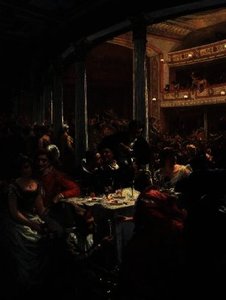
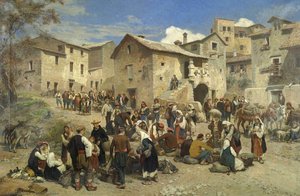
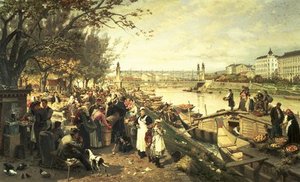
Simultaneously, Schönn excelled in genre painting—scenes of everyday life that resonated with a growing middle-class audience. His depictions of markets, balls, and weddings were particularly popular. These weren’t grand historical narratives but rather intimate moments frozen in time, offering viewers a glimpse into the social fabric of their society. A Masked Ball in a Theatre, for example, captures the elegance and excitement of Viennese high society, while paintings like Fruit Market In Schazel and Market in Sarajevo showcase his ability to depict bustling scenes with remarkable detail and atmosphere.
Technique and Style
Schönn’s technique is characterized by a meticulous attention to detail, a smooth brushstroke, and a rich color palette. He possessed an exceptional skill for rendering textures—the shimmering silks of costumes, the rough surfaces of stone walls, the vibrant hues of fruits and spices. His compositions are often carefully balanced, creating a sense of order and harmony. While influenced by academic traditions, Schönn’s style evolved to incorporate elements of realism and a subtle narrative quality. He wasn't interested in dramatic lighting or bold brushwork; instead, he favored a more subdued approach that allowed the details of his scenes to take center stage.
Legacy and Historical Significance
Although not as widely celebrated as some of his contemporaries, Alois Schönn played an important role in documenting 19th-century life. His paintings offer valuable insights into the social customs, fashion, and material culture of Vienna and the regions he visited. He stands as a testament to the power of observation and the enduring appeal of meticulously rendered realism. His work reflects the era’s fascination with both the exotic “other” and the familiar comforts of home, making him a compelling figure for those interested in understanding the complexities of 19th-century European art and society.
- Key Influences: Leopold Kupelwieser, Joseph von Führich
- Notable Works: A Masked Ball in a Theatre, Fruit Market In Schazel, Market in Sarajevo
- Artistic Movement: Victorian Art Style
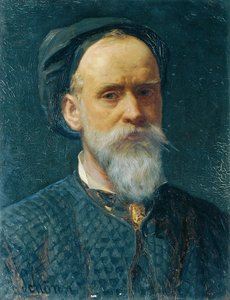
alois schonn
1826 - 1897 , Austria
Quick Facts
- Artistic Movement Or Style: Victorian Art Style
- Artists Who Influenced This Artist:
- Gustav Klimt
- Jean-Auguste Dominique Ingres
- Date Of Birth: 1826
- Full Name: Alois Schönn
- Nationality: Austrian
- Notable Artworks:
- A Masked Ball in a Theatre
- Fruit Market In Schazel
- Market in sarajevo
- Place Of Birth: Vienna, Austria