 Preview
 Send
Send Share
Share
 Details

 Download
 Similars
 X-Ray
X-Ray Diaporama
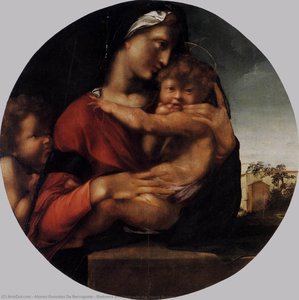
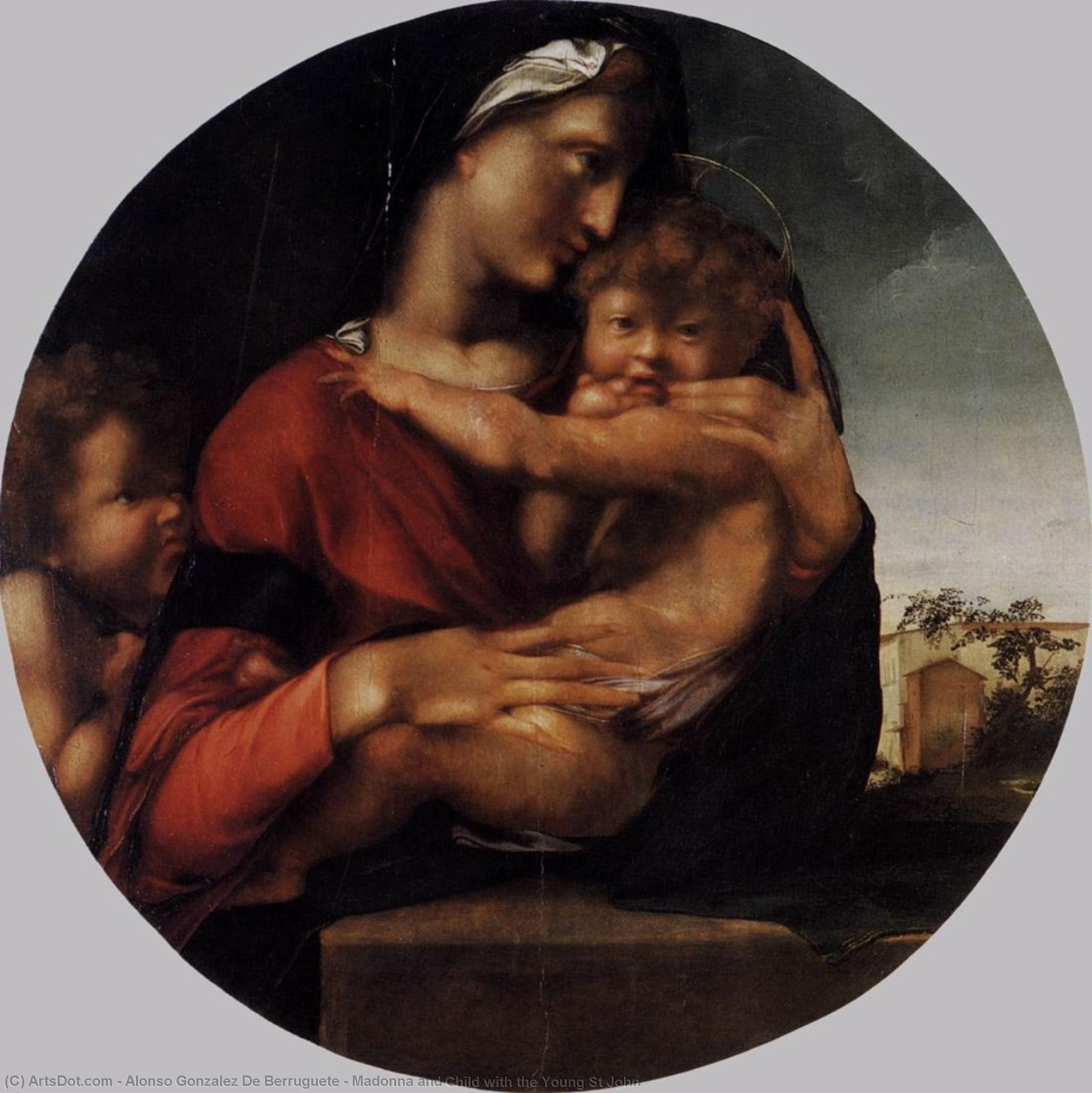
Madonna and Child with the Young St John


 Read More
Hand Made Oil Reproduction
Hand-painted oil on canvas in your size and frame, made to order by our artists. ( Buy Print Buy Image)




P118B $10

P118H $10

P118W $10

P438Z $10

P508JH $12

P508YH $12

P805H $10

P805Z $10

P919BZ $10

P919G $10

P919XJ $10

P959ZH $10

P968JZ $12

W106C $8

W218G $10

W218JH $8

W218Y $10

W307PJ $10

W316G $10

W316PJ $8

W316Y $10

W398PJ $8

W4111J $10

W500HY $15

W500JH $15

W692G $12

W849H $8

W940BG $15

W953PJ $8




Pick from our preset sizes that match the artwork's original proportions.

You may enter your own dimensions to fit a specific frame or space. If your selected size does not match the original image's proportions, we will either crop the artwork or extend the painting with additional hand-painted elements. A digital mockup will be sent for your approval before production begins.
Please note that the on-screen preview does not reflect the actual cropping or extension. Only the mockup will accurately show the final composition.
While custom sizes are available, we recommend selecting a dimension from the predefined list to preserve the original proportions.
After order, ArtsDot.com team will email client for instructions and provide a mockup preview
Worldwide Delivery () in 3/4 weeks instead of standard 5 weeks. (16 August). No compromise on quality.

Free Worldwide Express Shipping

High-Quality Linen Canvas

Full Shipping Insurance

Customs Tax Refund Guarantee

True Color Matching Guarantee

60-Day Return Policy (Defects Only)

100% Money-Back Guarantee

Bulk Discount Offer
 Glass option is only available in size under 110 CM

Madonna and Child with the Young St John
Reproduction Medium
Reproduction Size
-


Total Price
$ 263
Artwork Description
The Soul of Spanish Renaissance Sculpture: Alonso González de Berruguete’s Madonna and Child
Alonso González de Berruguete's "Madonna and Child with the Young St. John" isn't merely a painting; it’s a profound meditation on faith, family, and the very essence of divine grace. Created around 1517-1520 during his formative years in Florence and Italy, this work stands as a pivotal moment in Spanish Renaissance art—a bridge between the classical ideals he absorbed and the burgeoning emotionalism of the era. Berruguete, born in Paredes de Nava, Castile, was deeply influenced by the artistic revolution unfolding across the Italian peninsula, particularly the dramatic realism and emotive intensity championed by Michelangelo. This painting embodies that influence, yet retains a distinctly Spanish sensibility—a quiet dignity and spiritual depth rarely seen elsewhere.
The composition itself is remarkably intimate. Mary, rendered with a subtle softness of features and draped in flowing robes, cradles the infant Jesus in her arms. The young St. John, depicted as a mischievous but serene child, reaches out to touch his uncle’s hand—a gesture brimming with youthful curiosity and an early foreshadowing of their destined roles within the Christian narrative. The figures are not idealized; they possess a tangible humanity, conveying a sense of vulnerability and tenderness that resonates deeply with the viewer. Berruguete masterfully employs chiaroscuro – the dramatic interplay of light and shadow – to sculpt the forms, creating a palpable three-dimensionality and drawing our attention to the faces of the central figures.
A Window into Florentine Mannerism
Berruguete’s time in Florence proved transformative. He studied under Michelangelo, absorbing not just technical skill but also a new approach to depicting human emotion. This influence is particularly evident in the painting's subtly unsettling quality. The figures aren’t presented with the serene composure often found in earlier Renaissance works; instead, there’s an underlying tension, a sense of contained energy. The elongated proportions of the figures, the slightly off-center placement, and the expressive gestures all point to the emerging style of Florentine Mannerism—a movement characterized by its emphasis on psychological complexity and emotional intensity.
Notice, too, the background – a simple architectural setting that serves primarily as a framing device for the central figures. It’s not meant to distract from the drama unfolding within; rather, it subtly reinforces the sacred nature of the scene. The muted palette—dominated by earthy tones and rich blues—contributes to the painting's overall atmosphere of solemn contemplation.
Symbolism and Spiritual Resonance
Beyond its aesthetic qualities, “Madonna and Child” is laden with symbolic meaning. The serpent coiled beneath the feet of the Virgin Mary alludes to the biblical story of Genesis – a potent reminder of original sin and the need for redemption. The young St. John, as the precursor to Christ’s ministry, represents hope and renewal. His gesture of reaching out towards his uncle is not merely playful; it symbolizes the transmission of faith from one generation to the next.
Berruguete's ability to imbue a seemingly simple scene with such profound spiritual resonance is what elevates this painting beyond mere representation. It’s a testament to his artistic genius and his deep understanding of Christian theology. The work invites viewers to contemplate not only the beauty of the Madonna and Child but also the enduring themes of faith, family, and salvation that have captivated audiences for centuries.
A Legacy in Wood and Paint
Berruguete’s influence extended far beyond this single painting. He continued to sculpt throughout his career, producing monumental works for churches and palaces across Spain. His legacy is particularly evident in the work of subsequent generations of Spanish artists, who built upon his foundation of emotional intensity and expressive realism. Reproductions of “Madonna and Child with the Young St. John” remain highly sought after by collectors and interior designers alike—a testament to its enduring beauty and artistic significance.
Related Artworks

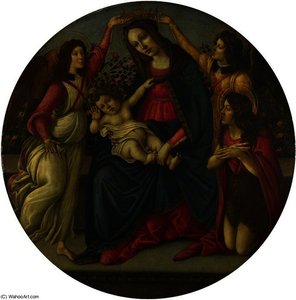
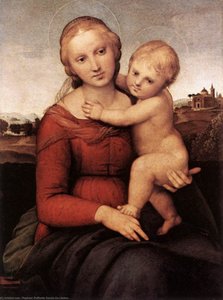
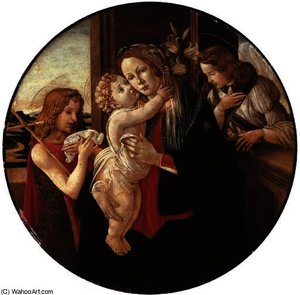
Artist Biography
The Soul of Spanish Renaissance Sculpture
Alonso González de Berruguete stands as a monumental figure in the history of Spanish art, recognized primarily for his profound impact on sculpture during the High Renaissance. He was not merely a craftsman; he was an artist who wrestled with theological concepts and translated them into emotionally charged forms that continue to resonate centuries later. Born in Paredes de Nava, Castile, around 1488, Berruguete's artistic journey began under the tutelage of his father, Pedro Berruguete, a respected painter whose lineage provided a foundation steeped in deep artistic tradition. This early exposure to the nuances of light and religious iconography would profoundly shape the creative vision that eventually defined a generation of Spanish art.
Following his father's untimely death in 1504, Berruguete embarked on an ambitious pilgrimage to Italy, driven by an unwavering desire to hone his skills and immerse himself in the burgeoning artistic fervor of Florence and Rome. This formative period witnessed him studying under the shadow of Michelangelo—a mentorship that undeniably influenced his stylistic sensibilities. From the Italian master, he absorbed a mastery of anatomical realism and an expressive dynamism that became the beacon guiding his own explorations into capturing human emotion with unparalleled intensity. His work began to reflect a Mannerist aesthetic, aligning him with contemporaries like Jacopo Pontorno and Rosso Fiorentino, as he prioritized psychological depth and spiritual tension over mere idealized beauty.
Mastery of Form and Emotion
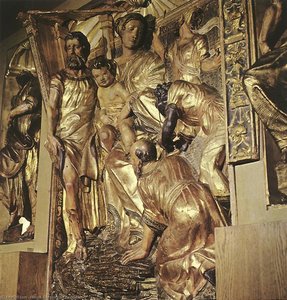
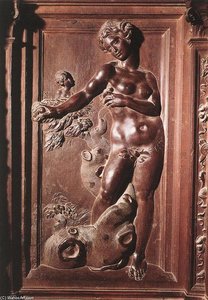
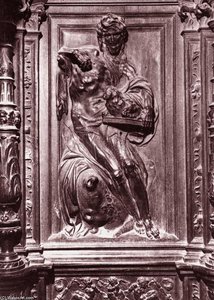
Upon returning to Spain in 1517, Berruguete swiftly ascended the ranks of Charles V’s court, securing the prestigious position of Court Painter and Sculptor. This unparalleled patronage afforded him access to the finest resources, allowing him to dedicate himself wholeheartedly to sculptural endeavors that would redefine Spanish religious art. His ability to manipulate medium—whether wood or stone—to convey divine presence is perhaps best seen in his relief works, such as the Choir-stall (detail) from 1539. In these intricate carvings, he utilized dramatic chiaroscuro and meticulous detail to breathe life into religious narratives, creating a sense of movement that feels almost supernatural.
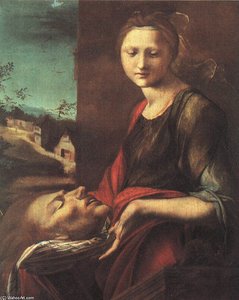
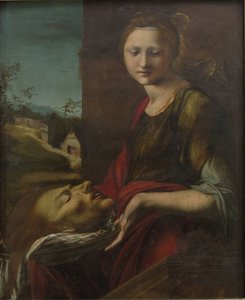
His paintings, too, possess a haunting, emotive quality that bridges the gap between the earthly and the divine. In works like Salome, housed in Florence’s Uffizi Gallery, one can witness his mastery of poignant realism; the depiction of Salome with the head of John the Baptist is a masterpiece of tension and exquisite detail. Similarly, his Madonna and Child with the Young St John serves as an iconic testament to his ability to depict divine family unity through powerful, emotive facial expressions and graceful, elongated forms that suggest a spiritual transcendence beyond the physical realm.
A Lasting Legacy in Spanish Art
The significance of Alonso González de Berruguete lies in his unique synthesis of Italian Mannerism and Spanish devotional fervor. He did not simply import foreign styles; he transformed them to suit the intense, often somber religious temperament of the Iberian Peninsula. His achievements include:
- The Integration of Michelangelo’s Dynamism: Bringing a new sense of anatomical energy and muscular tension to Spanish sculpture.
- Development of Mannerist Aesthetics in Spain: Pioneering the use of elongated figures and psychological complexity to evoke spiritual awe.
- Mastery of Religious Narrative: Creating altarpieces and reliefs, such as those at Salamanca Cathedral, that served as profound tools for theological reflection.
- Elevation of the Sculptural Craft: Moving Spanish sculpture away from purely decorative traditions toward a high-art form capable of expressing deep human suffering and divine grace.
Through his hands, the cold stone and rigid wood of the Renaissance were imbued with a restless, searching spirit. Berruguete remains a cornerstone of the Spanish High Renaissance, an artist whose work continues to invite viewers into a profound dialogue between the beauty of the human form and the mysteries of the soul.
alonso gonzalez de berruguete
1490 - 1561 , Spain
Quick Facts
- Artistic Movement Or Style: Renaissance Sculpture; Mannerism
- Artists Or Movements Influenced By This Artist: André Goujon
- Artists Who Influenced This Artist: Michelangelo
- Date Of Birth: c. 1488
- Date Of Death: 1561
- Full Name: Alonso González de Berruguete
- Nationality: Spanish
- Notable Artworks:
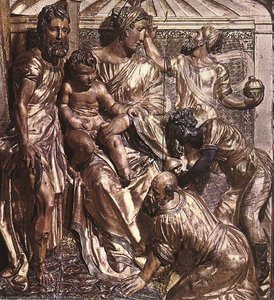
- Adoration of the Magi
- Madonna and Child with the Young St John
- Salome
- Place Of Birth: Paredes de Nava, Spain
Related Articles

John Singer Sargent's 25 Masterpieces: Portraits & Beyond | ArtsDot
Explore 25 iconic John Singer Sargent paintings – from dazzling portraits to Impressionist landscapes. Discover the stories behind Madame X, El Jaleo & more! Find museum-quality art reproductions and elevate your home decor with ArtsDot.com.

John Constable's Masterpieces: Explore 25 Iconic Landscapes for Your Home
Journey through John Constable's 25 most celebrated landscapes. Explore Romanticism, Dedham Vale & his masterful use of light in iconic paintings like 'Hay Wain'. Find museum-quality art reproductions and elevate your home decor on ArtsDot.com.

Raphael's Masterpieces: 25 Iconic Paintings & Renaissance Art for Your Home
Explore 25 breathtaking Raphael paintings! Journey through the Italian Renaissance with masterpieces like 'School of Athens' & iconic Madonnas. Find museum-quality art reproductions and elevate your home decor on ArtsDot.com.

El Greco's Masterpieces: Explore 25 Iconic Paintings & Spiritual Visions | ArtsDot
Journey through El Greco's 25 most iconic paintings! Explore the spiritual depth & dramatic beauty of this Spanish Renaissance master. Discover art history, techniques & find museum-quality reproductions for your home at ArtsDot.com.

Uffizi's 25 Masterpieces: Renaissance Art & Timeless Decor Inspiration
Journey through the Uffizi Gallery's 25 most iconic Renaissance artworks! Explore Botticelli, Leonardo da Vinci & Michelangelo’s masterpieces. Find museum-quality art reproductions and curated decor ideas to bring timeless Italian beauty into your home. Discover all masterpieces on ArtsDot.com