

 Preview
 Send
Send Share
Share
 Details

 Download
 Similars
 X-Ray
X-Ray Diaporama
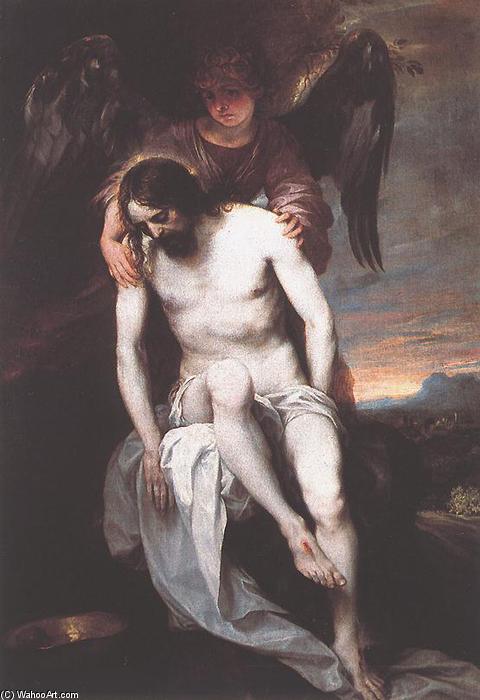
The Dead Christ Supported by an Angel
 Oil On Canvas
- WallArt
- Baroque
 1646
1646 178.0 x 121.0 cm
 Museo del Prado
 Read More
Purchase a high-resolution, enhanced digital image, far superior to the online preview.
Each file is meticulously prepared by our in-house specialists using advanced tools and expert manual retouching. We ensure every image has exceptional clarity, precise color accuracy, and fine detail.
The final file is delivered via email within 72 hours, optimized for immediate use in professional, editorial, and print environments. This is the same quality trusted by top-tier design studios, publishers, and galleries.
Digital Image
Download a high-resolution file for personal display, printing, and creative projects. ( Buy Print Buy Hand Made Painting)
Included in Every Digital Image Order
Expert Digital Delivery, Guaranteed
When you choose ArtsDot.com, you're not just getting an image - you're receiving a professionally enhanced digital artwork, crafted with precision and backed by a satisfaction guarantee. Here's everything that comes with your order, automatically:

Fast Email Delivery
Your high-resolution digital image file will be emailed to you within 72 hours of ordering - ready for immediate use.

AI-Enhanced Digital File
Your artwork is professionally optimized using advanced AI tools and manual editing, ensuring maximum detail, clarity, and color accuracy.

Free Lifetime Re-Delivery
Accidentally deleted or lost your file? No worries - we'll resend it to you anytime, free of charge.

No Import Fees - Ever
Enjoy your artwork instantly with zero customs, duties, or delivery fees - digital downloads are always tax-free.

Color Accuracy Guarantee
We ensure your digital image reflects the original colors as closely as possible using professional tools and color management.

60-Day Satisfaction Guarantee
If you're not satisfied with your digital image, we'll revise it or refund 100% within 60 days - no questions asked.

100% Money-Back Guarantee
Not satisfied? Get a full refund within 60 days of receiving your digital file - no questions asked.

Bulk Order Discounts
Buy 3 images, save 10% - Buy 5, save 15% - Buy 10+, save 20%. Great for creative projects, galleries, and agencies.
Collectible Description
A Moment of Divine Descent
Behold this dramatic tableau, The Dead Christ Supported by an Angel, a masterpiece steeped in the fervent spirituality of the Baroque era. Painted in 1646, this work captures not merely a scene from Christian iconography, but a profound moment of transition—the solemn weight of sacrifice being gently borne by celestial grace. The composition immediately arrests the viewer with its palpable drama. At the heart lies the figure of Christ, depicted after his ordeal upon the cross, yet miraculously supported by an angel whose presence lends both physical and spiritual fortitude to the scene. This is art that does not whisper; it resonates with the deep, resonant chords of human suffering meeting divine mercy.
Baroque Drama and Emotional Resonance
The style speaks directly from the heart of Baroque fervor. The period demanded emotion—a visceral connection between the artwork and the soul of the beholder. Alonzo Cano’s handling of this subject matter is anything but staid; it is intensely dramatic, utilizing deep shadows and luminous highlights to carve out a narrative moment in time. Observe the musculature suggested beneath the drapery, the weary resignation etched into the forms, contrasted sharply with the ethereal lightness surrounding the supporting angel. The inclusion of secondary figures in the background, along with the solitary bird taking flight towards the upper left corner, serves not as mere filler, but as carefully placed narrative anchors, deepening the sense of space and witnessing the gravity of the event.
Technical Mastery and Symbolic Depth
Technically, the painting showcases a masterful handling of oil paint, allowing for rich tonal gradations that give the scene an almost three-dimensional presence. The contrast between the earthly weight depicted on Christ and the buoyant support offered by the angel is achieved through expert chiaroscuro. Symbolism permeates every element: the cross itself represents ultimate sacrifice; the angel embodies divine intervention and solace; and the bird, often a symbol of the soul or the Holy Spirit, directs the viewer's eye upward, suggesting transcendence beyond the immediate suffering. These layers invite prolonged contemplation, rewarding the collector who seeks not just decoration, but dialogue.
A Legacy for the Modern Sanctuary
For the discerning collector, interior designer, or devotee of art history, this reproduction offers an unparalleled opportunity to integrate high Baroque drama into a contemporary setting. The scale—178 x 121 cm—ensures that the piece commands attention, suitable for a grand hall, a chapel niche, or a richly appointed study. Owning this work is acquiring a conduit to the passionate artistic spirit of the mid-seventeenth century, allowing the solemn beauty and emotional power of Cano’s vision to illuminate your space.
Related Artworks
Artist Biography
Guido Cagnacci: A Baroque Enigma
The seventeenth century in Italy was a crucible of artistic innovation, yet within its vibrant landscape emerged an artist profoundly singular – Guido Cagnacci. Born in the small village of Santarcangelo in 1601, Cagnacci’s life and career defy easy categorization, marked by both extraordinary talent and a notorious penchant for scandal. He wasn't merely a painter; he was a figure woven into the very fabric of his time, an eccentric whose unconventional behavior—elopements, accusations of impropriety, and even alleged dealings with young apprentices—became as much a part of his legend as his art. His work, predominantly religious in subject matter, is instantly recognizable for its unabashed eroticism, a boldness that challenged the prevailing norms of the era and continues to fascinate viewers today.
Cagnacci’s early years were spent honing his craft in Romagna, a region known for its artistic traditions. By 1618, he found himself studying under the tutelage of renowned Bolognese painters, laying the groundwork for his distinctive style. His time in Rome during the early 1620s further exposed him to the influences of the Carracci and Guercino, artists whose dramatic lighting and dynamic compositions would subtly shape his own approach. However, Cagnacci never fully embraced a conventional path; he was a restless spirit, constantly moving between cities – Rimini, Forlì, Faenza, Venice, and finally Vienna – often under assumed identities to avoid legal trouble. This itinerant existence fueled the rumors surrounding his life, adding layers of intrigue to his already enigmatic persona.
Despite the chaos that punctuated his biography, Cagnacci’s artistic output reveals a remarkable consistency in style and subject matter. His paintings are characterized by a sensual intensity rarely seen in religious art of the period. He masterfully employed light and shadow, creating dramatic effects that heightened the emotional impact of his scenes. Figures were often depicted with languid grace, their bodies imbued with an almost palpable eroticism. This wasn’t mere titillation; it was a deliberate exploration of human beauty and desire, filtered through a distinctly Baroque sensibility. Influenced by Guido Reni, Cagnacci developed a unique style that blended classical elegance with a vibrant, almost feverish energy.
The Scandalous Life & Artistic Development
Cagnacci’s life was inextricably linked to scandal. His most infamous episode involved an unlawful elopement with Teodora Arianna Stivivi, a wealthy widow. To evade arrest and prosecution, he abandoned her and fled Rimini. This incident, among others, led to years of legal battles and accusations—including rumors that he engaged in illicit relationships with young male apprentices. These stories, though often exaggerated, reveal a man who deliberately defied societal expectations and operated outside the bounds of conventional morality. It’s important to note that these scandalous episodes were frequently used by his contemporaries as a means of undermining his artistic reputation, yet they ultimately contributed to the enduring fascination surrounding his life.
His artistic development is marked by a gradual shift in style. Early works demonstrate a clear debt to Bolognese masters like Reni, characterized by refined elegance and balanced compositions. However, as he matured, Cagnacci’s style became increasingly individualistic, embracing bolder colors, dramatic lighting, and a heightened sense of sensuality. The influence of Venetian painters is also evident in his later work, particularly in the use of vibrant color palettes and dynamic brushwork. The rediscovery of his oeuvre in the mid-20th century revealed a complex and compelling artist who had been unjustly overlooked for centuries.
Major Works & Influences
Cagnacci’s most celebrated works are often characterized by their intimate scale and dramatic intensity. The *Repentant Magdalene* (circa 1660-63), now housed at the Norton Simon Art Foundation in Pasadena, exemplifies his signature style—a masterful blend of religious subject matter and sensual beauty. His depictions of Mary Magdalene, frequently rendered with a captivating vulnerability and an almost defiant gaze, are particularly noteworthy. Other significant paintings include *The Virgin and Child*, *St. Sebastian*, and numerous altarpieces for churches throughout Romagna and Venice.
Cagnacci’s artistic influences were diverse and complex. While he clearly admired the works of the Carracci, Guercino, and Reni, his style ultimately transcended these precedents. He absorbed elements from Venetian painting—particularly the use of color and light—but infused them with a distinctly Italian sensibility. His work also reveals an interest in classical antiquity, evident in the idealized figures and balanced compositions of many of his paintings.
Historical Significance & Legacy
Despite being largely forgotten for centuries after his death in 1663, Guido Cagnacci’s rediscovery in the mid-20th century marked a significant turning point in the history of Italian Baroque art. His unconventional life and provocative style challenged conventional notions of beauty and morality, while his artistic achievements demonstrated a remarkable command of technique and composition. Today, Cagnacci is recognized as one of the most original and enigmatic figures of the seventeenth century—an artist who dared to explore the complexities of human desire within the framework of religious art.
His work continues to be studied and admired for its sensual intensity, dramatic lighting, and masterful use of color. Cagnacci’s legacy lies not only in his individual paintings but also in his ability to provoke thought and challenge viewers to reconsider their own perceptions of beauty, morality, and the human condition.
alonzo cano
1601 - 1667 , Spain
Quick Facts
- Artistic Movement Or Style: Bolognese School
- Artists Or Movements Influenced By This Artist: ['Baroque']
- Artists Who Influenced This Artist: ['Guido Reni']
- Date Of Birth: 1601
- Date Of Death: 1663
- Full Name: Guido Cagnacci
- Nationality: Italian
- Notable Artworks: ['Repentant Magdalene']
- Place Of Birth: Santarcangelo, Italy

