 Preview
 Send
Send Share
Share
 Details

 Download
 Similars
 X-Ray
X-Ray Diaporama
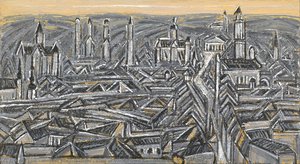
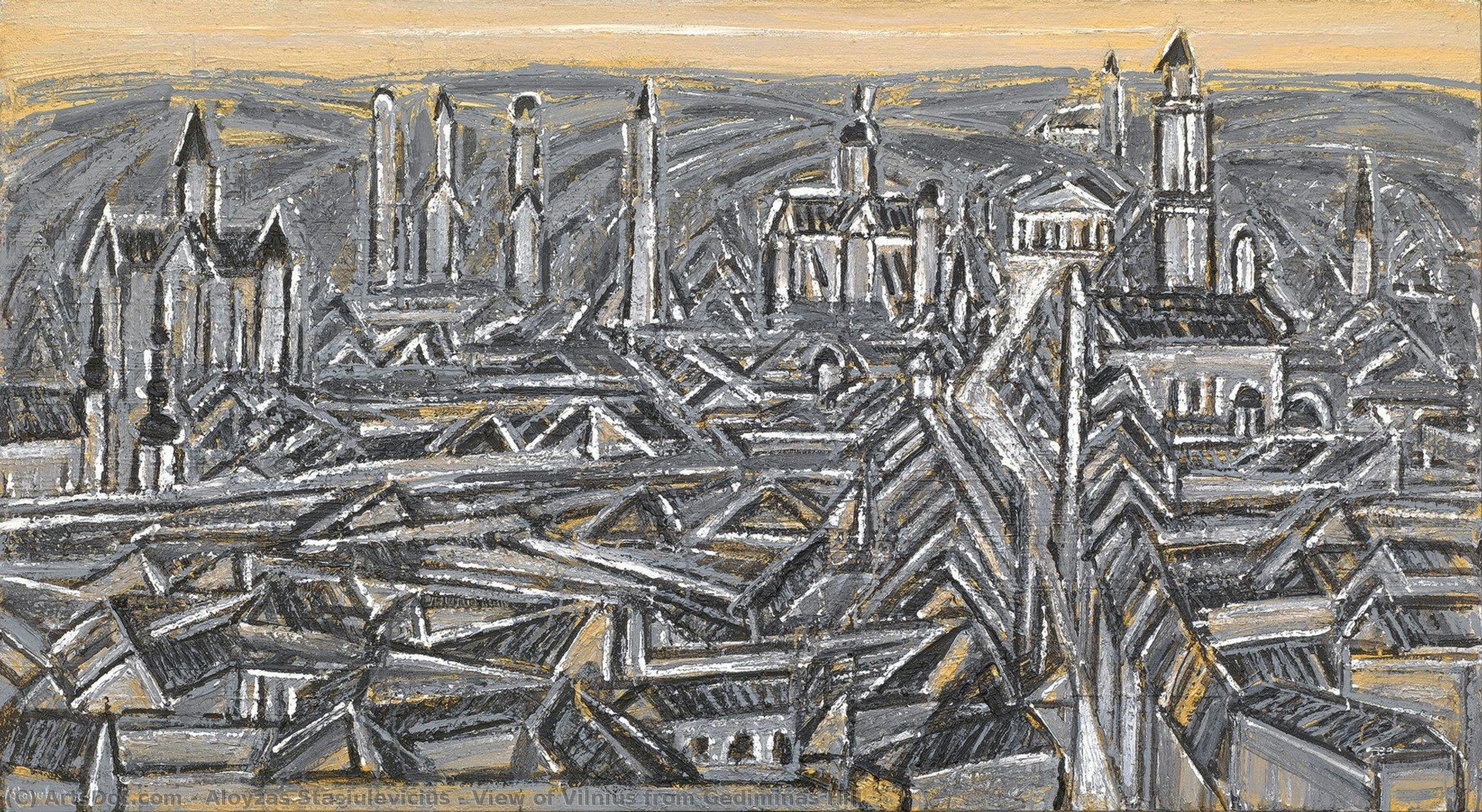
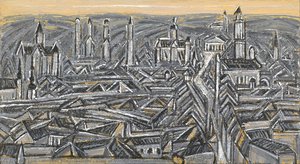
View of Vilnius from Gediminas Hill
 2011
2011 110.0 x 200.0 cm
 Lithuanian Art Centre TARTLE
 Read More
Hand Made Oil Reproduction
Hand-painted oil on canvas in your size and frame, made to order by our artists. ( Buy Print Buy Image)




































Pick from our preset sizes that match the artwork's original proportions.

You may enter your own dimensions to fit a specific frame or space. If your selected size does not match the original image's proportions, we will either crop the artwork or extend the painting with additional hand-painted elements. A digital mockup will be sent for your approval before production begins.
Please note that the on-screen preview does not reflect the actual cropping or extension. Only the mockup will accurately show the final composition.
While custom sizes are available, we recommend selecting a dimension from the predefined list to preserve the original proportions.
After order, ArtsDot.com team will email client for instructions and provide a mockup preview
Worldwide Delivery () in 3/4 weeks instead of standard 5 weeks. (27 August). No compromise on quality.

Free Worldwide Express Shipping

High-Quality Linen Canvas

Full Shipping Insurance

Customs Tax Refund Guarantee

True Color Matching Guarantee

60-Day Return Policy (Defects Only)

100% Money-Back Guarantee

Bulk Discount Offer
 Glass option is only available in size under 110 CM

View of Vilnius from Gediminas Hill
Reproduction Medium
Reproduction Size
-


Total Price
$ 263
Artwork Description
Related Artworks







Artist Biography
A Visionary of the Lithuanian Soul
In the quiet, storied landscapes of Ariogala, Lithuania, a profound artistic journey began on June 2, 1931. Aloyzas Stasiulevičius, a name that has become synonymous with the courageous evolution of Lithuanian modernism, was born into a world where the natural beauty of the Aukštaitija region would forever whisper to his creative spirit. His early years were steeped in the rhythms of the natural world, an influence that would later manifest not as mere landscape painting, but as a deep, spiritual connection to the essence of form and light. This foundational bond with his homeland provided the emotional bedrock upon which he would build a career defined by resistance, innovation, and an unwavering pursuit of abstraction.
Stasiulevičius’s formal training at the Vilnius Academy of Art from 1950 to 1956 served as a crucible for his developing intellect. While he mastered the rigorous traditional techniques of his predecessors, his mind was already drifting toward the boundaries of what art could represent. He did not merely seek to replicate the world; he sought to deconstruct it. This period of intense study allowed him to cultivate a dual mastery: the ability to observe the minute details of reality and the audacity to strip those details away in favor of pure, rhythmic geometry.
The Architecture of Memory and Resistance
To understand the work of Stasiulevičius is to understand the tension of living under the shadow of Soviet occupation. During an era when Socialist Realism was imposed as the sole acceptable aesthetic—a style demanding literal, heroic, and ideologically compliant imagery—Stasiulevičius chose a path of quiet but profound rebellion. He recognized that the rigid dogmas of the state could not capture the true complexity of human emotion or the shifting nuances of existence. In response, he turned toward collage and abstraction, using fragmented forms to confront the ideological constraints of his time.
His fascination with the city of Vilnius became a central pillar of his artistic identity. To Stasiulevičius, the Old Town was not merely a collection of buildings, but a living, breathing construct of history and light. In his later decades, particularly moving into the 1960s, he underwent a transformative shift in technique. He began to abandon the incidental details of street life—the people, the seasons, the passing moments—to focus on the architectural substance of the city itself. Through a masterful use of silvery monochromatic tones and rhythmic arrangements, he reduced the sprawling complexity of Vilnius to a series of geometric echoes. In his hands, the city became an icon, an empty metaphor that transcended time and place.
A Legacy Written in Light and Geometry
The significance of Aloyzas Stasiulevičius extends far beyond the canvas; he was a pivotal figure in the pedagogical landscape of Lithuania. As a dedicated educator at the M. K. Čiurlionis School of Art and later within the halls of the Vilnius Academy of Art, he helped shape the generations of artists who would follow in his footsteps. His role as a critic and innovator ensured that the dialogue of modern art in Lithuania remained vibrant and connected to broader international movements.
Today, the enduring impact of his vision is reflected in the prestigious global institutions that house his masterpieces. His works serve as windows into a period of profound cultural transition, held within collections such as:
- Jane Voorhees Zimmerli Art Museum
- Ludwig Forum für Internationale Kunst
- Tretyakov Gallery
- Sharjah Art Museum
- Latvian National Museum of Art
- Lithuanian Art Museum
Through his ability to blend the meticulous observation of a master with the expressive freedom of an abstractionist, Stasiulevičius achieved something rare: he created art that feels both deeply rooted in the soil of Lithuania and universally resonant. His legacy remains a testament to the power of the individual spirit to find beauty and truth within the most restrictive of circumstances.
Aloyzas Stasiulevičius
1931 - , Lithuania
Quick Facts
- Artistic Movement Or Style: Modern Lithuanian art; Abstract cityscape; Collage artist Vilnius; Monochromatic art
- Artists Or Movements Influenced By This Artist: ['Socialist realism']
- Artists Who Influenced This Artist: ['']
- Date Of Birth: June 2, 1931
- Full Name: Aloyzas Stasiulevičius
- Nationality: Lithuanian
- Notable Artworks: ['View of Vilnius from Gediminas Hill']
- Place Of Birth: Ariogala, Lithuania