 Preview
 Send
Send Share
Share
 Details

 Download
 Similars
 X-Ray
X-Ray Diaporama
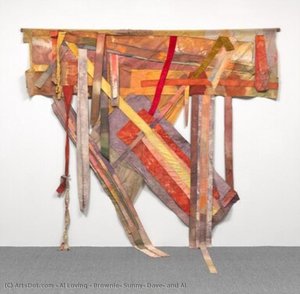
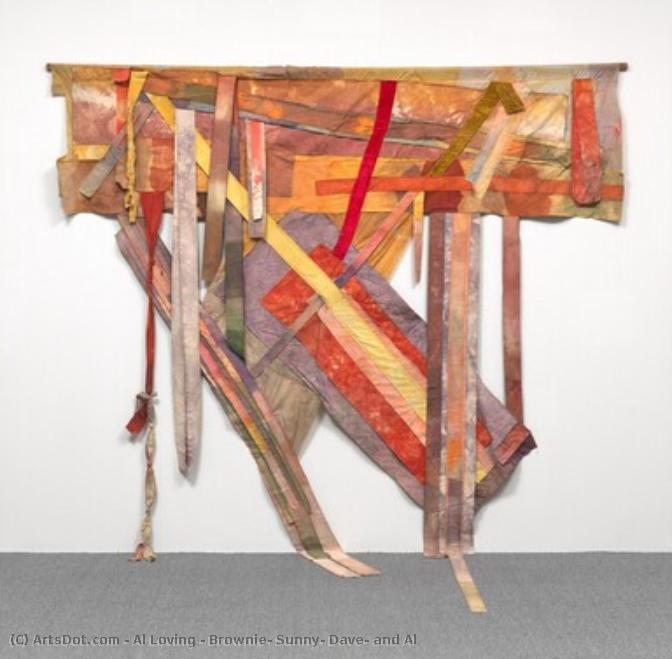
Brownie, Sunny, Dave, and Al
 Abstract Expressionism
 1972
1972 442.0 x 337.0 cm
 Read More
Giclée / Art Print
Museum-quality giclée or canvas print with fast production and flexible finish options. ( Buy Hand Made Painting Buy Image)




































Pick from our preset sizes that match the artwork's original proportions.

You may enter your own dimensions to fit a specific frame or space. If your selected size does not match the original image's proportions, we will either crop the artwork or extend the image with a mirrored or solid-fill edge. A digital mockup will be sent for your approval before production begins.
Please note that the on-screen preview does not reflect the actual cropping or extension. Only the mockup will accurately show the final composition.
While custom sizes are available, we recommend selecting a dimension from the predefined list to preserve the original proportions.
Worldwide Delivery () in 2 weeks instead of standard 4/5 weeks. (22 August)

Free Worldwide Express Shipping

High-Quality Linen Canvas

Full Shipping Insurance

Customs Tax Refund Guarantee

True Color Matching Guarantee

60-Day Return Policy (Defects Only)

100% Money-Back Guarantee

Bulk Discount Offer
 Glass option is only available in size under 110 CM

Brownie, Sunny, Dave, and Al
Giclée / Art Print
Reproduction Size
-


Total Price
$ 63
Related Artworks


Artist Biography
Alvin D. Loving Jr.: Pioneer of Fabric Abstraction
Alvin Demar Loving Jr., better known as Al Loving, was an African-American abstract expressionist painter who profoundly impacted the landscape of American art in the late 1960s and 1970s. Born on September 19, 1935, in Detroit, Michigan, Loving’s artistic journey began at the University of Illinois at Urbana-Champaign where he earned a Bachelor of Fine Arts degree in 1963 before furthering his studies with an MFA from the University of Michigan, Ann Arbor. His formative mentorship under Al Mullen instilled within him a dedication to exploring innovative approaches to visual art and propelled him toward groundbreaking experimentation.- Early Influences: Loving’s artistic sensibilities were significantly shaped by Josef Albers's explorations of squares within squares—a technique that encouraged him to consider the fundamental principles of form and color relationships. This influence would become a cornerstone of his distinctive style.
- The Once Group & NYC Arrival: Recognizing the importance of collaborative dialogue, Loving joined the Once Group organization in 1968, fostering connections with fellow artists who shared similar ambitions for pushing artistic boundaries. Shortly thereafter, he relocated to New York City, immersing himself in the vibrant cultural milieu and establishing a studio within the infamous Hotel Chelsea—a space that would become synonymous with artistic creativity and bohemian spirit.
Hard-Edge Abstraction & Geometric Exploration
Loving’s artistic breakthrough arrived in 1968 when he began to produce hard-edge abstraction series inspired by Albers's work. He meticulously crafted polyhedrons of identical size, employing contrasting colors—often vibrant reds and yellows—to create visually arresting compositions. These pieces weren’t merely decorative; they represented a deliberate effort to distill visual experience into its purest form, prioritizing geometric precision over expressive gesture. Loving’s approach challenged conventional notions of painting, emphasizing structural integrity and the interplay of color hues. As he eloquently stated, “For me at the time, it was about painting the square until it was ‘enough,’ and that meant until it obtained form.” His work gained recognition through exhibitions at the Whitney Museum of American Art in 1968 and subsequently cemented his position as a leading figure in geometric abstraction.Fabric Constructions & Material Experimentation
Inspired by an encounter with abstract design in American quilts at the Whitney Museum of American Art, Loving embarked on a transformative artistic endeavor: fabric constructions. He began hanging strips of canvas from walls and ceilings—a bold departure from traditional easel painting—creating sculptural forms that simultaneously engaged with pictorial and spatial dimensions. Utilizing a sewing machine, he meticulously assembled these fragments together, resulting in expansive textile installations that captured the essence of movement and fluidity. Loving’s exploration extended beyond mere color; he experimented with dyeing fabrics to achieve nuanced tonal variations and textural contrasts. This innovative technique reflected his belief in embracing unconventional materials and processes as conduits for artistic expression.Notable Achievements & Legacy
Loving's career spanned decades of dedicated artistic practice, culminating in significant accomplishments that solidified his place within the annals of American art history. He received prestigious National Endowment for the Arts fellowships in 1970, 1974, and 1984—a testament to the recognition accorded to his pioneering contributions. Furthermore, he secured a Guggenheim Fellowship for Painting in 1986—an honor bestowed upon exceptionally talented artists who demonstrate exceptional creativity and artistic merit. Loving’s monumental mural painting *A Message to Demar and Lauri*, commissioned for The First National Bank Building in Detroit, served as a powerful symbol of civic engagement and artistic ambition. His enduring influence continues to inspire contemporary artists exploring innovative approaches to material abstraction and geometric composition—a legacy that underscores the significance of Loving's contribution to the evolution of American art.
alvin d. loving jr.
1935 - 2005 , United States of America
Quick Facts
- Artistic Movement Or Style: Abstract Expressionism; Hard-edge abstraction; Fabric Constructions; Collage
- Artists Or Movements Influenced By This Artist: ['Geometric Abstraction']
- Artists Who Influenced This Artist: ['Josef Albers']
- Date Of Birth: September 19, 1935
- Date Of Death: June 21, 2005
- Full Name: Alvin D. Loving Jr.
- Nationality: American
- Notable Artworks:
- A Message to Demar and Lauri
- New Morning 1
- Place Of Birth: Detroit, United States
Related Articles

Bronze Sculptures That Defined Art History | ArtsDot
Journey through art history with our Top 10 bronze sculptures! Explore masterpieces by Rodin, Michelangelo & more. Discover stories behind iconic statues and find museum-quality reproductions for your home decor at ArtsDot.com.

The Enduring Form: Exploring Themes & Techniques in Sculpture Across Historical Periods
Explore the rich history of sculpture from ancient masterpieces to contemporary innovations. Discover key techniques, influential artists & investment potential for discerning art collectors.

Bronze Age to Modern Masters: 10 Sculptures That Redefined Art | ArtsDot
Journey through art history with 10 legendary bronze sculptures – from Michelangelo's David to Rodin’s Thinker. Explore the stories, techniques & timeless beauty of these masterpieces. Find museum-quality reproductions & elevate your home decor on ArtsDot.com.
The Enduring Form: Sculpture Across History, Technique & Emotional Resonance
Explore the rich history of sculpture with ArtsDot. Discover key techniques, influential artists & investment potential for discerning collectors. Expert insights into valuing and collecting timeless masterpieces.
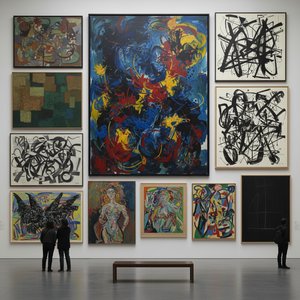
Abstract Expressionism's 10 Defining Masterpieces |
Explore 10 defining Abstract Expressionism masterpieces by Pollock, Rothko & de Kooning. Discover the stories behind these iconic paintings and find museum-quality art reproductions to elevate your home decor on .