

 Preview
 Send
Send Share
Share
 Details

 Download
 Similars
 X-Ray
X-Ray Diaporama
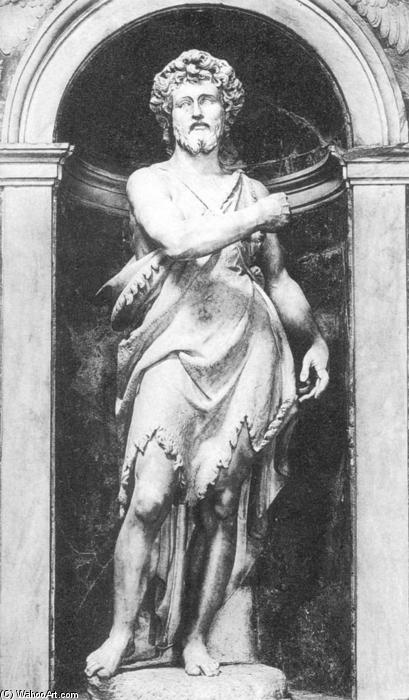
St John the Baptist


 Read More
Hand Made Oil Reproduction
Hand-painted oil on canvas in your size and frame, made to order by our artists. ( Buy Print Buy Image)




































Pick from our preset sizes that match the artwork's original proportions.

You may enter your own dimensions to fit a specific frame or space. If your selected size does not match the original image's proportions, we will either crop the artwork or extend the painting with additional hand-painted elements. A digital mockup will be sent for your approval before production begins.
Please note that the on-screen preview does not reflect the actual cropping or extension. Only the mockup will accurately show the final composition.
While custom sizes are available, we recommend selecting a dimension from the predefined list to preserve the original proportions.
After order, ArtsDot.com team will email client for instructions and provide a mockup preview
Worldwide Delivery () in 3/4 weeks instead of standard 5 weeks. (17 August). No compromise on quality.

Free Worldwide Express Shipping

High-Quality Linen Canvas

Full Shipping Insurance

Customs Tax Refund Guarantee

True Color Matching Guarantee

60-Day Return Policy (Defects Only)

100% Money-Back Guarantee

Bulk Discount Offer
 Glass option is only available in size under 110 CM

St John the Baptist
Reproduction Medium
Reproduction Size
-


Total Price
$ 263
Related Artworks
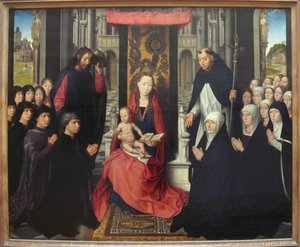
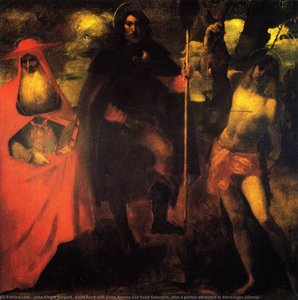
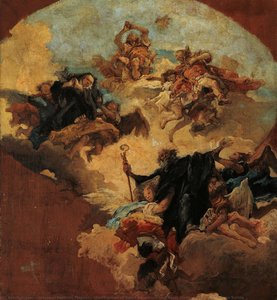
Artist Biography
Early Life and Formation in Lombardy
Ambrogio Bonvicino, often known as Ambrogio Bergognone due to his origins in the village of Bergognone near Como, emerged during a vibrant period of artistic ferment in late 15th-century Lombardy. Born around 1453, his early life remains somewhat shrouded in mystery, typical for artists of this era whose biographies weren’t meticulously documented. What is known suggests he received his initial training within the workshops prevalent in the region, absorbing the stylistic currents that characterized the transition from Gothic traditions to the burgeoning Renaissance aesthetic. The influence of artists like Vincenzo Foppio and possibly even Leonardo da Vinci—who spent time in Milan during Ambrogio's formative years—cannot be discounted. These masters instilled a sense of naturalism, delicate modeling, and emotional depth that would become hallmarks of Bergognone’s work. He was deeply rooted in the devotional art tradition of Northern Italy, focusing on religious subjects intended to inspire piety and contemplation.A Master of Religious Narrative
Bergognone quickly established himself as a sought-after painter, particularly for altarpieces and frescoes adorning churches throughout Lombardy and beyond. His style is characterized by a gentle sweetness and refined elegance, often depicting the Virgin Mary and Christ Child with tender affection. St. John the Baptist, a recurring motif in his oeuvre, exemplifies this approach—rendered not as an austere prophet but as a youthful figure imbued with grace and vulnerability. He possessed a remarkable ability to convey emotion through subtle gestures and facial expressions, drawing viewers into intimate moments of religious significance. His compositions, while adhering to traditional iconography, were often innovative in their arrangement and use of space, creating harmonious and balanced scenes. The frescoes he created in Siena demonstrate his adaptability and skill in working with different architectural contexts.Influences and Artistic Development
The artistic landscape of late 15th-century Italy was a complex interplay of regional styles and emerging Renaissance ideals. While firmly grounded in the Lombard tradition, Bergognone absorbed influences from various sources. The works of Perugino, known for his clarity of form and serene landscapes, likely impacted his compositional approach. The influence of Leonardo da Vinci’s sfumato technique—the subtle blurring of outlines to create a sense of atmospheric perspective—can be observed in the soft modeling of his figures. However, Bergognone never fully abandoned the decorative elements characteristic of Lombard art, retaining a preference for rich colors and intricate detailing. Over time, his style evolved from an early emphasis on linear precision towards a more painterly approach, characterized by softer edges and greater atmospheric depth.Key Works and Lasting Legacy
Among Bergognone’s most celebrated works are the altarpieces commissioned for churches in Milan and its surrounding areas. The Virgin and Child, painted around 1490, is a testament to his mastery of devotional imagery—a scene radiating tenderness and spiritual devotion. His frescoes, though often fragmented or dispersed, reveal a sophisticated understanding of narrative composition and color harmony. St Agnes (1495) stands out as an exceptional example of his fresco technique, showcasing intricate details and the use of gold leaf to enhance the painting’s luminosity. His “Charity of St Benedict” is another notable piece, demonstrating his ability to depict complex scenes with clarity and emotional resonance. Ambrogio Bergognone died in 1523, leaving behind a legacy as one of Lombardy's most important Renaissance painters. His work continued to influence artists in the region for generations, solidifying his place in the history of Italian art.Historical Significance
Ambrogio Bonvicino’s significance lies not only in his artistic achievements but also in his ability to bridge the gap between Gothic traditions and the emerging Renaissance aesthetic. He represents a crucial link in the development of Lombard painting, paving the way for later masters like Bernardino Lanino and Giovanni Antonio Boltraffio. His emphasis on devotional imagery resonated deeply with contemporary audiences, reflecting the religious fervor of the period.- His paintings served as powerful tools for spiritual contemplation.
- He skillfully blended artistic innovation with traditional iconography.
- Bergognone’s work continues to be admired for its grace, elegance, and emotional depth.
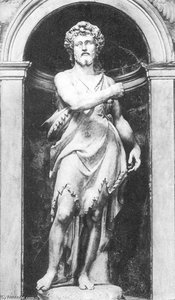
ambrogio bonvicino
1552 - 1622 , Italy
Quick Facts
- Artistic Movement Or Style: Renaissance painting
- Date Of Birth: 1552
- Date Of Death: 1622
- Full Name: Ambrogio Bonvicino
- Nationality: Italian
- Notable Artworks:
- St. John the Baptist
- Frescoes in Milan
- Frescoes in Siena
- Place Of Birth: Italy

