

 Preview
 Send
Send Share
Share
 Details

 Download
 Similars
 X-Ray
X-Ray Diaporama
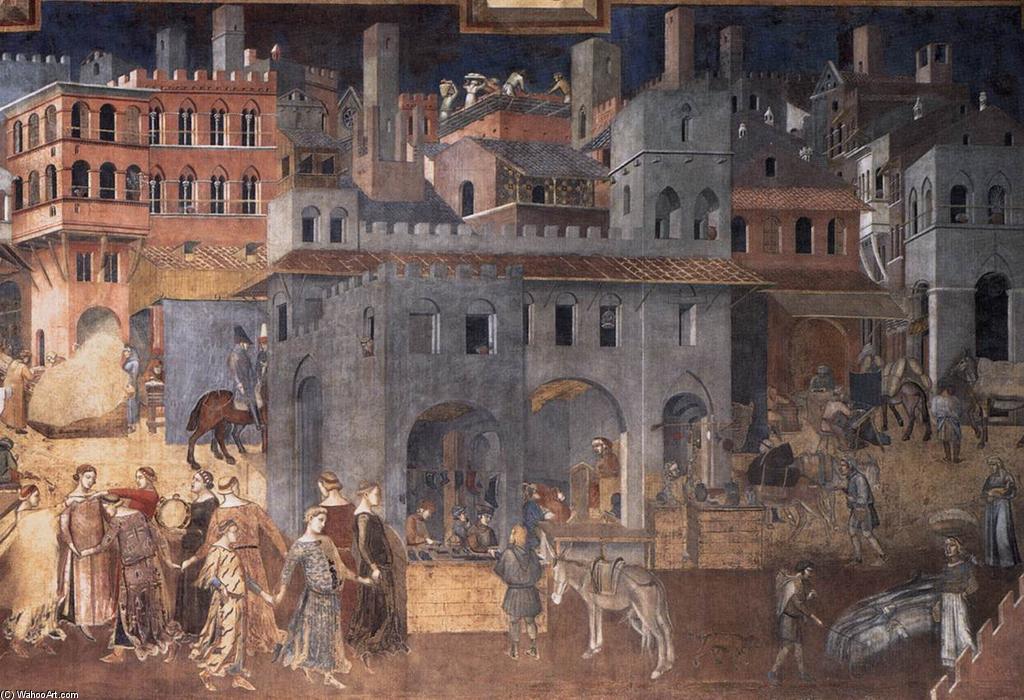
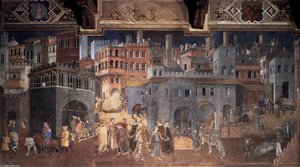
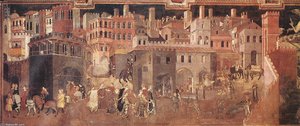
Effects of Good Government on the City Life (detail)


 Read More
Purchase a high-resolution, enhanced digital image, far superior to the online preview.
Each file is meticulously prepared by our in-house specialists using advanced tools and expert manual retouching. We ensure every image has exceptional clarity, precise color accuracy, and fine detail.
The final file is delivered via email within 72 hours, optimized for immediate use in professional, editorial, and print environments. This is the same quality trusted by top-tier design studios, publishers, and galleries.
Digital Image
Download a high-resolution file for personal display, printing, and creative projects. ( Buy Print Buy Hand Made Painting)
Included in Every Digital Image Order
Expert Digital Delivery, Guaranteed
When you choose ArtsDot.com, you're not just getting an image - you're receiving a professionally enhanced digital artwork, crafted with precision and backed by a satisfaction guarantee. Here's everything that comes with your order, automatically:

Fast Email Delivery
Your high-resolution digital image file will be emailed to you within 72 hours of ordering - ready for immediate use.

AI-Enhanced Digital File
Your artwork is professionally optimized using advanced AI tools and manual editing, ensuring maximum detail, clarity, and color accuracy.

Free Lifetime Re-Delivery
Accidentally deleted or lost your file? No worries - we'll resend it to you anytime, free of charge.

No Import Fees - Ever
Enjoy your artwork instantly with zero customs, duties, or delivery fees - digital downloads are always tax-free.

Color Accuracy Guarantee
We ensure your digital image reflects the original colors as closely as possible using professional tools and color management.

60-Day Satisfaction Guarantee
If you're not satisfied with your digital image, we'll revise it or refund 100% within 60 days - no questions asked.

100% Money-Back Guarantee
Not satisfied? Get a full refund within 60 days of receiving your digital file - no questions asked.

Bulk Order Discounts
Buy 3 images, save 10% - Buy 5, save 15% - Buy 10+, save 20%. Great for creative projects, galleries, and agencies.
The Fresco of Siena’s Ideal City: Ambrogio Lorenzetti's Visionary Allegory
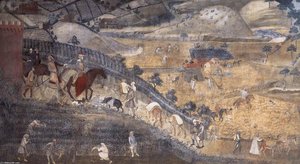
Ambrogio Lorenzetti’s “Effects of Good Government in the City,” completed between 1338 and 1340, stands as a monumental achievement of Sienese civic art—a testament to the Republic’s aspirations for prosperity and justice during its golden age. Commissioned to adorn the Sala della Pace (Hall of Peace) within Siena’s Palazzo Pubblico, this fresco isn't merely a depiction of urban life; it’s a meticulously crafted allegory designed to communicate profound philosophical ideas through visual storytelling. Lorenzetti, deeply influenced by Byzantine artistic traditions yet embracing burgeoning naturalism, skillfully blended these influences into a singular style that captivated audiences and continues to inspire admiration today.A Window Into Medieval Siena
The fresco's setting transports viewers back to thirteenth-century Siena—a thriving mercantile republic governed with wisdom and virtue. Lorenzetti meticulously recreated the cityscape, showcasing buildings adorned with arched doorways and windows, towering walls protecting the city’s inhabitants, and bustling streets teeming with activity. The artist’s attention to detail extends beyond architectural elements; he populated the scene with figures engaged in various professions—artisans crafting goods, merchants conducting trade, laborers constructing infrastructure—creating a microcosm of Sienese society. Clothing styles reflect the period's fashion, emphasizing formality and social hierarchy, reinforcing the fresco’s overarching message about order and stability.Technique and Artistic Innovation
Lorenzetti employed the technique of *trompe l'oeil*, or illusionistic painting, to heighten the sense of realism and depth within the composition. By subtly manipulating perspective and shading, he created an astonishingly convincing representation of space—a feat that foreshadowed developments in Renaissance art. The fresco’s palette is dominated by earthy tones—ochres, siennas, umbers—reflecting the materials available at the time and contributing to a solemn atmosphere imbued with spiritual significance. However, strategically placed brighter hues—particularly reds and blues—introduce visual contrast and draw attention to key figures and architectural details, enhancing the artwork’s impact.Symbolism: Justice, Harmony, and Societal Flourishing
The fresco's symbolism is multilayered and deliberately designed to convey moral lessons about governance. Lorenzetti divided Siena into two contrasting halves—one representing “Good Government” and the other “Bad Government”—a visual metaphor for the consequences of virtuous versus tyrannical rule. The depiction of Good Government showcases a harmonious cityscape populated by industrious citizens engaged in productive activities, symbolizing prosperity and social cohesion. Figures embody virtues such as justice, prudence, temperance, and fortitude, reflecting Sienese ideals of civic responsibility and moral excellence. Conversely, Bad Government portrays a desolate urban landscape plagued by famine, pestilence, and corruption—a chilling reminder of the perils faced by societies lacking ethical leadership.Emotional Resonance: A Legacy of Civic Virtue
“Effects of Good Government in the City” transcends its historical context to resonate powerfully with viewers today. Lorenzetti’s masterful use of visual language communicates a timeless message about the importance of ethical governance and the pursuit of societal flourishing. The fresco's serene beauty combined with its sobering depiction of corruption serves as an enduring inspiration for artists, designers, and anyone seeking to champion values of justice, harmony, and civic engagement. Its meticulous detail and innovative technique continue to captivate audiences, cementing Lorenzetti’s place as one of the foremost figures in Sienese art history—and a beacon of artistic vision within the medieval world.Related Artworks
Artist Biography
A Sienese Visionary: The Life and Art of Ambrogio Lorenzetti
Ambrogio Lorenzetti, born around 1290 in the heart of Siena, Italy, emerged as a pivotal figure in the transition from the medieval artistic traditions to the burgeoning Renaissance. Though overshadowed for periods by contemporaries like Duccio and Simone Martini, and often discussed alongside his brother, the painter Pietro Lorenzetti, Ambrogio carved out a unique path, one marked by an innovative spirit and a profound engagement with the world around him. Details of his early life remain scarce; artistic training in Siena likely provided the foundation upon which he would build a style that blended Byzantine elegance with a growing naturalism—a hallmark of his evolving vision. The Sienese school, renowned for its refined aesthetic, offered a fertile ground for Ambrogio’s talents to blossom, yet he wasn't content merely to replicate established conventions. He possessed an inquisitive mind, drawn to both the spiritual depths of Italo-Byzantine art and the classical ideals that were beginning to resurface in Italian thought.Breaking with Tradition: Style and Innovation
Ambrogio’s artistic journey was one of continual experimentation. Early works, such as the *Madonna and Child* from 1319, reveal a clear debt to the Byzantine tradition—the iconic frontality, the use of gold backgrounds, and the stylized rendering of figures all speak to this influence. However, even in these early pieces, hints of a new direction emerge: a subtle softening of forms, a nascent interest in depicting volume, and an attempt to imbue his subjects with a more human quality. This trajectory accelerated as Ambrogio matured, fueled by a fascination with classical antiquity and a desire to represent the world with greater accuracy. He studied perspective—though not always achieving perfect results—and demonstrated a keen eye for physiognomy, seeking to capture the individual characteristics of those he portrayed. The influence of Simone Martini, another leading Sienese painter, is evident in Ambrogio’s elegant compositions and refined color palettes, while some scholars suggest a connection to Giotto's more naturalistic approach, particularly in his depiction of human emotion. But it was Ambrogio who synthesized these influences into something distinctly his own—a style that balanced decorative grace with an unprecedented level of realism.The Palazzo Pubblico: A Monumental Achievement
Ambrogio Lorenzetti’s most enduring legacy lies within the walls of Siena's Palazzo Pubblico, specifically in the Sala dei Nove – the Council Room. Here, between 1337 and 1339, he embarked on a monumental cycle of frescoes depicting *The Allegory of Good and Bad Government*. This work is not merely a collection of beautiful images; it’s a profound meditation on civic virtue, social order, and the consequences of political choices. *Effects of Good Government on Town and Country* is an unparalleled pictorial encyclopedia of medieval life—a vibrant panorama teeming with activity: merchants trading, laborers working the land, dancers celebrating in the piazza. It's a vision of harmony and prosperity, where every element contributes to the well-being of the community. The contrasting *Allegory of Bad Government and its Effects on Town and Country* presents a starkly different scene—a landscape ravaged by tyranny, corruption, and discord. Within this cycle, Ambrogio achieved several groundbreaking feats: he pioneered the use of realistic landscapes as backdrops for his figures, experimented with perspective to create a sense of depth, and imbued his characters with a range of emotions that were remarkably expressive for the time. Notably, *Effects of Good Government* contains what is believed to be the first documented depiction of an hourglass—a symbol of time’s relentless passage and the importance of responsible governance.A Lasting Influence: Legacy and Historical Significance
Ambrogio Lorenzetti's untimely death in 1348, likely a victim of the Black Death that swept across Europe, cut short a career brimming with potential. Yet, his innovations left an indelible mark on the course of Italian art. He was a precursor to the Renaissance, anticipating many of the artistic concerns that would define the era—a renewed interest in naturalism, a mastery of perspective, and a focus on human emotion. His frescoes in the Palazzo Pubblico stand as masterpieces of early Renaissance secular painting, reflecting a growing emphasis on civic life and the responsibilities of leadership. Beyond their aesthetic beauty, these works offer invaluable insights into medieval society, providing a detailed glimpse into the daily lives, customs, and values of 14th-century Siena. Ambrogio’s influence extended to subsequent generations of Sienese and Italian painters, inspiring them to push the boundaries of artistic expression and explore new ways of representing the world around them. He remains a testament to the power of art to not only reflect society but also to shape it—a visionary whose work continues to resonate with audiences centuries later.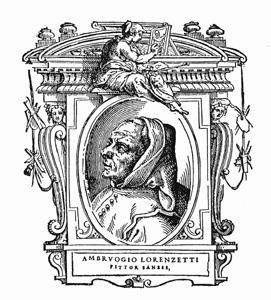
Ambrogio Lorenzetti
1290 - 1348 , Italy
Quick Facts
- Artistic Movement Or Style: Sienese School
- Artists Or Movements Influenced By This Artist: ['Renaissance artists']
- Artists Who Influenced This Artist:
- Simone Martini
- Giotto
- Date Of Birth: c. 1290
- Date Of Death: June 9, 1348
- Full Name: Ambrogio Lorenzetti
- Nationality: Italian
- Notable Artworks:
- Madonna and Child (1319)
- Good & Bad Government
- Investiture of Saint Louis
- Maestà (c. 1335)
- Place Of Birth: Siena, Italy

