 Preview
 Send
Send Share
Share
 Details

 Download
 Similars
 X-Ray
X-Ray Diaporama
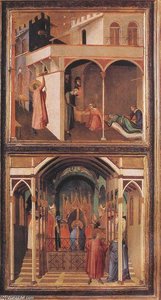
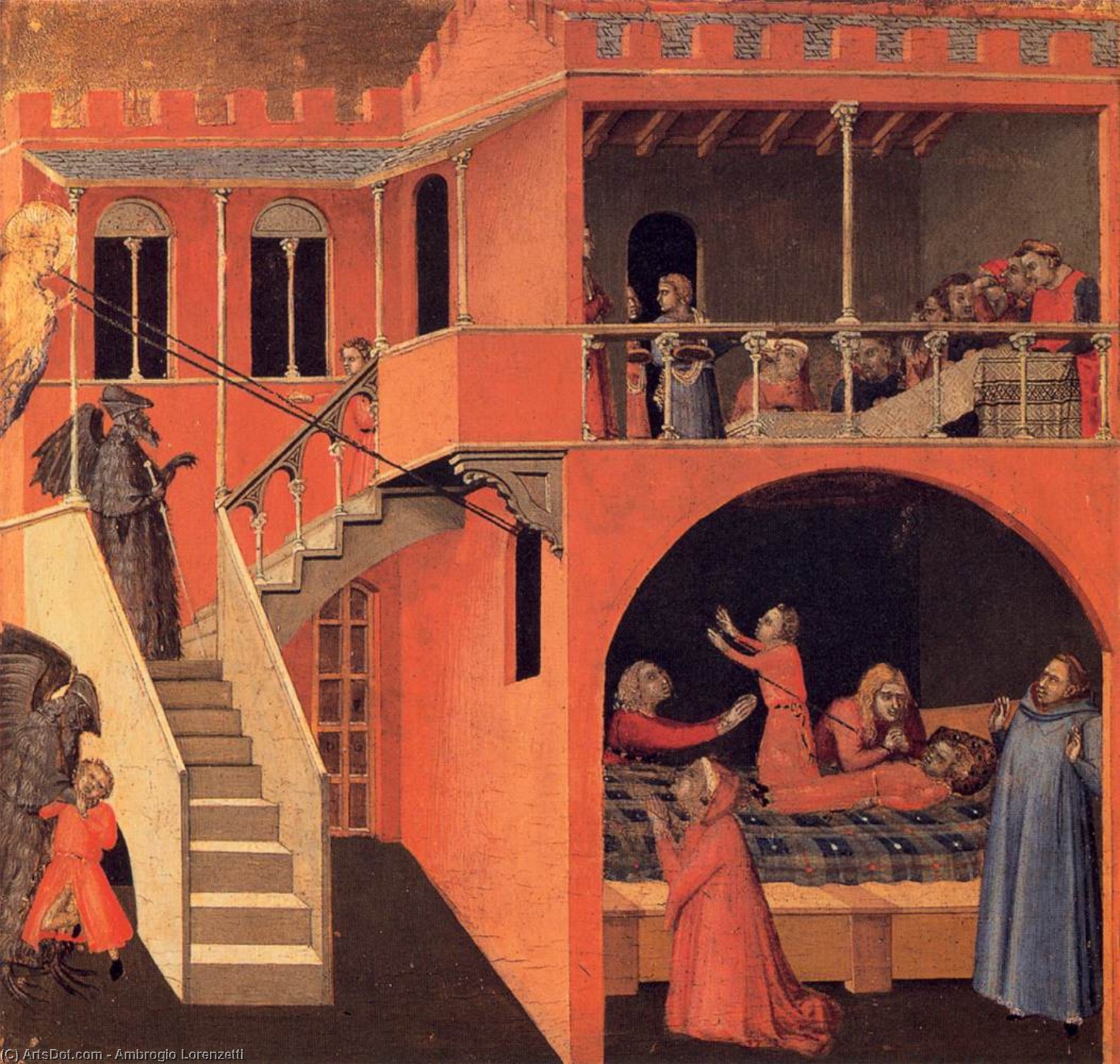
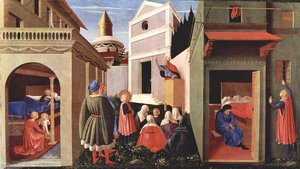
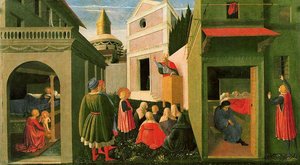
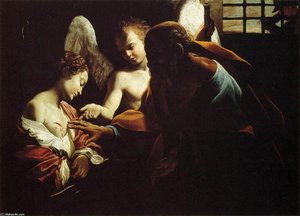
Scenes of the Life of St Nicholas


 Read More
Hand Made Oil Reproduction
Hand-painted oil on canvas in your size and frame, made to order by our artists. ( Buy Print Buy Image)




P118B $10

P118H $10

P118W $10

P438Z $10

P508JH $12

P508YH $12

P805H $10

P805Z $10

P919BZ $10

P919G $10

P919XJ $10

P959ZH $10

P968JZ $12

W106C $8

W218G $10

W218JH $8

W218Y $10

W307PJ $10

W316G $10

W316PJ $8

W316Y $10

W398PJ $8

W4111J $10

W500HY $15

W500JH $15

W692G $12

W849H $8

W940BG $15

W953PJ $8




Pick from our preset sizes that match the artwork's original proportions.

You may enter your own dimensions to fit a specific frame or space. If your selected size does not match the original image's proportions, we will either crop the artwork or extend the painting with additional hand-painted elements. A digital mockup will be sent for your approval before production begins.
Please note that the on-screen preview does not reflect the actual cropping or extension. Only the mockup will accurately show the final composition.
While custom sizes are available, we recommend selecting a dimension from the predefined list to preserve the original proportions.
After order, ArtsDot.com team will email client for instructions and provide a mockup preview
Worldwide Delivery () in 3/4 weeks instead of standard 5 weeks. (16 August). No compromise on quality.

Free Worldwide Express Shipping

High-Quality Linen Canvas

Full Shipping Insurance

Customs Tax Refund Guarantee

True Color Matching Guarantee

60-Day Return Policy (Defects Only)

100% Money-Back Guarantee

Bulk Discount Offer
 Glass option is only available in size under 110 CM

Scenes of the Life of St Nicholas
Reproduction Medium
Reproduction Size
-


Total Price
$ 263
Artwork Description
A Window into Medieval Compassion: Ambrogio Lorenzetti’s “Scenes of the Life of St Nicholas”
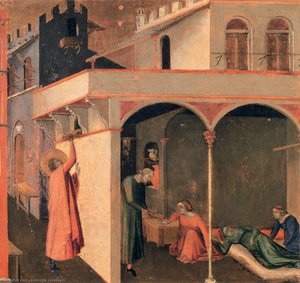
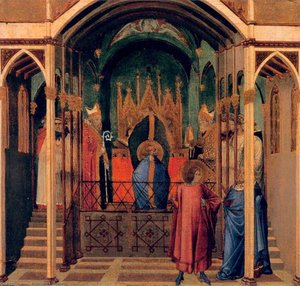
Ambrogio Lorenzetti's "Scenes of the Life of St Nicholas," painted in 1332, offers a poignant glimpse into the heart of medieval piety and social concern. This remarkable work, now meticulously reproduced by ArtsDot.com, transcends mere religious illustration; it’s a testament to the burgeoning humanist values beginning to emerge within the late Middle Ages. The painting depicts a series of vignettes illustrating key moments in the life of St Nicholas – the gift-giving saint who would later become known as Santa Claus – but what truly captivates is not just the narrative, but the palpable atmosphere of care and communal support radiating from the scene.
The composition immediately draws the viewer into a small, intimate space. A group of individuals, numbering at least thirteen, are gathered around two beds within what appears to be a rudimentary hospital or infirmary. The figures aren’t posed dramatically; instead, they engage in quiet acts of assistance – offering blankets, adjusting pillows, and simply providing companionship to those who are ill or injured. The artist masterfully uses light and shadow to create a sense of depth and intimacy, focusing attention on the faces of the patients and caregivers alike. Notice how Lorenzetti avoids idealized representations; his figures possess a grounded realism, reflecting the everyday lives and concerns of the Sienese community.
A Synthesis of Styles: Byzantine Roots and Emerging Naturalism
Ambrogio Lorenzetti’s artistic journey is particularly fascinating given the period in which he worked. Born in Siena around 1290, he inherited a rich artistic tradition deeply rooted in Byzantine iconography – characterized by its flattened perspective, symbolic colors, and emphasis on spiritual themes. However, Lorenzetti wasn't simply a follower of convention; he skillfully integrated these influences with emerging naturalistic tendencies that were beginning to surface across Italy. This synthesis is evident in the painting’s details: while the figures retain a certain stylized quality, their gestures and expressions convey genuine emotion, hinting at a growing interest in representing human experience more accurately.
The use of color also reflects this duality. The palette leans towards muted earth tones – ochres, browns, and blues – typical of Byzantine art, yet punctuated by brighter hues used to highlight specific elements or figures, suggesting a deliberate attempt to draw the viewer’s eye and emphasize key moments within the narrative. Lorenzetti's skill lies in his ability to balance these contrasting influences, creating an image that is both deeply spiritual and remarkably human.
Symbolism of Care and Community
Beyond the specific events depicted – likely drawn from the *Life of St Nicholas* as recorded by Bishop De Sancto Niccolo – the painting carries a profound symbolic weight. The act of caring for the sick and vulnerable was considered a sacred duty in medieval society, reflecting Christian teachings on charity and compassion. Lorenzetti’s depiction of this communal responsibility underscores the importance of social solidarity and mutual support within the Sienese community. The presence of the beds themselves speaks to the realities of illness and mortality – acknowledging the fragility of human life and emphasizing the need for care and comfort.
Furthermore, the arrangement of figures around the beds suggests a deliberate attempt to create a sense of order and harmony within the scene. This reflects the medieval belief in the interconnectedness of all things – that individual actions have consequences for the entire community. The simple chair near the bottom left corner might represent a moment of respite or reflection for one of the caregivers, highlighting the dedication required to fulfill this role.
A Timeless Reflection on Humanity
"Scenes of the Life of St Nicholas" is more than just a historical artwork; it’s a powerful meditation on human compassion and social responsibility. Reproduced with meticulous attention to detail by ArtsDot.com, this painting offers a unique opportunity to experience the artistry and vision of Ambrogio Lorenzetti firsthand. Whether you are an art collector seeking a significant addition to your collection or an interior designer searching for a piece that evokes warmth and empathy, this work is sure to resonate deeply. Its enduring message – the importance of caring for one another – remains as relevant today as it was over seven centuries ago.
Related Artworks
![Legend Of St Francis - [23] - St Francis Mourned By St Clare — Giotto Di Bondone, Gothic](/media/artworks/images/thumbnails/d9/a8/d9a8803f4ecd4b049507cc14e2371b42.jpg)
![Legend Of St Francis - [21] - Apparition To Fra Agostino And To Bishop Guido Of Arezzo — Giotto Di Bondone, Proto-renaissance](/media/artworks/images/thumbnails/1f/a3/1fa370e8ba2040d380a682d61260727f.jpg)
Artist Biography
A Sienese Visionary: The Life and Art of Ambrogio Lorenzetti
Ambrogio Lorenzetti, born around 1290 in the heart of Siena, Italy, emerged as a pivotal figure in the transition from the medieval artistic traditions to the burgeoning Renaissance. Though overshadowed for periods by contemporaries like Duccio and Simone Martini, and often discussed alongside his brother, the painter Pietro Lorenzetti, Ambrogio carved out a unique path, one marked by an innovative spirit and a profound engagement with the world around him. Details of his early life remain scarce; artistic training in Siena likely provided the foundation upon which he would build a style that blended Byzantine elegance with a growing naturalism—a hallmark of his evolving vision. The Sienese school, renowned for its refined aesthetic, offered a fertile ground for Ambrogio’s talents to blossom, yet he wasn't content merely to replicate established conventions. He possessed an inquisitive mind, drawn to both the spiritual depths of Italo-Byzantine art and the classical ideals that were beginning to resurface in Italian thought.Breaking with Tradition: Style and Innovation
Ambrogio’s artistic journey was one of continual experimentation. Early works, such as the *Madonna and Child* from 1319, reveal a clear debt to the Byzantine tradition—the iconic frontality, the use of gold backgrounds, and the stylized rendering of figures all speak to this influence. However, even in these early pieces, hints of a new direction emerge: a subtle softening of forms, a nascent interest in depicting volume, and an attempt to imbue his subjects with a more human quality. This trajectory accelerated as Ambrogio matured, fueled by a fascination with classical antiquity and a desire to represent the world with greater accuracy. He studied perspective—though not always achieving perfect results—and demonstrated a keen eye for physiognomy, seeking to capture the individual characteristics of those he portrayed. The influence of Simone Martini, another leading Sienese painter, is evident in Ambrogio’s elegant compositions and refined color palettes, while some scholars suggest a connection to Giotto's more naturalistic approach, particularly in his depiction of human emotion. But it was Ambrogio who synthesized these influences into something distinctly his own—a style that balanced decorative grace with an unprecedented level of realism.The Palazzo Pubblico: A Monumental Achievement
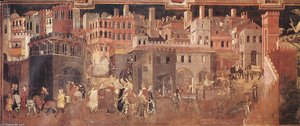
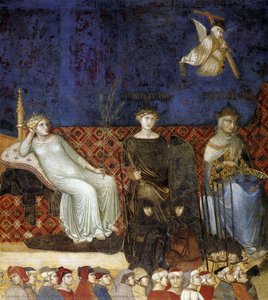
Ambrogio Lorenzetti’s most enduring legacy lies within the walls of Siena's Palazzo Pubblico, specifically in the Sala dei Nove – the Council Room. Here, between 1337 and 1339, he embarked on a monumental cycle of frescoes depicting *The Allegory of Good and Bad Government*. This work is not merely a collection of beautiful images; it’s a profound meditation on civic virtue, social order, and the consequences of political choices. *Effects of Good Government on Town and Country* is an unparalleled pictorial encyclopedia of medieval life—a vibrant panorama teeming with activity: merchants trading, laborers working the land, dancers celebrating in the piazza. It's a vision of harmony and prosperity, where every element contributes to the well-being of the community. The contrasting *Allegory of Bad Government and its Effects on Town and Country* presents a starkly different scene—a landscape ravaged by tyranny, corruption, and discord. Within this cycle, Ambrogio achieved several groundbreaking feats: he pioneered the use of realistic landscapes as backdrops for his figures, experimented with perspective to create a sense of depth, and imbued his characters with a range of emotions that were remarkably expressive for the time. Notably, *Effects of Good Government* contains what is believed to be the first documented depiction of an hourglass—a symbol of time’s relentless passage and the importance of responsible governance.A Lasting Influence: Legacy and Historical Significance
Ambrogio Lorenzetti's untimely death in 1348, likely a victim of the Black Death that swept across Europe, cut short a career brimming with potential. Yet, his innovations left an indelible mark on the course of Italian art. He was a precursor to the Renaissance, anticipating many of the artistic concerns that would define the era—a renewed interest in naturalism, a mastery of perspective, and a focus on human emotion. His frescoes in the Palazzo Pubblico stand as masterpieces of early Renaissance secular painting, reflecting a growing emphasis on civic life and the responsibilities of leadership. Beyond their aesthetic beauty, these works offer invaluable insights into medieval society, providing a detailed glimpse into the daily lives, customs, and values of 14th-century Siena. Ambrogio’s influence extended to subsequent generations of Sienese and Italian painters, inspiring them to push the boundaries of artistic expression and explore new ways of representing the world around them. He remains a testament to the power of art to not only reflect society but also to shape it—a visionary whose work continues to resonate with audiences centuries later.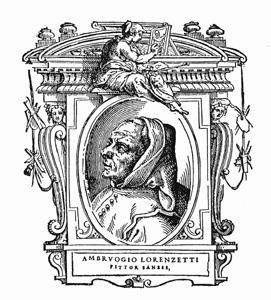
Ambrogio Lorenzetti
1290 - 1348 , Italy
Quick Facts
- Artistic Movement Or Style: Sienese School
- Artists Or Movements Influenced By This Artist: ['Renaissance artists']
- Artists Who Influenced This Artist:
- Simone Martini
- Giotto
- Date Of Birth: c. 1290
- Date Of Death: June 9, 1348
- Full Name: Ambrogio Lorenzetti
- Nationality: Italian
- Notable Artworks:
- Madonna and Child (1319)
- Good & Bad Government
- Investiture of Saint Louis
- Maestà (c. 1335)
- Place Of Birth: Siena, Italy
Related Articles
High Medieval Art: 10 Masterpieces That Shaped an Era | ArtsDot
Journey through High Medieval Art! Explore 10 iconic masterpieces – from Giotto's frescoes to stunning Gothic cathedrals. Discover the stories behind these timeless paintings, sculptures & illuminated manuscripts. Find museum-quality art reproductions at ArtsDot.com.

Giotto's Masterpieces: 25 Renaissance Artworks for Your Home | ArtsDot
Explore 25 breathtaking artworks by Giotto di Bondone, a Renaissance master. Discover the stories behind iconic frescoes & paintings like the Scrovegni Chapel cycle. Find museum-quality Giotto reproductions and elevate your home decor with ArtsDot.com.
Illuminating Faith & Power: A Journey Through Medieval Art (c. 500 – c. 1500)
Explore the rich history of Medieval Art (c. 500 – c. 1500) with ArtsDot. Discover Byzantine mosaics, Gothic cathedrals & Renaissance masterpieces. Expert insights & museum-quality reproductions.
Late Medieval Masterpieces: 10 Artworks That Defined an Era | ArtsDot
Journey through 10 defining Late Medieval masterpieces – from Giotto's frescoes to Jan van Eyck’s realism. Explore the stories, techniques & vibrant colors of Gothic art. Find museum-quality reproductions and elevate your home decor with ArtsDot.com! Discover all masterpieces on ArtsDot.com
Illuminating Eternity: A Comprehensive Exploration of Byzantine Art's Legacy
Explore the rich history & stunning artistry of the Byzantine Empire! Discover iconic mosaics, profound symbolism, and lasting influence on Western art. A comprehensive guide for history lovers.