 Preview
 Send
Send Share
Share
 Details

 Download
 Similars
 X-Ray
X-Ray Diaporama
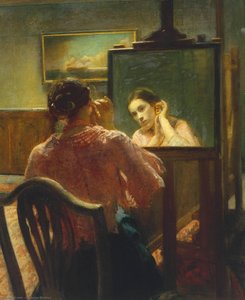
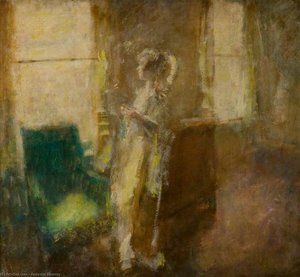
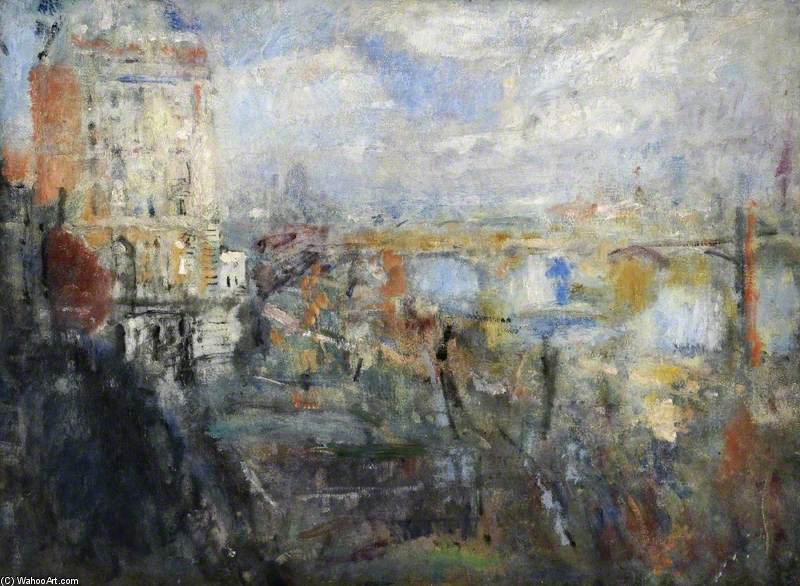
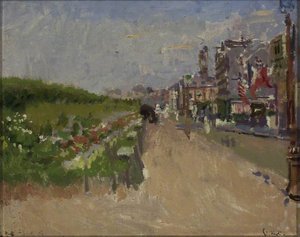
View From The Adelphi, London
 Read More
Hand Made Oil Reproduction
Hand-painted oil on canvas in your size and frame, made to order by our artists. ( Buy Print Buy Image)




































Pick from our preset sizes that match the artwork's original proportions.

You may enter your own dimensions to fit a specific frame or space. If your selected size does not match the original image's proportions, we will either crop the artwork or extend the painting with additional hand-painted elements. A digital mockup will be sent for your approval before production begins.
Please note that the on-screen preview does not reflect the actual cropping or extension. Only the mockup will accurately show the final composition.
While custom sizes are available, we recommend selecting a dimension from the predefined list to preserve the original proportions.
After order, ArtsDot.com team will email client for instructions and provide a mockup preview
Worldwide Delivery () in 3/4 weeks instead of standard 5 weeks. (17 August). No compromise on quality.

Free Worldwide Express Shipping

High-Quality Linen Canvas

Full Shipping Insurance

Customs Tax Refund Guarantee

True Color Matching Guarantee

60-Day Return Policy (Defects Only)

100% Money-Back Guarantee

Bulk Discount Offer
 Glass option is only available in size under 110 CM

View From The Adelphi, London
Reproduction Medium
Reproduction Size
-


Total Price
$ 263
Related Artworks

Artist Biography
The Ethereal Legacy of Ambrose McEvoy
In the vibrant, shifting landscape of early twentieth-century British art, few figures captured the fleeting essence of a changing era as poignantly as Ambrose McEvoy. Born in 1877 in the quiet surroundings of Crewkerne, Somerset, McEvoy’s journey was destined for the bright lights of London’s artistic avant-garde. His path was uniquely paved by the mentorship of the legendary James McNeill Whistler, a master who recognized the young artist's latent brilliance during his formative teenage years. This early encounter with Whistler did more than provide guidance; it instilled in McEvoy a lifelong devotion to atmospheric perception and tonal harmony, principles that would become the bedrock of his aesthetic language.
Enrolling at the prestigious Slade School of Fine Art at just sixteen, McEvoy found himself immersed in a brilliant cohort of contemporaries, including Augustus John and William Orpen. During these formative years, his work was deeply reflective of the Whistlerian tradition, characterized by landscapes and intimate interiors that breathed with a soft, muted light. His early canvases were studies in subtlety, utilizing broken brushstrokes to evoke the ephemeral qualities of nature and the quietude of domestic spaces. This period of his life was marked by a meticulous exploration of how light interacts with form, creating works that felt less like static images and perhaps more like captured breaths of air.
A Shift Toward Expressive Portraiture
As the twentieth century progressed, McEvoy’s artistic temperament underwent a profound transformation. While his roots remained anchored in the contemplative stillness of his early landscapes, he began to pivot toward the human figure with an increasing sense of urgency and vitality. This transition saw him move away from the more restrained, tonalist approach of his mentor toward a style that embraced the bold, rapid execution of Impressionism. He became particularly renowned for his portraits of women, utilizing the watercolor medium to achieve a luminous, spontaneous quality that captured not just the physical likeness, but the very spirit and social grace of his subjects.
His technique in these later years was nothing short of masterful. Eschewing rigid anatomical precision in favor of expressive brushwork, McEvoy sought to convey the immediacy of emotion. His portraits of society women were often characterized by:
- Luminous Color Palettes: A sophisticated use of light that seemed to radiate from within the paper itself.
- Spontaneous Execution: A sense of movement and life achieved through rapid, confident strokes.
- Psychological Depth: An ability to capture the fleeting nuances of character and personality.
This evolution allowed him to bridge the gap between the late nineteenth-century fascination with atmosphere and the modern era's hunger for psychological truth. His work became a mirror reflecting the refined elegance and the underlying tensions of Edwardian and post-war society.
War, Service, and Artistic Significance
The trajectory of McEvoy’s life was irrevocably altered by the onset of the Great War. Serving with distinction in the Royal Naval Division between 1916 and 1918, the artist experienced a world far removed from the refined studios of Chelsea. This period of service brought a new gravity to his perspective, as he navigated the harsh realities of conflict. While much of his fame rests upon his delicate portraits, his wartime experiences contributed to a broader understanding of his capacity to document the human condition under duress.
Though his life was tragically cut short in 1927, McEvoy’s contribution to British art remains indelible. He stands as a vital link in the chain of modernism, a painter who successfully synthesized the tonalist elegance of Whistler with the energetic spirit of Impressionism. His ability to navigate between the quietude of a landscape and the vibrant pulse of a portrait ensures his place in history as an artist of profound sensitivity and enduring relevance. Today, his works serve as evocative windows into a lost world, reminding us of the power of art to capture the ephemeral beauty of life amidst the tides of change.
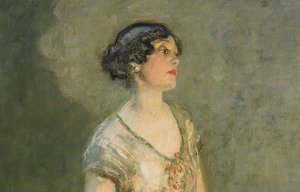
Ambrose McEvoy
1878 - 1927 , United Kingdom
Quick Facts
- Artistic Movement Or Style: Impressionism
- Artists Or Movements Influenced By This Artist: ['Walter Sickert']
- Artists Who Influenced This Artist: ['James McNeill Whistler']
- Date Of Birth: 1877-08-12
- Date Of Death: 1927-01-04
- Full Name: Arthur Ambrose McEvoy
- Nationality: British
- Notable Artworks:
- The Honourable Mrs Akers-douglas
- Brigadier General A. R. H. Hutchinson
- Place Of Birth: Crewkerne, United Kingdom