 Preview
 Send
Send Share
Share
 Details

 Download
 Similars
 X-Ray
X-Ray Diaporama
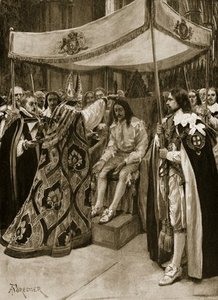
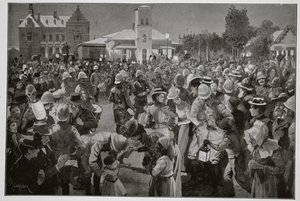
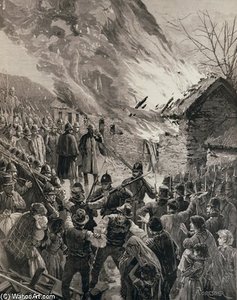
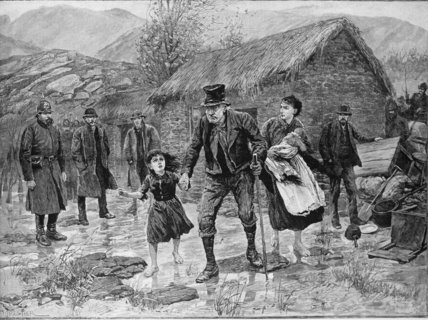
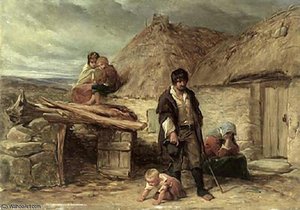
Scene At An Irish Eviction In County Kerry

 Read More
Hand Made Oil Reproduction
Hand-painted oil on canvas in your size and frame, made to order by our artists. ( Buy Print Buy Image)




































Pick from our preset sizes that match the artwork's original proportions.

You may enter your own dimensions to fit a specific frame or space. If your selected size does not match the original image's proportions, we will either crop the artwork or extend the painting with additional hand-painted elements. A digital mockup will be sent for your approval before production begins.
Please note that the on-screen preview does not reflect the actual cropping or extension. Only the mockup will accurately show the final composition.
While custom sizes are available, we recommend selecting a dimension from the predefined list to preserve the original proportions.
After order, ArtsDot.com team will email client for instructions and provide a mockup preview
Worldwide Delivery () in 3/4 weeks instead of standard 5 weeks. (17 August). No compromise on quality.

Free Worldwide Express Shipping

High-Quality Linen Canvas

Full Shipping Insurance

Customs Tax Refund Guarantee

True Color Matching Guarantee

60-Day Return Policy (Defects Only)

100% Money-Back Guarantee

Bulk Discount Offer
 Glass option is only available in size under 110 CM

Scene At An Irish Eviction In County Kerry
Reproduction Medium
Reproduction Size
-


Total Price
$ 363
Related Artworks
Artist Biography
John Martin: Architect of the Sublime
John Martin (1789–1854) wasn’t merely a painter; he was an architect of the sublime, a visionary who conjured landscapes of immense scale and terrifying beauty. Born in Haydon Bridge, Northumberland, into a family steeped in artistic tradition – his father a fencing master and his brothers involved in heraldry and even arson – Martin's early life instilled within him a deep appreciation for both meticulous craft and dramatic storytelling. His apprenticeship with a china painter provided a foundational skill set, but it was the influence of Bonaface Musso, an Italian artist who taught him perspective and engraving techniques, that truly ignited his artistic fire. This formative period laid the groundwork for the monumental canvases and haunting prints that would define his career.Early Works and the Rise of a Romantic Vision
Martin’s early works, primarily watercolors depicting landscapes of the River Thames Valley, demonstrated an emerging talent for capturing atmospheric effects and conveying a sense of vastness. However, it was his foray into oil painting in 1811 that truly announced his arrival on the London art scene. His paintings immediately garnered attention, not just for their technical skill but for their unsettling power – scenes of biblical catastrophes, apocalyptic landscapes, and figures dwarfed by overwhelming natural forces. These early pieces were characterized by a deliberate obscurity, with tiny, almost lost human forms set against colossal backgrounds, creating an immediate sense of awe and dread. This technique, heavily influenced by the works of Claude Lorrain and the Baroque masters, established Martin as a key figure in the burgeoning Romantic movement. The Royal Academy initially rejected his submissions, but persistent efforts eventually secured him exhibition space, solidifying his position within the artistic community.The Power of Print: Engravings and Public Appeal
Martin’s fame wasn't solely built on canvas; it was significantly amplified by his engravings. He meticulously reproduced his own paintings, often with subtle variations and additions, creating a series of prints that captivated the public imagination. These weren’t mere copies; they were reinterpretations, imbued with an even greater sense of drama and mystery. Works like *The Deluge* (1837) and *The Fall of Nineveh* became instant sensations, selling in enormous quantities and establishing Martin as the most popular painter of his day. The accessibility of prints allowed a wider audience to experience his vision – a world dominated by colossal landscapes, biblical narratives, and the overwhelming power of nature. This success was even recognized by European royalty; the French Academy presented him with medals and honors, acknowledging his unique contribution to the art world.Major Themes and Influences
Martin’s work is profoundly shaped by a complex interplay of influences. The Baroque masters – particularly Claude Lorrain – provided him with a model for dramatic landscape composition, while Milton's *Paradise Lost* instilled within him a fascination with biblical narratives and the consequences of human transgression. The writings of Edmund Burke on the sublime—the experience of awe mixed with terror—were central to his artistic philosophy. He sought to evoke this feeling in his viewers, not through simple beauty but through the depiction of overwhelming scale, dramatic light and shadow, and a sense of impending doom. His paintings frequently depict scenes of destruction – floods, earthquakes, battles – reflecting a pessimistic view of humanity’s place within the universe. The influence of Gothic art is also evident in his use of dark colors, intricate details, and a pervasive atmosphere of foreboding.Legacy and Historical Significance
Despite initial critical acclaim, Martin faced considerable opposition from critics like John Ruskin, who dismissed his work as overly gloomy and lacking in moral substance. However, his influence on subsequent generations of artists is undeniable. His exploration of the sublime—the experience of awe mixed with terror—became a defining characteristic of Romanticism and continues to resonate today. Artists such as Caspar David Friedrich and J.M.W. Turner built upon Martin’s foundation, pushing the boundaries of landscape painting and exploring themes of nature's power and humanity’s vulnerability. John Martin remains a pivotal figure in art history, not just for his stunning visual achievements but for his profound exploration of the human condition within the vastness of the universe—a testament to the enduring power of the sublime.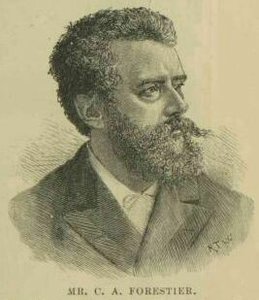
amédée forestier
1854 - 1930 , France
Quick Facts
- Artistic Movement Or Style: Impressionism, Portraiture
- Artists Or Movements Influenced By This Artist:
- Post-Impressionism
- American Modernism
- Artists Who Influenced This Artist:
- William Merritt Chase
- Jean-Léon Gérôme
- Date Of Birth: January 12, 1856
- Date Of Death: November 3, 1925
- Full Name: John Singer Sargent
- Nationality: American
- Notable Artworks:
- Madame X
- Carnation Women
- The Daughters of Edward Darley Boit
- Place Of Birth: Florence, Italy
Related Articles

The Subtleties of Shade: Exploring Black, White & Gray Abstraction in Modern Interior Design
Explore the power of black, white & gray abstraction in modern interior design. Discover how minimalist art impacts spatial perception & creates sophisticated hotel spaces. Expert insights for designers.

Chromatic Absence: Exploring the Aesthetic Power of Black & White Art
Explore the captivating world of monochrome art! Discover its rich history, influential artists like Malevich & Klein, and profound emotional impact. Expert insights for collectors & design enthusiasts.
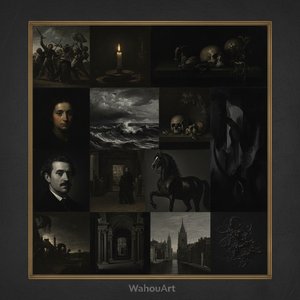
Ivory Black Masters: 10 Paintings That Define Dramatic Art |
Delve into the power of 'Ivory Black' with 10 iconic paintings by masters like Rembrandt & Caravaggio. Explore dramatic chiaroscuro, gothic moods & timeless art history. Find museum-quality reproductions and elevate your home decor at
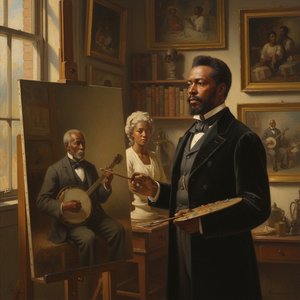
Henry Ossawa Tanner: Pioneering African American Representation in 19th-Century Art
Explore the life and groundbreaking work of Henry Ossawa Tanner, a pioneering African American artist who achieved international acclaim with his deeply spiritual and realistic paintings. Discover his legacy at ArtsDot.
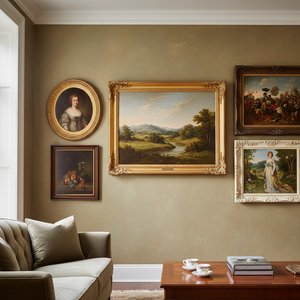
Iconic Art of the 18th & 19th Centuries: Masterpieces for Your Home | ArtsDot
Journey through 18th & 19th century art! Explore iconic masterpieces by Monet, Van Gogh & more. Discover the stories behind these timeless paintings and find museum-quality reproductions for your home at ArtsDot.com.