 Preview
 Send
Send Share
Share
 Details

 Download
 Similars
 X-Ray
X-Ray Diaporama
Anna Akhmatova


 Read More
Hand Made Oil Reproduction
Hand-painted oil on canvas in your size and frame, made to order by our artists. ( Buy Print Buy Image)




P118B $10

P118H $10

P118W $10

P438Z $10

P508JH $12

P508YH $12

P805H $10

P805Z $10

P919BZ $10

P919G $10

P919XJ $10

P959ZH $10

P968JZ $12

W106C $8

W218G $10

W218JH $8

W218Y $10

W307PJ $10

W316G $10

W316PJ $8

W316Y $10

W398PJ $8

W4111J $10

W500HY $15

W500JH $15

W692G $12

W849H $8

W940BG $15

W953PJ $8




Pick from our preset sizes that match the artwork's original proportions.

You may enter your own dimensions to fit a specific frame or space. If your selected size does not match the original image's proportions, we will either crop the artwork or extend the painting with additional hand-painted elements. A digital mockup will be sent for your approval before production begins.
Please note that the on-screen preview does not reflect the actual cropping or extension. Only the mockup will accurately show the final composition.
While custom sizes are available, we recommend selecting a dimension from the predefined list to preserve the original proportions.
After order, ArtsDot.com team will email client for instructions and provide a mockup preview
Worldwide Delivery () in 3/4 weeks instead of standard 5 weeks. (16 August). No compromise on quality.

Free Worldwide Express Shipping

High-Quality Linen Canvas

Full Shipping Insurance

Customs Tax Refund Guarantee

True Color Matching Guarantee

60-Day Return Policy (Defects Only)

100% Money-Back Guarantee

Bulk Discount Offer
 Glass option is only available in size under 110 CM

Anna Akhmatova
Reproduction Medium
Reproduction Size
-


Total Price
$ 263
Artwork Description
Anna Akhmatova: A Portrait of Resilience Amidst Terror
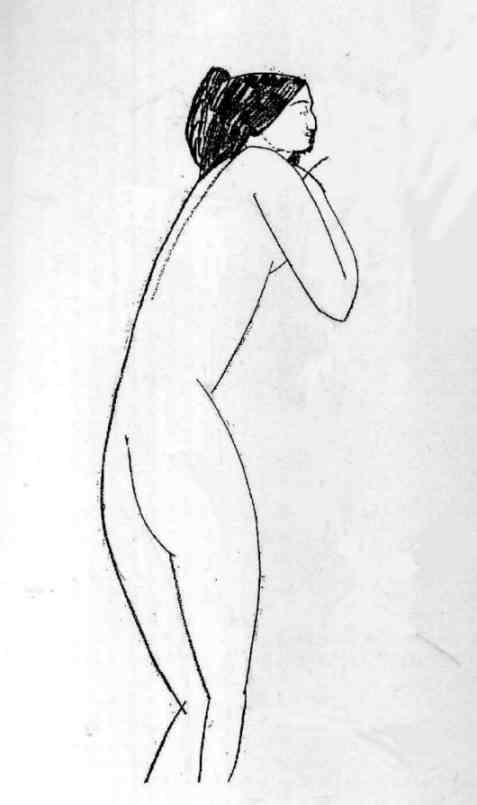
Amedeo Modigliani’s sketch of Anna Akhmatova stands as an arresting testament to artistic sensitivity and enduring human spirit—a poignant image captured against the backdrop of Soviet repression. Completed in 1911, this artwork transcends mere representation; it embodies a profound exploration of emotion and psychological depth, characteristics that cemented Modigliani's reputation as one of the foremost artists of his era.
- Subject Matter: The portrait focuses squarely on Akhmatova’s figure—a woman rendered from the back, her gaze directed inward. This deliberate choice emphasizes introspection and contemplation, mirroring the poet’s own inner turmoil during a period marked by immense personal hardship.
- Style & Technique: Modigliani's signature style is instantly recognizable through his elongated forms and fluid lines—a technique heavily influenced by African sculpture and Cubism. The artist eschewed meticulous realism, prioritizing instead the conveyance of essence through simplified shapes and expressive contours. Charcoal or pencil was skillfully employed on paper, resulting in a textured surface that subtly captures the melancholic atmosphere of the scene.
- Composition: Centrally positioned within the frame, Akhmatova’s posture creates a graceful curve—a visual guide for the viewer's eye—highlighting her spine and limbs. The simplicity of the composition underscores Modigliani’s commitment to conveying emotion with minimal ornamentation.
- Color Palette & Lighting: Strikingly monochromatic in black and white, the palette amplifies the artwork’s emotional impact. Diffused lighting contributes to a sense of flatness, furthering the impression of quiet solemnity and focusing attention on the figure's expressive face.
- Symbolism & Emotional Impact: The pose—hand resting on chin—is laden with symbolic significance, representing thoughtfulness and perhaps even suppressed grief. Combined with the elongated neck and slender physique, it evokes an aura of elegance intertwined with vulnerability—a visual embodiment of Akhmatova’s resilience in confronting adversity.
Historical Context: Created before the horrors of Stalinist terror engulfed Russia, Modigliani's sketch anticipates the anxieties of the time. It speaks to a broader artistic preoccupation with capturing psychological states and conveying profound emotion—a legacy that continues to resonate within contemporary art discourse.
Beyond its formal qualities, “Anna Akhmatova” serves as a powerful reminder of Modigliani’s ability to distill complex feelings into deceptively simple forms. It's an artwork that invites contemplation on themes of solitude, memory, and the enduring human capacity for empathy—qualities that elevate it beyond mere visual beauty into a timeless expression of artistic vision.
Related Artworks
Artist Biography
A Life Etched in Longing: The World of Amedeo Modigliani
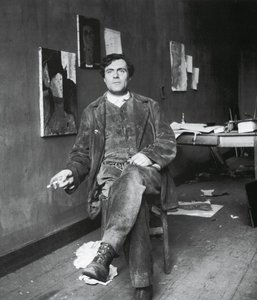
Amedeo Clemente Modigliani, a name synonymous with haunting beauty and melancholic grace, remains one of the most beloved and tragically romantic figures of early 20th-century art. Born in Livorno, Italy, in 1884 into a family steeped in Sephardic Jewish heritage, his life was marked by both profound artistic vision and persistent hardship. Frequent illness shadowed his youth – pleurisy and typhoid fever became unwelcome companions – perhaps instilling within him a sensitivity to fragility that would permeate his work. Though born into relative comfort, the family’s financial fortunes waned, adding another layer of complexity to the young Modigliani's formative years. It was a childhood punctuated by intellectual stimulation, thanks to his mother and grandfather who introduced him to the works of Nietzsche, Baudelaire, and Lautréamont, laying the groundwork for an artistic sensibility that would reject conventional norms.
The pull of Paris proved irresistible, and in 1906, Modigliani embarked on a journey that would define his career. The city was then a crucible of artistic innovation, teeming with revolutionary ideas and challenging conventions. He immersed himself in the vibrant art scene, encountering giants like Pablo Picasso and Constantin Brâncuși, figures who profoundly shaped his aesthetic trajectory. Initially drawn to the burgeoning Cubist movement, Modigliani quickly found its rigid geometry too constricting for his expressive needs. His artistic spirit yearned for something more lyrical, more deeply rooted in human emotion. He began a period of intense experimentation, absorbing influences from African sculpture – particularly its elongated forms and simplified features – and the archaic grace of Italian Renaissance art.
The Sculpted Soul: Style and Innovation
Modigliani’s signature style emerged as a unique synthesis of these diverse inspirations. His portraits, arguably his most celebrated works, are instantly recognizable for their elongated faces and necks, almond-shaped eyes devoid of pupils, and an overall sense of serene melancholy. These were not merely likenesses; they were explorations of the inner life, capturing a profound psychological depth in each subject. He stripped away extraneous detail, focusing on essential forms to convey emotion with remarkable economy. His nudes, often controversial during his lifetime, possess a similar quality – a quiet dignity and vulnerability that transcends mere physical representation. The figures are not overtly sensual but rather imbued with a sense of timeless beauty and existential longing.
Beyond painting, Modigliani also dedicated himself to sculpture, creating a series of highly stylized heads and torsos. These sculptures, influenced by African art and Brâncuși’s reductive forms, further demonstrate his commitment to simplifying form and emphasizing essential qualities. Though he exhibited these works briefly with the Section d'Or group in 1912, they were met with harsh criticism and largely withdrawn from public view. This rejection deeply affected Modigliani, contributing to a period of artistic self-doubt and financial hardship.
A Life Marked by Shadows
Modigliani’s personal life was as turbulent as his artistic journey. He struggled with poverty and addiction throughout much of his career, often relying on the generosity of friends and patrons. His relationship with Jeanne Hébuterne, a young artist herself, became the central emotional anchor in his life. They shared a deep love and mutual artistic understanding, but their happiness was tragically short-lived. The pressures of poverty, Modigliani’s declining health, and Jeanne's pregnancy created an unbearable strain. In 1920, devastated by the birth of their daughter and overwhelmed by despair, Jeanne took her own life. Just days later, Modigliani succumbed to tubercular meningitis at the age of only 35.
Legacy of a Lost Generation
Despite facing little recognition during his lifetime, Amedeo Modigliani’s work experienced a dramatic surge in popularity after his death. His paintings and sculptures began to command increasingly high prices, and his distinctive style exerted a profound influence on subsequent generations of artists. He became an icon of the bohemian spirit, embodying the struggles and triumphs of a lost generation grappling with modernity and existential questions.
Today, Modigliani’s works are held in prestigious museums around the world, including the Osaka City Museum of Modern Art, the Musée d'Art Moderne de la Ville de Paris, and numerous private collections. His portraits continue to captivate viewers with their haunting beauty and emotional resonance, serving as a poignant reminder of a life lived on the edge – a life etched in longing, passion, and an unwavering commitment to artistic truth.
Notable Works
- Nude Bust (35 x 26 cm): A quintessential example of Modigliani’s elongated forms and expressive style, showcasing his mastery of the human figure.
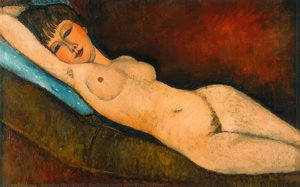
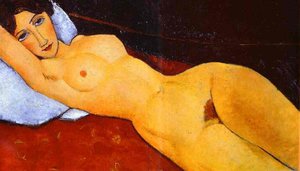
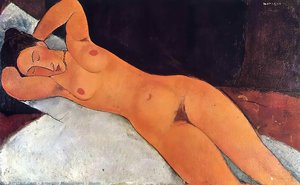
- Reclining Nude with Loose Hair: Demonstrates his ability to capture the essence of femininity with a delicate balance of sensuality and vulnerability.
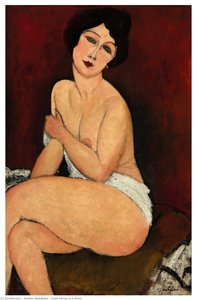
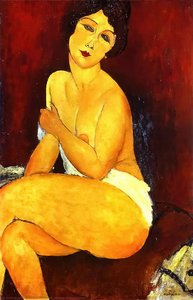
- Seated Female Nude (92 x 60 cm): A powerful depiction of the female form, characterized by its simplified shapes and serene composure.
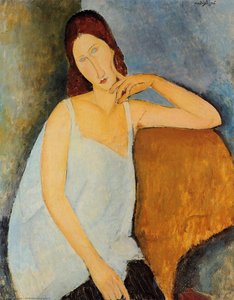
- Portrait of Jeanne Hebuterne: Numerous portraits capturing his lover and muse, revealing a poignant emotional depth and intimate connection.
Amedeo Clemente Modigliani
1884 - 1920 , Italy
Quick Facts
- Artistic Movement Or Style: Expressionism
- Artists Or Movements Influenced By This Artist:
- Expressionism
- Modernism
- Artists Who Influenced This Artist:
- Picasso
- Brâncuși
- African sculpture
- Date Of Birth: July 12, 1884
- Date Of Death: January 24, 1920
- Full Name: Amedeo Clemente Modigliani
- Nationality: Italian
- Notable Artworks:
- Nude Bust
- Reclining Nude
- Seated Female Nude
- Portrait of Jeanne Hebuterne
- Place Of Birth: Livorno, Italy
Related Articles

The Subtleties of Shade: Exploring Black, White & Gray Abstraction in Modern Interior Design
Explore the power of black, white & gray abstraction in modern interior design. Discover how minimalist art impacts spatial perception & creates sophisticated hotel spaces. Expert insights for designers.
Mars Black Masterpieces: 10 Iconic Paintings & Timeless Art Decor Ideas
Delve into the power of 'Mars Black' with 10 iconic paintings by masters like Rembrandt & Caravaggio. Explore dramatic chiaroscuro, gothic art, and timeless beauty. Find museum-quality reproductions & elevate your home decor on .

Monochrome Visions: Exploring the Aesthetic & Historical Significance of Black & White Photography
Explore the rich history & artistic power of black and white photography. From early techniques to iconic masters like Ansel Adams, discover why monochrome continues to captivate art lovers today. Expert insights for collectors.
Chromatic Absence: Exploring the Aesthetic Power of Black & White Art
Explore the captivating world of monochrome art! Discover its rich history, influential artists like Malevich & Klein, and profound emotional impact. Expert insights for collectors & design enthusiasts.

From Snapshot to Statement: Elevating Personal Photography Through Black & White Fine Art Reproduction
Transform cherished photos into timeless black & white fine art with ArtsDot. Our expert artists create museum-quality reproductions – a lasting legacy for your home and family. Discover the artistry today.