 Preview
 Send
Send Share
Share
 Details

 Download
 Similars
 X-Ray
X-Ray Diaporama
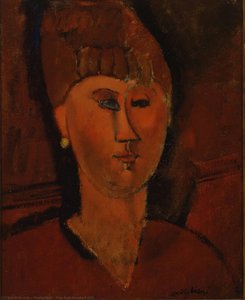
Portrait of a Woman
 Oil On Canvas
- WallArt
- Expressionism
 1919
1919- Modern
 66.0 x 51.0 cm
 Read More
Hand Made Oil Reproduction
Hand-painted oil on canvas in your size and frame, made to order by our artists. ( Buy Print Buy Image)




P118B $10

P118H $10

P118W $10

P438Z $10

P508JH $12

P508YH $12

P805H $10

P805Z $10

P919BZ $10

P919G $10

P919XJ $10

P959ZH $10

P968JZ $12

W106C $8

W218G $10

W218JH $8

W218Y $10

W307PJ $10

W316G $10

W316PJ $8

W316Y $10

W398PJ $8

W4111J $10

W500HY $15

W500JH $15

W692G $12

W849H $8

W940BG $15

W953PJ $8




Pick from our preset sizes that match the artwork's original proportions.

You may enter your own dimensions to fit a specific frame or space. If your selected size does not match the original image's proportions, we will either crop the artwork or extend the painting with additional hand-painted elements. A digital mockup will be sent for your approval before production begins.
Please note that the on-screen preview does not reflect the actual cropping or extension. Only the mockup will accurately show the final composition.
While custom sizes are available, we recommend selecting a dimension from the predefined list to preserve the original proportions.
After order, ArtsDot.com team will email client for instructions and provide a mockup preview
Worldwide Delivery () in 3/4 weeks instead of standard 5 weeks. (17 August). No compromise on quality.

Free Worldwide Express Shipping

High-Quality Linen Canvas

Full Shipping Insurance

Customs Tax Refund Guarantee

True Color Matching Guarantee

60-Day Return Policy (Defects Only)

100% Money-Back Guarantee

Bulk Discount Offer
 Glass option is only available in size under 110 CM

Portrait of a Woman
Reproduction Medium
Reproduction Size
-


Total Price
$ 263
Artwork Description
A Gaze into Modernity: Modigliani’s 1919 Portrait
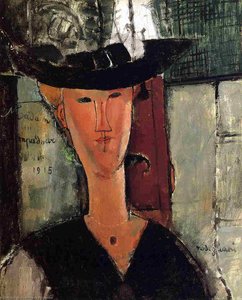
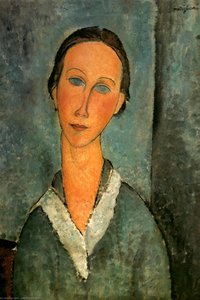
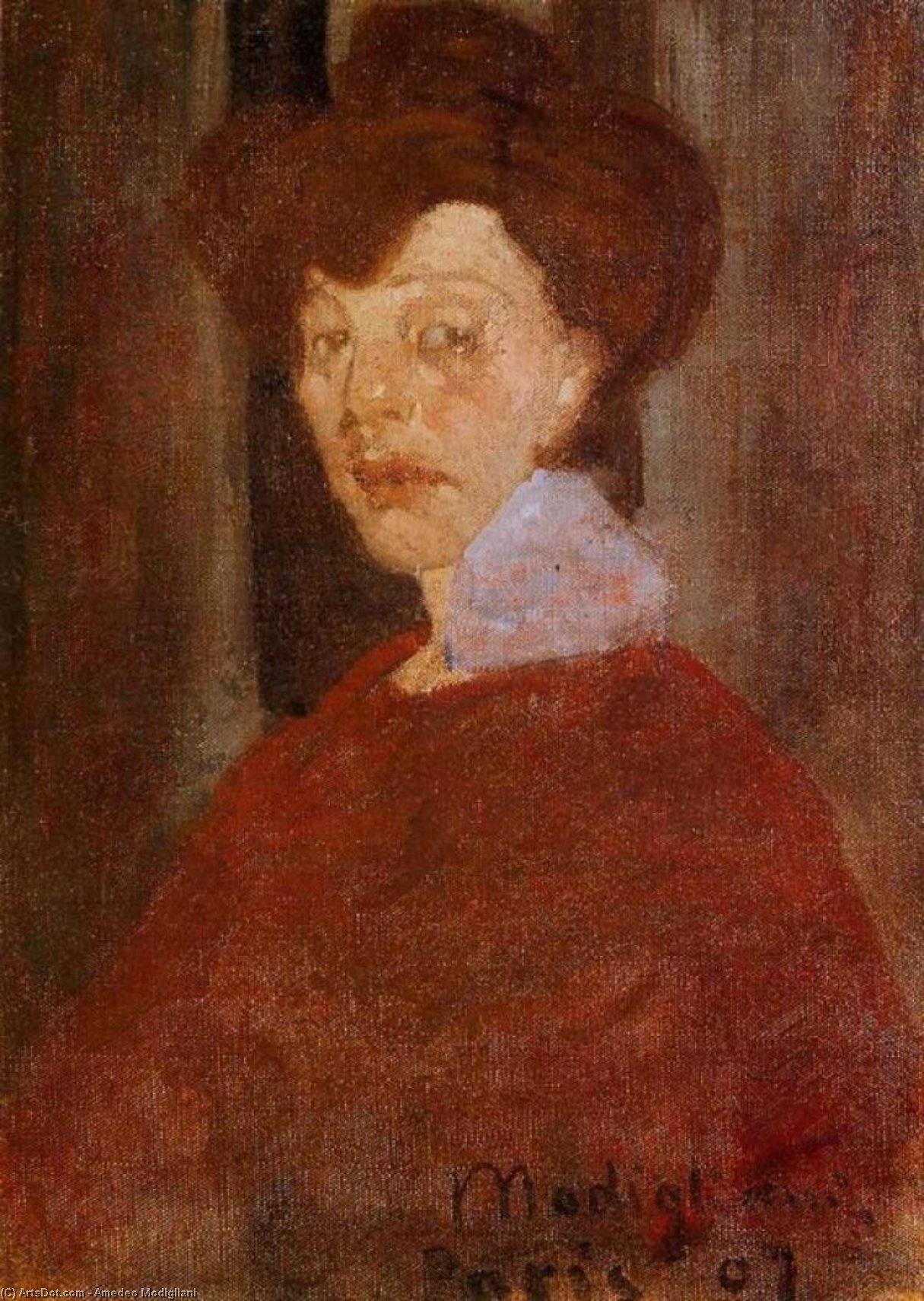
This captivating *Portrait of a Woman*, painted in 1919 by Italian master Amedeo Clemente Modigliani, is more than just a likeness; it's an embodiment of early 20th-century artistic innovation and emotional depth. Measuring 66 x 51 cm, the oil on canvas work immediately draws the viewer in with its striking subject – a woman rendered with Modigliani’s signature elongated forms and intensely focused gaze. Her vibrant red hair and dress provide a bold contrast to the delicate white collar, creating a visual focal point that emphasizes her presence.Deconstructing the Style: A Fusion of Influences
Modigliani's style is a fascinating synthesis of artistic currents. While often categorized within Expressionism, this portrait also reveals strong influences from Cubism in its simplified forms and flattened planes, though Modigliani uniquely softens these angularities with flowing lines. The elongated face and neck are hallmarks of his work, echoing the aesthetic of African masks – a source of inspiration for many avant-garde artists of the time – and the stylized elegance of Byzantine mosaics. This blending creates a distinctly modern sensibility that departs from traditional portraiture.Technique & Texture: The Language of Paint
The painting’s surface is alive with texture, achieved through visible brushstrokes and likely a degree of *impasto* – the thick application of paint. Modigliani wasn't concerned with meticulous realism; instead, he used his technique to convey mood and psychological insight. The soft, diffused lighting subtly models the woman’s features, while the indistinct background serves to isolate her, intensifying the connection between subject and viewer. The color palette, dominated by reds, whites, and earthy tones, contributes to a sense of intimacy and quiet contemplation.Historical Context: Paris & The School of Paris
Created in 1919, this portrait reflects the vibrant artistic climate of post-World War I Paris. Modigliani was deeply embedded within the *School of Paris*, a community of expatriate artists who were pushing the boundaries of art and challenging conventional norms. His portraits, often depicting friends, lovers (particularly Jeanne Hebuterne), and members of bohemian society, offer a glimpse into this dynamic era. Despite facing poverty and illness throughout his short life, Modigliani produced a remarkable body of work that continues to resonate today.Symbolism & Emotional Resonance
While not overtly symbolic, the portrait’s power lies in its emotional impact. The woman's direct gaze is both inviting and unsettling – she seems to simultaneously offer herself to the viewer while maintaining a sense of mystery and reserve. The simplicity of her attire and pose suggests a focus on inner life rather than outward display. Modigliani masterfully captures a feeling of melancholic beauty, hinting at the complexities of human experience.Modigliani’s Legacy & Similar Works
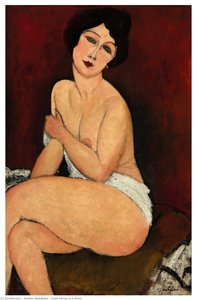
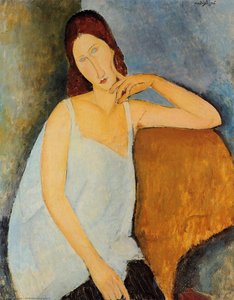
Amedeo Clemente Modigliani's influence on 20th-century art is undeniable. His portraits are instantly recognizable and highly sought after by collectors worldwide. Notable works that share stylistic similarities include *Nude Bust*, *Jeanne Hebuterne in a Yellow Jumper*, *Head of Red-Haired Woman* , and *Portrait of Madame Rachele Osterlind*. These paintings demonstrate his consistent exploration of form, color, and emotional expression. His work can be found in prestigious museums such as the Musee Angladon, which houses his painting *Pink Blouse*, and the Butler Institute of American Art.Related Artworks
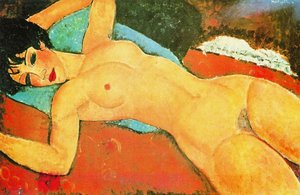
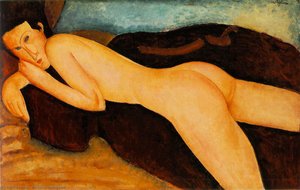
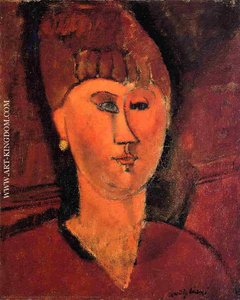
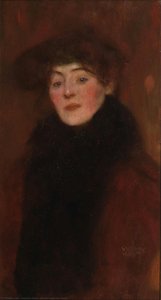
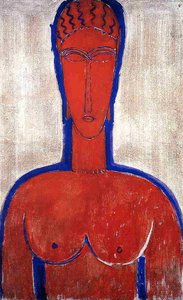
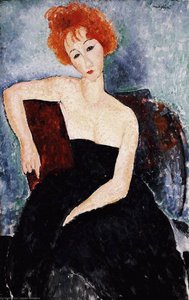
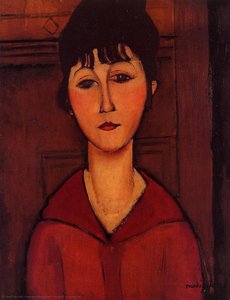
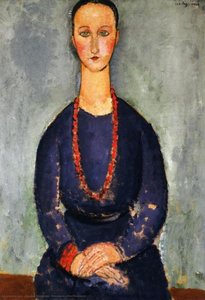
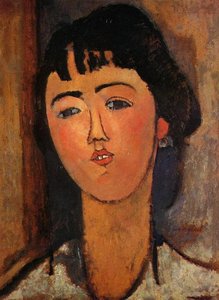
Artist Biography
A Life Etched in Longing: The World of Amedeo Modigliani
Amedeo Clemente Modigliani, a name synonymous with haunting beauty and melancholic grace, remains one of the most beloved and tragically romantic figures of early 20th-century art. Born in Livorno, Italy, in 1884 into a family steeped in Sephardic Jewish heritage, his life was marked by both profound artistic vision and persistent hardship. Frequent illness shadowed his youth – pleurisy and typhoid fever became unwelcome companions – perhaps instilling within him a sensitivity to fragility that would permeate his work. Though born into relative comfort, the family’s financial fortunes waned, adding another layer of complexity to the young Modigliani's formative years. It was a childhood punctuated by intellectual stimulation, thanks to his mother and grandfather who introduced him to the works of Nietzsche, Baudelaire, and Lautréamont, laying the groundwork for an artistic sensibility that would reject conventional norms.
The pull of Paris proved irresistible, and in 1906, Modigliani embarked on a journey that would define his career. The city was then a crucible of artistic innovation, teeming with revolutionary ideas and challenging conventions. He immersed himself in the vibrant art scene, encountering giants like Pablo Picasso and Constantin Brâncuși, figures who profoundly shaped his aesthetic trajectory. Initially drawn to the burgeoning Cubist movement, Modigliani quickly found its rigid geometry too constricting for his expressive needs. His artistic spirit yearned for something more lyrical, more deeply rooted in human emotion. He began a period of intense experimentation, absorbing influences from African sculpture – particularly its elongated forms and simplified features – and the archaic grace of Italian Renaissance art.
The Sculpted Soul: Style and Innovation
Modigliani’s signature style emerged as a unique synthesis of these diverse inspirations. His portraits, arguably his most celebrated works, are instantly recognizable for their elongated faces and necks, almond-shaped eyes devoid of pupils, and an overall sense of serene melancholy. These were not merely likenesses; they were explorations of the inner life, capturing a profound psychological depth in each subject. He stripped away extraneous detail, focusing on essential forms to convey emotion with remarkable economy. His nudes, often controversial during his lifetime, possess a similar quality – a quiet dignity and vulnerability that transcends mere physical representation. The figures are not overtly sensual but rather imbued with a sense of timeless beauty and existential longing.
Beyond painting, Modigliani also dedicated himself to sculpture, creating a series of highly stylized heads and torsos. These sculptures, influenced by African art and Brâncuși’s reductive forms, further demonstrate his commitment to simplifying form and emphasizing essential qualities. Though he exhibited these works briefly with the Section d'Or group in 1912, they were met with harsh criticism and largely withdrawn from public view. This rejection deeply affected Modigliani, contributing to a period of artistic self-doubt and financial hardship.
A Life Marked by Shadows
Modigliani’s personal life was as turbulent as his artistic journey. He struggled with poverty and addiction throughout much of his career, often relying on the generosity of friends and patrons. His relationship with Jeanne Hébuterne, a young artist herself, became the central emotional anchor in his life. They shared a deep love and mutual artistic understanding, but their happiness was tragically short-lived. The pressures of poverty, Modigliani’s declining health, and Jeanne's pregnancy created an unbearable strain. In 1920, devastated by the birth of their daughter and overwhelmed by despair, Jeanne took her own life. Just days later, Modigliani succumbed to tubercular meningitis at the age of only 35.
Legacy of a Lost Generation
Despite facing little recognition during his lifetime, Amedeo Modigliani’s work experienced a dramatic surge in popularity after his death. His paintings and sculptures began to command increasingly high prices, and his distinctive style exerted a profound influence on subsequent generations of artists. He became an icon of the bohemian spirit, embodying the struggles and triumphs of a lost generation grappling with modernity and existential questions.
Today, Modigliani’s works are held in prestigious museums around the world, including the Osaka City Museum of Modern Art, the Musée d'Art Moderne de la Ville de Paris, and numerous private collections. His portraits continue to captivate viewers with their haunting beauty and emotional resonance, serving as a poignant reminder of a life lived on the edge – a life etched in longing, passion, and an unwavering commitment to artistic truth.
Notable Works
- Nude Bust (35 x 26 cm): A quintessential example of Modigliani’s elongated forms and expressive style, showcasing his mastery of the human figure.
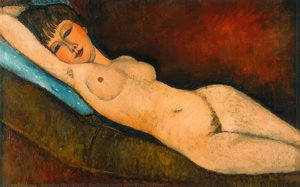
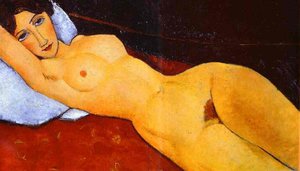
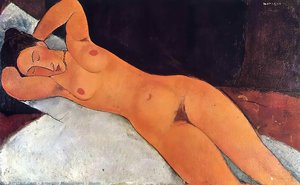
- Reclining Nude with Loose Hair: Demonstrates his ability to capture the essence of femininity with a delicate balance of sensuality and vulnerability.
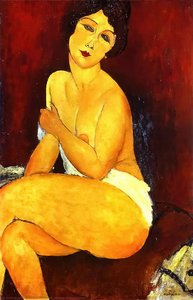
- Seated Female Nude (92 x 60 cm): A powerful depiction of the female form, characterized by its simplified shapes and serene composure.
- Portrait of Jeanne Hebuterne: Numerous portraits capturing his lover and muse, revealing a poignant emotional depth and intimate connection.
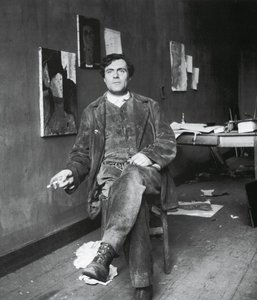
Amedeo Clemente Modigliani
1884 - 1920 , Italy
Quick Facts
- Artistic Movement Or Style: Expressionism
- Artists Or Movements Influenced By This Artist:
- Expressionism
- Modernism
- Artists Who Influenced This Artist:
- Picasso
- Brâncuși
- African sculpture
- Date Of Birth: July 12, 1884
- Date Of Death: January 24, 1920
- Full Name: Amedeo Clemente Modigliani
- Nationality: Italian
- Notable Artworks:
- Nude Bust
- Reclining Nude
- Seated Female Nude
- Portrait of Jeanne Hebuterne
- Place Of Birth: Livorno, Italy
Related Articles
Modigliani's Masterpieces: 25 Iconic Paintings & Sculptures | ArtsDot
Explore 25 iconic artworks by Amedeo Modigliani, from his haunting portraits to captivating sculptures. Discover the stories behind these masterpieces of early 20th-century art & find museum-quality reproductions at ArtsDot.com.

Crimson Threads of Narrative: Exploring Symbolism & Representation in Artworks Featuring the Red Dress
Explore the rich symbolism of the red dress in art history! From ancient power displays to iconic portraits like Cézanne’s 'Madame Cezanne', discover the cultural and artistic significance behind this captivating color. Expert analysis & insights.
Mark Rothko's Masterpieces: 25 Paintings That Define Abstract Expressionism | ArtsDot
Explore 25 iconic Mark Rothko paintings that define Abstract Expressionism. Discover the stories, colors & emotions behind these masterpieces. Find museum-quality art reproductions and curated decor ideas at ArtsDot.com.
Egon Schiele's Masterpieces: 25 Paintings That Define Expressionism | ArtsDot
Delve into the haunting world of Egon Schiele with our curated selection of his 25 most iconic Expressionist paintings. Explore the artist's life, technique & emotional depth. Find museum-quality Schiele reproductions and elevate your home decor on ArtsDot.com.
Henri Matisse's Masterpieces: Explore 25 Iconic Paintings & Art Decor Ideas
Journey through Henri Matisse's 25 most iconic paintings! Explore Fauvism, vibrant colors & the stories behind masterpieces like 'The Dance'. Find museum-quality art reproductions and curated decor ideas to elevate your space. Discover all masterpieces on ArtsDot.com.