

 Preview
 Send
Send Share
Share
 Details

 Download
 Similars
 X-Ray
X-Ray Diaporama
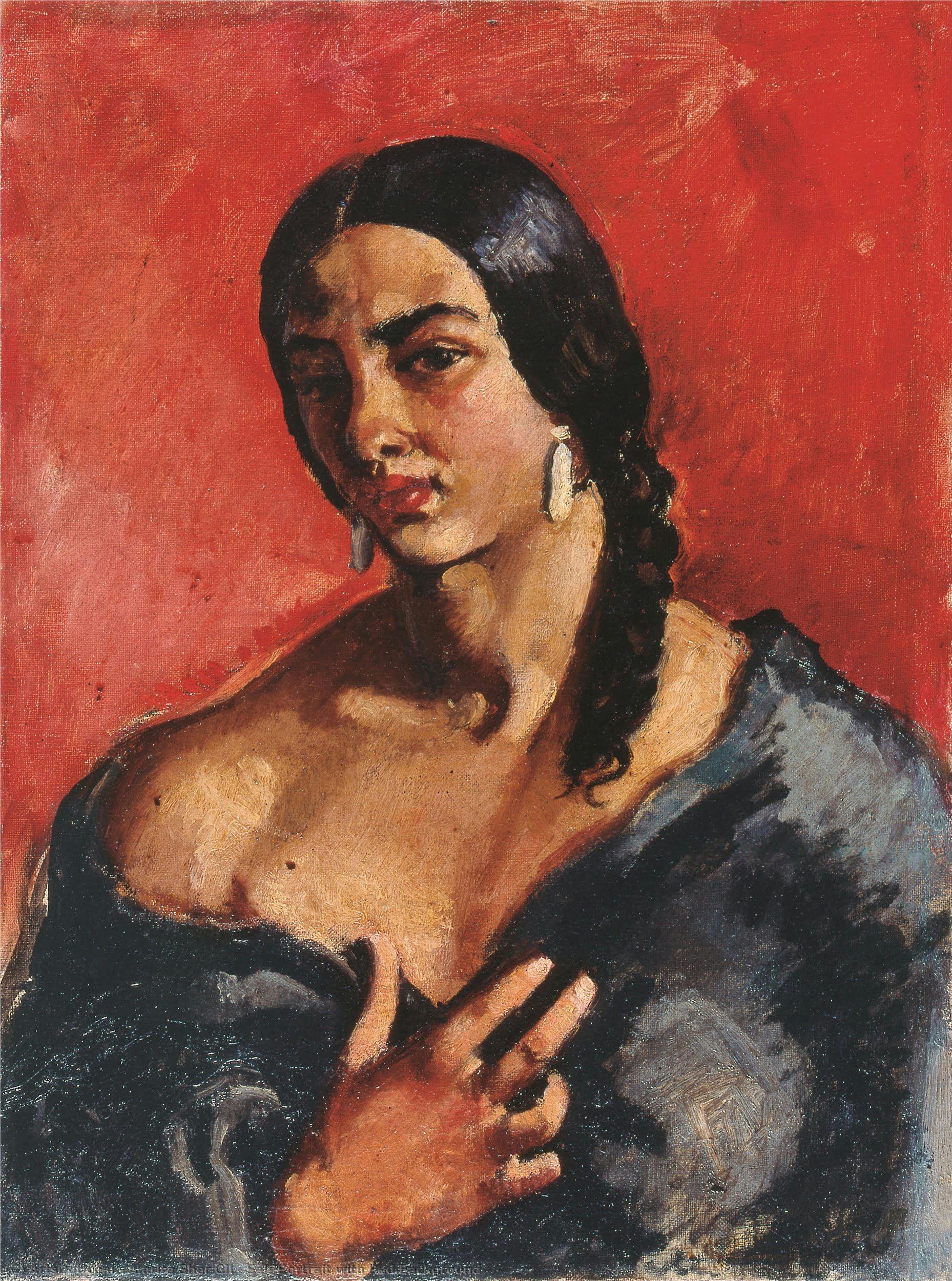
Self-Portrait with Red Background


 Read More
Purchase a high-resolution, enhanced digital image, far superior to the online preview.
Each file is meticulously prepared by our in-house specialists using advanced tools and expert manual retouching. We ensure every image has exceptional clarity, precise color accuracy, and fine detail.
The final file is delivered via email within 72 hours, optimized for immediate use in professional, editorial, and print environments. This is the same quality trusted by top-tier design studios, publishers, and galleries.
Digital Image
Download a high-resolution file for personal display, printing, and creative projects. ( Buy Print Buy Hand Made Painting)
Included in Every Digital Image Order
Expert Digital Delivery, Guaranteed
When you choose ArtsDot.com, you're not just getting an image - you're receiving a professionally enhanced digital artwork, crafted with precision and backed by a satisfaction guarantee. Here's everything that comes with your order, automatically:

Fast Email Delivery
Your high-resolution digital image file will be emailed to you within 72 hours of ordering - ready for immediate use.

AI-Enhanced Digital File
Your artwork is professionally optimized using advanced AI tools and manual editing, ensuring maximum detail, clarity, and color accuracy.

Free Lifetime Re-Delivery
Accidentally deleted or lost your file? No worries - we'll resend it to you anytime, free of charge.

No Import Fees - Ever
Enjoy your artwork instantly with zero customs, duties, or delivery fees - digital downloads are always tax-free.

Color Accuracy Guarantee
We ensure your digital image reflects the original colors as closely as possible using professional tools and color management.

60-Day Satisfaction Guarantee
If you're not satisfied with your digital image, we'll revise it or refund 100% within 60 days - no questions asked.

100% Money-Back Guarantee
Not satisfied? Get a full refund within 60 days of receiving your digital file - no questions asked.

Bulk Order Discounts
Buy 3 images, save 10% - Buy 5, save 15% - Buy 10+, save 20%. Great for creative projects, galleries, and agencies.
Collectible Description
A Gaze Across Eras: The Soul of Amrita Sher-Gil
In the quiet intensity of Self-Portrait with Red Background, we encounter more than just a reflection in a mirror; we meet the profound psychological depth of one of the twentieth century's most luminous talents. Painted in 1930, this masterpiece serves as a window into the soul of Amrita Sher-Gil, an artist whose very existence was a bridge between the classical traditions of Europe and the vibrant, burgeoning modernism of India. As she gazes out from the canvas, her expression is one of haunting seriousness, a stillness that commands the viewer to pause and reflect. The painting captures a moment of deep introspection, where the subject’s identity seems to vibrate against the bold, monochromatic backdrop.
The technical mastery displayed in this oil on canvas is nothing short of breathtaking. Sher-Gil utilizes a striking color palette where the warmth of the skin tones is set in dramatic opposition to the saturated, crimson hue of the background. This use of color is not merely decorative; it creates a sense of compressed space, pushing the figure toward the viewer and heightening the emotional intimacy of the encounter. The brushwork, while smooth enough to capture the delicate features of her face and the luster of her earrings, retains an organic vitality that speaks to her training in Budapest and her eventual immersion in the aesthetics of the East. For the collector or interior designer, this piece offers a sophisticated focal point, bringing a sense of dramatic elegance and historical weight to any curated space.
A Synthesis of Worlds and Identities
To understand this portrait, one must understand the complex tapestry of Sher-Gil’s heritage. Born to a Sikh aristocrat and a Hungarian Jewish opera singer, her life was an intersection of disparate cultures, a theme that resonates through every stroke of her brush. In this self-portrait, we see the early stages of her evolution as a pioneer of modern Indian art. The composition reflects a fusion of Western portraiture techniques—reminiscent of the European masters—with a burgeoning sensitivity to the light and mood found in Indian traditions. The way she rests her hand upon her chest is a gesture of vulnerability and strength, a symbolic reclamation of selfhood during a period of immense cultural transition.
The emotional impact of the work lies in its ability to evoke empathy through silence. There is no narrative action here, only the weight of being. The red background acts as an emotional amplifier, suggesting passion, blood, and life, yet it remains a flat, almost abstract plane that forces our focus onto the human element. For those seeking to adorn their homes with art that inspires conversation and deep thought, this reproduction offers a rare opportunity to possess a piece of history. It is a work that does not merely decorate a wall; it inhabits a room, inviting all who see it to contemplate the complexities of identity, heritage, and the enduring power of the human gaze.
Related Artworks
Artist Biography
A Life Bridging Worlds: The Story of Amrita Sher-Gil
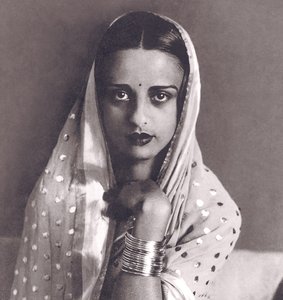
Amrita Sher-Gil, a name synonymous with the dawn of modern Indian art, was an artist whose brief but incandescent career left an indelible mark on the cultural landscape. Born in Budapest in 1913 to a fascinatingly diverse parentage – Umrao Singh Sher-Gil Majithia, a Sikh aristocrat and scholar, and Marie Antoinette Gottesmann, a Hungarian Jewish opera singer – her life was destined to be one of compelling contrasts. This unique heritage instilled within her a sensibility that would profoundly shape her artistic vision, allowing her to navigate the complexities of identity and belonging with remarkable depth. From an early age, Amrita displayed a precocious talent for painting, receiving formal lessons at eight years old. Her childhood in Budapest exposed her to the rich tapestry of European art and culture, while summers spent in India ignited a burgeoning fascination with its vibrant traditions and social realities. The guidance of her uncle, Ervin Baktay, an Indologist, proved pivotal; he recognized her potential and provided critical feedback, laying a strong foundation for her artistic development.From Parisian Studios to the Indian Soul
Amrita’s formal training led her to Paris in 1929, where she enrolled at the Académie de la Grande Chaumière under Pierre Vaillent and Lucien Simon, later attending the École des Beaux-Arts. Immersed in the bohemian atmosphere of the city, she absorbed the influences of European modernism, particularly the works of Paul Cézanne and Paul Gauguin. However, a profound shift occurred upon her return to India in 1934. This wasn’t merely a geographical relocation; it was an artistic homecoming. Inspired by the grandeur of Mughal paintings, the delicate lyricism of Pahari miniatures, and the ancient frescoes of Ajanta, Amrita began to explore Indian subjects with newfound fervor. She sought to capture the essence of everyday life – the quiet dignity of rural communities, the intimate moments shared between women, the raw beauty of the Indian landscape. This marked a turning point in her artistic journey, as she consciously moved away from purely Western styles and embarked on a quest to forge a uniquely Indian visual language.A Distinctive Style: Color, Form, and Psychological Depth
Amrita Sher-Gil’s style is instantly recognizable for its bold use of color, simplified forms, and expressive figures. She possessed an extraordinary ability to convey psychological depth in her portraits, capturing not just the physical likeness of her subjects but also their inner lives, their hopes, and their struggles. Her paintings are characterized by a sense of quiet intensity, a melancholic beauty that resonates with viewers even today. Works like “Young Girls” (1932), which garnered international acclaim – winning a gold medal and election as an associate of the Grand Salon in Paris – demonstrate her mastery of composition and color. “Self Portrait (7)” and "Sleep" further showcase her evolving artistic vision, revealing a willingness to experiment with form and explore themes of identity and sensuality. She didn’t merely depict what she saw; she imbued her paintings with emotion, creating works that are both visually stunning and deeply moving.Legacy and Lasting Impact
Amrita Sher-Gil's tragically short life – she died in 1941 at the age of 28 – belies the immense impact she had on Indian art. She is rightfully regarded as a pioneer of modern Indian painting, bridging Western artistic techniques with indigenous traditions and paving the way for future generations of artists. Her work subtly critiqued social inequalities and explored themes of identity, gender, and class in colonial India, making her an artist ahead of her time. Today, her paintings are among the most valuable by Indian women painters, a testament to their historical significance and artistic merit. Beyond her technical skill, Amrita Sher-Gil’s legacy lies in her ability to capture the soul of India – its beauty, its complexity, and its enduring spirit. Her personal letters, revealing complex relationships including same-sex affairs, offer further insight into the artist's life and perspective, adding another layer to the understanding of this remarkable woman and her art. She remains an icon, a symbol of artistic innovation and cultural fusion, whose work continues to inspire and captivate audiences around the world.Major Works
- Young Girls (1932): A pivotal early work that brought her international recognition.
- Self Portrait (7): Demonstrates her evolving style and exploration of identity.
- Sleep (1933): A poignant nude portrait reflecting her unique artistic vision.
- Village Scene (1936-37): Captures the essence of rural Indian life with remarkable sensitivity.
- Three Women (1934): A powerful depiction of female companionship and resilience.
Amrita Sher-Gil
1913 - 1941 , Slovakia
Quick Facts
- Artistic Movement Or Style: Modern Indian art, Avant-garde
- Artists Or Movements Influenced By This Artist: Modern Indian artists
- Artists Who Influenced This Artist:
- Paul Cézanne
- Paul Gauguin
- Date Of Birth: January 30, 1913
- Date Of Death: December 5, 1941
- Full Name: Amrita Sher-Gil
- Nationality: Hungarian-Indian
- Notable Artworks:
- Young Girls
- Self Portrait (7)
- Sleep
- Place Of Birth: Budapest, Slovakia

