

 Preview
 Send
Send Share
Share
 Details

 Download
 Similars
 X-Ray
X-Ray Diaporama
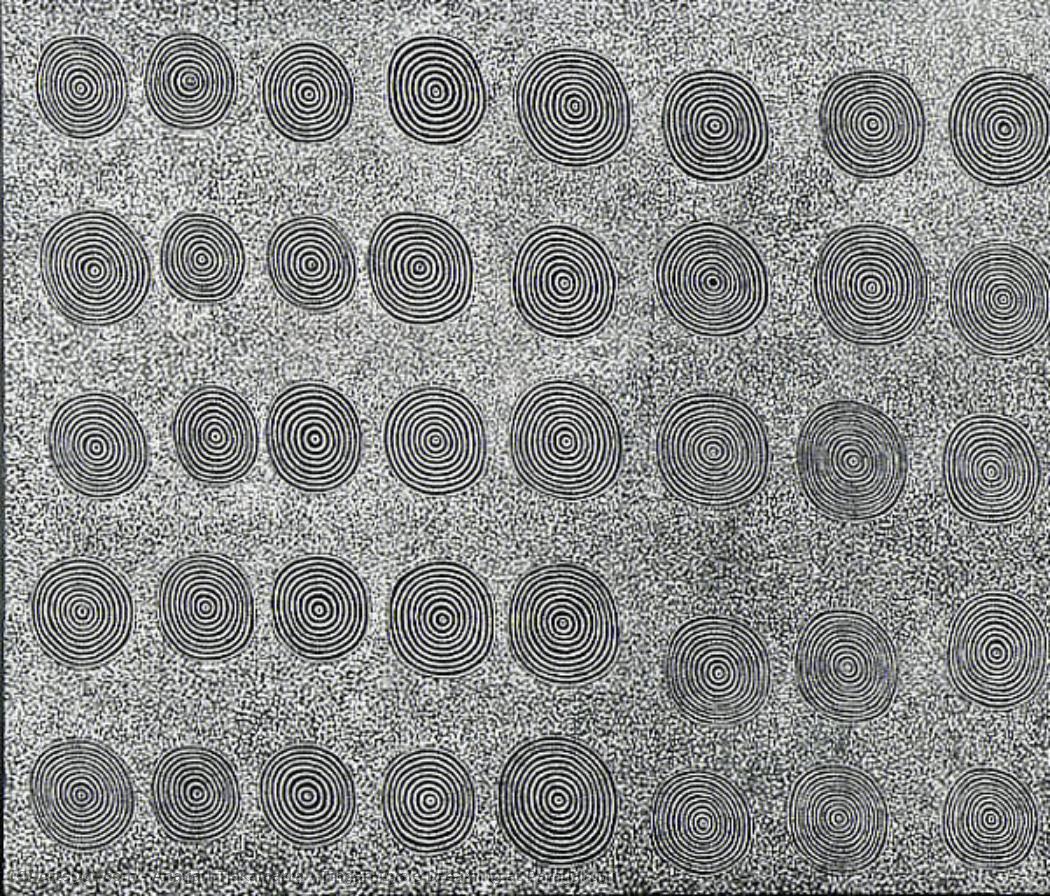
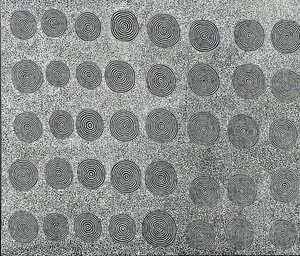
Tingari Cycle Dreaming at Paratjakutti
 1989
1989 150.0 x 180.0 cm
 Read More
Giclée / Art Print
Museum-quality giclée or canvas print with fast production and flexible finish options. ( Buy Hand Made Painting Buy Image)




































Pick from our preset sizes that match the artwork's original proportions.

You may enter your own dimensions to fit a specific frame or space. If your selected size does not match the original image's proportions, we will either crop the artwork or extend the image with a mirrored or solid-fill edge. A digital mockup will be sent for your approval before production begins.
Please note that the on-screen preview does not reflect the actual cropping or extension. Only the mockup will accurately show the final composition.
While custom sizes are available, we recommend selecting a dimension from the predefined list to preserve the original proportions.
Worldwide Delivery () in 2 weeks instead of standard 4/5 weeks. (1 September)

Free Worldwide Express Shipping

High-Quality Linen Canvas

Full Shipping Insurance

Customs Tax Refund Guarantee

True Color Matching Guarantee

60-Day Return Policy (Defects Only)

100% Money-Back Guarantee

Bulk Discount Offer
 Glass option is only available in size under 110 CM

Tingari Cycle Dreaming at Paratjakutti
Giclée / Art Print
Reproduction Size
-


Total Price
$ 63
Related Artworks






Artist Biography
The Spirit of the Desert: The Life and Legacy of Anatjari Tjakamarra
Anatjari Tjakamarra (1938–1992) stands as a pivotal figure in Australian Aboriginal art, embodying the spirit of resilience and artistic innovation within the Papunya T ula movement. Born in Kulkuta, Pintupi country—a region characterized by its profound isolation and enduring connection to ancestral lands—Tjakamarra’s life was inextricably linked to the traditions of his people and profoundly shaped by their cosmology. His early years were spent traversing the vast, rhythmic desert landscape alongside his family, absorbing the ancient patterns of nomadic existence. This formative period allowed him to develop an intimate understanding of Pintupi culture, a connection that would later serve as the spiritual bedrock for his profound visual contributions to the world of contemporary art.
As a well-respected indigenous ritual leader, Tjakamarra possessed a deep responsibility for safeguarding cultural heritage and transmitting sacred knowledge across generations. This role as a custodian of tradition instilled in him a meticulous attention to detail and a reverence for the narratives that underpin Aboriginal spirituality. His transition from the semi-nomadic life of the Western Desert to the settled community of Papunya marked a monumental shift in his journey. Having lived largely apart from the modern world until his late thirties, his arrival at the settlement—relocated by the Weapons Research Establishment—placed him at the epicenter of a burgeoning cultural revolution.
The Genesis of a Stylistic Revolution
The turning point in Tjakamarra’s artistic journey arrived in 1971, when the anthropologist Geoffrey Bardon began encouraging the men of Papunya to express their stories using Western materials. Under Bardon's guidance, Tjakamarra joined the initial cohort of Papunya painters, a group that would redefine the trajectory of Australian desert art. Inspired by the precise line work of Kaapa Tjampitjinpa and guided by Bardon’s insights into visual intelligibility, Tjakamarra honed a technique characterized by deliberate repetition and symbolic representation. His work became a bridge between the ephemeral nature of sand and body painting and the permanence of canvas and acrylic.
His paintings delve deeply into the Tingari Cycle, a foundational narrative framework encompassing creation myths and ancestral journeys that illuminate the spiritual landscape of Pintupi country. Through his brush, the desert is not merely a physical space but a living, breathing map of sacred history. The artist’s meticulous rendering captures the essence of these ancient travels, turning the canvas into a site of profound storytelling where every mark carries the weight of ancestral presence.
Symbolism and the Language of the Land
Tjakamarra’s visual vocabulary is both complex and deeply evocative, utilizing recurring motifs to communicate the intricate layers of Pintupi cosmology. His compositions often feature:
- Concentric circles, which serve as powerful symbols representing vital rock holes and water sources essential for survival in the arid landscape.
- Stylized figures and tracks, which trace the movements of ancestral beings as they traversed the earth during the Dreaming.
- Intricate dotting and linework, used to create a sense of movement and to shroud sacred knowledge within layers of aesthetic beauty.
Beyond the purely aesthetic, Tjakamarra’s work was often driven by a profound political and personal purpose. During his early painting period in the 1970s, he utilized his art to advocate for the protection of ancestral sites, such as his efforts to visit and safeguard Yawalyurru from mining exploration. This intersection of art, land rights, and cultural preservation underscores his significance not just as a painter, but as a defender of his people's sovereignty.
A Lasting Historical Significance
The historical importance of Anatjari Tjakamarra cannot be overstated. As one of the last individuals to live in the most isolated regions of Central Australia before the outstation movement, he brought an unadulterated authenticity to the Papunya Tula movement. His work has earned a permanent place in the global art canon, with his masterpieces featured in prestigious institutions such as the Metropolitan Museum of Art and the National Gallery of Victoria.
Tjakamarra’s legacy resides in his ability to translate the profound, invisible rhythms of the Tingari Cycle into a visual language that resonates across cultures. He did not merely paint the desert; he invited the world to witness its sacred pulse. Through his dedication to both his role as a ritual leader and his emergence as a master painter, he ensured that the echoes of the Pintupi ancestors would continue to vibrate through the contemporary art landscape for generations to come.
anatjari no. iii tjakamarra
1938 - 1992 , Australia
Quick Facts
- Artistic Movement Or Style: Papunya Tula
- Artists Or Movements Influenced By This Artist: ['Tingari Cycle']
- Artists Who Influenced This Artist: ['Geoffrey Bardon']
- Date Of Birth: 1938
- Full Name: Anatjari Tjakamarra
- Nationality: Australian Aboriginal
- Notable Artworks:
- Man Dreaming shield
- Possum Men of Yirtjurunya
- Place Of Birth: Canberra, Australia

