 Preview
 Send
Send Share
Share
 Details

 Download
 Similars
 X-Ray
X-Ray Diaporama
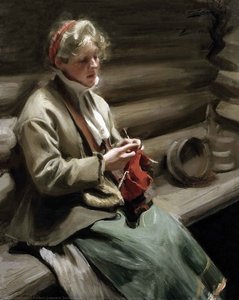
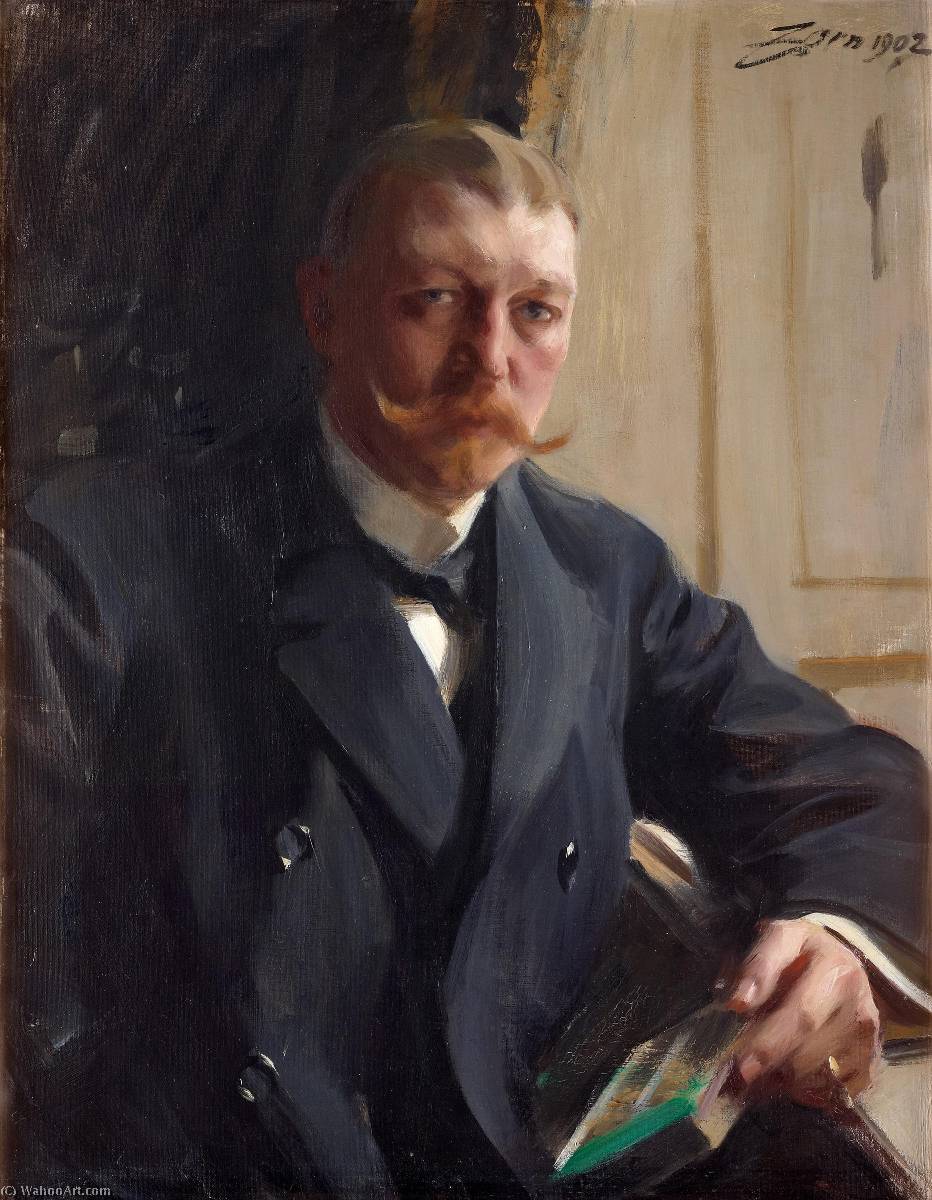
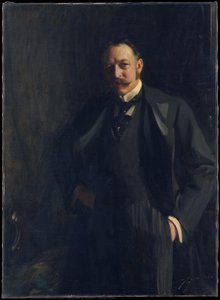
Untitled (AQQLQ8)
 1902
1902 81.0 x 62.0 cm
 Read More
Hand Made Oil Reproduction
Hand-painted oil on canvas in your size and frame, made to order by our artists. ( Buy Print Buy Image)




































Pick from our preset sizes that match the artwork's original proportions.

You may enter your own dimensions to fit a specific frame or space. If your selected size does not match the original image's proportions, we will either crop the artwork or extend the painting with additional hand-painted elements. A digital mockup will be sent for your approval before production begins.
Please note that the on-screen preview does not reflect the actual cropping or extension. Only the mockup will accurately show the final composition.
While custom sizes are available, we recommend selecting a dimension from the predefined list to preserve the original proportions.
After order, ArtsDot.com team will email client for instructions and provide a mockup preview
Worldwide Delivery () in 3/4 weeks instead of standard 5 weeks. (1 September). No compromise on quality.

Free Worldwide Express Shipping

High-Quality Linen Canvas

Full Shipping Insurance

Customs Tax Refund Guarantee

True Color Matching Guarantee

60-Day Return Policy (Defects Only)

100% Money-Back Guarantee

Bulk Discount Offer
 Glass option is only available in size under 110 CM

Untitled (AQQLQ8)
Reproduction Medium
Reproduction Size
-


Total Price
$ 263
Early Life and Career
Zorn was born in 1860 in Mora, Sweden, and began his artistic training at a young age. He studied at the Royal Swedish Academy of Arts in Stockholm, where he developed his skills as a painter and sculptor. In the 1880s, Zorn traveled to Spain, France, and England, where he was exposed to the works of other artists and developed his own unique style.Portrait Painting
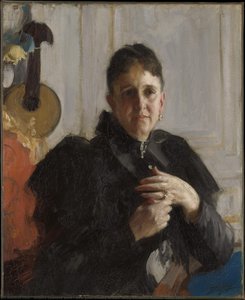
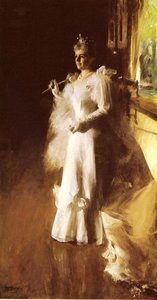
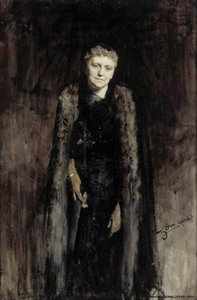
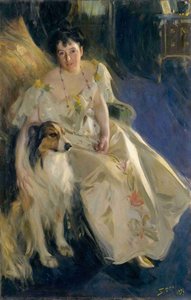
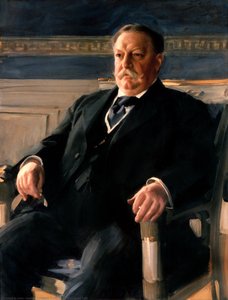
Zorn's portraits are considered some of his best work, and he is often compared to other great portrait painters such as Rembrandt and Velázquez. His portraits are known for their psychological depth and attention to detail, which capture the essence of his subjects. One of his most famous portraits is Mr. Abraham Howling, Master of Trinity House, which is now housed at the Landesmuseum Niederösterreich in Austria.Other Works
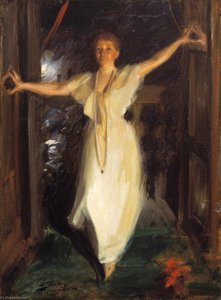
In addition to his portraits, Zorn also painted landscapes and scenes from everyday life. His landscape paintings are known for their use of light and color, which capture the beauty of the Swedish countryside. Some of his notable works include The Museum Landesmuseum Niederösterreich and D. McBurnie Watson.- View Mr. Abraham Howling, Master of Trinity House at ArtsDot.com
- View D. McBurnie Watson at ArtsDot.com
- Learn more about Anders Leonard Zorn on Wikipedia: https://en.wikipedia.org/wiki/Anders_Zorn
Zorn's legacy continues to be celebrated today, with his works housed in museums around the world, including the Landesmuseum Niederösterreich in Austria. His portraits and landscapes remain some of the most popular and enduring works of art from the late 19th and early 20th centuries.
Related Artworks








Artist Biography
A Swedish Master of Light and Life: The World of Anders Zorn
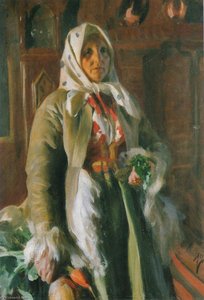
Anders Leonard Zorn, a name synonymous with vibrant Impressionism and masterful portraiture, stands as Sweden’s most celebrated artist. Born in 1860 amidst the rustic beauty of Dalarna, his journey from humble beginnings to international acclaim is a testament to raw talent nurtured by relentless dedication. Unlike many artists who sought formal training within established circles, Zorn's early education was rooted in the practicalities of rural life and an innate artistic sensibility that blossomed even before entering the Royal Swedish Academy of Arts at the remarkably young age of twelve. His childhood on his grandparents’ farm instilled a deep connection to the land and its people—a theme that would resonate throughout his oeuvre, particularly in his evocative depictions of Swedish peasant life. This early exposure wasn't merely about subject matter; it was about capturing a way of being, an authenticity that infused his work with a unique emotional depth.From Watercolors to International Recognition
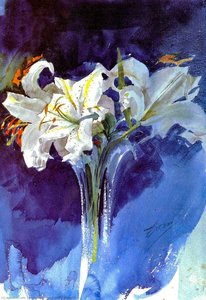
Zorn’s initial artistic explorations centered on watercolors, a medium he mastered with astonishing speed and skill. He quickly gained recognition for his ability to capture fleeting moments of light and atmosphere, particularly in scenes depicting everyday life. A pivotal moment arrived with “In Mourning” (1880), a watercolor portrait that showcased his remarkable sensitivity and technical prowess. This work propelled him onto the art scene, attracting commissions from Stockholm’s elite and setting the stage for an international career. He embarked on extensive travels throughout Europe—London, Paris, Spain—and eventually to the United States, where he found immense success as a portraitist. His ability to distill the essence of his sitters, whether royalty like King Oscar II or American presidents Grover Cleveland, William H. Taft, and Theodore Roosevelt, earned him widespread admiration. Zorn didn’t simply paint likenesses; he captured character, intellect, and even a hint of the soul. This talent wasn't accidental—it stemmed from an acute observational skill honed through years of studying human form and expression.A Synthesis of Influences and Artistic Development
While Zorn’s style is often categorized as Impressionistic, it was far from a simple imitation of French trends. He absorbed influences from various sources, blending them into a uniquely personal vision. The luminosity of Spanish masters like Velázquez resonated in his handling of light and shadow, while the directness and realism of Scandinavian naturalism informed his approach to subject matter. His time spent with artists like Albert Edelfelt in Paris exposed him to new ideas and techniques, but he always remained true to his own artistic instincts. A crucial turning point came when Zorn began experimenting with oil painting in the late 1880s. This allowed him to achieve a greater richness of color and texture, further enhancing the vibrancy and immediacy of his work. He embraced a limited palette, focusing on achieving maximum impact through subtle variations in tone and hue—a technique that became a hallmark of his style. His paintings from this period, such as “A Fisherman in St Ives,” demonstrate a newfound confidence and mastery of the medium.Legacy and Enduring Impact
Anders Zorn’s influence extends far beyond his stunning body of work. He was not only a gifted artist but also a dedicated patron of the arts, establishing the Bellman Prize in 1920—a prestigious literary award for Swedish poets that continues to be awarded today. This act underscores his commitment to fostering creativity and supporting cultural expression within his homeland. His paintings are now held in prominent museums worldwide, including the Nationalmuseum in Stockholm, the Musée d'Orsay in Paris, and the Metropolitan Museum of Art in New York. The Zorn Collections in Mora, Sweden—comprising Zorngården, Zorn Museum, Gammelgård, and Gopsmor—serve as a lasting tribute to his life and legacy, offering visitors an intimate glimpse into his world. Zorn’s ability to capture the beauty of everyday life, combined with his technical brilliance and unwavering artistic vision, cemented his place as one of the most important artists of his generation. He remains a source of inspiration for artists today, a testament to the enduring power of light, color, and human connection in art. His work continues to resonate with audiences worldwide, reminding us of the beauty that can be found in both the grand and the mundane.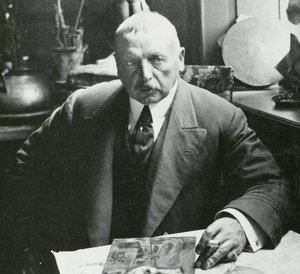
Anders Leonard Zorn
1860 - 1920 , Sweden
Quick Facts
- Artistic Movement Or Style: Impressionism
- Artists Who Influenced This Artist:
- Egron Lundgren
- Georg von Rosen
- Date Of Birth: February 18, 1860
- Date Of Death: August 22, 1920
- Full Name: Anders Leonard Zorn
- Nationality: Swedish
- Notable Artworks:
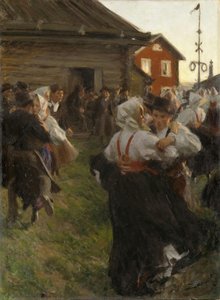
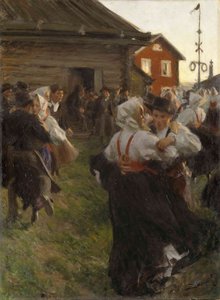
- Midsummer Dance
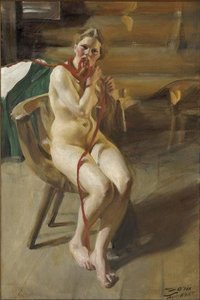
- Model Study
- Karleksnymf
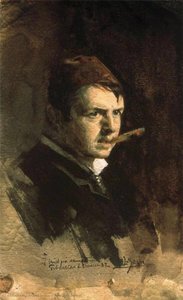
- Self-Portrait
- Place Of Birth: Mora, Sweden