 Preview
 Send
Send Share
Share
 Details

 Download
 Similars
 X-Ray
X-Ray Diaporama
Mestolino
 1742
1742 127.0 x 64.0 cm
 Read More
Hand Made Oil Reproduction
Hand-painted oil on canvas in your size and frame, made to order by our artists. ( Buy Print Buy Image)




































Pick from our preset sizes that match the artwork's original proportions.

You may enter your own dimensions to fit a specific frame or space. If your selected size does not match the original image's proportions, we will either crop the artwork or extend the painting with additional hand-painted elements. A digital mockup will be sent for your approval before production begins.
Please note that the on-screen preview does not reflect the actual cropping or extension. Only the mockup will accurately show the final composition.
While custom sizes are available, we recommend selecting a dimension from the predefined list to preserve the original proportions.
After order, ArtsDot.com team will email client for instructions and provide a mockup preview
Worldwide Delivery () in 3/4 weeks instead of standard 5 weeks. (17 August). No compromise on quality.

Free Worldwide Express Shipping

High-Quality Linen Canvas

Full Shipping Insurance

Customs Tax Refund Guarantee

True Color Matching Guarantee

60-Day Return Policy (Defects Only)

100% Money-Back Guarantee

Bulk Discount Offer
 Glass option is only available in size under 110 CM

Mestolino
Reproduction Medium
Reproduction Size
-


Total Price
$ 263
Artwork Description
Composition and Style
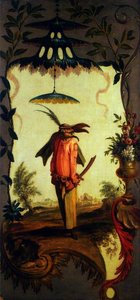
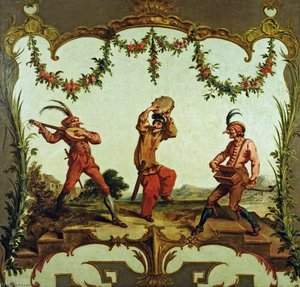
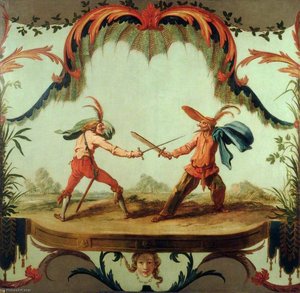
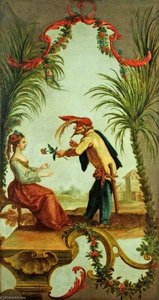
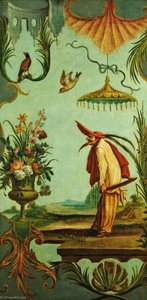
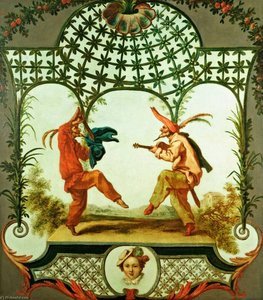
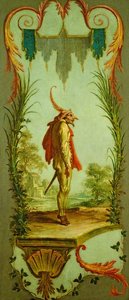
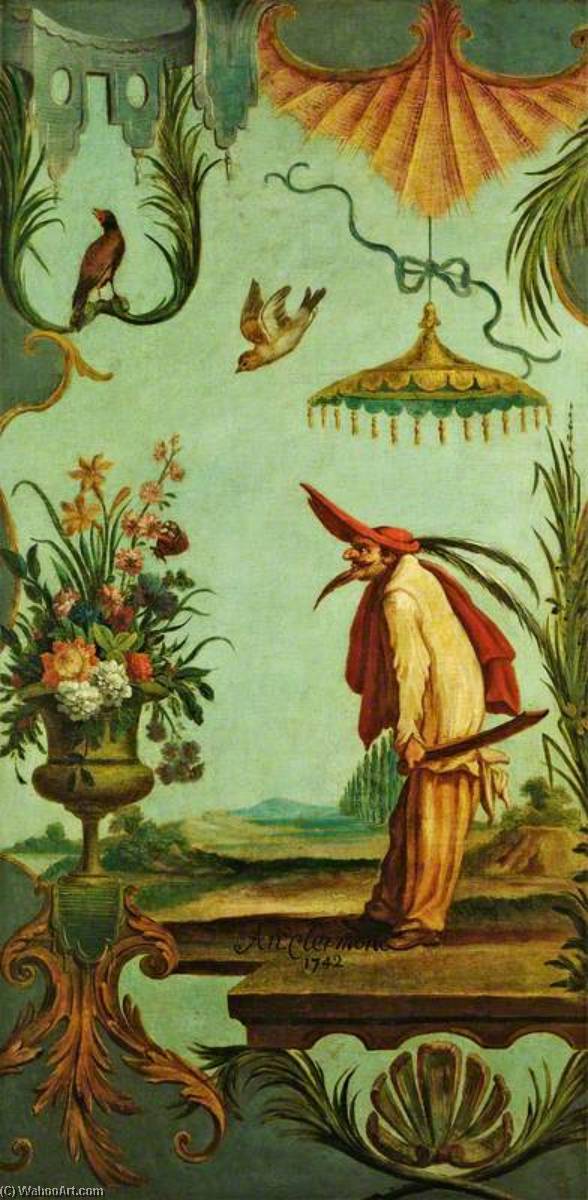
The painting features a man standing on the ground with a large sword in his hand, wearing a red coat that adds a pop of color to the scene. A bird perched atop the man's head adds an interesting detail to the composition, while a vase in the foreground enhances the depth of the scene. The overall atmosphere of the painting suggests a sense of adventure and intrigue, with the man holding his sword ready for action. Key elements of the painting include the use of bold colors, intricate details, and a sense of movement and energy. The artist's use of chiaroscuro creates a sense of depth and dimensionality, drawing the viewer's eye into the scene.Artist and Context
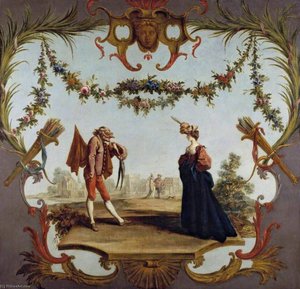
Andien De Clermont was a skilled artist who created several notable works, including Pulchinello and Lucretia, which is also part of the collection at the Victoria and Albert Museum. To learn more about this painting, visit Pulchinello and Lucretia on ArtsDot.com. For those interested in learning more about the artist and his works, visit Andien De Clermont on ArtsDot.com.- The painting Mestolino is a significant work in the collection of the Victoria and Albert Museum.
- The artist Andien De Clermont was known for his skill in capturing the essence of Commedia dell'Arte.
- ArtsDot.com offers handmade oil reproductions of famous paintings, including works by Andien De Clermont.
To explore more artworks and learn about the artists who created them, visit ArtsDot.com. Discover the beauty and significance of handmade oil painting reproductions and experience the world of art like never before.
Related Artworks

Artist Biography
Andien de Clermont (c.1716–1783): A Decorative Painter of Rococo Splendor
Andien de Clermont was a French artist who flourished during the Rococo period, leaving an indelible mark on English aristocratic interiors and establishing himself as one of the foremost decorative painters of his time. Born around 1716, his artistic journey began in France, where he honed his skills amidst the opulent salons and burgeoning patronage of the aristocracy—a milieu profoundly shaped by the aesthetic ideals of Louis XV’s reign. While biographical details remain scarce, scholarly research suggests a formative influence from Jean Siméon Chardin, whose meticulous observation of nature and understated elegance served as a cornerstone for Clermont's artistic sensibilities.- Early Training & Parisian Career: Clermont’s initial training likely occurred under the tutelage of established masters in Paris, equipping him with foundational techniques in oil painting and fresco—skills crucial for executing large-scale decorative commissions. His early works showcased a mastery of chiaroscuro and tonal gradation, mirroring the stylistic conventions prevalent within the Rococo movement.
- Migration to England & Patronage: Around 1756, Clermont embarked on a significant relocation to England, drawn by the generous patronage offered by influential families like the Earls of Hertford and Northumberland. This move proved pivotal in propelling his artistic reputation and securing commissions that would solidify his legacy as a celebrated decorator.
The Art of Decorative Painting: Technique & Style
Clermont’s distinctive style was characterized by an unparalleled sensitivity to color and texture—elements meticulously deployed to create immersive environments that captivated viewers. He excelled in trompe-l'oeil murals, skillfully blending illusionistic painting with architectural features to deceive the eye and heighten spatial perception. His canvases frequently depicted floral garlands and landscapes rendered with breathtaking realism, reflecting the prevailing fascination for botanical illustration during the Rococo era. Furthermore, Clermont’s mastery of silk embroidery—a technique he adopted from Italian artisans—added another dimension to his artistic repertoire, transforming textiles into luminous surfaces adorned with intricate floral motifs.- Floral Composition: Clermont's paintings were renowned for their exquisite floral arrangements, meticulously crafted to evoke the beauty and fragrance of gardens—a motif deeply rooted in Rococo symbolism representing fertility, grace, and aristocratic refinement.
- Silk Embroidery Integration: He seamlessly integrated silk embroidery into his decorative panels, elevating the textural qualities of the artwork and creating a harmonious blend between painting and textile art.
Notable Commissions & Artistic Achievements
Clermont’s artistic accomplishments reached their zenith during his tenure in England, where he undertook prestigious commissions that transformed several stately homes into breathtaking showcases of Rococo artistry. Among his most celebrated projects were the opulent murals adorning Kirtlington Park—a sprawling estate overseen by the Earl of Hertford—and Langley Hall, commissioned by Sir Robert Walpole. His work at Wentworth Castle and Wilton House further cemented his reputation as a visionary decorator who understood how to imbue spaces with atmosphere and grandeur. Particularly noteworthy was his contribution to St. James’s Square, where he executed a monumental fresco depicting mythological figures within the dining room of William Wentworth Fitzwilliam II—a masterpiece that exemplifies the apex of Rococo decorative painting.Legacy & Historical Significance
Andien de Clermont's artistic legacy extends beyond his individual paintings—he fundamentally reshaped the aesthetic landscape of English aristocratic interiors, establishing a standard for elegance and sophistication that endured throughout the late 18th century. His meticulous attention to detail, masterful command of technique, and profound understanding of Rococo principles continue to inspire artists today. Moreover, Clermont’s work serves as an invaluable testament to the cultural exchange between France and England during the Enlightenment—a period marked by intellectual ferment and artistic innovation. He remains a celebrated figure in art history, remembered not merely for his technical prowess but also for his ability to capture the spirit of his time and elevate decorative art to new heights of beauty and artistry.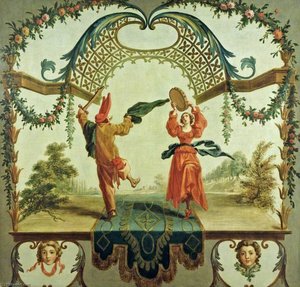
andien de clermont
1716 - 1783
Quick Facts
- Artistic Movement Or Style: Rococo
- Artists Or Movements Influenced By This Artist: ['Abraham of Clermont']
- Date Of Death: 1783
- Full Name: Andien de Clermont
- Nationality: French
- Notable Artworks:
- Mestolino
- Smaraolo Cornuto
- Place Of Birth: France