

 Preview
 Send
Send Share
Share
 Details

 Download
 Similars
 X-Ray
X-Ray Diaporama
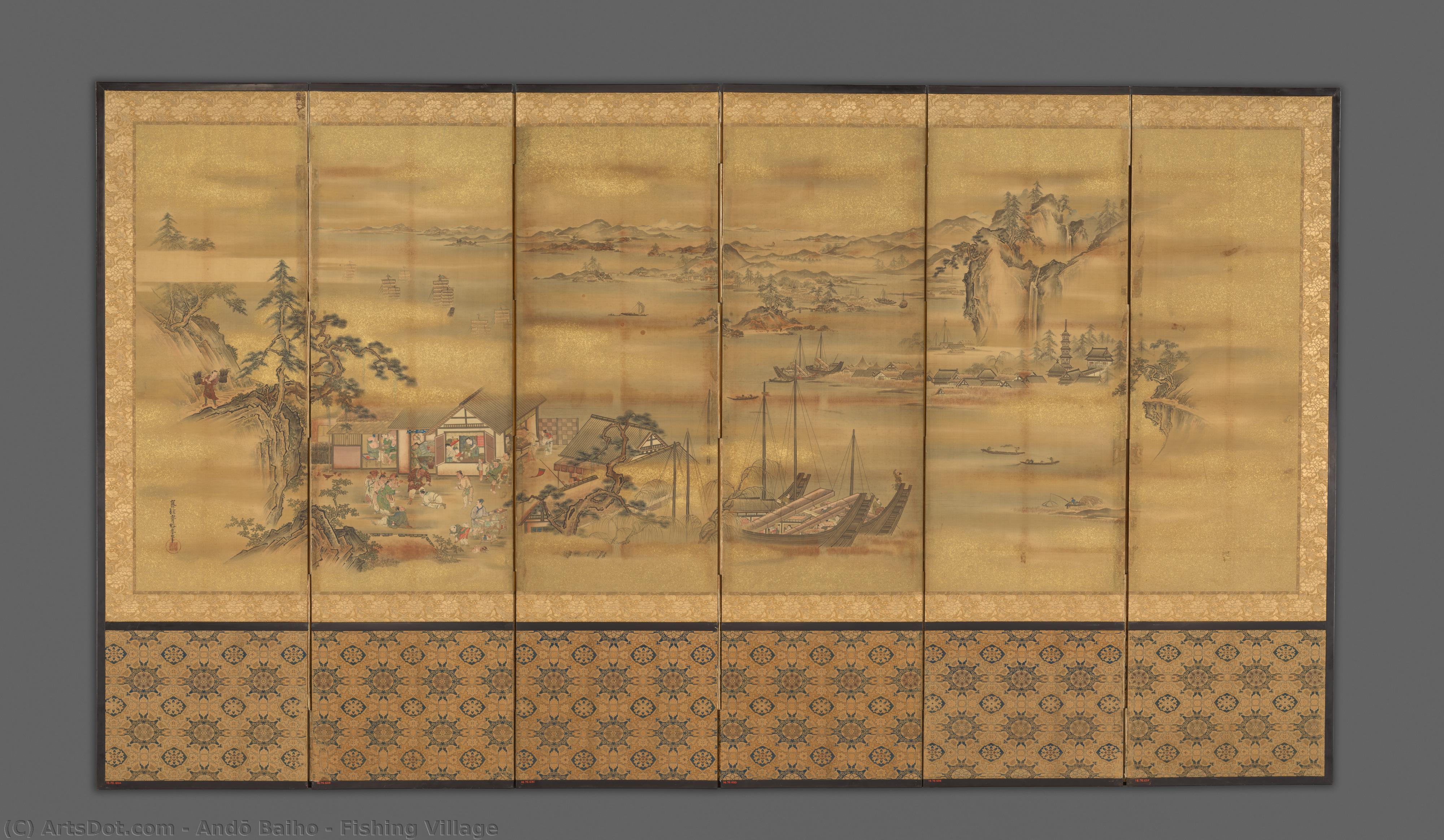
Fishing Village
 801
801 218.0cm x 89.0cm
 Read More
Hand Made Oil Reproduction
Hand-painted oil on canvas in your size and frame, made to order by our artists. ( Buy Print Buy Image)




































Pick from our preset sizes that match the artwork's original proportions.

You may enter your own dimensions to fit a specific frame or space. If your selected size does not match the original image's proportions, we will either crop the artwork or extend the painting with additional hand-painted elements. A digital mockup will be sent for your approval before production begins.
Please note that the on-screen preview does not reflect the actual cropping or extension. Only the mockup will accurately show the final composition.
While custom sizes are available, we recommend selecting a dimension from the predefined list to preserve the original proportions.
After order, ArtsDot.com team will email client for instructions and provide a mockup preview
Worldwide Delivery () in 3/4 weeks instead of standard 5 weeks. (24 August). No compromise on quality.

Free Worldwide Express Shipping

High-Quality Linen Canvas

Full Shipping Insurance

Customs Tax Refund Guarantee

True Color Matching Guarantee

60-Day Return Policy (Defects Only)

100% Money-Back Guarantee

Bulk Discount Offer
 Glass option is only available in size under 110 CM

Fishing Village
Reproduction Medium
Reproduction Size
-


Total Price
$ 263
Related Artworks










Artist Biography
The Enigmatic Legacy of Andō Baiho
In the vibrant, bustling landscape of Japan’s Edo period, where many artists sought to capture the burgeoning energy of urban life through bold colors and intricate details, Andō Baiho (1777–1825) carved out a space of profound stillness. Born in the merchant city of Osaka, Baiho remains an enigmatic figure, a shadow in the historical record whose presence is felt most powerfully through the quietude of his surviving work. While much of his personal history remains shrouded in the mists of time, his artistic identity is unmistakable: he was a master of restraint, a painter who understood that what is left unsaid often carries more weight than what is explicitly depicted. His vision was not one of outward expansion, but of inward reflection, rooted deeply in the traditional aesthetics of Japanese silk painting.
The foundations of Baiho’s unique perspective were likely laid during his youth in Osaka. Though biographical accounts are fragmentary, it is known that he was born into a family of craftsmen, with a father engaged in the textile trade. This early immersion in the world of fine fabrics and pigments provided him with an intimate, tactile understanding of his primary medium: silk. Unlike many of his contemporaries who sought formal apprenticeship within established schools, Baiho appears to have been a largely self-taught observer of the natural world. This independence allowed him to bypass the rigid conventions of the era, fostering a style that prioritized atmosphere and suggestion over the meticulous, often crowded compositions typical of much 19th-century Japanese art.
A Mastery of Minimalist Atmosphere
The true brilliance of Baiho’s technique lies in his revolutionary approach to color and composition on silk folding screens. During an era when many artists utilized vibrant, saturated pigments to command attention, Baiho turned toward a deliberate reduction of the palette. He mastered the art of the subtle gradation, using muted hues—predominantly soft blues, deep greens, and ethereal greys—to evoke the shifting moods of the natural landscape. His work does not merely represent a scene; it captures the very breath of the environment. By eschewing elaborate ornamentation, he invited the viewer to inhabit the space within his paintings, finding beauty in the delicate interplay of light and shadow across the silk surface.
His most celebrated achievement, the masterpiece ‘Fishing Village,’ serves as a testament to this minimalist philosophy. In this work, the boundaries between land, water, and sky are blurred through masterful blending, creating a sense of infinite tranquility. The painting functions as a precursor to much later movements in Western art, possessing a structural simplicity and tonal harmony that would not be seen again until the advent of Impressionism. Through his ability to evoke the salt spray of the coast and the stillness of a morning mist using only a handful of colors, Baiho achieved a level of emotional resonance that transcends the boundaries of time and culture.
Historical Significance and Enduring Influence
Though his career was relatively brief, the historical significance of Andō Baiho lies in his ability to bridge the gap between traditional Japanese craftsmanship and a proto-modernist sensibility. He stood at a crossroads of history, maintaining a steadfast devotion to the classical beauty of silk folding screens while simultaneously experimenting with a level of abstraction that felt remarkably ahead of his time. His work suggests a profound understanding of how structure and nature can be integrated into a single, harmonious vision—a concept that resonates even with much later architectural philosophies.
Today, Baiho is remembered not for the volume of his output, but for the depth of its impact. He remains a vital figure for those studying the evolution of Japanese landscape art, offering a window into a period of quiet innovation. His legacy continues to inspire artists and collectors alike, serving as a reminder that true power in art often resides in simplicity, and that the most enduring impressions are often those made with the lightest of touches.
andō baiho
1777 - 1825 , Japan
Quick Facts
- Artistic Movement Or Style: Minimalist Color on Silk Six-Panel Folding Screen Paintings
- Artists Or Movements Influenced By This Artist: ['Tadao Ando']
- Date Of Birth: Osaka, Japan (1777)
- Full Name: Andō Baiho
- Nationality: Japanese
- Notable Artworks: ['Fishing Village']
- Place Of Birth: Osaka

