 Preview
 Send
Send Share
Share
 Details

 Download
 Similars
 X-Ray
X-Ray Diaporama
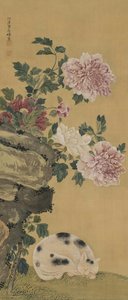
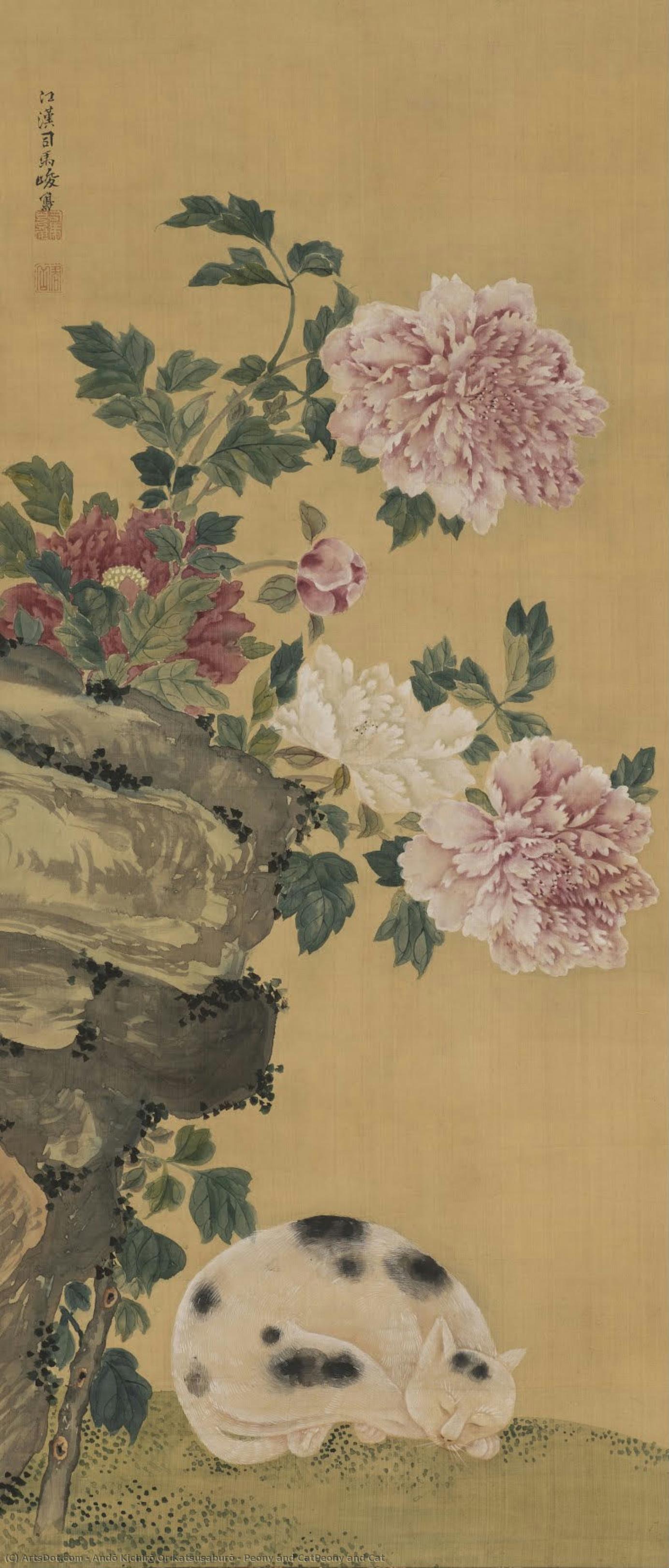
Peony and CatPeony and Cat

 Read More
Hand Made Oil Reproduction
Hand-painted oil on canvas in your size and frame, made to order by our artists. ( Buy Print Buy Image)




































Pick from our preset sizes that match the artwork's original proportions.

You may enter your own dimensions to fit a specific frame or space. If your selected size does not match the original image's proportions, we will either crop the artwork or extend the painting with additional hand-painted elements. A digital mockup will be sent for your approval before production begins.
Please note that the on-screen preview does not reflect the actual cropping or extension. Only the mockup will accurately show the final composition.
While custom sizes are available, we recommend selecting a dimension from the predefined list to preserve the original proportions.
After order, ArtsDot.com team will email client for instructions and provide a mockup preview
Worldwide Delivery () in 3/4 weeks instead of standard 5 weeks. (24 August). No compromise on quality.

Free Worldwide Express Shipping

High-Quality Linen Canvas

Full Shipping Insurance

Customs Tax Refund Guarantee

True Color Matching Guarantee

60-Day Return Policy (Defects Only)

100% Money-Back Guarantee

Bulk Discount Offer
 Glass option is only available in size under 110 CM

Peony and CatPeony and Cat
Reproduction Medium
Reproduction Size
-


Total Price
$ 263
Artwork Description
Related Artworks




Artist Biography
Early Life and Artistic Foundations
Andō Kichirō, known later as Shiba Kōkan, emerged into the vibrant artistic landscape of Edo-period Japan in 1747. Born in Edo (modern Tokyo), his initial training followed the established path of the Kanō school, a prominent institution steeped in Chinese aesthetic traditions and formal techniques. However, this conventional apprenticeship proved short-lived; after six years, Kichirō felt constrained by its rigid structure and sought alternative avenues for artistic expression. This early departure signaled a restless spirit and a burgeoning desire to forge his own unique style—a characteristic that would define his entire career.
His subsequent studies with Suzuki Harunobu, a master of *ukiyo-e* (woodblock printing), exposed him to a different world – one focused on capturing the ephemeral beauty of everyday life and employing delicate color palettes. While he absorbed Harunobu’s refined techniques, Kichirō's ambition extended beyond replicating existing styles. He began experimenting with new approaches, driven by an insatiable curiosity that would soon lead him toward a radical departure from traditional Japanese art.
A Pioneer of Western-Style Painting
Embracing *Yōga* and the Dutch Influence
The late 18th century witnessed a limited but significant influx of Western knowledge into Japan, primarily through Dutch trade at the port of Nagasaki. This exposure ignited Kōkan’s fascination with European art, particularly the oil painting techniques and realistic depictions favored by Dutch masters. He dedicated himself to mastering this foreign medium, painstakingly studying imported books and attempting to replicate the effects of shading, perspective, and texture that were so novel in Japanese artistic practice.
Kōkan’s dedication bore fruit in 1783 with the creation of Japan's first copperplate etching, a groundbreaking achievement that marked the beginning of *yōga* (Western-style painting) in the country. This was not merely technical imitation; Kōkan sought to understand the underlying principles of Western art and adapt them to his own artistic vision. He wasn’t simply copying Dutch paintings but translating their aesthetic qualities into a Japanese context.
Innovation, Forgery, and Intellectual Pursuits
A Multifaceted Talent
Shiba Kōkan was not solely an artist; he was a polymath with diverse intellectual interests. Famously, he became known for his audacious skill in forging the works of Suzuki Harunobu, even boasting about his ability to deceive connoisseurs. This act, while ethically questionable, demonstrates his profound understanding of Harunobu’s style and technique—a testament to his meticulous observation and artistic mastery.
Beyond painting and printmaking, Kōkan was deeply engaged in *rangaku* (Dutch studies), focusing particularly on astronomy. He produced detailed illustrations and writings on Western astronomical theories, including those of Nicolaus Copernicus, showcasing a remarkable ability to synthesize scientific knowledge with his artistic endeavors. This fusion of art and science reflects the broader intellectual currents of the Edo period and Kōkan’s position as a forward-thinking scholar.
Legacy and Historical Significance
A Bridge Between Cultures
Shiba Kōkan's impact on Japanese art is profound. He single-handedly introduced Western painting techniques to Japan, paving the way for subsequent generations of *yōga* artists who would further explore and develop this new style. His work challenged conventional artistic norms and broadened the scope of Japanese aesthetic expression.
Major Achievements:
- Creation of Japan’s first copperplate etching (1783).
- Pioneering Western-style oil painting (*yōga*) in Japan.
- Masterful forgeries of Suzuki Harunobu prints, demonstrating exceptional technical skill.
- Significant contributions to *rangaku* through illustrations and writings on astronomy.
Kōkan’s legacy extends beyond his artistic innovations. He embodied a spirit of intellectual curiosity and cultural exchange, serving as a bridge between Japan and the West during a period of relative isolation. His work continues to fascinate art historians and collectors alike, offering a unique glimpse into the complexities of Edo-period Japan and the transformative power of cross-cultural influence.
andō kichirō or katsusaburō
1747 - 1818 , Japan
Quick Facts
- Artistic Movement Or Style: Yōga, Ukiyo-e
- Artists Who Influenced This Artist:
- Suzuki Harunobu
- Sō Shiseki
- Hiraga Gennai
- Date Of Birth: 1747
- Date Of Death: 1818
- Full Name: Andō Kichirō (Katsusaburō)
- Nationality: Japanese
- Notable Artworks:
- European Landscapes...
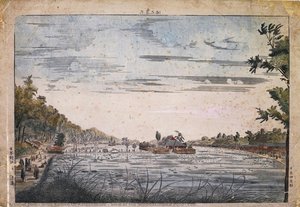
- View of Mimeguri in Edo
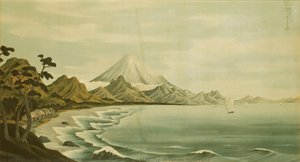
- Distant View of Mt. Fuji
- Place Of Birth: Tokyo, Japan