 Preview
 Send
Send Share
Share
 Details

 Download
 Similars
 X-Ray
X-Ray Diaporama
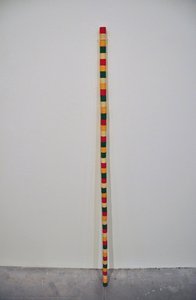
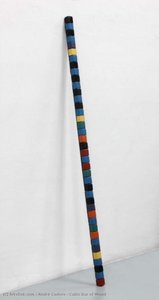
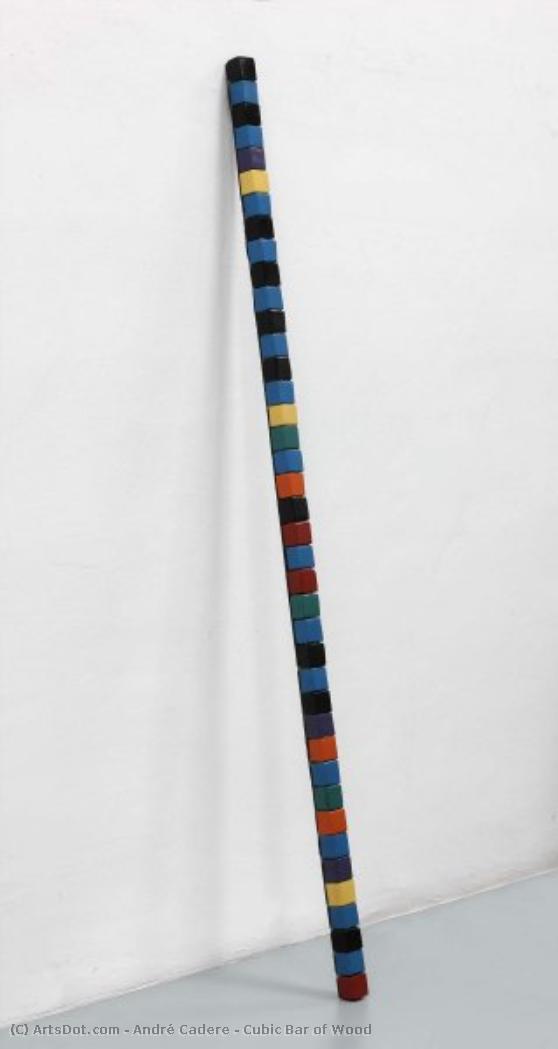
Cubic Bar of Wood


 Read More
Giclée / Art Print
Museum-quality giclée or canvas print with fast production and flexible finish options. ( Buy Hand Made Painting Buy Image)




































Pick from our preset sizes that match the artwork's original proportions.

You may enter your own dimensions to fit a specific frame or space. If your selected size does not match the original image's proportions, we will either crop the artwork or extend the image with a mirrored or solid-fill edge. A digital mockup will be sent for your approval before production begins.
Please note that the on-screen preview does not reflect the actual cropping or extension. Only the mockup will accurately show the final composition.
While custom sizes are available, we recommend selecting a dimension from the predefined list to preserve the original proportions.
Worldwide Delivery () in 2 weeks instead of standard 4/5 weeks. (21 August)

Free Worldwide Express Shipping

High-Quality Linen Canvas

Full Shipping Insurance

Customs Tax Refund Guarantee

True Color Matching Guarantee

60-Day Return Policy (Defects Only)

100% Money-Back Guarantee

Bulk Discount Offer
 Glass option is only available in size under 110 CM

Cubic Bar of Wood
Giclée / Art Print
Reproduction Size
-


Total Price
$ 63
Related Artworks

Artist Biography
André Cadere: A Revolutionary of Minimal Form
André Cadere (1934-1978), a Romanian conceptual artist born in Warsaw, Poland, and later residing primarily in Paris, stands as a pivotal figure in the challenging landscape of 1970s art. His work, often characterized by its deliberate ambiguity and subversive approach to authorship, profoundly impacted the development of minimal art, land art, and conceptual practices within the Parisian avant-garde. Cadere’s trajectory is marked by a restless spirit, a constant negotiation with institutional structures, and an unwavering commitment to questioning the very definition of artistic creation. His untimely death from cancer in 1978 cemented his legacy as a tragically influential voice in contemporary art.Early Life and Influences
Born into a prominent Romanian family deeply involved in Polish diplomacy during World War II, André Cadere’s early life was shaped by political instability and social exclusion. His father served as the Romanian Ambassador to Poland, a position that afforded them a precarious existence amidst the rising tide of Stalinist influence. This experience instilled within him a profound awareness of power dynamics and the limitations imposed upon individual expression. Moving to Paris in 1967, Cadere quickly immersed himself in the vibrant, experimental art scene, forging connections with key figures like Isidore Isou, a prominent member of the lettrist movement known for his radical approach to language and image. These encounters proved crucial, exposing him to ideas that would fundamentally reshape his artistic practice. The influence of minimal art, particularly the work of Donald Judd and Sol LeWitt, is evident in Cadere’s later explorations of geometric forms and reductive aesthetics. However, he deliberately subverted these influences, injecting a layer of playful disruption and social commentary into his work.The ‘Barres de Bois Rond’ – A Performance of Presence
Cadere's most iconic contribution to the art world is undoubtedly the *Barres de bois rond* (round wooden bars), created between 1970 and 1978. These seemingly simple objects—cylindrical wooden poles painted in a vibrant array of colors—were anything but straightforward. Cadere would carry these bars with him, exhibiting them publicly in unexpected locations: art exhibitions, street corners, public squares, and even within the spaces of other artists’ shows. This practice was not merely an act of displaying artwork; it was a deliberate performance of presence, challenging traditional notions of ownership, display, and the role of the artist. The *Barres de bois rond* became a symbol of Cadere's critique of the art market and the institutional framework that often dictates artistic value. The act of carrying them, placing them, and observing their reception was itself an integral part of the artwork’s meaning—a constant negotiation between the object and its context.Technique and Conceptual Framework
Cadere's technique was deliberately understated, prioritizing process over polished execution. The *Barres de bois rond* were constructed from readily available materials – wood poles – and painted with a meticulous attention to color and geometric precision. However, the true significance of his work lies not in the physical objects themselves but in their conceptual framework. Cadere’s approach can be understood as a radical form of conceptualism, where the idea—the act of showing, the disruption of established norms—supersedes traditional notions of aesthetic beauty or formal skill. He embraced a strategy of “anti-art,” deliberately undermining the conventions of the art world and forcing viewers to confront their own assumptions about what constitutes art. His work is deeply intertwined with ideas of authorship and signature – he actively sought to erase his personal identity from the objects, emphasizing instead the act of presentation and the viewer’s interpretation.Legacy and Recognition
Despite a tragically short life, André Cadere's influence on contemporary art remains considerable. His work continues to be studied and exhibited, particularly within the context of conceptual art and land art. The Musée Jacquemart-André in Paris and MuMa Le Havre, France’s premier modern art museum, have both hosted retrospectives showcasing his oeuvre. Furthermore, Monoskop offers a comprehensive online archive detailing his life and work. His 2007 retrospective at the Staatliche Kunsthalle in Baden-Baden, curated by Karola Grässlin and Astrid Ihle, garnered critical acclaim and helped to reintroduce Cadere’s radical ideas to a wider audience. His legacy is one of audacious experimentation, intellectual rigor, and a profound questioning of the very nature of art itself—a testament to the power of an artist who dared to challenge the established order.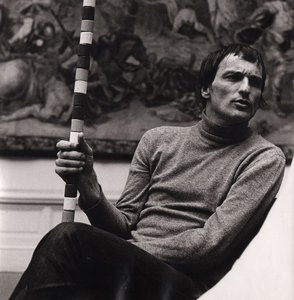
andré cadere
1934 - 1978 , Poland
Quick Facts
- Artistic Movement Or Style: Conceptual art, Minimalist
- Artists Or Movements Influenced By This Artist:
- Minimalism
- Lettrist movement
- Artists Who Influenced This Artist: ['Isidore Isou']
- Date Of Birth: 1934
- Date Of Death: 1978
- Full Name: André Cadere
- Nationality: Romanian
- Notable Artworks: ['Barres de bois rond']
- Place Of Birth: Warsaw, Poland