 Preview
 Send
Send Share
Share
 Details

 Download
 Similars
 X-Ray
X-Ray Diaporama
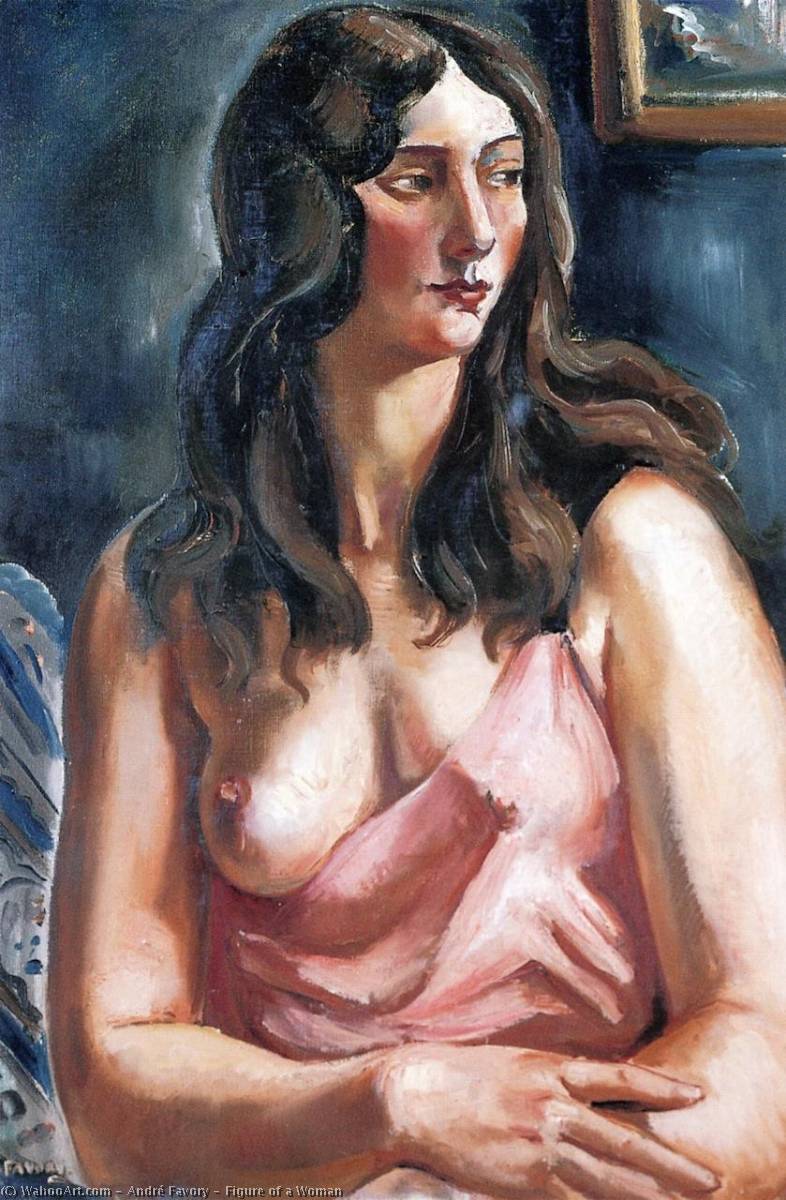
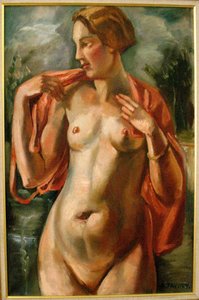
Figure of a Woman
 1924
1924 72.0 x 49.0 cm
 Read More
Hand Made Oil Reproduction
Hand-painted oil on canvas in your size and frame, made to order by our artists. ( Buy Print Buy Image)




































Pick from our preset sizes that match the artwork's original proportions.

You may enter your own dimensions to fit a specific frame or space. If your selected size does not match the original image's proportions, we will either crop the artwork or extend the painting with additional hand-painted elements. A digital mockup will be sent for your approval before production begins.
Please note that the on-screen preview does not reflect the actual cropping or extension. Only the mockup will accurately show the final composition.
While custom sizes are available, we recommend selecting a dimension from the predefined list to preserve the original proportions.
After order, ArtsDot.com team will email client for instructions and provide a mockup preview
Worldwide Delivery () in 3/4 weeks instead of standard 5 weeks. (24 August). No compromise on quality.

Free Worldwide Express Shipping

High-Quality Linen Canvas

Full Shipping Insurance

Customs Tax Refund Guarantee

True Color Matching Guarantee

60-Day Return Policy (Defects Only)

100% Money-Back Guarantee

Bulk Discount Offer
 Glass option is only available in size under 110 CM

Figure of a Woman
Reproduction Medium
Reproduction Size
-


Total Price
$ 263
Artwork Description
Artistic Style and Influences
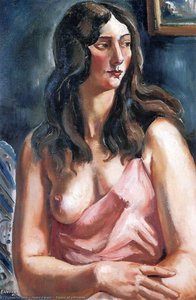
André Favory was a French painter who studied at the Académie Julian and was heavily influenced by Paul Cézanne. His early work was characterized by a cubist style, but he later moved away from this movement to develop a more sensual and expressive approach. The Figure of a Woman showcases this shift in style, with the subject's curves and contours rendered in soft, flowing brushstrokes. Key Features of the painting include:- The use of bold colors and contrasting textures to create a sense of depth and visual interest
- The emphasis on the subject's emotional state, conveyed through her introspective expression
- The incorporation of subtle background elements, such as the blue wall and the chair, to add context and narrative depth
The Figure of a Woman is a testament to André Favory's skill as a painter and his ability to capture the essence of his subjects. As a piece of art history, it continues to inspire and fascinate audiences today. Whether you're an art enthusiast or simply looking to appreciate the beauty of a bygone era, this painting is sure to captivate and delight.
Related Artworks








Artist Biography
The Luminous Evolution of André Favory
In the vibrant tapestry of early twentieth-century French art, few threads are as complex and captivating as that of André Favory. Born in Paris on March 9, 1888, Favory emerged during an era of profound aesthetic upheaval, a time when the rigid traditions of the past were being dismantled by the radical geometries of Cubism and the kinetic energy of Futurism. As a student at the prestigious Académie Julian, his early training provided him with a formidable technical foundation, yet his artistic soul was destined to wander far beyond the confines of academic classicism. His formative years were deeply marked by the structural lessons of Paul Cézanne, whose ability to render the world through volume and sculptural form became a cornerstone of Favory’s visual language.
The trajectory of Favory’s life was irrevocably altered by the shadows of the First World War. Mobilized in 1914, the harrowing experience of the trenches brought a profound psychological shift to his creative consciousness. Upon his return to the art world in 1919, the intellectual rigor of the Cubist movement—which he had previously embraced—began to feel increasingly detached and sterile. Seeking a more visceral connection to existence, Favory turned his gaze away from geometric fragmentation and toward the carnal aspects of nature and life. This period marked the birth of a new sensibility, one that sought to capture the warmth of the human spirit and the sensory richness of the natural world.
A Mastery of Color and Sensuality
As Favory transitioned into the mid-1920s, his palette underwent a breathtaking transformation. He began to move away from the cerebral and toward the sensual, finding deep inspiration in the monumental works of Peter Paul Rubens. Through frequent travels to Belgium, he studied the Flemish master’s ability to manipulate light and flesh, a pursuit that led Favory to develop a style characterized by luminous landscapes, voluptuous nudes, and intimate female portraits. His canvases became windows into a world bathed in golden light, where expressive brushwork and vibrant, warm tones conveyed an emotional depth that resonated with the burgeoning Impressionist revival.
This era of his career was defined by several key artistic milestones:
- The Shift to Sensualism: Abandoning the rigid formalism of Cubism for a more fluid, emotive approach to subject matter.
- Mastery of Light: Utilizing Rubens-inspired luminosity to imbue landscapes and figures with a sense of vitality and warmth.
- Illustrative Brilliance: Demonstrating versatility through his work as an illustrator for notable literary figures such as Jules Supervielle and Gustave Flaubert.
- Global Recognition: Showcasing his talent in major international art hubs, including London, New York, Amsterdam, and Tokyo.
Legacy and Historical Significance
Favory’s career was a testament to the resilience of the human spirit and the enduring power of beauty. Despite being forced to cease painting in the early 1930s due to a debilitating illness, his impact on the art world remained indelible. He was recognized by the most influential critics of his day, such as Louis Vauxcelles, as a major artist of his generation, capable of bridging the gap between the intellectual avant-garde and the deeply felt traditions of classical painting. His works, now held in prestigious institutions like the Musée National d'Art Moderne in Paris and the State Hermitage Museum in Russia, continue to captivate audiences with their profound grace.
Ultimately, André Favory stands as a bridge between eras. He took the structural lessons of the modernists and infused them with a timeless, painterly passion. In his hands, the landscape was not merely a subject to be analyzed, but a living, breathing entity; the human figure was not just a form to be studied, but a vessel for light, color, and emotion. His legacy remains a vital part of the French modernist narrative, reminding us that even in an age of fragmentation, there is an eternal pull toward the beauty of the whole.
andré favory
1888 - 1937
Quick Facts
- Artistic Movement Or Style: Cubism, Sensual landscapes
- Artists Who Influenced This Artist:
- Peter Paul Rubens
- Paul Cézanne
- Date Of Birth: 1888
- Date Of Death: 1937
- Full Name: André Favory
- Nationality: French
- Notable Artworks:
- Figure of a Woman
- Untitled (ARCUJK)
- Landscape
- Place Of Birth: France