 Preview
 Send
Send Share
Share
 Details

 Download
 Similars
 X-Ray
X-Ray Diaporama
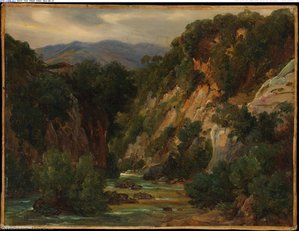
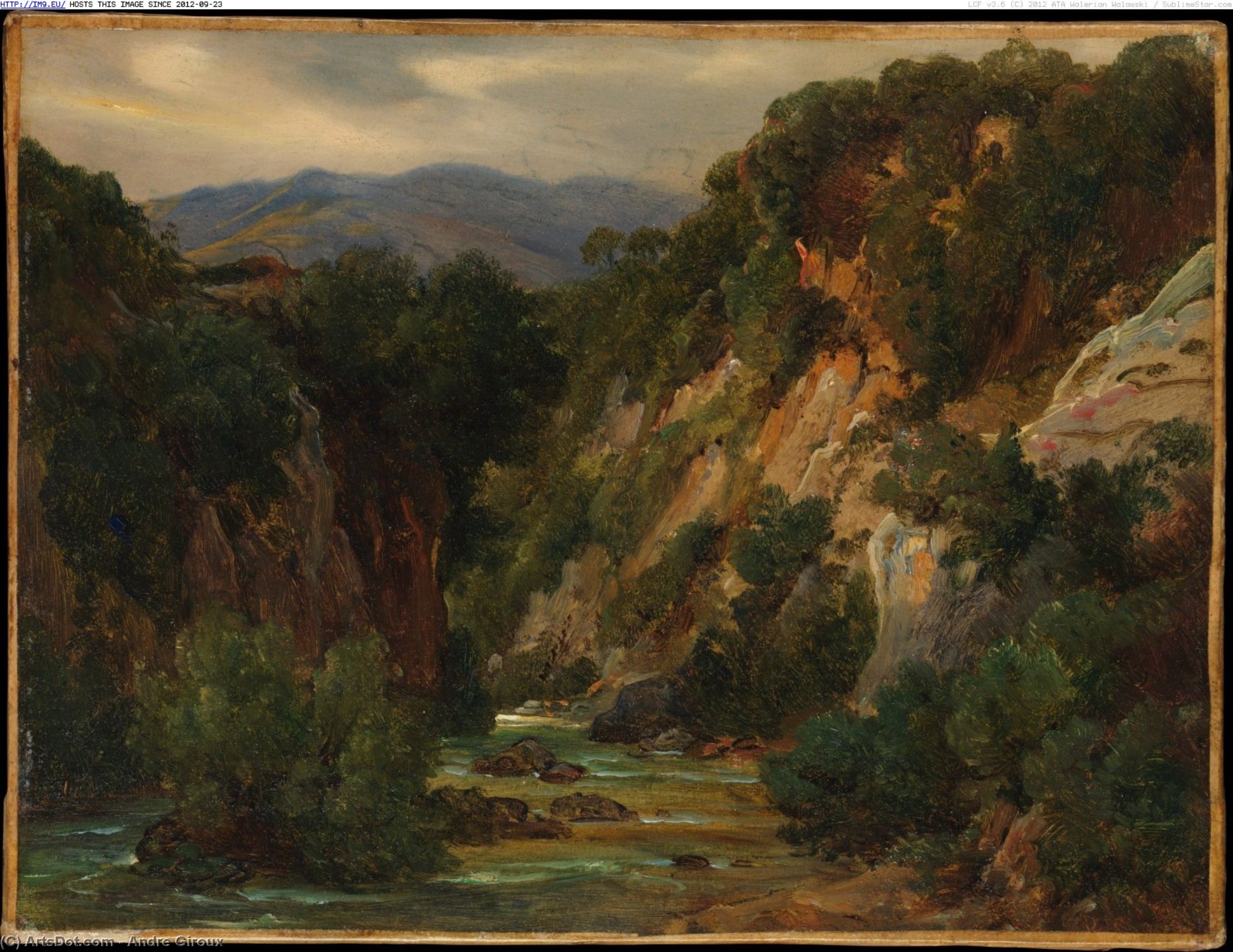
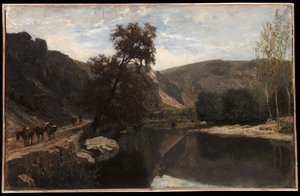
The Aniene River at Subiaco (late (1820s))
 Read More
Giclée / Art Print
Museum-quality giclée or canvas print with fast production and flexible finish options. ( Buy Hand Made Painting Buy Image)




































Pick from our preset sizes that match the artwork's original proportions.

You may enter your own dimensions to fit a specific frame or space. If your selected size does not match the original image's proportions, we will either crop the artwork or extend the image with a mirrored or solid-fill edge. A digital mockup will be sent for your approval before production begins.
Please note that the on-screen preview does not reflect the actual cropping or extension. Only the mockup will accurately show the final composition.
While custom sizes are available, we recommend selecting a dimension from the predefined list to preserve the original proportions.
Worldwide Delivery () in 2 weeks instead of standard 4/5 weeks. (27 August)

Free Worldwide Express Shipping

High-Quality Linen Canvas

Full Shipping Insurance

Customs Tax Refund Guarantee

True Color Matching Guarantee

60-Day Return Policy (Defects Only)

100% Money-Back Guarantee

Bulk Discount Offer
 Glass option is only available in size under 110 CM

The Aniene River at Subiaco (late (1820s))
Giclée / Art Print
Reproduction Size
-


Total Price
$ 63
Related Artworks

Artist Biography
The Serene Vision of André Giroux
André Giroux (1801 – 1879) remains a captivating figure in the tapestry of nineteenth-century French art, a master whose brush captured the quietude of a world caught between the dramatic fervor of Romanticism and the delicate light of early Impressionism. Born in Paris to François-Simon-Alphonseb Giroux—a man renowned for crafting camera equipment for the legendary Daguerre—Giroux was immersed in an environment where the boundaries between art, science, and observation were constantly blurring. While he is often remembered as a painter of tranquil landscapes and genre scenes, his legacy is equally defined by his technical versatility and his role as a sophisticated art dealer who navigated the evolving cultural landscape of his era.
His artistic journey began with rigorous classical training at the École des Beaux-Arts, where he studied under the monumental Jacques-Louis David. This foundation in Neoclassical precision provided him with the technical discipline required to master complex textures and light. However, it was his time studying under Jean-Baptiste Camille Corot that truly unlocked his poetic sensibility. From Corot, Giroux inherited a profound devotion to capturing atmospheric effects—the way mist clings to a riverbank or how sunlight softens the edges of ancient stone. This influence steered him away from the theatricality of his contemporaries and toward a more subtle, tonal approach that prioritized the emotional resonance of stillness over overt drama.
A Journey Through Light and Stone
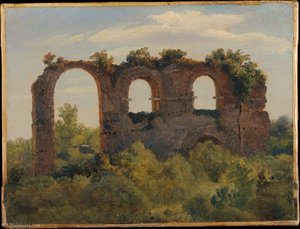
The heart of Giroux’s oeuvre lies in his evocative depictions of the Italian countryside, particularly the majestic Roman landscapes. He possessed an extraordinary ability to render the grandeur of antiquity through a lens of peaceful coexistence between nature and man-made marvels. His celebrated works featuring the Roman aqueducts serve as a testament to this skill; in pieces such as A Section of the Claudian Aqueduct, Rome, he eschews turbulent compositions in favor of meticulously rendered weathered surfaces bathed in a gentle, golden glow. Through the careful layering of thin glazes, Giroux achieved a luminous quality that made the ancient stone appear almost organic, breathing with the warmth of the Mediterranean sun.
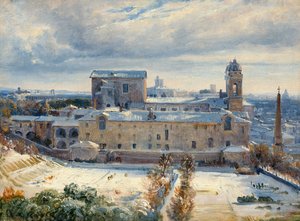
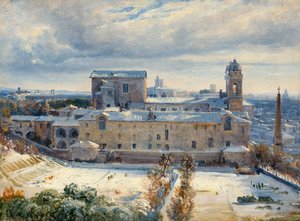
Beyond the architectural ruins, Giroux’s landscapes often explored the ephemeral beauty of seasonal shifts. His painting Santa Trinità dei Monti in the Snow showcases his mastery of a muted, wintry palette, utilizing icy blues, creams, and soft browns to evoke the biting yet beautiful hush of a snow-covered Rome. In these works, the viewer is not merely an observer but a participant in a moment of profound solitude. His ability to balance large-scale structures with delicate natural elements—such as mossy treetops or winding paths—created a sense of depth and narrative that invited deep contemplation.
Legacy of a Versatile Artist
While his fame was occasionally eclipsed by the more tempestuous figures of the Romantic movement, Giroux’s contributions to the evolution of landscape painting are significant. His work bridged the gap between the structured compositions of the Academy and the light-focused experiments of the Impressionists. Furthermore, his artistic life was marked by a unique duality; as an established art dealer specializing in curiosities, he possessed a deep scholarly appreciation for the history of art, even engaging in the restoration of medieval genre paintings.
The enduring significance of André Giroux can be summarized through several key facets of his career:
- Technical Mastery: His ability to blend Neoclassical precision with Corot-inspired atmospheric softness.
- Historical Connection: His unique position at the intersection of traditional painting and the dawn of photography.
- Thematic Focus: A dedication to portraying the harmonious relationship between ancient human engineering and the natural world.
- Artistic Versatility: Success as a painter, a restorer of medieval works, and a prominent dealer of fine antiquities.
Today, his works residing in prestigious institutions like the Metropolitan Museum of Art and the National Gallery of Art continue to offer modern audiences a window into a lost era of tranquility, reminding us of the power of art to find beauty in the quietest corners of the world.
andre giroux
1801 - 1879
Quick Facts
- Artistic Movement Or Style: Impressionism
- Artists Or Movements Influenced By This Artist: ['École impressionniste']
- Artists Who Influenced This Artist:
- Claude Monet
- Pierre-Auguste Renoir
- Date Of Death: 1879
- Full Name: André Giroux
- Nationality: French
- Notable Artworks:
- Santa Trinità dei Monti in the Snow
- The Aniene River at Subiaco
- A Section of the Claudian Aqueduct
- Place Of Birth: Paris, France