

 Preview
 Send
Send Share
Share
 Details

 Download
 Similars
 X-Ray
X-Ray Diaporama
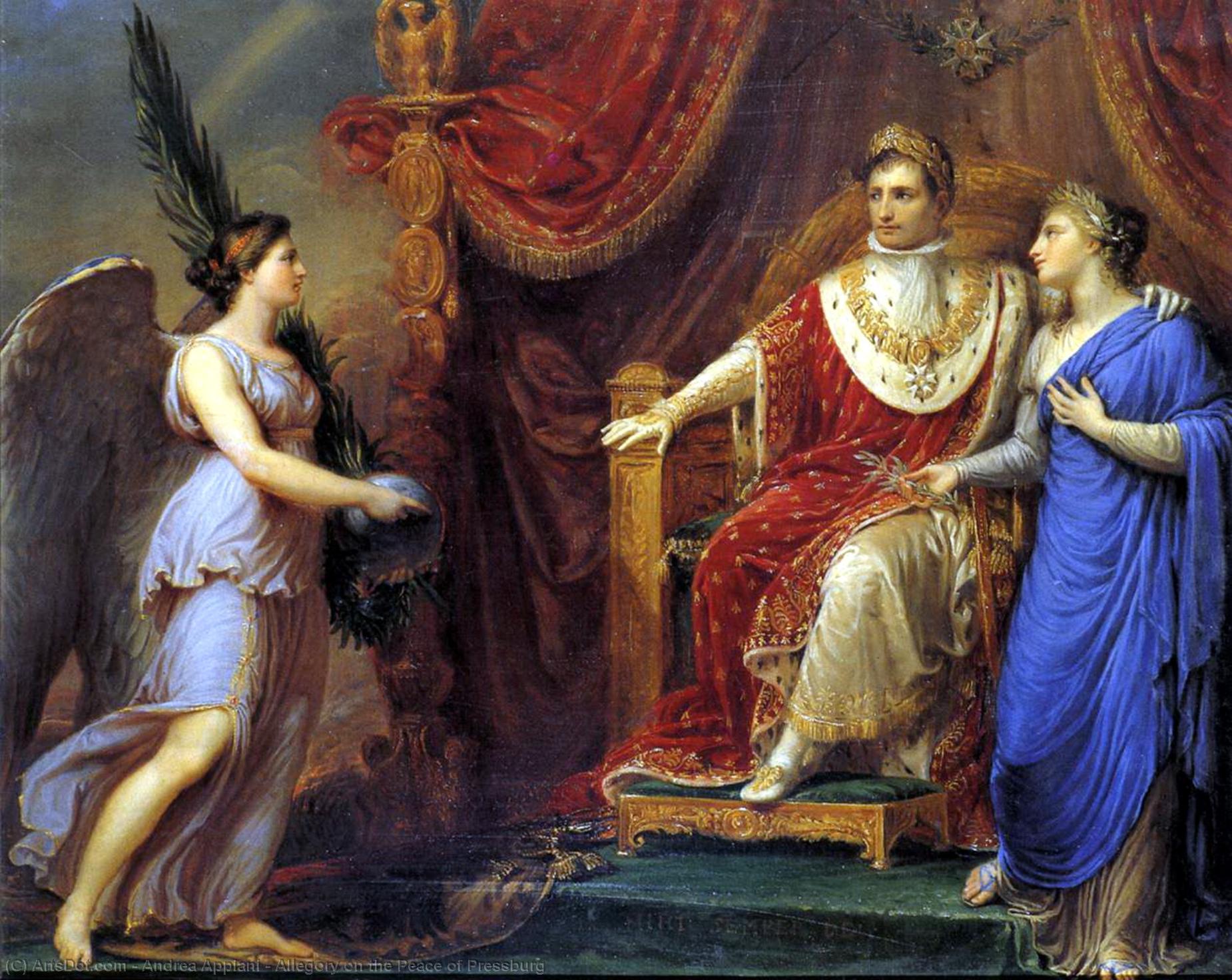
Allegory on the Peace of Pressburg
 Oil On Canvas
- WallArt
- Neoclassicism
 1808
1808 38.0 x 46.0 cm
 Pushkin State Museum
 Read More
Purchase a high-resolution, enhanced digital image, far superior to the online preview.
Each file is meticulously prepared by our in-house specialists using advanced tools and expert manual retouching. We ensure every image has exceptional clarity, precise color accuracy, and fine detail.
The final file is delivered via email within 72 hours, optimized for immediate use in professional, editorial, and print environments. This is the same quality trusted by top-tier design studios, publishers, and galleries.
Digital Image
Download a high-resolution file for personal display, printing, and creative projects. ( Buy Print Buy Hand Made Painting)
Included in Every Digital Image Order
Expert Digital Delivery, Guaranteed
When you choose ArtsDot.com, you're not just getting an image - you're receiving a professionally enhanced digital artwork, crafted with precision and backed by a satisfaction guarantee. Here's everything that comes with your order, automatically:

Fast Email Delivery
Your high-resolution digital image file will be emailed to you within 72 hours of ordering - ready for immediate use.

AI-Enhanced Digital File
Your artwork is professionally optimized using advanced AI tools and manual editing, ensuring maximum detail, clarity, and color accuracy.

Free Lifetime Re-Delivery
Accidentally deleted or lost your file? No worries - we'll resend it to you anytime, free of charge.

No Import Fees - Ever
Enjoy your artwork instantly with zero customs, duties, or delivery fees - digital downloads are always tax-free.

Color Accuracy Guarantee
We ensure your digital image reflects the original colors as closely as possible using professional tools and color management.

60-Day Satisfaction Guarantee
If you're not satisfied with your digital image, we'll revise it or refund 100% within 60 days - no questions asked.

100% Money-Back Guarantee
Not satisfied? Get a full refund within 60 days of receiving your digital file - no questions asked.

Bulk Order Discounts
Buy 3 images, save 10% - Buy 5, save 15% - Buy 10+, save 20%. Great for creative projects, galleries, and agencies.
Collectible Description
Andrea Appiani’s Allegory on the Peace of Pressburg: A Triumph of Neoclassical Grandeur
The monumental painting “Allegory on the Peace of Pressburg” by Andrea Appiani stands as a testament to the artistic fervor and political ambition that characterized Napoleon Bonaparte's reign in Italy. Completed in 1808, this colossal fresco adorns the Sala Bianca of Palazzo Nuovo in Rome—a deliberate statement of imperial prestige designed to solidify Napoleon’s dominion over Lombardy and Tuscany following his decisive victory against Austria. More than just a decorative embellishment, it embodies the core tenets of Neoclassicism: idealized beauty, rational order, and moral virtue – principles championed by Appiani himself and deeply influential in shaping artistic taste during the era.A Vision of Divine Favor and Imperial Legitimacy
Appiani’s masterful depiction captures a pivotal moment in European history—the signing of the Treaty of Pressburg, which formally ended Napoleon's war against Austria and secured Lombardy’s independence. However, the painting transcends mere chronicle; it operates on a symbolic level, conveying a profound message about divine endorsement of Napoleon’s rule. At the center stands Napoleon I himself, seated upon a throne crafted from gleaming gold, radiating authority and serenity. He is flanked by an angelic figure—a radiant woman draped in flowing white robes—who extends her hand towards him as if bestowing grace and blessing his triumph. This juxtaposition underscores the belief that Napoleon’s success stemmed not solely from military prowess but also from divine providence – a crucial element in bolstering his claim to legitimacy amidst republican anxieties.Technical Brilliance: Oil Paint and Linear Precision
Appiani's technique exemplifies the meticulous craftsmanship demanded by Neoclassical art. Executed entirely in oil paint on canvas, he achieved remarkable realism through painstaking brushwork and masterful blending of colors. The artist prioritized linear precision, defining forms with unwavering accuracy—particularly evident in the pyramidal composition that dominates the scene. Geometric shapes – squares, rectangles, and circles – contribute to this formal structure, creating a sense of stability and grandeur. Textures are rendered smoothly and polished, reflecting the luminosity characteristic of oil paint application, particularly on drapery and skin tones. Careful attention was paid to perspective, establishing depth within the chamber and enhancing the dramatic impact of the lighting—which originates from an unseen source above Napoleon’s head, casting strong shadows that emphasize his regal posture and the figures' forms.Symbolism Rich in Classical Allusions
The painting is replete with symbolic elements drawn from classical mythology and allegory. The angel represents divine grace and beneficence, symbolizing God’s favor upon Napoleon’s endeavors. The woman beside Napoleon embodies feminine virtue—a reflection of Enlightenment ideals—and her opulent attire signifies imperial wealth and splendor. Furthermore, the throne itself serves as a visual metaphor for power and majesty, echoing architectural precedents from ancient Greece and Rome. These references reinforce the painting's overarching theme: the triumph of reason and order over chaos and barbarism – values central to Napoleon’s vision for Italy and Europe.Emotional Resonance: A Portrait of Confidence and Triumph
“Allegory on the Peace of Pressburg” transcends mere visual representation; it evokes a palpable sense of confidence and triumph. Appiani's portrayal of Napoleon captures not only his physical stature but also his inner composure—a deliberate effort to project an image of imperial dignity and moral virtue. The painting’s luminous palette and dramatic lighting contribute to its emotional impact, transporting the viewer back to the momentous occasion depicted. It remains a powerful reminder of Napoleon Bonaparte’s ambition to establish himself as a beacon of enlightenment and artistic excellence – a legacy cemented by Appiani's unforgettable masterpiece.Related Artworks


Artist Biography
Andrea Appiani: The Neoclassical Master of Milan
Born in Milan in 1754, Andrea Appiani emerged as a pivotal figure in the Italian Neoclassical art scene during the late 18th and early 19th centuries. Initially destined for a medical career following his father’s profession, Appiani’s artistic inclinations led him to study under Carlo Maria Giudici at a private academy, laying the foundation for his future endeavors. His training further encompassed the tutelage of Antonio de' Giorgi at the Ambrosiana picture gallery and Martin Knoller, deepening his understanding of oil painting techniques. This diverse educational background, coupled with his fascination with classical aesthetics fostered by the poet Giuseppe Parini, shaped Appiani’s artistic vision and propelled him to become a celebrated painter known for his elegant portraits, monumental frescoes, and commissions from prominent figures like Napoleon Bonaparte.
Appiani's early career was marked by a dedication to mastering various techniques. He began with the fresco of Saints Gervasio and Protasio in 1776, followed by altar pieces such as those for the collegiate church of Santa Maria Nascente at Arona (1782) and the Nativity for the Ospedale Maggiore in Milan (1784). His architectural designs for the high altar of Duomo di Monza (1786-1798) showcased his burgeoning talent, while stage design work in Florence during 1783-1784 demonstrated his versatility. His anatomical studies at the Ospedale Maggiore, alongside sculptor Gaetano Monti, provided a crucial understanding of human form – an element that would later inform his remarkably lifelike portraits and dynamic compositions.
The Napoleonic Years: A Court Painter
The French occupation of Milan during the 1790s proved to be a transformative period for Appiani. He quickly gained favor with Napoleon Bonaparte, becoming a court painter and receiving commissions that significantly elevated his status. During this time, he produced numerous portraits of the Emperor and other key figures in his regime, including the iconic “Napoleon at Lodi” (a work now lost but documented), alongside elegant depictions like "Venus and Love" and "Rinaldo in the Garden of Armida." His artistic skills were also utilized for official purposes – designing medals and preparing visual materials for governmental announcements. This period witnessed a surge in his productivity, reflecting both his personal ambition and the patronage he received.
Appiani’s most ambitious projects during this era included the elaborate frescoes within the Rotonda of the Royal Villa of Monza (1789-1790), inspired by Raphael's work at the Villa Farnesina in Rome, and the grand cycle depicting the myths of Apollo at the Casa Sannazzaro in Milan (1795-1796). These frescoes established him as a leading figure in Neoclassical decoration, showcasing his mastery of perspective, color, and narrative composition. The “Parnassus,” representing Apollo and the Muses, on the ceiling of the Royal Villa’s dining room, remains a particularly celebrated example of his artistic skill.
Fresco Masterpieces and Royal Commissions
Appiani's legacy is firmly rooted in his monumental frescoes. The cycle depicting the four Evangelists and Doctors of the Church for the cupola and pendentives of Santa Maria presso San Celso (1795) stands as a testament to his technical prowess and narrative ability. Similarly, the fresco “The Parnassus” within the Royal Villa’s dining room is considered one of his masterpieces, capturing the essence of classical mythology with remarkable detail and dynamism. His work in the Royal Palace of Milan – allegories of virtues honoring Napoleon and depictions of historical events – further solidified his reputation as a court painter of exceptional skill.
Beyond these grand commissions, Appiani’s artistic endeavors extended to smaller, yet equally significant works. His portrait of Giulia Beccaria and her son Alessandro Manzoni bambino (1790) is a poignant example of his ability to capture human emotion and familial bonds. The “Encounter of Rachel and Jacob” for a church in Alzano (painted around 1798), now housed in the Brera, demonstrates his command of composition and dramatic storytelling. His work also included designing decorative elements for theaters and private residences, showcasing his versatility as an artist.
A Fallen Artist: Legacy and Remembrance
Despite his success during the Napoleonic era, Appiani’s fortunes declined dramatically after the fall of Napoleon in 1814. His allowance from the Kingdom of Italy was revoked, plunging him into poverty. This period marked a significant setback for the artist, who had dedicated much of his life to serving the imperial court. However, Appiani continued to paint, producing portraits and smaller works, though without the same level of recognition or financial support.
Andrea Appiani’s artistic legacy extends beyond his individual masterpieces. He is often distinguished from his great-nephew, Andrea Appiani (a historical painter in Rome), by the title “the elder.” His work continues to be studied and admired for its elegance, technical skill, and embodiment of Neoclassical ideals. The Brera Gallery in Milan houses a significant collection of his paintings, including the "Olympus" fresco, offering visitors a glimpse into the life and art of this remarkable Italian painter. His influence can still be seen in the works of subsequent generations of artists who followed in his footsteps.
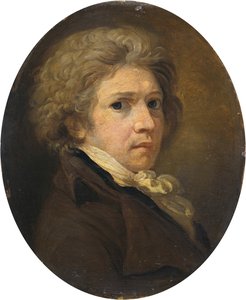
Andrea Appiani
1754 - 1817 , Italy
Quick Facts
- Artistic Movement Or Style: Neoclassical
- Artists Or Movements Influenced By This Artist: ['Andrea Appiani (younger)']
- Artists Who Influenced This Artist:
- Carlo Maria Giudici
- Antonio de' Giorgi
- Martin Knoller
- Date Of Birth: May 31, 1754
- Date Of Death: November 8, 1817
- Full Name: Andrea Appiani
- Nationality: Italian
- Notable Artworks:
- Four Evangelists Fresco
- Parnassus Fresco
- Allegories of Virtues
- Place Of Birth: Milan, Italy

