

 Send
Send Share
Share
 Details

 Download
 Similars
 Diaporama
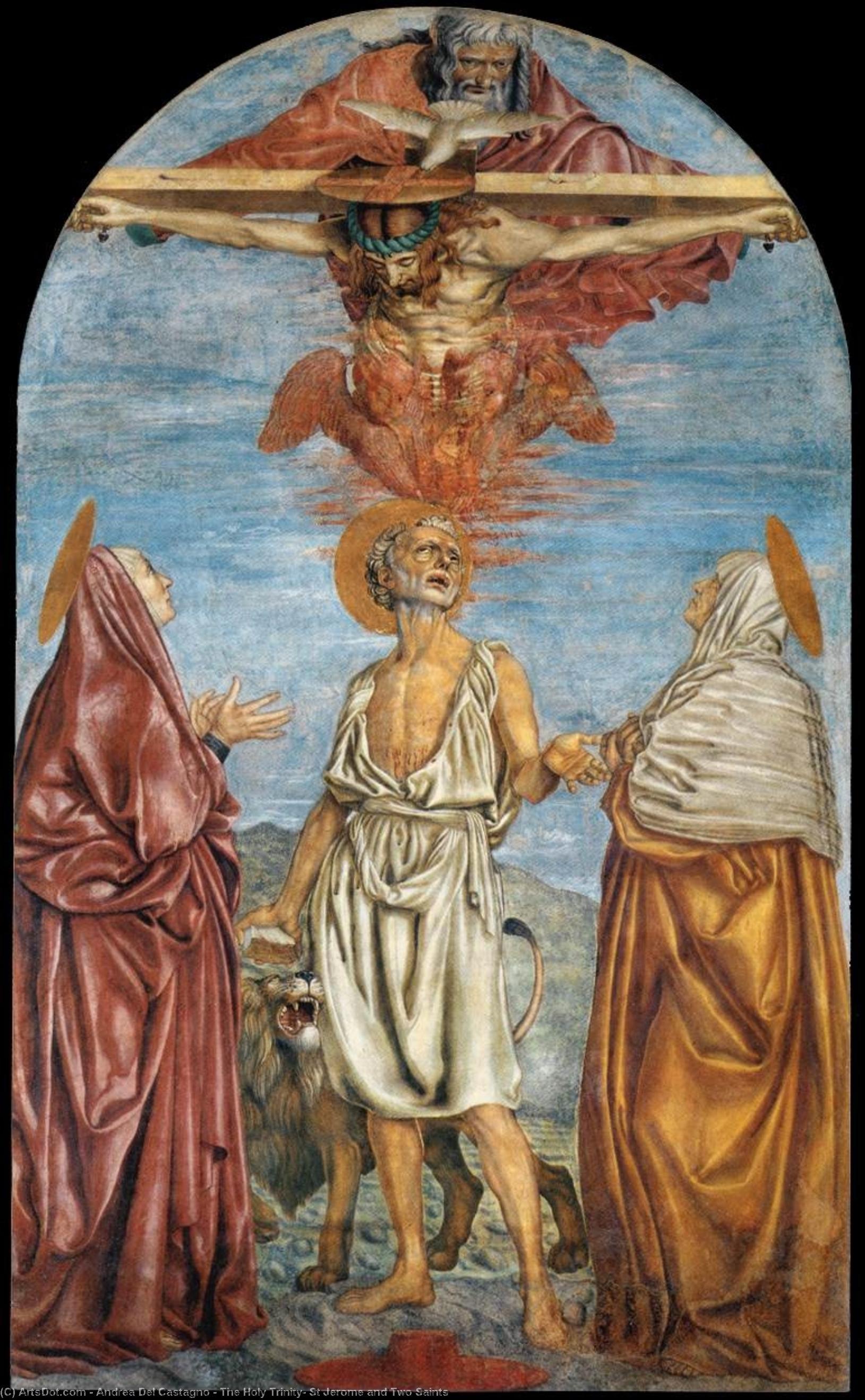
The Holy Trinity, St Jerome and Two Saints


 Read More
Purchase a high-resolution, enhanced digital image, far superior to the online preview.
Each file is meticulously prepared by our in-house specialists using advanced tools and expert manual retouching. We ensure every image has exceptional clarity, precise color accuracy, and fine detail.
The final file is delivered via email within 72 hours, optimized for immediate use in professional, editorial, and print environments. This is the same quality trusted by top-tier design studios, publishers, and galleries.
Digital Image
Download a high-resolution file for personal display, printing, and creative projects. ( Buy Print Buy Hand Made Painting)
Included in Every Digital Image Order
Expert Digital Delivery, Guaranteed
When you choose ArtsDot.com, you're not just getting an image - you're receiving a professionally enhanced digital artwork, crafted with precision and backed by a satisfaction guarantee. Here's everything that comes with your order, automatically:

Fast Email Delivery
Your high-resolution digital image file will be emailed to you within 72 hours of ordering - ready for immediate use.

AI-Enhanced Digital File
Your artwork is professionally optimized using advanced AI tools and manual editing, ensuring maximum detail, clarity, and color accuracy.

Free Lifetime Re-Delivery
Accidentally deleted or lost your file? No worries - we'll resend it to you anytime, free of charge.

No Import Fees - Ever
Enjoy your artwork instantly with zero customs, duties, or delivery fees - digital downloads are always tax-free.

Color Accuracy Guarantee
We ensure your digital image reflects the original colors as closely as possible using professional tools and color management.

60-Day Satisfaction Guarantee
If you're not satisfied with your digital image, we'll revise it or refund 100% within 60 days - no questions asked.

100% Money-Back Guarantee
Not satisfied? Get a full refund within 60 days of receiving your digital file - no questions asked.

Bulk Order Discounts
Buy 3 images, save 10% - Buy 5, save 15% - Buy 10+, save 20%. Great for creative projects, galleries, and agencies.
Collectible Description
A Moment of Profound Revelation: The Holy Trinity, St Jerome and Two Saints by Andrea del Castagno
This extraordinary fresco, dating back to 1453 and attributed to the Florentine master Andrea del Castagno, offers a visceral encounter with one of Christianity’s most pivotal moments – the Resurrection of Christ. Executed in the fervent spirit of the Early Renaissance, the artwork transcends mere representation; it is a carefully constructed drama of faith, doubt, and divine grace, rendered with an unprecedented level of realism and emotional intensity. The scene unfolds within a monumental arched composition, reminiscent of a stained-glass window or a grand panel, immediately drawing the viewer into its heart – the kneeling figure of Saint Thomas, overwhelmed by the tangible reality of Christ’s risen body.
- Subject Matter: At the core lies the Resurrection itself, depicted with breathtaking immediacy. Saint Thomas's gesture—touching the resurrected Jesus—is a universally recognized symbol of faith and acceptance, while God the Father’s outstretched arms embody divine intervention and triumph over mortality.
- Composition & Style: Castagno’s mastery is evident in his dynamic composition, utilizing perspective to create depth and drawing the eye towards the central figures. The influence of classical antiquity is subtly present, particularly in the idealized forms of the apostles and the carefully rendered landscape.
The Power of Fresco Technique
The artwork’s enduring quality stems directly from its execution as a fresco – a technique demanding immense skill and precision. Applying pigment to wet plaster creates a bond that is both incredibly durable and remarkably vibrant, ensuring that the colors retain their intensity for centuries. The texture itself—a slightly rough surface achieved through layering of paint—is characteristic of this method, adding a tactile quality to the image. Castagno’s meticulous attention to detail, particularly in the rendering of human anatomy and emotional expression, elevates the fresco beyond a simple depiction; it becomes a powerful testament to his artistic genius.
- Material: The artwork is painted with pigments mixed into lime plaster, creating a durable and long-lasting image.
- Process: Fresco painting involves applying wet paint directly onto freshly laid, damp plaster. As the plaster dries, it bonds with the pigment, forming a permanent surface.
Symbolism and Emotional Resonance
Beyond its religious narrative, “The Holy Trinity, St Jerome and Two Saints” is rich in symbolic meaning. The dog at Christ’s feet represents fidelity and loyalty—a timeless symbol of devotion. The stylized landscape, with its distant mountains and body of water, adds a layer of depth and reinforces the sense of awe and wonder. Castagno's masterful use of light – dramatic and directional – further enhances the emotional impact, highlighting key figures and casting shadows that contribute to the three-dimensionality of the scene. This artwork is not merely a historical record; it’s an invitation to contemplate profound questions about faith, redemption, and the human condition.
- Color Palette: The dominant use of warm tones – golds, reds, and browns – contrasted with cooler blues in the sky and water creates a visually arresting effect.
- Emotional Impact: The scene evokes feelings of reverence, awe, and perhaps even a touch of human vulnerability, reflecting the profound spiritual experience at its core.
A Legacy of Renaissance Innovation
Created in 1453 by Andrea del Castagno, a pivotal figure in the Early Renaissance, this fresco stands as a testament to his innovative approach and dramatic realism. His work, marked by a departure from earlier stylistic conventions, foreshadowed many of the developments that would characterize the High Renaissance. Owning a reproduction of “The Holy Trinity, St Jerome and Two Saints” is not simply acquiring an artwork; it’s gaining access to a moment in art history—a window into the soul of a brilliant artist and the enduring power of faith.
Related Artworks

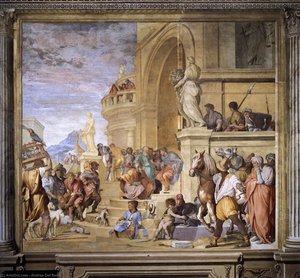
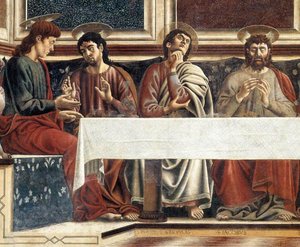
Artist Biography
A Florentine Renaissance Master: The Life and Art of Andrea del Castagno
Andrea del Castagno, a pivotal figure in the Early Renaissance, emerged from the Tuscan countryside near Florence around 1419 to leave an indelible mark on the artistic landscape. His life, though shrouded in some mystery, was one of innovation, dramatic realism, and a departure from the more stylized conventions that preceded him. Born in Castagnoli, not far from Monte Falterona, young Andrea’s early years were touched by conflict; his family resided in Corella during periods of war between Florence and Milan before returning home. It was under the patronage of Bernardo de' Medici in 1440 that he truly entered the Florentine art world, an entry marked by a rather grim commission – painting portraits of citizens executed after the Battle of Anghiari on the facade of the Palazzo del Podestà. This act earned him the chilling nickname "Andrea degli Impiccati" (Andrea of the Hanged), a testament to the political turbulence and stark realities of the era, and a shadow that followed him throughout his career. While details regarding his formal training remain scarce, it is widely believed he studied under both Fra Filippo Lippi and Paolo Uccello, absorbing their techniques while forging his own distinct path. His early works, such as the fresco of the Crucifixion and Saints in the Ospedale di Santa Maria Nuova (1440-1441), already demonstrate a keen interest in perspective and figures that bear the clear influence of Masaccio’s groundbreaking naturalism.Evolution of Style and Major Works
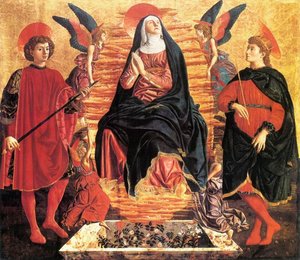
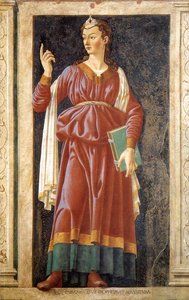
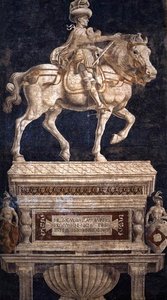
Castagno's artistic journey was one of continuous development, moving away from decorative approaches towards a more profound realism and psychological depth. His frescoes in San Tarasio Chapel, Venice (1442), represent an early expression of this evolving style, while his work within St Mark’s Basilica (1442-1443), including the poignant “Death of the Virgin,” showcased a growing mastery of dramatic composition. However, it was the Last Supper fresco at Sant’Apollonia in Florence, completed around 1447, that cemented his reputation as a master. This work is considered not merely a painting but a pivotal moment in Renaissance art; its exceptional detail, naturalistic portrayal of the apostles' reactions, and innovative use of perspective captivated contemporaries and profoundly influenced later artists – most notably Leonardo da Vinci, who is believed to have studied it intently before embarking on his own iconic rendition of the scene. The Assumption with Saints Julian and Miniato (c. 1449-1450), now housed in Berlin, further exemplifies his evolving style, while the frescoes at Villa Carducci (c. 1449-1450) – a series of portraits including luminaries like Pippo Spano, Farinata degli Uberti, Dante, and Petrarch – demonstrate his skill in capturing individual character and intellectual presence. Perhaps one of his most ambitious undertakings was the equestrian statue of Niccolò da Tolentino (1456), a fresco within Florence Cathedral that mirrors Paolo Uccello’s depiction of John Hawkwood, showcasing Castagno's ability to handle large-scale compositions with dynamic energy.Influences and Artistic Legacy
Andrea del Castagno did not work in isolation; his art was deeply informed by the giants who came before him. The pioneering use of perspective and naturalism championed by Masaccio served as a cornerstone of his artistic philosophy, while the expressive figures of Giotto di Bondone provided an early source of inspiration. He synthesized these influences into something uniquely his own – a style characterized by stark contrasts in light and shadow that heightened dramatic effect, and a commitment to portraying human emotion with unflinching honesty. This emphasis on realism and detailed observation wasn’t confined to Florence; it resonated throughout Italy, significantly impacting subsequent generations of artists, particularly those associated with the Ferrarese school. Cosme Tura, Francesco del Cossa, and Ercole de’ Roberti all demonstrate a clear debt to Castagno's innovations, carrying forward his legacy of naturalistic representation and psychological depth. He brought to painting what Banco and Donatello brought to sculpture, as one contemporary observer noted, solidifying his place among the most important artists of his time.Controversies and Historical Significance
Despite his artistic achievements, Andrea del Castagno’s life was not without its shadows. The renowned artist and biographer Giorgio Vasari alleged that Castagno murdered Domenico Veneziano, a claim fueled by professional rivalry and speculation. However, this accusation is now widely considered inaccurate due to discrepancies in the timelines of their deaths. Regardless of this unfounded rumor, Andrea del Castagno remains a crucial figure in Florentine Renaissance art. He represents a turning point – a move away from the decorative tendencies of earlier styles towards a more grounded, emotionally resonant form of expression. His work paved the way for later developments in painting, influencing not only his immediate successors but also shaping the course of Italian Renaissance art as a whole.Exploring Castagno’s World Today
While many of Castagno's frescoes remain in situ in Florence and Venice, offering a direct connection to his artistic vision, reproductions allow art enthusiasts worldwide to experience the power and beauty of his work. From the dramatic intensity of the Last Supper to the dignified portraits at Villa Carducci, these recreations provide an opportunity to appreciate the technical skill and emotional depth that define Castagno’s legacy. Discover the captivating world of Andrea del Castagno through high-quality reproductions available online. Explore his masterpieces, including the Crucifixion, Resurrection, and the iconic Last Supper. Delve into the historical context of Renaissance Florence and understand Castagno’s place within this vibrant artistic movement. His influence continues to inspire, reminding us of the enduring power of art to capture the human spirit and reflect the complexities of our world.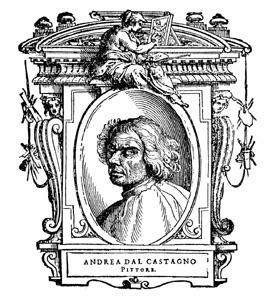
Andrea del Castagno
1419 - 1457 , Italy
Quick Facts
- Artistic Movement Or Style: Early Renaissance
- Artists Or Movements Influenced By This Artist:
- Ferrarese school
- Cosme Tura
- Francesco del Cossa
- Artists Who Influenced This Artist:
- Masaccio
- Giotto
- Fra Filippo Lippi
- Paolo Uccello
- Date Of Birth: c. 1419
- Date Of Death: 1457
- Full Name: Andrea del Castagno
- Nationality: Italian
- Notable Artworks:
- Last Supper
- Crucifixion
- Resurrection
- Assumption
- Place Of Birth: Castagnoli, Italy

