 Send
Send Share
Share
 Details

 Download
 Similars
 Diaporama
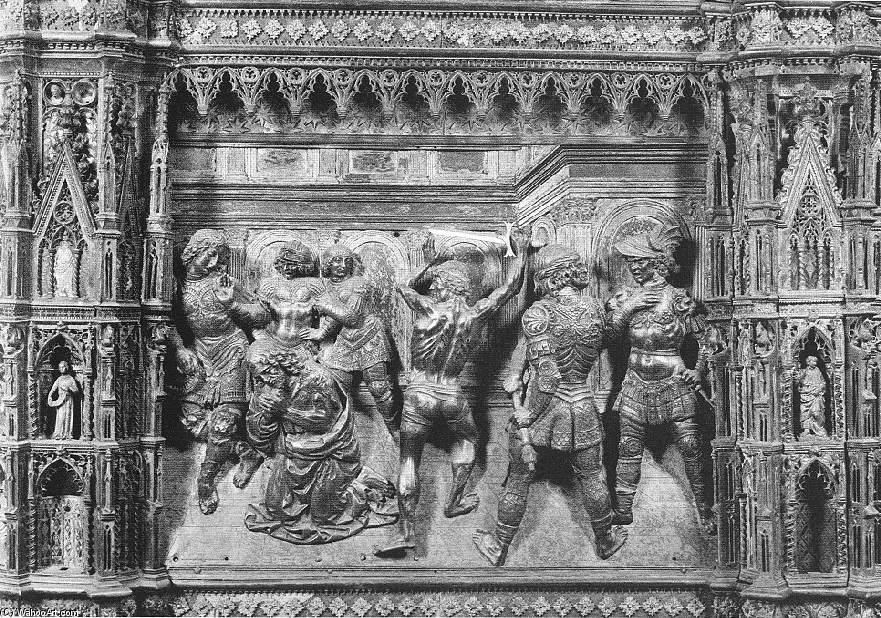
Beheading of St John the Baptist (detail of the altar)


 Read More
Hand Made Oil Reproduction
Hand-painted oil on canvas in your size and frame, made to order by our artists. ( Buy Print Buy Image)




































Pick from our preset sizes that match the artwork's original proportions.

You may enter your own dimensions to fit a specific frame or space. If your selected size does not match the original image's proportions, we will either crop the artwork or extend the painting with additional hand-painted elements. A digital mockup will be sent for your approval before production begins.
Please note that the on-screen preview does not reflect the actual cropping or extension. Only the mockup will accurately show the final composition.
While custom sizes are available, we recommend selecting a dimension from the predefined list to preserve the original proportions.
After order, ArtsDot.com team will email client for instructions and provide a mockup preview
Worldwide Delivery () in 3/4 weeks instead of standard 5 weeks. (6 September). No compromise on quality.

Free Worldwide Express Shipping

High-Quality Linen Canvas

Full Shipping Insurance

Customs Tax Refund Guarantee

True Color Matching Guarantee

100-Day Return Policy (Defects Only)

100% Money-Back Guarantee

Bulk Discount Offer
 Glass option is only available in size under 110 CM

Beheading of St John the Baptist (detail of the altar)
Reproduction Medium
Reproduction Size
-


Total Price
$ 363
Beheading of St John the Baptist (Detail of the Altar) – A Renaissance Masterpiece
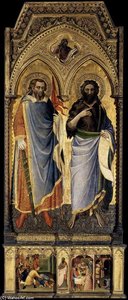
The Florence Baptistery’s altar stands as a testament to artistic ambition and humanist ideals, dominated by Andrea del Verrocchio's monumental sculpture depicting the gruesome yet profoundly symbolic act of decapitation. Completed in 1477 during the zenith of Florentine Renaissance culture, this artwork transcends mere representation; it embodies the era’s fascination with classical ideals blended with Christian piety.Subject Matter and Narrative Context
The sculpture portrays St. John the Baptist being brutally severed from his neck by Roman soldiers – a scene drawn directly from biblical scripture recounting Jesus's baptism. However, Verrocchio doesn’t simply depict an event; he crafts a narrative tableau designed to convey theological significance. The figures surrounding St. John are rendered with meticulous detail, portraying soldiers and onlookers who witness the execution. This deliberate staging underscores themes of martyrdom, sacrifice, and divine judgment – concepts central to Renaissance spirituality.Style and Technique: Renaissance Realism Embodied
Verrocchio’s approach exemplifies the stylistic hallmarks of Florentine Renaissance sculpture. Departing from Byzantine conventions that prioritized stylized depictions, he championed realism—a commitment to accurately portraying human anatomy and emotion. The sculptor skillfully utilizes contrapposto – a pose where the torso tilts slightly away from the spine – creating dynamic movement and conveying psychological depth within each figure. Furthermore, Verrocchio’s mastery of marble carving is evident in the sculpture's surface texture; subtle variations in shading and polishing contribute to an astonishing level of realism. The technique involved meticulous sculpting using chisels and hammers, combined with grinding and polishing to achieve a luminous finish that captures the essence of stone itself.Historical Significance: Verrocchio’s Workshop and Leonardo’s Legacy
The Baptistery altar is not merely a beautiful object; it represents a pivotal moment in artistic history. Verrocchio's workshop served as an incubator for talent, fostering the burgeoning genius of Leonardo da Vinci – arguably the most influential artist of the Renaissance. The collaboration between Verrocchio and Leonardo underscores the interconnectedness of artistic innovation during this transformative period. Moreover, the sculpture reflects the broader humanist movement that championed human reason and observation alongside religious faith—a shift away from medieval dogma toward a more nuanced understanding of the world.Symbolism: Blood, Sacrifice, and Divine Revelation
The depiction of blood – St. John’s severed head dripping onto his tunic – carries profound symbolic weight. It represents sacrifice for righteousness, mirroring Christ's crucifixion and symbolizing redemption through suffering. The positioning of St. John’s body—prone and vulnerable—emphasizes his humility before God. Simultaneously, the sculpture engages with theological concepts of divine revelation; the act of decapitation signifies the stripping away of earthly illusions to reveal spiritual truth.Emotional Impact: A Moment Frozen in Time
Looking upon Verrocchio's Beheading of St John the Baptist evokes a visceral response—a confrontation with mortality and an appreciation for artistic mastery. The sculpture’s unflinching portrayal of violence compels contemplation on themes of suffering, faith, and sacrifice. Yet, its exquisite craftsmanship inspires awe and admiration for Verrocchio’s skill as a sculptor and his contribution to the enduring legacy of Renaissance art. It remains a powerful reminder that beauty can coexist with solemn reflection—a timeless masterpiece capturing the spirit of an era defined by intellectual curiosity and artistic brilliance.Related Artworks
Artist Biography
A Florentine Renaissance Polymath: The World of Andrea del Verrocchio
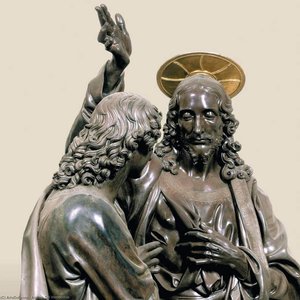
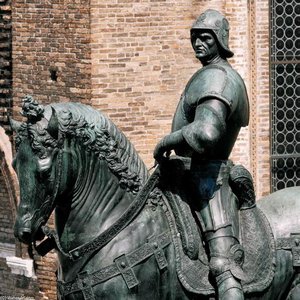
Andrea di Michele di Francesco de' Cioni, known to history as Andrea del Verrocchio, occupies a pivotal position in the Italian Renaissance. Born in Florence around 1435, his life coincided with a period of extraordinary artistic and intellectual ferment. While celebrated today for his sculptures – particularly the monumental equestrian statue of Bartolomeo Colleoni – Verrocchio was far more than simply a sculptor; he was a painter, goldsmith, and, crucially, a master craftsman who ran one of Florence’s most influential workshops. This workshop served as a crucible where artistic talent was forged, most notably nurturing the genius of Leonardo da Vinci. Verrocchio's early training remains somewhat shrouded in mystery, though his family background suggests an initial grounding in goldsmithing, a trade deeply ingrained within Florentine artisanal traditions. Speculation exists regarding apprenticeships under masters like Donatello or Fra Filippo Lippi, but concrete evidence is elusive. Regardless of his precise formative experiences, Verrocchio quickly demonstrated a remarkable aptitude for both sculpture and painting, laying the foundation for a career that would bridge medieval artistic conventions with the burgeoning aesthetics of the High Renaissance.From Goldsmith to Sculptor: A Rising Star in Florence
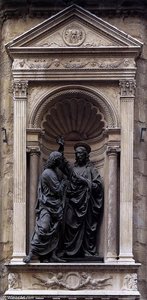
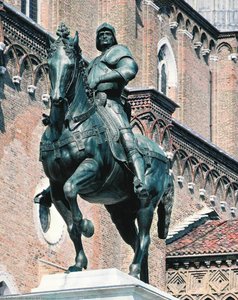
Verrocchio’s ascent within the Florentine art world was fueled by his exceptional skill and the patronage of powerful families, most prominently the Medici. His early works reveal a developing mastery of form and an increasing ambition to tackle complex subjects. The *Putto with a Dolphin*, for instance, showcases his ability to capture movement and emotion in bronze – qualities that would become hallmarks of his style. However, it was through larger-scale commissions that Verrocchio truly established his reputation. He wasn’t merely executing designs; he was overseeing an entire workshop, coordinating the efforts of assistants while maintaining a consistently high level of quality. This organizational prowess, combined with his artistic vision, allowed him to undertake ambitious projects like the *David*, a marble sculpture that reflects a classical influence yet possesses a youthful grace distinct from earlier depictions of the biblical hero. The equestrian statue of Bartolomeo Colleoni, commissioned for Venice and completed after his death in 1488, stands as Verrocchio’s undisputed masterpiece. This colossal bronze monument embodies Renaissance ideals of civic virtue and military prowess, demonstrating an unparalleled anatomical accuracy and a dynamic composition that captures the energy and power of both horse and rider. It remains a testament to his technical skill and artistic ambition.A Painter's Hand: Collaboration and Legacy
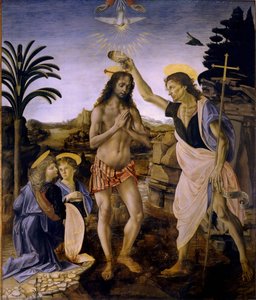
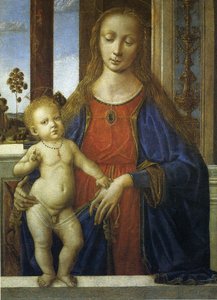
While primarily recognized as a sculptor, Verrocchio’s contributions to painting should not be underestimated, particularly considering his role in the development of one of history’s greatest artists. The *Baptism of Christ* is perhaps his most famous painted work, though it's renowned for what it reveals about another: Leonardo da Vinci. Verrocchio painted John the Baptist and one angel within the composition, while Leonardo – then a young apprentice in his workshop – was entrusted with painting the other angel and portions of the background landscape. The sheer quality of Leonardo’s contribution is said to have so profoundly impressed Verrocchio that he allegedly abandoned painting altogether, though this account is likely apocryphal. Nevertheless, it underscores the transformative impact Verrocchio had on Leonardo's artistic journey. Other paintings attributed primarily to Verrocchio, such as *The Virgin and Child with Two Angels*, demonstrate his ability to create serene and emotionally resonant religious scenes. These works reveal a delicate touch and a sensitivity to light and color that further solidify his position as a versatile and accomplished artist.The Enduring Influence of the Verrocchio Workshop
Andrea del Verrocchio’s legacy extends far beyond his individual artworks. His greatest contribution may well have been the workshop he established, which served as a training ground for a generation of talented artists. Leonardo da Vinci is, of course, the most celebrated pupil, but others – including Pietro Perugino and Lorenzo di Credi – also honed their skills under Verrocchio’s guidance. The workshop system itself was crucial to the flourishing artistic environment of Renaissance Florence, fostering collaboration, innovation, and a shared pursuit of excellence. Verrocchio's influence can be seen in the works of his students, who carried forward his emphasis on anatomical accuracy, dynamic composition, and technical mastery. He played a vital role in shaping the direction of Florentine sculpture, blending classical influences with innovative techniques to create a style that was both elegant and powerful. His work embodies the spirit of the Early Renaissance – a renewed interest in classical art, humanism, and naturalistic representation – while simultaneously paving the way for the artistic achievements of the High Renaissance. He died in Venice around 1488, leaving behind a legacy that continues to inspire artists and captivate audiences centuries later.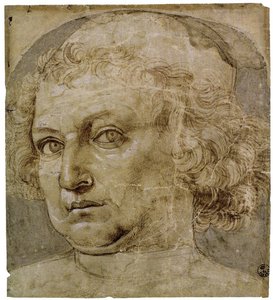
Andrea del Verrocchio
1435 - 1488 , Italy
Quick Facts
- Artistic Movement Or Style: Early Renaissance
- Artists Or Movements Influenced By This Artist:
- Leonardo da Vinci
- Pietro Perugino
- Artists Who Influenced This Artist:
- Donatello (debated)
- Fra Filippo Lippi
- Date Of Birth: c. 1435
- Date Of Death: 1488
- Full Name: Andrea del Verrocchio
- Nationality: Italian
- Notable Artworks:
- Baptism of Christ
- David
- Colleoni Statue
- Place Of Birth: Florence, Italy
Related Articles

Bronze Sculptures That Defined Art History | ArtsDot
Journey through art history with our Top 10 bronze sculptures! Explore masterpieces by Rodin, Michelangelo & more. Discover stories behind iconic statues and find museum-quality reproductions for your home decor at ArtsDot.com.

John Constable's Masterpieces: Explore 25 Iconic Landscapes for Your Home
Journey through John Constable's 25 most celebrated landscapes. Explore Romanticism, Dedham Vale & his masterful use of light in iconic paintings like 'Hay Wain'. Find museum-quality art reproductions and elevate your home decor on ArtsDot.com.

John Singer Sargent's 25 Masterpieces: Portraits & Beyond | ArtsDot
Explore 25 iconic John Singer Sargent paintings – from dazzling portraits to Impressionist landscapes. Discover the stories behind Madame X, El Jaleo & more! Find museum-quality art reproductions and elevate your home decor with ArtsDot.com.

The Enduring Form: Exploring Themes & Techniques in Sculpture Across Historical Periods
Explore the rich history of sculpture from ancient masterpieces to contemporary innovations. Discover key techniques, influential artists & investment potential for discerning art collectors.

Bronze Age to Modern Masters: 10 Sculptures That Redefined Art | ArtsDot
Journey through art history with 10 legendary bronze sculptures – from Michelangelo's David to Rodin’s Thinker. Explore the stories, techniques & timeless beauty of these masterpieces. Find museum-quality reproductions & elevate your home decor on ArtsDot.com.