 Preview
 Send
Send Share
Share
 Details

 Download
 Similars
 X-Ray
X-Ray Diaporama
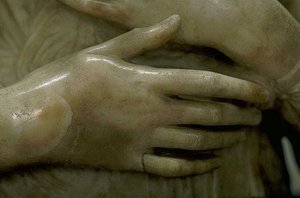
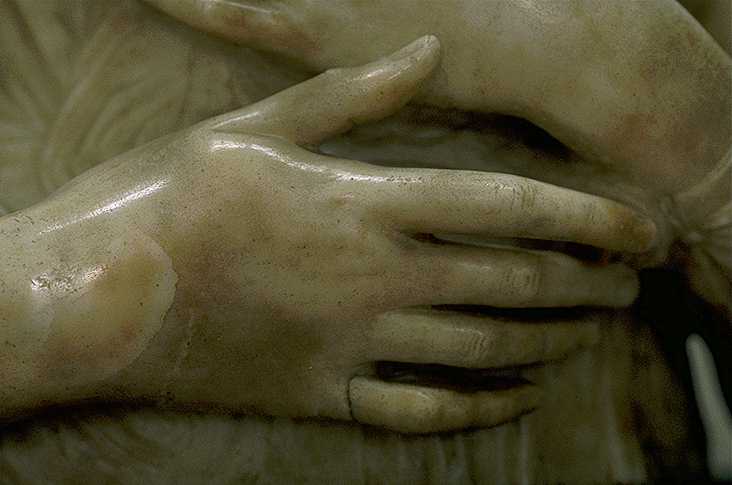
Portrait of a Woman (detail)


 Read More
Giclée / Art Print
Museum-quality giclée or canvas print with fast production and flexible finish options. ( Buy Hand Made Painting Buy Image)




P118B $10

P118H $10

P118W $10

P438Z $10

P508JH $12

P508YH $12

P805H $10

P805Z $10

P919BZ $10

P919G $10

P919XJ $10

P959ZH $10

P968JZ $12

W106C $8

W218G $10

W218JH $8

W218Y $10

W307PJ $10

W316G $10

W316PJ $8

W316Y $10

W398PJ $8

W4111J $10

W500HY $15

W500JH $15

W692G $12

W849H $8

W940BG $15

W953PJ $8




Pick from our preset sizes that match the artwork's original proportions.

You may enter your own dimensions to fit a specific frame or space. If your selected size does not match the original image's proportions, we will either crop the artwork or extend the image with a mirrored or solid-fill edge. A digital mockup will be sent for your approval before production begins.
Please note that the on-screen preview does not reflect the actual cropping or extension. Only the mockup will accurately show the final composition.
While custom sizes are available, we recommend selecting a dimension from the predefined list to preserve the original proportions.
Worldwide Delivery () in 2 weeks instead of standard 4/5 weeks. (4 September)

Free Worldwide Express Shipping

High-Quality Linen Canvas

Full Shipping Insurance

Customs Tax Refund Guarantee

True Color Matching Guarantee

60-Day Return Policy (Defects Only)

100% Money-Back Guarantee

Bulk Discount Offer
 Glass option is only available in size under 110 CM

Portrait of a Woman (detail)
Giclée / Art Print
Reproduction Size
-


Total Price
$ 63
Portrait of a Woman (detail) by Andrea del Verrocchio – A Study in Florentine Grace
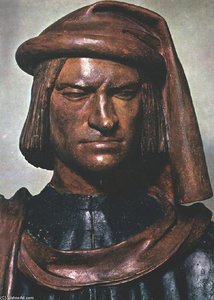
The world of 15th-century Florence pulsed with artistic innovation, and few figures embodied this dynamism quite like Andrea del Verrocchio. His workshop, a crucible for talent that nurtured the genius of Leonardo da Vinci amongst others, produced works of astonishing beauty and technical mastery. Among these, the “Portrait of a Woman (detail)” – currently housed within the Bargello Museum in Florence – stands as a particularly poignant example of his skill and an intimate glimpse into the refined sensibilities of Renaissance society. This isn’t merely a likeness; it's a carefully constructed meditation on beauty, modesty, and the subtle power of gesture.
The sculpture itself is a marvel of marble carving, measuring just sixty centimeters in height yet radiating an immense presence. The subject, believed by many to be Lucrezia Donati, a mistress of Lorenzo de’ Medici, is depicted in a half-length pose, her gaze averted and her hands clasped gently at her breast – a gesture that speaks volumes about her character. Verrocchio's genius lies not just in the accurate representation of anatomy—the delicate curve of the neck, the subtle modeling of the skin—but also in his ability to imbue the figure with an almost palpable sense of serenity and quiet dignity. The overall effect is one of profound stillness, a moment captured in time that invites contemplation.
The Techniques of Florentine Renaissance Sculpture
Verrocchio’s approach to sculpture was deeply rooted in the traditions of Florentine craftsmanship, yet he possessed a remarkable ability to transcend mere imitation. He skillfully employed techniques honed over generations, including meticulous carving and polishing of the marble to achieve a surface that is both smooth and subtly textured. The use of light and shadow is particularly noteworthy; Verrocchio masterfully manipulates these elements to create a sense of depth and volume, drawing the viewer’s eye to the intricate details of the hands and face. Notice, for instance, how the folds in the fabric are rendered with astonishing realism, each crease and ripple conveying a tactile quality that invites touch.
The choice of white marble itself is significant. It was considered an ideal material for portraiture, symbolizing purity, virtue, and nobility – qualities highly valued within Renaissance Florence. The cool, luminous tone of the marble further enhances the sense of serenity and grace, while its inherent reflectivity adds a subtle shimmer to the surface.
Symbolism and Context
Beyond its aesthetic merits, the “Portrait of a Woman” is rich in symbolic meaning. The pose itself—with hands clasped at the breast—is a traditional gesture of modesty and piety, suggesting a woman of virtue and refinement. The averted gaze speaks to an inner strength and self-possession, hinting at a life lived with grace and dignity. Considering Lucrezia Donati’s position as a favored mistress of Lorenzo de' Medici, the portrait can also be interpreted as a subtle assertion of power and influence – a quiet declaration of status within the complex political landscape of Renaissance Florence.
Furthermore, Verrocchio’s work reflects the broader artistic trends of the period. The emphasis on realism, combined with an understanding of human anatomy and emotion, aligns with the High Renaissance ideals that were beginning to emerge. Yet, there's also a distinctly Florentine sensibility at play—a celebration of beauty, elegance, and the refined tastes of the elite.
A Timeless Masterpiece – Reproduction Possibilities
The “Portrait of a Woman (detail)” by Andrea del Verrocchio remains an enduring testament to the artistic genius of the Renaissance. Its captivating beauty, technical brilliance, and profound symbolism continue to resonate with viewers centuries after its creation. High-quality reproductions offer a remarkable opportunity to bring this masterpiece into your home or office, allowing you to appreciate its intricate details and evocative atmosphere firsthand. When selecting a reproduction, prioritize materials and techniques that faithfully capture the original’s luminosity and texture – ensuring that you experience the true essence of Verrocchio's extraordinary work.
Related Artworks

Artist Biography
A Florentine Renaissance Polymath: The World of Andrea del Verrocchio
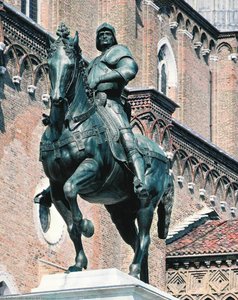
Andrea di Michele di Francesco de' Cioni, known to history as Andrea del Verrocchio, occupies a pivotal position in the Italian Renaissance. Born in Florence around 1435, his life coincided with a period of extraordinary artistic and intellectual ferment. While celebrated today for his sculptures – particularly the monumental equestrian statue of Bartolomeo Colleoni – Verrocchio was far more than simply a sculptor; he was a painter, goldsmith, and, crucially, a master craftsman who ran one of Florence’s most influential workshops. This workshop served as a crucible where artistic talent was forged, most notably nurturing the genius of Leonardo da Vinci. Verrocchio's early training remains somewhat shrouded in mystery, though his family background suggests an initial grounding in goldsmithing, a trade deeply ingrained within Florentine artisanal traditions. Speculation exists regarding apprenticeships under masters like Donatello or Fra Filippo Lippi, but concrete evidence is elusive. Regardless of his precise formative experiences, Verrocchio quickly demonstrated a remarkable aptitude for both sculpture and painting, laying the foundation for a career that would bridge medieval artistic conventions with the burgeoning aesthetics of the High Renaissance.From Goldsmith to Sculptor: A Rising Star in Florence
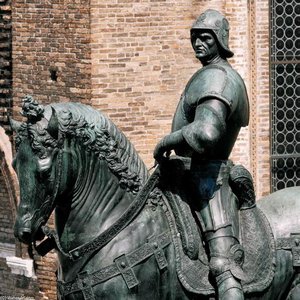
Verrocchio’s ascent within the Florentine art world was fueled by his exceptional skill and the patronage of powerful families, most prominently the Medici. His early works reveal a developing mastery of form and an increasing ambition to tackle complex subjects. The *Putto with a Dolphin*, for instance, showcases his ability to capture movement and emotion in bronze – qualities that would become hallmarks of his style. However, it was through larger-scale commissions that Verrocchio truly established his reputation. He wasn’t merely executing designs; he was overseeing an entire workshop, coordinating the efforts of assistants while maintaining a consistently high level of quality. This organizational prowess, combined with his artistic vision, allowed him to undertake ambitious projects like the *David*, a marble sculpture that reflects a classical influence yet possesses a youthful grace distinct from earlier depictions of the biblical hero. The equestrian statue of Bartolomeo Colleoni, commissioned for Venice and completed after his death in 1488, stands as Verrocchio’s undisputed masterpiece. This colossal bronze monument embodies Renaissance ideals of civic virtue and military prowess, demonstrating an unparalleled anatomical accuracy and a dynamic composition that captures the energy and power of both horse and rider. It remains a testament to his technical skill and artistic ambition.A Painter's Hand: Collaboration and Legacy
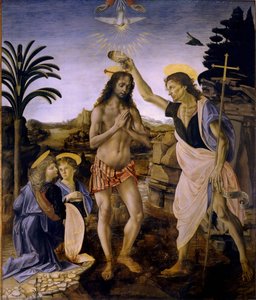
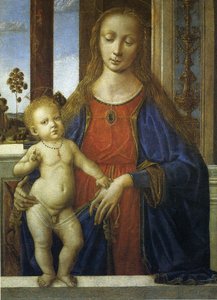
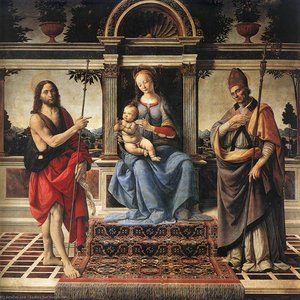
While primarily recognized as a sculptor, Verrocchio’s contributions to painting should not be underestimated, particularly considering his role in the development of one of history’s greatest artists. The *Baptism of Christ* is perhaps his most famous painted work, though it's renowned for what it reveals about another: Leonardo da Vinci. Verrocchio painted John the Baptist and one angel within the composition, while Leonardo – then a young apprentice in his workshop – was entrusted with painting the other angel and portions of the background landscape. The sheer quality of Leonardo’s contribution is said to have so profoundly impressed Verrocchio that he allegedly abandoned painting altogether, though this account is likely apocryphal. Nevertheless, it underscores the transformative impact Verrocchio had on Leonardo's artistic journey. Other paintings attributed primarily to Verrocchio, such as *The Virgin and Child with Two Angels*, demonstrate his ability to create serene and emotionally resonant religious scenes. These works reveal a delicate touch and a sensitivity to light and color that further solidify his position as a versatile and accomplished artist.The Enduring Influence of the Verrocchio Workshop
Andrea del Verrocchio’s legacy extends far beyond his individual artworks. His greatest contribution may well have been the workshop he established, which served as a training ground for a generation of talented artists. Leonardo da Vinci is, of course, the most celebrated pupil, but others – including Pietro Perugino and Lorenzo di Credi – also honed their skills under Verrocchio’s guidance. The workshop system itself was crucial to the flourishing artistic environment of Renaissance Florence, fostering collaboration, innovation, and a shared pursuit of excellence. Verrocchio's influence can be seen in the works of his students, who carried forward his emphasis on anatomical accuracy, dynamic composition, and technical mastery. He played a vital role in shaping the direction of Florentine sculpture, blending classical influences with innovative techniques to create a style that was both elegant and powerful. His work embodies the spirit of the Early Renaissance – a renewed interest in classical art, humanism, and naturalistic representation – while simultaneously paving the way for the artistic achievements of the High Renaissance. He died in Venice around 1488, leaving behind a legacy that continues to inspire artists and captivate audiences centuries later.
Andrea del Verrocchio
1435 - 1488 , Italy
Quick Facts
- Artistic Movement Or Style: Early Renaissance
- Artists Or Movements Influenced By This Artist:
- Leonardo da Vinci
- Pietro Perugino
- Artists Who Influenced This Artist:
- Donatello (debated)
- Fra Filippo Lippi
- Date Of Birth: c. 1435
- Date Of Death: 1488
- Full Name: Andrea del Verrocchio
- Nationality: Italian
- Notable Artworks:
- Baptism of Christ
- David
- Colleoni Statue
- Place Of Birth: Florence, Italy
Related Articles

Bronze Sculptures That Defined Art History | ArtsDot
Journey through art history with our Top 10 bronze sculptures! Explore masterpieces by Rodin, Michelangelo & more. Discover stories behind iconic statues and find museum-quality reproductions for your home decor at ArtsDot.com.
The Enduring Allure of Marble in Art History: From Classical Sculpture to Modern Abstraction
Explore the captivating history of marble sculpture from ancient Greece to modern art. Discover renowned artists like Canova & Michelangelo, carving techniques, and investment insights at ArtsDot.

The Enduring Form: Exploring Themes & Techniques in Sculpture Across Historical Periods
Explore the rich history of sculpture from ancient masterpieces to contemporary innovations. Discover key techniques, influential artists & investment potential for discerning art collectors.

The Enduring Form: Sculpture Across History, Technique & Emotional Resonance
Explore the rich history of sculpture with ArtsDot. Discover key techniques, influential artists & investment potential for discerning collectors. Expert insights into valuing and collecting timeless masterpieces.

Bronze Age to Modern Masters: 10 Sculptures That Redefined Art | ArtsDot
Journey through art history with 10 legendary bronze sculptures – from Michelangelo's David to Rodin’s Thinker. Explore the stories, techniques & timeless beauty of these masterpieces. Find museum-quality reproductions & elevate your home decor on ArtsDot.com.