

 Preview
 Send
Send Share
Share
 Details

 Download
 Similars
 X-Ray
X-Ray Diaporama
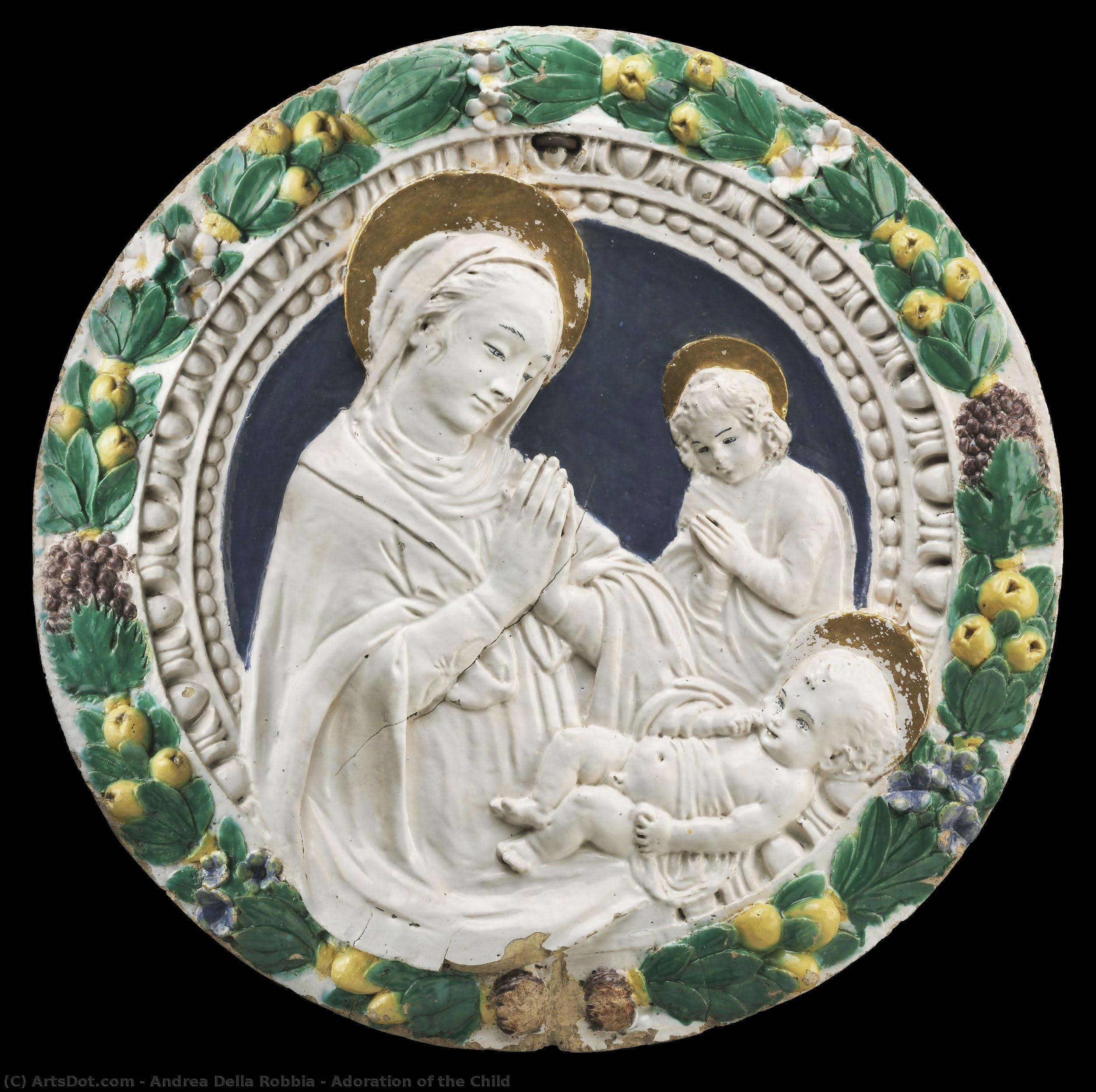
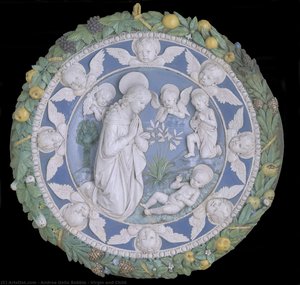
Adoration of the Child


 Read More
Purchase a high-resolution, enhanced digital image, far superior to the online preview.
Each file is meticulously prepared by our in-house specialists using advanced tools and expert manual retouching. We ensure every image has exceptional clarity, precise color accuracy, and fine detail.
The final file is delivered via email within 72 hours, optimized for immediate use in professional, editorial, and print environments. This is the same quality trusted by top-tier design studios, publishers, and galleries.
Digital Image
Download a high-resolution file for personal display, printing, and creative projects. ( Buy Print Buy Hand Made Painting)
Included in Every Digital Image Order
Expert Digital Delivery, Guaranteed
When you choose ArtsDot.com, you're not just getting an image - you're receiving a professionally enhanced digital artwork, crafted with precision and backed by a satisfaction guarantee. Here's everything that comes with your order, automatically:

Fast Email Delivery
Your high-resolution digital image file will be emailed to you within 72 hours of ordering - ready for immediate use.

AI-Enhanced Digital File
Your artwork is professionally optimized using advanced AI tools and manual editing, ensuring maximum detail, clarity, and color accuracy.

Free Lifetime Re-Delivery
Accidentally deleted or lost your file? No worries - we'll resend it to you anytime, free of charge.

No Import Fees - Ever
Enjoy your artwork instantly with zero customs, duties, or delivery fees - digital downloads are always tax-free.

Color Accuracy Guarantee
We ensure your digital image reflects the original colors as closely as possible using professional tools and color management.

60-Day Satisfaction Guarantee
If you're not satisfied with your digital image, we'll revise it or refund 100% within 60 days - no questions asked.

100% Money-Back Guarantee
Not satisfied? Get a full refund within 60 days of receiving your digital file - no questions asked.

Bulk Order Discounts
Buy 3 images, save 10% - Buy 5, save 15% - Buy 10+, save 20%. Great for creative projects, galleries, and agencies.
Collectible Description
Andrea della Robbia: The Poet of Clay
Andrea della Robbia stands apart in the pantheon of Renaissance sculptors not for monumental grandeur but for an astonishing mastery of glazed terracotta – transforming humble clay into objects imbued with serene beauty, profound emotion, and a uniquely Florentine sensibility. He wasn’t driven by ambition to dominate architectural spaces; rather, his legacy resides in exquisitely crafted reliefs that capture the spirit of faith and human experience with unparalleled grace. Born in Florence during an era of explosive artistic innovation – October 20, 1435 – Robbia emerged as one of the most distinctive voices of his time, inheriting from his father Marco della Robbia a passion for color and texture that would propel him to international renown. Luca della Robbia’s brother, Luca della Robbia, had already revolutionized sculpture through his pioneering use of tin-glazed terra-cotta, establishing a technique that Andrea swiftly adopted and perfected. This innovation wasn't merely about aesthetics; it represented a fundamental shift in sculptural practice – moving away from the cold stone of earlier masters toward a medium capable of conveying warmth and luminosity. Robbia’s early training undoubtedly involved working alongside Luca, absorbing the principles that would shape his own distinctive style, yet he possessed an independent vision that distinguished him as a singular artist. He was particularly influenced by Donatello, whose dynamic figures and expressive realism served as inspiration for Robbia's own creations.A Technique Born of Innovation
The della Robbia brothers’ breakthrough came with the development of tin-glazed terracotta – a process involving layering clay, applying slip (a mixture of clay and water), firing it to a low temperature, and then glazing it with enamel pigments. This method yielded astonishing results: surfaces that shimmered with vibrant color, achieved through meticulous application of glaze over fired terracotta. Unlike stone sculpture, which relied on carving away material to reveal form, glazed terracotta allowed artists to build up figures from multiple layers of clay, creating complex textures and capturing subtle nuances of expression. The resulting reliefs possessed a remarkable tactile quality – inviting viewers to imagine the coolness of the clay beneath the surface of the glaze.Devotional Works Reflecting Florentine Spirituality
Andrea della Robbia’s artistic output was overwhelmingly devoted to religious subjects—a testament to the prevailing spiritual fervor of Florence during his lifetime. His most celebrated works include depictions of Mary holding the infant Jesus, scenes from biblical narratives, and representations of saints – all rendered with breathtaking detail and imbued with a palpable sense of reverence. The artist's meticulous attention to anatomical accuracy combined seamlessly with expressive gestures and facial expressions, conveying not merely visual information but also emotional depth. Robbia’s reliefs served as powerful reminders of Christian faith and morality, reflecting the humanist ideals that underpinned Florentine culture.Iconic Masterpieces: Beyond Imitation
Among Robbia's enduring achievements are the monumental terracotta reliefs adorning the Baptistery of Florence Cathedral—a collaborative effort with Lorenzo Ghiberti—and the intricate sculptures decorating St Mark’s Basilica in Venice. These masterpieces exemplify Robbia’s mastery of technique and his ability to transform simple materials into objects of sublime beauty. The “Adoration of the Magi,” commissioned for the Cappella Maggiore of Santa Maria Novella, stands as a pinnacle of Florentine Renaissance art—a testament to Robbia's artistic genius and his unwavering commitment to conveying spiritual truth through visual form. His sculptures continue to inspire awe and admiration centuries later, cementing his place as one of the greatest artists of the Renaissance.Related Artworks
Artist Biography
Andrea della Robbia: The Poet of Clay
Born in the heart of Florence during a period of explosive artistic innovation – October 20, 1435 – Andrea della Robbia emerged as one of the most distinctive and influential sculptors of the Italian Renaissance. His legacy isn’t defined by grand monuments or imposing statues, but rather by an extraordinary mastery of glazed terracotta, transforming humble clay into objects brimming with serene beauty, profound emotion, and a uniquely Florentine sensibility. He was the son of Marco della Robbia, whose brother, Luca della Robbia, had already begun to revolutionize sculpture through his pioneering use of tin-glazed terra-cotta, and Andrea inherited this passion for color and texture, building upon his uncle’s foundation.
Andrea's early training undoubtedly involved working alongside Luca, absorbing the techniques and artistic principles that would shape his own distinctive style. However, unlike his uncle who primarily focused on stone sculpture, Andrea quickly established himself as a master of terracotta relief, developing a technique that allowed him to achieve astonishing levels of detail, realism, and vibrant color. This shift marked a crucial development in Renaissance art, elevating terracotta from a relatively inexpensive material to one capable of producing works of breathtaking beauty and sophistication.
The Language of Clay: Technique and Innovation
Andrea della Robbia’s genius lay not just in his artistic vision but also in his technical innovations. He perfected the process of enameling terracotta, meticulously layering glazes to create a dazzling array of colors – blues, greens, yellows, reds, and whites – that shimmered with an almost ethereal quality. Crucially, he often departed from the traditional practice of applying enamel to the faces and hands of his figures, particularly in scenes depicting infants or children. This decision, driven by a desire for greater realism, resulted in remarkably expressive faces, conveying a wide range of emotions with subtle nuances.
His most significant contribution was arguably the introduction of a new method of applying enamel – often omitting it entirely from the faces and hands. This technique, combined with his meticulous modeling skills, allowed him to create figures that possessed an unparalleled sense of life and immediacy. He also expanded the application of glazed relief beyond traditional panels, incorporating it into architectural elements such as friezes, lavabos (wash basins), fountains, and elaborate retables – essentially transforming these functional objects into works of art.
Devotional Masterpieces: Madonna and Child
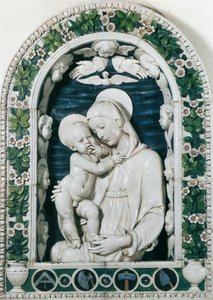
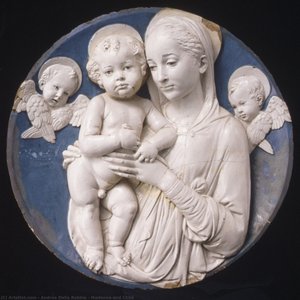
Andrea della Robbia’s most celebrated works are undoubtedly his depictions of the Virgin Mary and the infant Jesus. These “Madonna and Child” sculptures, often characterized by their serene beauty, profound spirituality, and remarkable realism, became immensely popular throughout Italy. He produced a vast number of these figures, each subtly different in pose, expression, and detail, creating a captivating series that showcases his artistic versatility.
One particularly poignant example is the series of medallions depicting the infant Jesus found adorning the facade of the Ospedale degli Innocenti (Hospital of the Innocent) in Florence. These small, intimate sculptures – often described as “swaddled babies” – are considered among Andrea’s finest achievements. The figures are rendered with exquisite detail, capturing the vulnerability and innocence of childhood with remarkable sensitivity. The use of white terracotta against a blue ground creates a striking visual contrast, further enhancing the ethereal quality of these beloved works.
Beyond Florence: Influence and Legacy
While Andrea della Robbia’s workshop was firmly rooted in Florence, his influence extended far beyond the city's borders. His techniques were eagerly adopted by his sons, Giovanni and Girolamo, who continued to develop and refine his style. His work also profoundly impacted Luca della Robbia’s nephew, Giovanni, solidifying the family’s reputation as masters of glazed terracotta sculpture.
Andrea della Robbia's legacy is profound. He not only elevated terracotta to a position of artistic prominence but also demonstrated an unparalleled ability to imbue his creations with emotion and realism. His innovative techniques, combined with his deep understanding of human psychology, continue to inspire artists today. His works are treasured in museums and private collections around the world, serving as enduring testaments to the genius of this remarkable Florentine sculptor – a true poet of clay.
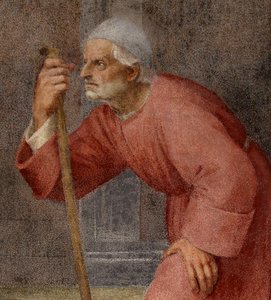
Andrea della Robbia
1435 - 1525 , Italy
Quick Facts
- Artistic Movement Or Style: Renaissance sculpture
- Artists Or Movements Influenced By This Artist: ['Renaissance art']
- Artists Who Influenced This Artist: ['Luca della Robbia']
- Date Of Birth: Oct 20, 1435
- Date Of Death: Aug 4, 1525
- Full Name: Andrea della Robbia
- Nationality: Italian
- Notable Artworks:
- Madonna & Child
- Bartolini Salimbeni Coat of Arms
- Madonna of the Stonemasons
- Place Of Birth: Florence, Italy

