

 Send
Send Share
Share
 Details

 Download
 Similars
 Diaporama
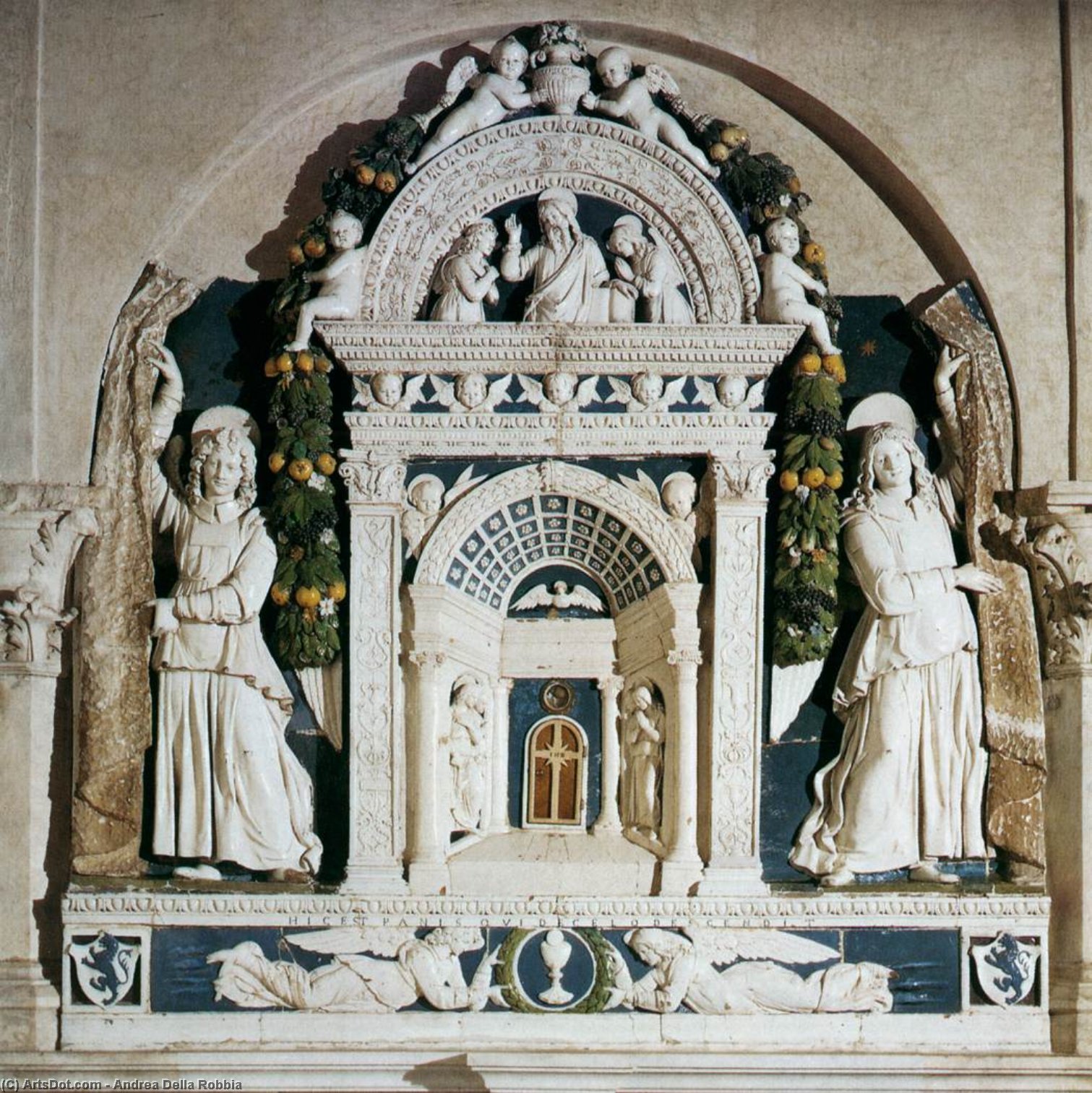
Altar of the Sacrament
 Terracotta
- Italian Renaissance
 1512
1512- Renaissance
 270.0 x 240.0 cm
 Santi Apostoli
 Read More
Purchase a high-resolution, enhanced digital image, far superior to the online preview.
Each file is meticulously prepared by our in-house specialists using advanced tools and expert manual retouching. We ensure every image has exceptional clarity, precise color accuracy, and fine detail.
The final file is delivered via email within 72 hours, optimized for immediate use in professional, editorial, and print environments. This is the same quality trusted by top-tier design studios, publishers, and galleries.
Digital Image
Download a high-resolution file for personal display, printing, and creative projects. ( Buy Print Buy Hand Made Painting)
Included in Every Digital Image Order
Expert Digital Delivery, Guaranteed
When you choose ArtsDot.com, you're not just getting an image - you're receiving a professionally enhanced digital artwork, crafted with precision and backed by a satisfaction guarantee. Here's everything that comes with your order, automatically:

Fast Email Delivery
Your high-resolution digital image file will be emailed to you within 72 hours of ordering - ready for immediate use.

AI-Enhanced Digital File
Your artwork is professionally optimized using advanced AI tools and manual editing, ensuring maximum detail, clarity, and color accuracy.

Free Lifetime Re-Delivery
Accidentally deleted or lost your file? No worries - we'll resend it to you anytime, free of charge.

No Import Fees - Ever
Enjoy your artwork instantly with zero customs, duties, or delivery fees - digital downloads are always tax-free.

Color Accuracy Guarantee
We ensure your digital image reflects the original colors as closely as possible using professional tools and color management.

60-Day Satisfaction Guarantee
If you're not satisfied with your digital image, we'll revise it or refund 100% within 60 days - no questions asked.

100% Money-Back Guarantee
Not satisfied? Get a full refund within 60 days of receiving your digital file - no questions asked.

Bulk Order Discounts
Buy 3 images, save 10% - Buy 5, save 15% - Buy 10+, save 20%. Great for creative projects, galleries, and agencies.
Collectible Description
A Vision of Divine Splendor
In the heart of the Italian Renaissance, where the boundaries between the earthly and the divine were often blurred by the stroke of a brush or the molding of clay, Andrea della Robbia created a masterpiece of profound devotion: Altar of the Sacrament. Created in 1512, this breathtaking work serves as a window into a period of intense spiritual reflection and artistic mastery. The composition centers upon a magnificent statue of Jesus, a figure that commands the viewer's attention with an aura of serene authority. Surrounding this central divinity is a celestial assembly of smaller statues and graceful angels, positioned to guide the eye through a complex hierarchy of holiness. To witness this piece is to step into a sacred space where every sculpted detail—from the delicate folds of angelic drapery to the meticulous arrangement of the figures—whispers of a higher, heavenly order.
The artistry of the Altar of the Sacrament is deeply rooted in the unique Florentine tradition of glazed terracotta and sculptural relief. Andrea della Robbia, a descendant of the legendary Luca della Robbia, brought to this work a specialized sensitivity to color and texture that transformed humble materials into luminous treasures. The painting captures the essence of this technique, presenting an arrangement where light seems to dance across the surfaces of the statues, creating a sense of depth and three-dimensionality that transcends the flat plane. This interplay of light and shadow does more than just define form; it breathes life into the figures, making the divine presence feel tangible and immediate to the observer.
Symbolism and the Renaissance Soul
Beyond its visual splendor, the work is a rich tapestry of theological symbolism designed to inspire awe and contemplation. The central placement of Christ signifies his role as the cornerstone of faith, while the surrounding angels act as intermediaries between the mortal realm and the heavens. Even the subtle inclusion of a clock in the upper corner serves as a poignant memento mori, a reminder of the fleeting nature of earthly time in contrast to the eternal life promised by the sacrament. For the collector or the interior designer, this piece offers more than mere decoration; it provides a profound narrative depth that can anchor a room with a sense of history and timelessness.
Integrating a high-quality reproduction of such a significant work into a contemporary space allows for a sophisticated dialogue between the past and the present. Whether placed in a grand gallery, a quiet study, or an elegantly appointed living area, the Altar of the Sacrament brings with it an atmosphere of tranquility and intellectual prestige. It is a piece that invites long periods of study and emotional connection, making it an incomparable choice for those who seek to surround themselves with art that possesses both historical weight and an enduring, soulful beauty.
Related Artworks

Artist Biography
Andrea della Robbia: The Poet of Clay
Born in the heart of Florence during a period of explosive artistic innovation – October 20, 1435 – Andrea della Robbia emerged as one of the most distinctive and influential sculptors of the Italian Renaissance. His legacy isn’t defined by grand monuments or imposing statues, but rather by an extraordinary mastery of glazed terracotta, transforming humble clay into objects brimming with serene beauty, profound emotion, and a uniquely Florentine sensibility. He was the son of Marco della Robbia, whose brother, Luca della Robbia, had already begun to revolutionize sculpture through his pioneering use of tin-glazed terra-cotta, and Andrea inherited this passion for color and texture, building upon his uncle’s foundation.
Andrea's early training undoubtedly involved working alongside Luca, absorbing the techniques and artistic principles that would shape his own distinctive style. However, unlike his uncle who primarily focused on stone sculpture, Andrea quickly established himself as a master of terracotta relief, developing a technique that allowed him to achieve astonishing levels of detail, realism, and vibrant color. This shift marked a crucial development in Renaissance art, elevating terracotta from a relatively inexpensive material to one capable of producing works of breathtaking beauty and sophistication.
The Language of Clay: Technique and Innovation
Andrea della Robbia’s genius lay not just in his artistic vision but also in his technical innovations. He perfected the process of enameling terracotta, meticulously layering glazes to create a dazzling array of colors – blues, greens, yellows, reds, and whites – that shimmered with an almost ethereal quality. Crucially, he often departed from the traditional practice of applying enamel to the faces and hands of his figures, particularly in scenes depicting infants or children. This decision, driven by a desire for greater realism, resulted in remarkably expressive faces, conveying a wide range of emotions with subtle nuances.
His most significant contribution was arguably the introduction of a new method of applying enamel – often omitting it entirely from the faces and hands. This technique, combined with his meticulous modeling skills, allowed him to create figures that possessed an unparalleled sense of life and immediacy. He also expanded the application of glazed relief beyond traditional panels, incorporating it into architectural elements such as friezes, lavabos (wash basins), fountains, and elaborate retables – essentially transforming these functional objects into works of art.
Devotional Masterpieces: Madonna and Child
Andrea della Robbia’s most celebrated works are undoubtedly his depictions of the Virgin Mary and the infant Jesus. These “Madonna and Child” sculptures, often characterized by their serene beauty, profound spirituality, and remarkable realism, became immensely popular throughout Italy. He produced a vast number of these figures, each subtly different in pose, expression, and detail, creating a captivating series that showcases his artistic versatility.
One particularly poignant example is the series of medallions depicting the infant Jesus found adorning the facade of the Ospedale degli Innocenti (Hospital of the Innocent) in Florence. These small, intimate sculptures – often described as “swaddled babies” – are considered among Andrea’s finest achievements. The figures are rendered with exquisite detail, capturing the vulnerability and innocence of childhood with remarkable sensitivity. The use of white terracotta against a blue ground creates a striking visual contrast, further enhancing the ethereal quality of these beloved works.
Beyond Florence: Influence and Legacy
While Andrea della Robbia’s workshop was firmly rooted in Florence, his influence extended far beyond the city's borders. His techniques were eagerly adopted by his sons, Giovanni and Girolamo, who continued to develop and refine his style. His work also profoundly impacted Luca della Robbia’s nephew, Giovanni, solidifying the family’s reputation as masters of glazed terracotta sculpture.
Andrea della Robbia's legacy is profound. He not only elevated terracotta to a position of artistic prominence but also demonstrated an unparalleled ability to imbue his creations with emotion and realism. His innovative techniques, combined with his deep understanding of human psychology, continue to inspire artists today. His works are treasured in museums and private collections around the world, serving as enduring testaments to the genius of this remarkable Florentine sculptor – a true poet of clay.
Andrea della Robbia
1435 - 1525 , Italy
Quick Facts
- Artistic Movement Or Style: Renaissance sculpture
- Artists Or Movements Influenced By This Artist: ['Renaissance art']
- Artists Who Influenced This Artist: ['Luca della Robbia']
- Date Of Birth: Oct 20, 1435
- Date Of Death: Aug 4, 1525
- Full Name: Andrea della Robbia
- Nationality: Italian
- Notable Artworks:
- Madonna & Child
- Bartolini Salimbeni Coat of Arms
- Madonna of the Stonemasons
- Place Of Birth: Florence, Italy

