

 Preview
 Send
Send Share
Share
 Details

 Download
 Similars
 X-Ray
X-Ray Diaporama
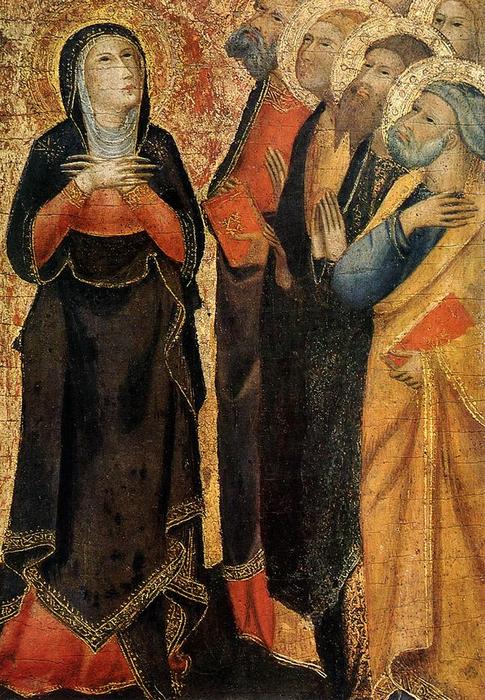
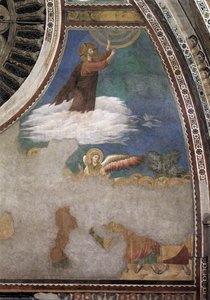
Ascension of Christ (detail)


 Read More
Purchase a high-resolution, enhanced digital image, far superior to the online preview.
Each file is meticulously prepared by our in-house specialists using advanced tools and expert manual retouching. We ensure every image has exceptional clarity, precise color accuracy, and fine detail.
The final file is delivered via email within 72 hours, optimized for immediate use in professional, editorial, and print environments. This is the same quality trusted by top-tier design studios, publishers, and galleries.
Digital Image
Download a high-resolution file for personal display, printing, and creative projects. ( Buy Print Buy Hand Made Painting)
Included in Every Digital Image Order
Expert Digital Delivery, Guaranteed
When you choose ArtsDot.com, you're not just getting an image - you're receiving a professionally enhanced digital artwork, crafted with precision and backed by a satisfaction guarantee. Here's everything that comes with your order, automatically:

Fast Email Delivery
Your high-resolution digital image file will be emailed to you within 72 hours of ordering - ready for immediate use.

AI-Enhanced Digital File
Your artwork is professionally optimized using advanced AI tools and manual editing, ensuring maximum detail, clarity, and color accuracy.

Free Lifetime Re-Delivery
Accidentally deleted or lost your file? No worries - we'll resend it to you anytime, free of charge.

No Import Fees - Ever
Enjoy your artwork instantly with zero customs, duties, or delivery fees - digital downloads are always tax-free.

Color Accuracy Guarantee
We ensure your digital image reflects the original colors as closely as possible using professional tools and color management.

60-Day Satisfaction Guarantee
If you're not satisfied with your digital image, we'll revise it or refund 100% within 60 days - no questions asked.

100% Money-Back Guarantee
Not satisfied? Get a full refund within 60 days of receiving your digital file - no questions asked.

Bulk Order Discounts
Buy 3 images, save 10% - Buy 5, save 15% - Buy 10+, save 20%. Great for creative projects, galleries, and agencies.
Collectible Description
A Moment of Divine Ascent: Exploring the Depths of Andrea di Vanni d’Andrea’s “Ascension of Christ”
The world of 14th-century Siena, Italy, pulsed with a fervent blend of artistic innovation and deep religious devotion. Within this vibrant landscape flourished Andrea di Vanni d’Andrea, an artist whose legacy rests primarily on a handful of profoundly moving works – most notably, the exquisite “Ascension of Christ” currently housed within the Hermitage Museum in St. Petersburg. This particular detail panel, radiating with a quiet intensity, offers a captivating glimpse into a pivotal moment of Christian belief: the ascension of Jesus to heaven. More than just a depiction of an event, it’s a carefully constructed tableau brimming with symbolic weight and technical mastery, inviting viewers to contemplate themes of faith, hope, and divine grace.
The painting immediately draws the eye to its central figure – a woman draped in rich fabrics, her posture conveying both solemnity and profound contemplation. While traditionally attributed to Bartolo di Fredi initially, scholarly research now firmly places this work within Andrea’s oeuvre, revealing a distinct stylistic evolution. The woman's attire, a dark robe overlaid with a vibrant red cloak and headscarf, speaks to her elevated status as a witness to the divine event. Her face, rendered with remarkable sensitivity, is not one of ecstatic joy but rather one of quiet reverence – an invitation for the viewer to share in her contemplative gaze.
A Symphony of Color and Technique: The Art of Tempera on Wood
Andrea di Vanni d’Andrea was a master of tempera paint on wood, a technique favored during this period for its luminosity and durability. The painting's palette is restrained yet remarkably effective; deep blues and purples dominate the background, creating an atmosphere of ethereal twilight – a visual representation of the heavenly realm. The use of gold leaf, particularly in outlining figures and highlighting architectural elements, adds a layer of opulence and reinforces the sacred nature of the scene. Notice the meticulous detail applied to the clothing, the subtle gradations of color in the drapery, and the delicate rendering of facial features – all hallmarks of Andrea’s painstaking approach.
The composition itself is carefully balanced, drawing the eye upwards towards Christ, who occupies a prominent position within the scene. The surrounding figures—men dressed in varying styles of medieval clothing—are engaged in different activities: some appear to be listening intently, others observing with a sense of wonder. This arrangement suggests a community gathered to witness this transformative event, emphasizing the universality of faith and belief.
Symbolism and Spiritual Resonance: Echoes of Byzantine and Gothic Traditions
The “Ascension of Christ” is deeply rooted in both Byzantine and Gothic artistic traditions. The pyramidal composition, reminiscent of Byzantine iconography, directs the viewer’s eye towards the central figure, while the rich colors and elaborate details reflect the grandeur of Gothic art. Crucially, the scene itself—the ascension—holds immense symbolic significance within Christian theology. It represents not just a physical departure but also a spiritual elevation – Christ's return to God the Father and his subsequent role as intercessor for humanity.
The presence of the woman in dark robes is particularly noteworthy. While interpretations vary, she’s often seen as representing Mary Magdalene, or perhaps even the Church itself—a witness to the divine event and a conduit between heaven and earth. The halo surrounding Christ's head further emphasizes his divinity and authority. The overall effect is one of profound spiritual resonance, inviting viewers to contemplate their own relationship with faith and the promise of eternal life.
A Timeless Masterpiece: Reproductions and Beyond
Reproductions of Andrea di Vanni d’Andrea's “Ascension of Christ” offer a remarkable opportunity to bring this exquisite artwork into your home or office. ArtsDot.com offers high-quality reproductions, meticulously crafted to capture the original’s luminosity and detail. Whether you seek a vibrant acrylic on canvas or a faithful digital mockup for approval, we provide options to suit your individual needs and preferences. This painting remains a testament to the enduring power of faith and artistic expression – a timeless masterpiece that continues to inspire awe and contemplation centuries after its creation.
Related Artworks

Artist Biography
The Sienese Master: The Life and Legacy of Andrea di Vanni
In the golden light of the fourteenth century, within the winding, terracotta-hued streets of Siena, a painter emerged whose brush would capture the spiritual essence of the Early Renaissance. Andrea di Vanni d'Andrea, known simply as Andrea di Vanni, was more than just a practitioner of religious iconography; he was a man deeply woven into the very fabric of his city’s civic and spiritual identity. Born around 1332, Vanni’s life unfolded during a transformative era for Italian art, a period where the delicate elegance of the Gothic tradition began to meet the burgeoning structural ambitions of the Renaissance.
While historical records regarding his earliest years remain somewhat veiled in mystery, we first encounter his presence in the artistic landscape around 1353. During this formative period, he was associated with the esteemed painter Bartolo di Fredi, a connection that likely provided him with the technical foundation necessary to navigate the demanding workshops of Siena. However, Vanni was not merely a man of the studio; his life was marked by a remarkable duality between artistic creation and civic duty. He played an active role in the governance of Siena, holding prestigious offices such as gonfaloniero and serving as an envoy to the Papal court. This unique position allowed him to exist at the intersection of political power and religious devotion, a vantage point that undoubtedly informed the gravity and importance found within his compositions.
A Tapestry of Influence and Technique
To understand the visual language of Andrea di Vanni, one must look toward the masters who preceded him. His style breathes with the lingering grace of Simone Martini and Pietro Lorenzetti, the titans of Sienese painting. From Martini, Vanni inherited a penchant for lyrical lines and a certain ethereal quality, while from Lorenzetti, he drew a sense of weight and emotional presence. His work often eschews the heavy use of chiaroscuro—the dramatic play of light and shadow—in favor of a striking, almost silhouette-like design. This technique creates a powerful graphic impact, particularly when set against the luminous, unyielding gold backgrounds so characteristic of Sienese devotional art.
One of his most breathtaking achievements is the polyptych housed in the church of Santo Stefano alla Lizza. In this masterpiece, the viewer is confronted with a central portrait of the Virgin and Child that commands the space through sheer coloristic brilliance. The Madonna is rendered as a dark, elegant pattern against her gilded throne, creating a visual rhythm that feels both ancient and strikingly modern. This ability to balance intricate ornamentation with bold, simplified forms allowed his work to resonate deeply within the liturgical spaces of his era.
Fragments of a Vanished Splendor
The true breadth of Vanni’s oeuvre remains a poignant subject for art historians, as much of his legacy has been lost to the ravages of time. Many of his most ambitious projects, including portraits of Saint Catherine of Siena and scenes from the life of Saint James, have disappeared into the shadows of history. Yet, the fragments that remain—such as the Enthroned Madonna in the transept of San Francesco or the fragmented Crucifixion now held in the Istituto delle Belle Arti—serve as vital windows into his creative soul.
Even in these surviving pieces, we see a painter dedicated to the commemorative and the sacred. His work was often commissioned to honor saints and celebrate the continuity of faith within the Sienese community. Though he may not possess the global fame of some of his contemporaries, Andrea di Vanni d'Andrea remains an indispensable figure for understanding the evolution of the Sienese school. He stands as a testament to an era where art, politics, and piety were inextricably linked, leaving behind a visual heritage that continues to whisper the glories of the early Italian Renaissance.
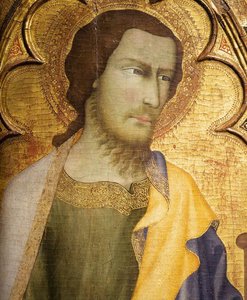
andrea di vanni d'andrea
1332 - 1414 , Italy
Quick Facts
- Artistic Movement Or Style: Early Renaissance
- Artists Who Influenced This Artist:
- Simone Martini
- Pietro Lorenzetti
- Date Of Birth: 1332
- Date Of Death: 1414
- Full Name: Andrea di Vanni d'Andrea
- Nationality: Italian
- Notable Artworks:
- Enthroned Madonna
- St. Paul
- Portrait of St. Catherine of Siena
- Polyptych in Santo Stefano alla Lizza
- Place Of Birth: Siena, Italy

