

 Preview
 Send
Send Share
Share
 Details

 Download
 Similars
 X-Ray
X-Ray Diaporama
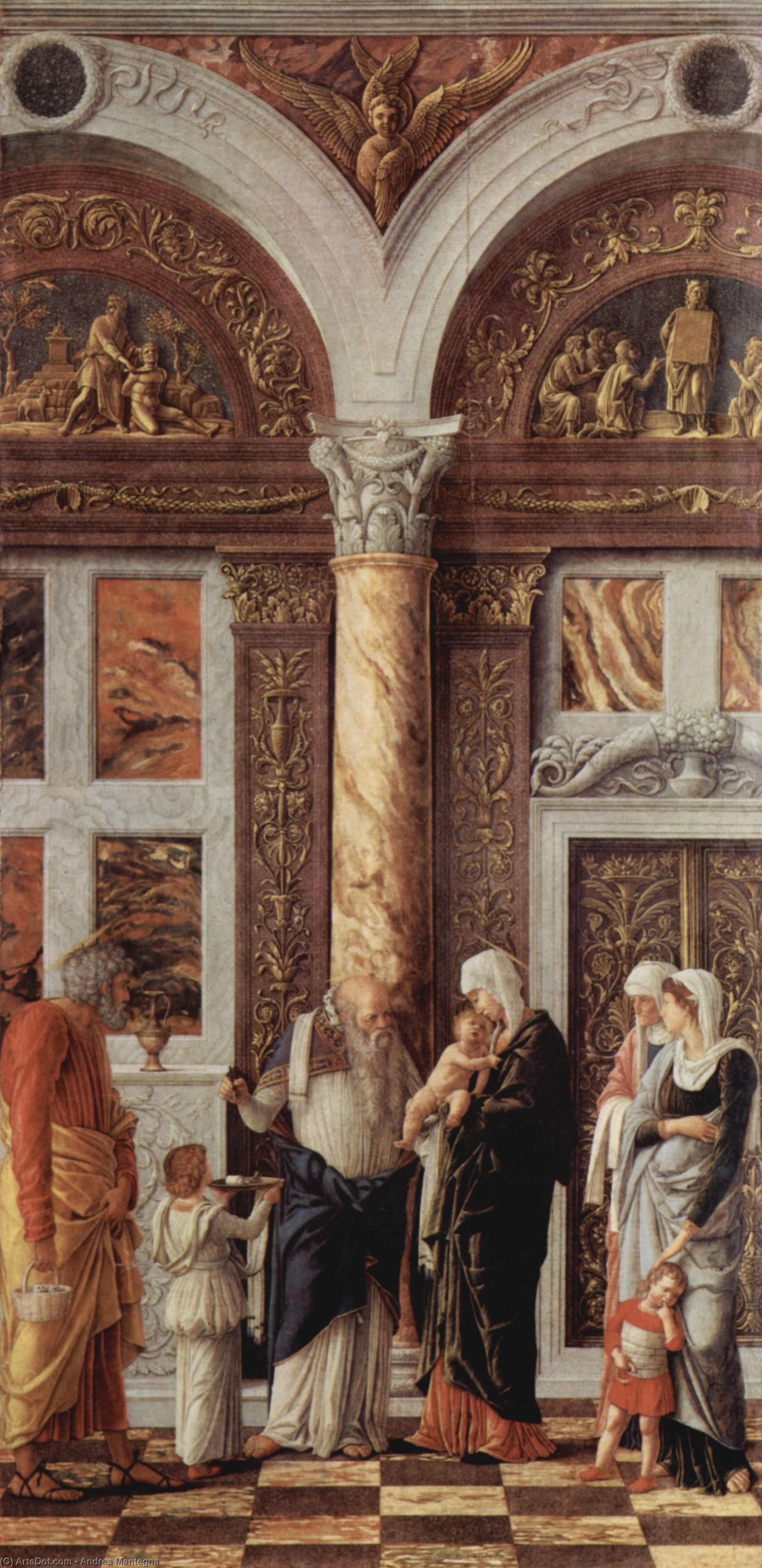
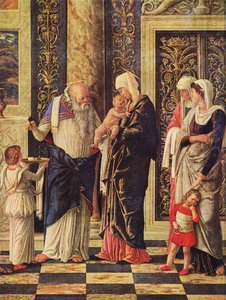
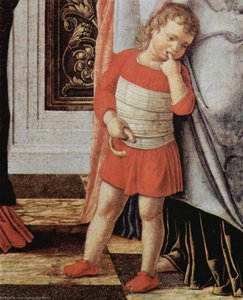
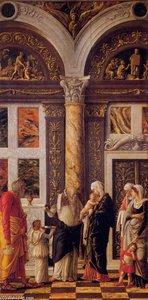
The Circumsicion of jesus
 Acrylic On Canvas
- WallArt
- Renaissance
 1461
1461- Renaissance
 86.0 x 43.0 cm
 Galleria degli Uffizi
 Read More
Purchase a high-resolution, enhanced digital image, far superior to the online preview.
Each file is meticulously prepared by our in-house specialists using advanced tools and expert manual retouching. We ensure every image has exceptional clarity, precise color accuracy, and fine detail.
The final file is delivered via email within 72 hours, optimized for immediate use in professional, editorial, and print environments. This is the same quality trusted by top-tier design studios, publishers, and galleries.
Digital Image
Download a high-resolution file for personal display, printing, and creative projects. ( Buy Print Buy Hand Made Painting)
Included in Every Digital Image Order
Expert Digital Delivery, Guaranteed
When you choose ArtsDot.com, you're not just getting an image - you're receiving a professionally enhanced digital artwork, crafted with precision and backed by a satisfaction guarantee. Here's everything that comes with your order, automatically:

Fast Email Delivery
Your high-resolution digital image file will be emailed to you within 72 hours of ordering - ready for immediate use.

AI-Enhanced Digital File
Your artwork is professionally optimized using advanced AI tools and manual editing, ensuring maximum detail, clarity, and color accuracy.

Free Lifetime Re-Delivery
Accidentally deleted or lost your file? No worries - we'll resend it to you anytime, free of charge.

No Import Fees - Ever
Enjoy your artwork instantly with zero customs, duties, or delivery fees - digital downloads are always tax-free.

Color Accuracy Guarantee
We ensure your digital image reflects the original colors as closely as possible using professional tools and color management.

60-Day Satisfaction Guarantee
If you're not satisfied with your digital image, we'll revise it or refund 100% within 60 days - no questions asked.

100% Money-Back Guarantee
Not satisfied? Get a full refund within 60 days of receiving your digital file - no questions asked.

Bulk Order Discounts
Buy 3 images, save 10% - Buy 5, save 15% - Buy 10+, save 20%. Great for creative projects, galleries, and agencies.
Collectible Description
A Masterpiece of Renaissance Faith
Andrea Mantegna’s Circumcision of Jesus stands as a testament to the artistic fervor and intellectual curiosity that characterized the Early Renaissance in Italy. Executed in 1461 for the Chapel of San Giorgio in Mantua—a commission entrusted to him by Marquis Ludovico Gonzaga—this fresco transcends mere depiction; it embodies profound theological contemplation and masterful technical execution. Its enduring appeal lies not only in its visual splendor but also in its ability to convey a complex tapestry of religious symbolism and humanist ideals.Composition and Perspective: A Revolutionary Approach
Measuring 86 x 43 cm, the painting immediately captivates viewers with its ambitious use of linear perspective—a technique pioneered by Mantegna and profoundly influencing subsequent artists. Unlike the flattened surfaces prevalent in medieval art, Mantegna achieves a remarkable illusion of depth through carefully calibrated orthogonals converging towards a vanishing point located just beyond the horizon line. This innovative approach reflects Mantegna’s unwavering dedication to studying classical sculpture and architecture, specifically the ruins of Roman temples—a fascination that fueled his artistic vision. The figures are arranged with meticulous precision, creating a dynamic interplay between foreground and background, drawing the eye inward toward the central figure of Jesus Christ.The Narrative Scene: Symbolism Richly Layered
At the heart of the fresco is Jesus Christ, surrounded by twelve disciples—a deliberate reference to the Twelve Apostles depicted in depictions of the crucifixion. The scene portrays the circumcision ritual performed eight days after Jesus’s birth, a pivotal event marking his acceptance into Jewish law and foreshadowing his sacrificial death. Among the figures gathered around Jesus are Joseph, Mary, and several attendants, symbolizing humility and piety. Notably, a newborn infant is held aloft by one of the disciples—a poignant emblem of innocence and divine grace—underscoring the painting’s overarching theme of redemption. The backdrop depicts a stylized Roman temple interior, evoking memories of antiquity and reinforcing Mantegna's commitment to classical ideals.Technique and Artistic Significance
Mantegna employed tempera paint on wood panels, utilizing a technique that allowed for exceptional detail and luminosity—characteristics particularly valued during the Renaissance. His meticulous brushwork captures subtle nuances of light and shadow, creating an atmosphere of solemn reverence. The artist’s masterful rendering of drapery—particularly Mary's robe—demonstrates his profound understanding of anatomy and sculptural form—skills honed through extensive study of Roman sculptures. More than just a beautiful image, The Circumcision of Jesus represents a watershed moment in Renaissance art—establishing linear perspective as a cornerstone of artistic representation and elevating religious painting to new heights of expressive power.Preservation and Legacy: A Jewel of Florentine Art
Today housed at the Galleria degli Uffizi in Florence, Italy—one of the world’s foremost repositories of Renaissance masterpieces—The Circumcision of Jesus continues to inspire awe and admiration. Its careful conservation ensures that future generations can appreciate its artistic brilliance and contemplate its enduring spiritual significance. For those seeking to immerse themselves in the splendor of Renaissance art, ArtsDot offers exquisite handmade oil painting reproductions—allowing you to bring this iconic masterpiece into your home. Explore ArtsDot today!- Painting Title: The Circumcision of Jesus
- Artist: Andrea Mantegna
- Date: 1461
- Medium: Frescoes
- Location: Galleria degli Uffizi, Florence, Italy
This artwork embodies the spirit of Renaissance artistic innovation and theological contemplation. Its detailed depiction of biblical narrative combined with groundbreaking perspective techniques cemented Mantegna’s place as a pioneer of his era. To experience this masterpiece firsthand, visit ArtsDot for stunning reproductions.
Related Artworks

Artist Biography
A Renaissance Forged in Antiquity: The Life and Art of Andrea Mantegna
Andrea Mantegna, born near Padua around 1431, stands as a pivotal figure bridging the Early and High Renaissances. His artistic journey wasn’t merely about adopting classical forms; it was an immersive excavation of antiquity, a passionate attempt to resurrect the spirit of Rome within the burgeoning Italian Renaissance. Unlike many contemporaries who drew inspiration from classical models, Mantegna possessed a unique fervor for archaeological accuracy. This obsession stemmed from his formative years under Francesco Squarcione, a painter and collector whose workshop functioned less as a traditional studio and more as an academy dedicated to the study of Roman ruins, sculptures, and inscriptions. It was within these walls, surrounded by fragments of a lost empire, that Mantegna’s artistic vision began to take shape—a vision characterized by sculptural forms, dramatic perspective, and an almost obsessive attention to detail. His early life remains somewhat shrouded in mystery; accounts suggest he was discovered as a promising apprentice, his innate talent recognized and nurtured by Squarcione despite humble origins. This unconventional beginning perhaps fueled Mantegna’s relentless pursuit of artistic mastery and his determination to forge a style distinctly his own.The Gonzaga Court and the Illusion of Reality
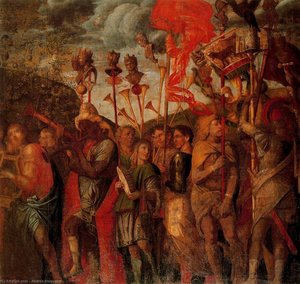
Mantegna's career truly blossomed when he entered the service of the Gonzaga family in Mantua, becoming court painter in 1488. This patronage provided him with an unprecedented level of artistic freedom and a platform to realize his most ambitious projects. The Gonzaga’s were not simply patrons; they were collaborators, commissioning works that pushed the boundaries of artistic innovation. It was during this period that Mantegna created what is arguably his masterpiece: the *Camera degli Sposi* (Bridal Chamber) frescoes in the Palazzo Ducale. This groundbreaking work transcends mere decoration; it's a complete illusionistic environment, seamlessly integrating architecture and painting to create an extended sense of space. The frescoes depict scenes from the life of the Gonzaga family, portraits that are remarkably lifelike and engaging, and a breathtaking *di sotto in sù* (seen from below) ceiling panel that creates the illusion of an open sky. This masterful manipulation of perspective wasn’t simply about technical skill; it was about creating a world within a room, blurring the lines between reality and representation. Beyond the *Camera degli Sposi*, Mantegna continued to produce works of exceptional quality for the Gonzaga court, including the monumental series *Triumphs of Caesar*. These paintings, inspired by Roman triumphal processions, are not merely historical depictions; they are elaborate allegories celebrating the power and prestige of the Gonzaga family, presented with a grandeur that rivals the imperial ambitions of ancient Rome.A Master of Perspective and Anatomical Precision
Mantegna’s artistic innovations extended far beyond illusionistic environments. He was a pioneer in the use of perspective, often employing techniques that went against conventional methods to achieve dramatic effects. Frequently, he adjusted the horizon line, creating a sense of monumentality and imposing scale. This technique, coupled with his meticulous attention to anatomical detail, gave his figures an unparalleled sense of weight and presence. He wasn’t content with simply representing the human form; he dissected it, studied its musculature, and rendered it with a precision that was revolutionary for his time. His mastery of *trompe-l'oeil* – creating illusions so convincing they deceive the eye – further enhanced this effect, blurring the boundaries between painting and reality. This dedication to anatomical accuracy wasn’t merely an exercise in technical skill; it reflected Mantegna’s deep engagement with classical sculpture and his desire to emulate the idealized forms of antiquity. He sought not just to depict the human body but to capture its inherent dignity and power. His influence on subsequent generations of artists, including Raphael and Michelangelo, is undeniable, as they built upon his foundations in perspective, anatomy, and composition.Legacy and Enduring Influence
Andrea Mantegna died in Mantua in 1506, leaving behind a legacy that continues to resonate with art historians and enthusiasts alike. His work represents a crucial turning point in the history of Renaissance art, bridging the gap between the Early and High Renaissance styles. He wasn’t simply an imitator of classical forms; he was an interpreter, adapting ancient motifs and techniques to create something entirely new and uniquely his own. His meticulous attention to detail, his mastery of perspective, and his profound engagement with classical antiquity established him as a leading figure of his time. Mantegna’s exploration of classical themes helped revive interest in ancient art and culture, paving the way for the artistic achievements of the High Renaissance. His influence can be seen in the works of countless artists who followed, from Raphael's graceful compositions to Michelangelo's powerful figures. Today, his paintings are housed in major museums around the world, including The National Gallery in London and the Pinacoteca di Brera in Milan, where they continue to inspire awe and admiration.- His innovative use of perspective continues to be studied by artists and art historians.
- His anatomical precision remains a benchmark for realistic representation.
- His dedication to classical themes helped shape the course of Renaissance art.
Andrea Mantegna
1431 - 1506 , Italy
Quick Facts
- Artistic Movement Or Style: Early Renaissance
- Artists Or Movements Influenced By This Artist:
- Raphael
- Michelangelo
- Artists Who Influenced This Artist:
- Donatello
- Jacopo Bellini
- Date Of Birth: 1431
- Date Of Death: 1506
- Full Name: Andrea Mantegna
- Nationality: Italian
- Notable Artworks:
- Lamentation over the Dead Christ
- St. George and the Dragon
- Camera degli Sposi
- Triumphs of Caesar
- Place Of Birth: Padua, Italy

