

 Preview
 Send
Send Share
Share
 Details

 Download
 Similars
 X-Ray
X-Ray Diaporama
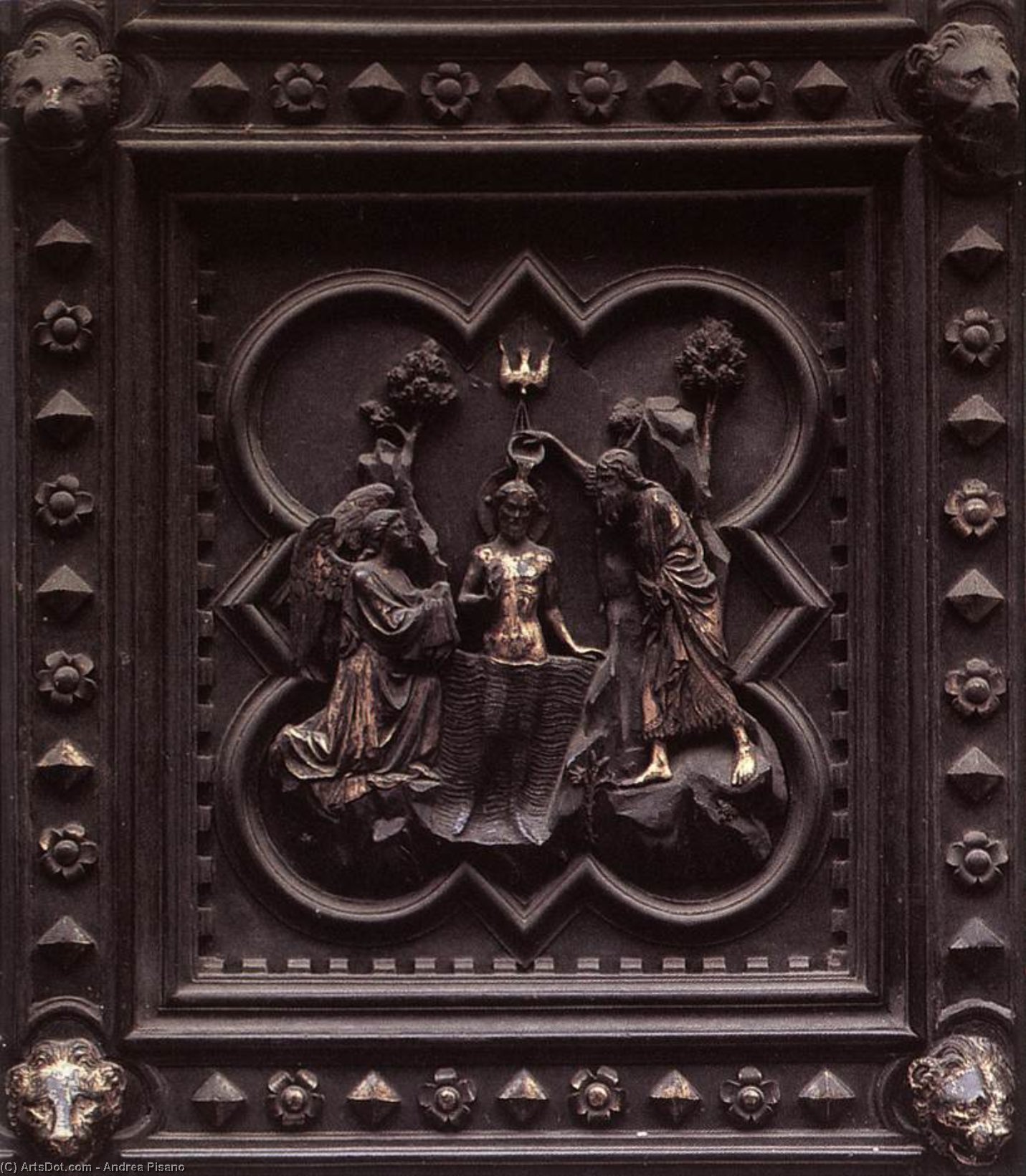
Baptism of Christ (panels of the south doors)
 Gothic
 1330
1330- Late Medieval
 39.0 x 39.0 cm
 Baptistry
 Read More
Purchase a high-resolution, enhanced digital image, far superior to the online preview.
Each file is meticulously prepared by our in-house specialists using advanced tools and expert manual retouching. We ensure every image has exceptional clarity, precise color accuracy, and fine detail.
The final file is delivered via email within 72 hours, optimized for immediate use in professional, editorial, and print environments. This is the same quality trusted by top-tier design studios, publishers, and galleries.
Digital Image
Download a high-resolution file for personal display, printing, and creative projects. ( Buy Print Buy Hand Made Painting)
Included in Every Digital Image Order
Expert Digital Delivery, Guaranteed
When you choose ArtsDot.com, you're not just getting an image - you're receiving a professionally enhanced digital artwork, crafted with precision and backed by a satisfaction guarantee. Here's everything that comes with your order, automatically:

Fast Email Delivery
Your high-resolution digital image file will be emailed to you within 72 hours of ordering - ready for immediate use.

AI-Enhanced Digital File
Your artwork is professionally optimized using advanced AI tools and manual editing, ensuring maximum detail, clarity, and color accuracy.

Free Lifetime Re-Delivery
Accidentally deleted or lost your file? No worries - we'll resend it to you anytime, free of charge.

No Import Fees - Ever
Enjoy your artwork instantly with zero customs, duties, or delivery fees - digital downloads are always tax-free.

Color Accuracy Guarantee
We ensure your digital image reflects the original colors as closely as possible using professional tools and color management.

60-Day Satisfaction Guarantee
If you're not satisfied with your digital image, we'll revise it or refund 100% within 60 days - no questions asked.

100% Money-Back Guarantee
Not satisfied? Get a full refund within 60 days of receiving your digital file - no questions asked.

Bulk Order Discounts
Buy 3 images, save 10% - Buy 5, save 15% - Buy 10+, save 20%. Great for creative projects, galleries, and agencies.
A Divine Encounter in Bronze and Color
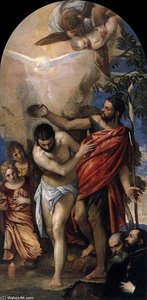
In the delicate interplay of light and shadow captured within this exquisite panel from the Baptism of Christ, we find ourselves transported to the dawn of the Italian Renaissance. This masterpiece, a profound segment of the south doors created by the legendary Andrea Pisano around 1330, serves as more than just a religious depiction; it is a window into a transformative era of human expression. The scene unfolds with a tender intimacy, focusing on the pivotal moment where the earthly and the divine converge. As we gaze upon the figures—the central man cradling the infant with profound reverence and the witnesses gathered in quiet contemplation—we are struck by a sense of sacred stillness that transcends the centuries.
The composition is a masterclass in the transition from the rigid hierarchies of the Byzantine tradition to the burgeoning naturalism championed by Giotto. Pisano, a sculptor whose hands were trained in the meticulous precision of a goldsmith, brings a unique tactile quality to this work. Even through the medium of a reproduction, one can sense the weight and volume of the figures, as if they were carved from precious metal rather than painted upon a surface. The rich, vibrant palette breathes life into the scene, with deep, resonant tones that ground the spiritual event in a palpable, earthly reality, making it an ideal centerpiece for any collection seeking to evoke depth and historical gravity.
The Artistry of the Giottesque Revolution
To understand the emotional resonance of this piece, one must consider the hand of Andrea Pisano. Emerging from the workshop traditions of the late 13th century, Pisano was a pivotal figure who bridged the gap between Gothic ornamentation and the monumental clarity of the early Renaissance. His work on the Pisa Baptistery doors remains one of the most significant sculptural achievements of his age, and this panel reflects that same architectural grandeur scaled down to an intimate, emotive level. The technique employed here emphasizes form and drapery, using light to define the contours of the bodies, which creates a rhythmic movement across the frame.
For the discerning collector or interior designer, this artwork offers a sophisticated layer of storytelling. The ornate wooden framing that surrounds the scene acts as a threshold, inviting the viewer to step out of the modern world and into a narrative of rebirth and grace. The interplay of the intricate borders with the fluid, expressive brushwork within the painting creates a visual tension that is both stimulating and calming. It is a piece that does not merely decorate a wall; it commands the atmosphere of a room, providing a focal point of intellectual and spiritual inquiry.
A Timeless Legacy for Modern Spaces
Integrating a high-quality reproduction of Pisano’s work into a contemporary interior allows for a profound dialogue between history and modernity. Whether placed in a sunlit study or a grand, formal dining hall, the Baptism of Christ panel brings an air of timelessness and prestige. The symbolism of the baptism—representing purification, new beginnings, and the cyclical nature of life—offers a universal resonance that speaks to anyone moved by the enduring power of classical art.
Owning such a piece is an investment in cultural heritage. It serves as a testament to the era when artists first began to truly observe the human condition through the lens of divine inspiration. As a reproduction, it captures the meticulous detail and the soulful intensity of the original 1330 panels, ensuring that the brilliance of Pisano’s vision remains accessible to those who appreciate the profound beauty of the Italian masters. It is an invitation to surround oneself with art that does not just occupy space, but enriches the very soul of the home.
Related Artworks
![Scrovegni - [23] - Baptism Of Christ — Giotto Di Bondone, Early Renaissance](/media/artworks/images-thumb/17/af/17af47626cb93b2000ad3d13e045f189.jpg)

Artist Biography
Andrea Pisano: Bridging Byzantium and Giotto’s Vision
Andrea Pisano (c. 1290 – 1348 Orvieto) stands as a monumental figure in Italian Renaissance sculpture, yet his artistic legacy is inextricably linked to the preceding Gothic era and profoundly shaped by the revolutionary influence of Giotto di Bondone. Born in Pontecorvo, Lazio, Pisano’s early life remains shrouded in some mystery, though he honed his craft initially as a goldsmith before dedicating himself wholeheartedly to sculpting around 1300 under the tutelage of Mino di Giovanni. This formative apprenticeship instilled in him a mastery of technique and an understanding of monumental design that would characterize his entire oeuvre.- Early Career & Pisa Baptistery Doors: Pisano’s initial renown emerged from his collaborative work on the ambitious Baptistery façade at Pisa Cathedral, alongside Giovanni di Balduccio. Together they embarked upon creating a breathtaking ensemble of bronze doors—a project that epitomized Gothic ambition and showcased Pisano's burgeoning sculptural prowess. The south door, begun in 1330 and completed in 1336, is arguably his masterpiece, featuring exquisitely detailed quatrefoil panels depicting scenes from the life of Saint John the Baptist. These panels demonstrate a remarkable sensitivity to naturalism—a departure from Byzantine conventions—and foreshadowed Giotto’s groundbreaking approach to portraying human figures with unprecedented realism.
- Florence Cathedral & Giotto's Legacy: Pisano swiftly established himself as Florence’s leading sculptor, succeeding Giotto as maestro d’opera in 1340. He undertook the monumental task of constructing a series of reliefs for the Duomo—the cathedral—a project that cemented his reputation and solidified Giotto’s enduring influence on his artistic style. These reliefs, conceived by Pisano himself, are imbued with Giotto's humanist spirit and represent a pivotal moment in Florentine art history.
The Duomo Reliefs: A Testament to Giotto’s Influence
Pisano’s contribution to the Duomo is particularly noteworthy for its ambitious scale and thematic richness. The four colossal panels depicting prophets—Isaiah, Jeremiah, Ezekiel, and Daniel—are considered among the finest examples of Gothic sculpture in Italy. Pisano skillfully captured the solemn dignity and expressive gestures of these biblical figures, mirroring Giotto's revolutionary depiction of human emotion and anatomy. Furthermore, the seven virtues—faith, hope, charity, prudence, justice, temperance, and fortitude—were rendered with meticulous detail, reflecting Giotto’s humanist vision of man as a rational being capable of moral contemplation.- Technique & Innovation: Pisano's sculptural technique was characterized by its precision and virtuosity. He employed a masterful understanding of contrapposto—the balanced stance adopted by human figures—to convey dynamism and realism. His sculptures are imbued with an unparalleled sense of depth and texture, achieved through innovative carving methods that anticipated developments in Renaissance sculpture.
Beyond Florence: Orvieto Cathedral & Artistic Patronage
Pisano’s artistic endeavors extended beyond Florence, culminating in his involvement with the construction of Orvieto Cathedral—a project initiated by Lorenzo Maitani before Pisano's arrival. He oversaw the creation of a monumental bronze doors and contributed significantly to the cathedral’s overall aesthetic grandeur. This undertaking showcased Pisano’s versatility as an architect and sculptor, demonstrating his ability to adapt to diverse artistic traditions while maintaining his distinctive stylistic vision.Historical Significance & Lasting Impact
Andrea Pisano's work represents a crucial bridge between Byzantine art and the burgeoning Renaissance movement. He skillfully assimilated Byzantine sculptural conventions—particularly the stylized depiction of drapery—while simultaneously embracing Giotto’s humanist ideals and pioneering techniques for portraying human anatomy with unprecedented accuracy. His sculptures stand as enduring testaments to the artistic genius of the Gothic period and profoundly influenced subsequent generations of sculptors, establishing him as one of Italy's most influential artists of his time. He died in 1348, leaving behind a legacy that continues to inspire admiration for its beauty and innovation.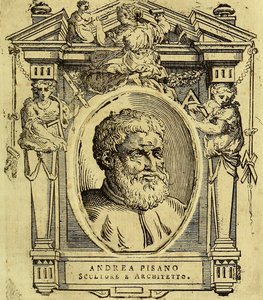
Andrea Pisano
1290 - 1348 , Italy
Quick Facts
- Artistic Movement Or Style: Gothic
- Artists Or Movements Influenced By This Artist: ['Giotto']
- Artists Who Influenced This Artist: ['Mino di Giovanni']
- Date Of Birth: c.1290
- Date Of Death: 1348
- Full Name: Andrea Pisano
- Nationality: Italian
- Notable Artworks:
- Baptistery Doors Florence
- Shepherd (detail)
- Weaving (detail)
- Place Of Birth: Pontedera, Italy

