 Preview
 Send
Send Share
Share
 Details

 Download
 Similars
 X-Ray
X-Ray Diaporama
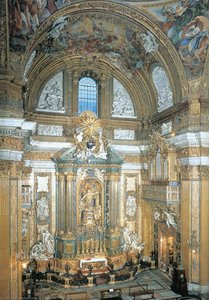
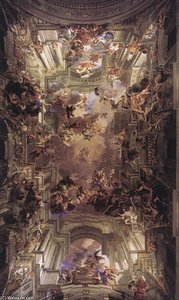
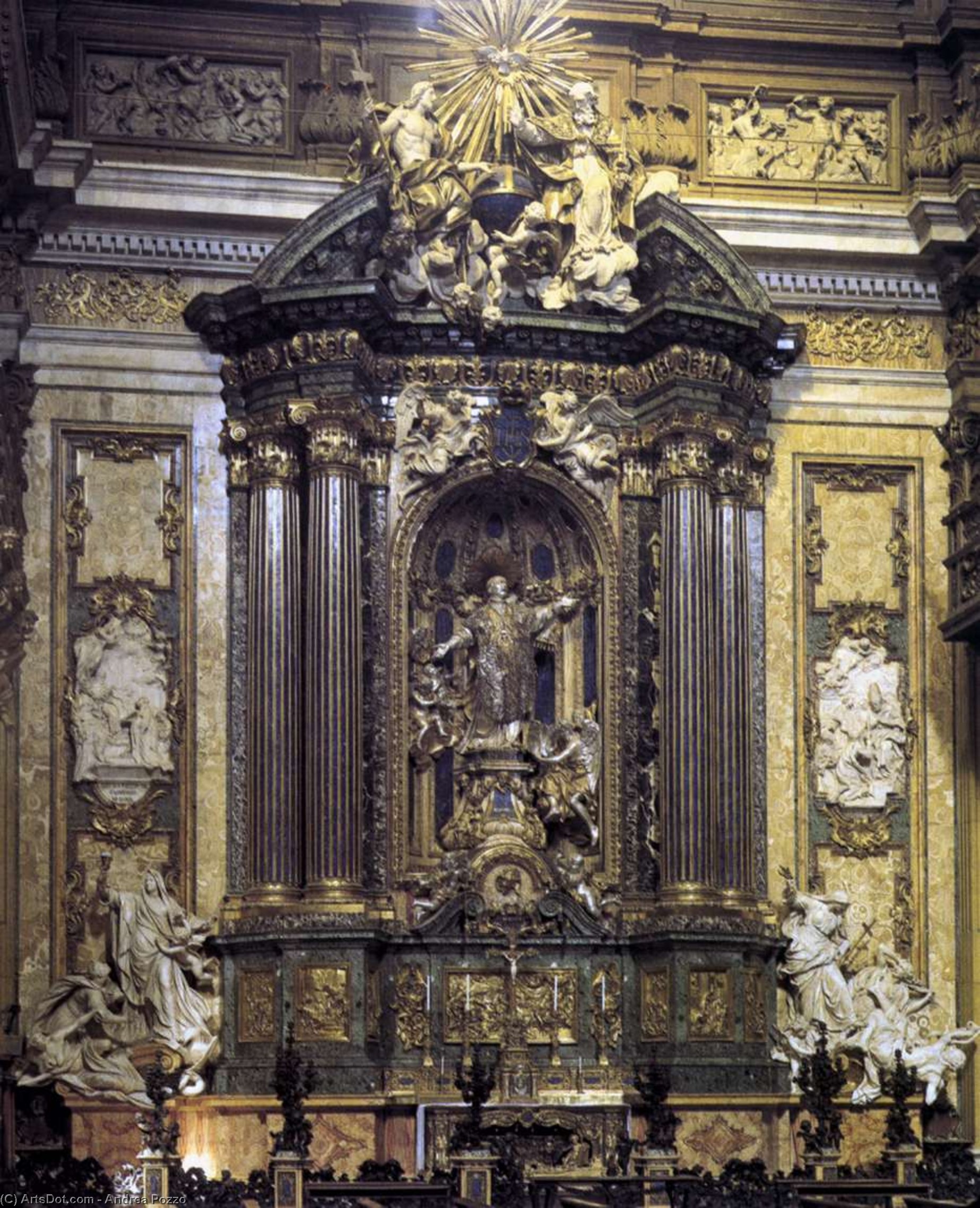
Altar of St Ignatius Loyola


 Read More
Hand Made Oil Reproduction
Hand-painted oil on canvas in your size and frame, made to order by our artists. ( Buy Print Buy Image)




P118B $10

P118H $10

P118W $10

P438Z $10

P508JH $12

P508YH $12

P805H $10

P805Z $10

P919BZ $10

P919G $10

P919XJ $10

P959ZH $10

P968JZ $12

W106C $8

W218G $10

W218JH $8

W218Y $10

W307PJ $10

W316G $10

W316PJ $8

W316Y $10

W398PJ $8

W4111J $10

W500HY $15

W500JH $15

W692G $12

W849H $8

W940BG $15

W953PJ $8




Pick from our preset sizes that match the artwork's original proportions.

You may enter your own dimensions to fit a specific frame or space. If your selected size does not match the original image's proportions, we will either crop the artwork or extend the painting with additional hand-painted elements. A digital mockup will be sent for your approval before production begins.
Please note that the on-screen preview does not reflect the actual cropping or extension. Only the mockup will accurately show the final composition.
While custom sizes are available, we recommend selecting a dimension from the predefined list to preserve the original proportions.
After order, ArtsDot.com team will email client for instructions and provide a mockup preview
Worldwide Delivery () in 3/4 weeks instead of standard 5 weeks. (24 August). No compromise on quality.

Free Worldwide Express Shipping

High-Quality Linen Canvas

Full Shipping Insurance

Customs Tax Refund Guarantee

True Color Matching Guarantee

60-Day Return Policy (Defects Only)

100% Money-Back Guarantee

Bulk Discount Offer
 Glass option is only available in size under 110 CM

Altar of St Ignatius Loyola
Reproduction Medium
Reproduction Size
-


Total Price
$ 263
Artwork Description
A Symphony of Illusion and Faith: The Altar of St Ignatius Loyola
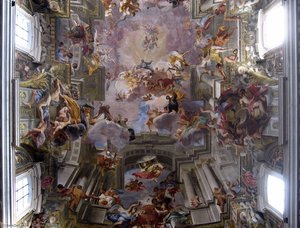
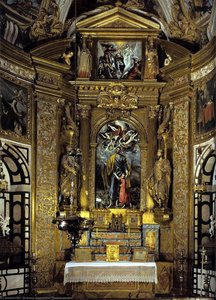
Within the heart of Rome’s Il Gesù church lies a work that transcends mere decoration, becoming instead a profound meditation on faith, perspective, and the very nature of reality – the Altar of St Ignatius Loyola. Completed in 1695 by the masterful Andrea Pozzo, this monumental piece isn't simply an altar; it’s a meticulously crafted stage for divine narrative, a testament to the Baroque era’s obsession with theatricality and illusion. Pozzo, a Jesuit lay brother renowned for his innovative use of quadratura – ‘painted architecture’ – didn’t merely paint on a surface; he created the *impression* of depth, volume, and an entire architectural space that exists only within the confines of the frescoed ceiling.
The altar itself is a study in opulent detail. Crafted from Carrara marble, it's adorned with intricate carvings depicting scenes from the life of St. Ignatius, the founder of the Jesuit order. The central relief sculpture, portraying his martyrdom, commands attention with its dramatic pose and the palpable sense of suffering. Surrounding this focal point are a multitude of angels and cherubs, rendered in exquisite detail, each contributing to the overall narrative tapestry. The use of gold leaf – liberally applied throughout – amplifies the altar’s grandeur, reflecting light and drawing the eye towards its central elements.
The Art of Quadratura: Creating an Illusion of Space
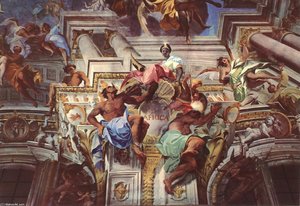
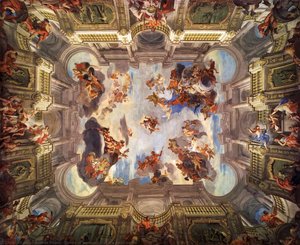
Pozzo's genius lies in his mastery of quadratura, a technique perfected by Italian Renaissance artists but elevated to breathtaking heights by him. He didn’t simply paint a flat ceiling; he painted the *illusion* of a vast, vaulted space above – a space that appears to extend infinitely beyond the confines of the church. This is achieved through a complex interplay of perspective, foreshortening, and architectural detail. The fresco depicts a celestial realm, complete with columns, arches, and windows, all seamlessly integrated into the painted ceiling. Looking closely, one can discern subtle cues – a slightly skewed angle here, a vanishing point cleverly concealed there – that reveal the artistry behind this astonishing illusion.
The effect is profoundly immersive. The viewer feels as though they are standing beneath a genuine dome, bathed in ethereal light. Pozzo’s skill wasn't just technical; it was deeply spiritual. He sought to transport the worshipper into a realm of divine beauty and contemplation, using art as a conduit for faith.
Historical Context: The Jesuit Church and Baroque Grandeur
The Altar of St Ignatius Loyola is inextricably linked to the rise of the Jesuits in 17th-century Rome. The Society of Jesus was instrumental in shaping the artistic landscape of the city, commissioning grand churches and lavish interiors designed to inspire awe and devotion. The Il Gesù church itself, built between 1646 and 1668, became a showcase for Baroque innovation, and Pozzo’s altar served as its crowning achievement. The Baroque style, characterized by dramatic lighting, dynamic movement, and elaborate ornamentation, was intended to evoke strong emotions in the viewer – a desire for religious experience and a sense of connection with the divine.
Furthermore, the commission itself reflects the Jesuit emphasis on education and intellectual pursuits. The intricate details of the altar’s design, combined with its illusionistic perspective, demonstrate a sophisticated understanding of mathematics, geometry, and optics – fields that were central to the Jesuits' commitment to knowledge and reason.
Symbolism and Emotional Impact
Beyond its technical brilliance, the Altar of St Ignatius Loyola is rich in symbolism. The depiction of St. Ignatius’ martyrdom represents sacrifice, faith, and the enduring power of spiritual conviction. The angels and cherubs surrounding the central figure symbolize divine grace and protection. The overall composition evokes a sense of reverence, awe, and profound emotional connection – inviting viewers to contemplate the mysteries of faith and the transformative potential of art.
Today, the Altar remains a breathtaking example of Baroque artistry, a testament to Andrea Pozzo’s genius and the enduring power of illusion. It is more than just an altar; it's a window into a bygone era, offering a glimpse into the spiritual heart of Rome and the extraordinary vision of its most influential artists.
Related Artworks

Artist Biography
Early Life and Artistic Formation
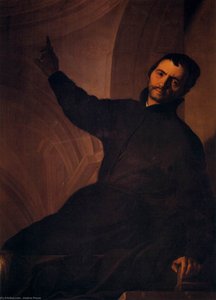
Andrea Pozzo, born Andreas Puteus in Trento, Italy, in 1642, emerged into a world poised between the waning Renaissance and the burgeoning Baroque. His initial exposure to artistic pursuits was fostered within the structured environment of the local Jesuit High School, where he received a grounding in humanities that would later subtly inform the narrative depth of his work. At seventeen, Pozzo embarked on formal training with an as-yet unidentified artist in Trento, laying the foundation for skills that would eventually captivate Europe. This early apprenticeship was followed by a period of exploration and refinement within the workshops of other painters—artists trained in the style of Andrea Sacchi—immersing him in the principles of Roman High Baroque. Journeys to Como and Milan further broadened his artistic horizons, exposing him to diverse influences and solidifying his technical abilities. These formative years were crucial, shaping not only his hand but also his eye for composition, color, and the dramatic interplay of light and shadow.A Life Dedicated to Faith and Illusion
A pivotal moment arrived in 1665 when Pozzo entered the Jesuit Order as a lay brother. This decision irrevocably intertwined his artistic vocation with the spiritual mission of the Society of Jesus. His talent was immediately put into service, decorating churches and religious buildings across Italy—Modena, Bologna, Arezzo, Mondovì, and Turin all bore witness to his burgeoning skill. Early works reveal the influence of the Lombard School, characterized by a rich palette and striking *chiaroscuro*. However, it wasn’t long before Pozzo began developing the signature illusionistic techniques that would define his legacy: meticulously rendered fake gilding, convincingly sculpted bronze-colored statues, realistically veined marbled columns, and—most famously—the breathtaking *trompe l'œil* domes painted onto flat ceilings. These weren’t merely decorative flourishes; they were carefully calculated strategies to inspire awe and reinforce the power of faith, central tenets of the Counter-Reformation.The Triumph of Quadratura: Sant'Ignazio and Beyond
Pozzo’s masterpiece, and arguably one of the most celebrated achievements of Baroque art, is the nave ceiling of the Church of Sant'Ignazio in Rome. Completed between 1685 and 1694, this monumental fresco exemplifies his mastery of *quadratura*—a technique employing mathematical perspective and dramatic foreshortening to create the illusion of vast, soaring architectural spaces where none physically exist. The ceiling appears to open up into a boundless heaven, populated by figures representing saints, angels, and allegorical representations of Jesuit missionary work. The effect is profoundly disorienting yet deeply moving, drawing the viewer into a spiritual realm that transcends earthly limitations. This wasn’t simply about technical skill; it was about creating an immersive experience designed to evoke religious fervor. Pozzo didn't limit his contributions to painting; he also provided architectural plans for Ljubljana Cathedral in 1700, demonstrating a holistic vision where art and architecture were seamlessly integrated. His innovative use of *di sotto in su*—viewing structures from below—further enhanced the illusion of grandeur and depth.Legacy and Theoretical Contributions
Andrea Pozzo’s influence extended far beyond his completed commissions. He wasn't merely a practitioner of illusionistic art; he was also a theorist who sought to codify its principles for future generations. In 1693, and again in 1700, he published *Perspectiva Pictorum et Architectorum* (Perspective for Painters and Architects), a treatise that meticulously detailed his techniques and became an essential resource for artists throughout Europe. This work cemented his position as a leading intellectual figure of the Baroque period. Pozzo also championed the concept of *Gesamtkunst*—total art—advocating for the unification of architecture, painting, and sculpture into a single, harmonious artistic experience. His work stands as a testament to the power of illusion, not as deception, but as a means of elevating the spirit and celebrating the glory of God. He died in Vienna in 1709, leaving behind a legacy that continues to inspire awe and wonder centuries later—a Baroque master who redefined the boundaries between reality and representation.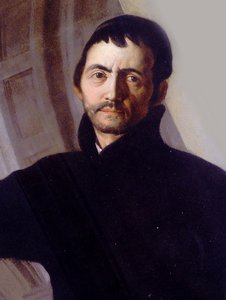
Andrea Pozzo
1642 - 1709 , Italy
Quick Facts
- Artistic Movement Or Style: Baroque
- Artists Or Movements Influenced By This Artist: ['Baroque period artists']
- Artists Who Influenced This Artist:
- Andrea Sacchi
- Peter Paul Rubens
- Date Of Birth: 1642
- Date Of Death: 1709
- Full Name: Andrea Pozzo
- Nationality: Italian
- Notable Artworks:
- Sant'Ignazio Ceiling
- Jesus in Gethsemane
- Self-Portrait
- Place Of Birth: Trento, Italy
Related Articles

The Dramatic Flourish: Exploring the Baroque Movement's Enduring Legacy in Art History
Explore the dramatic world of Baroque art! Discover iconic artists like Caravaggio & Rubens, defining techniques, and its lasting impact on art history. Expert insights for collectors & enthusiasts at ArtsDot.

Baroque Drama: Bringing Opulence & Emotion into Contemporary Interiors
Explore the opulent world of Baroque interior design! Discover key elements, modern applications & how to bring dramatic elegance into your home with 's authentic reproductions.
The Dramatic Flourish: Exploring Baroque Painting's Emotional Intensity & Artistic Innovations
Explore the dramatic world of Baroque painting! Discover its history, defining characteristics, iconic artists like Caravaggio & Rubens, and lasting influence on Western art. Expert insights for collectors.
The Dramatic Flourish: Exploring the Baroque Movement's Enduring Legacy in Art & Culture
Explore the dramatic world of Baroque art! Discover its history, defining characteristics, iconic artists like Caravaggio & Rubens, and lasting influence on Western culture. A comprehensive guide for art lovers.

Baroque Masterpieces: 10 Paintings That Defined an Era |
Journey through the drama & grandeur of Baroque art! Explore 10 masterpieces by Caravaggio, Rembrandt, Rubens & more. Discover stunning oil paintings, rich colors & timeless stories. Find museum-quality reproductions at .