

 Preview
 Send
Send Share
Share
 Details

 Download
 Similars
 X-Ray
X-Ray Diaporama
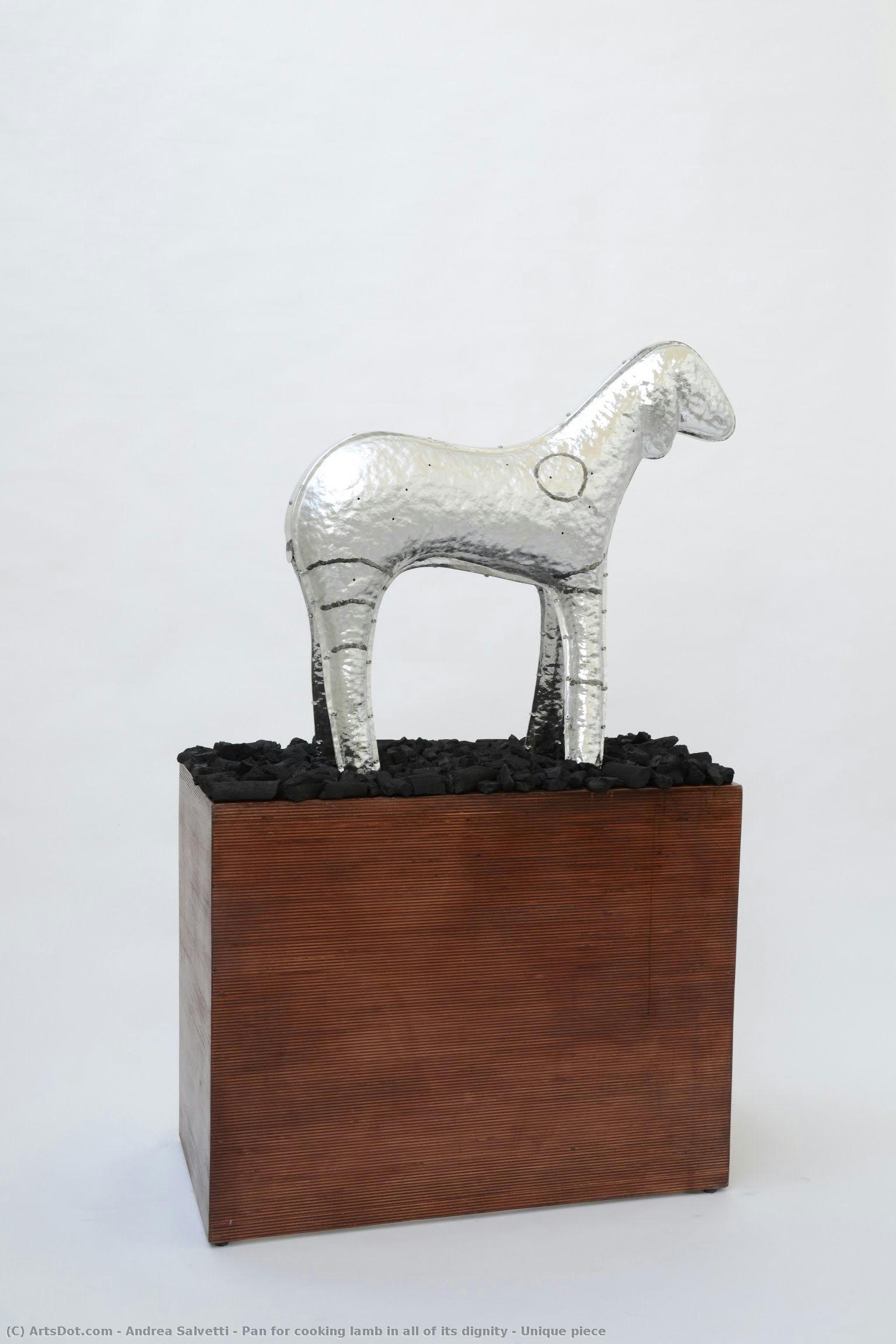
Pan for cooking lamb in all of its dignity - Unique piece
 2013
2013 90.0 x 147.0 cm
 Fondazione Hospice Seràgnoli Onlus
 Read More
Purchase a high-resolution, enhanced digital image, far superior to the online preview.
Each file is meticulously prepared by our in-house specialists using advanced tools and expert manual retouching. We ensure every image has exceptional clarity, precise color accuracy, and fine detail.
The final file is delivered via email within 72 hours, optimized for immediate use in professional, editorial, and print environments. This is the same quality trusted by top-tier design studios, publishers, and galleries.
Digital Image
Download a high-resolution file for personal display, printing, and creative projects. ( Buy Print Buy Hand Made Painting)
Included in Every Digital Image Order
Expert Digital Delivery, Guaranteed
When you choose ArtsDot.com, you're not just getting an image - you're receiving a professionally enhanced digital artwork, crafted with precision and backed by a satisfaction guarantee. Here's everything that comes with your order, automatically:

Fast Email Delivery
Your high-resolution digital image file will be emailed to you within 72 hours of ordering - ready for immediate use.

AI-Enhanced Digital File
Your artwork is professionally optimized using advanced AI tools and manual editing, ensuring maximum detail, clarity, and color accuracy.

Free Lifetime Re-Delivery
Accidentally deleted or lost your file? No worries - we'll resend it to you anytime, free of charge.

No Import Fees - Ever
Enjoy your artwork instantly with zero customs, duties, or delivery fees - digital downloads are always tax-free.

Color Accuracy Guarantee
We ensure your digital image reflects the original colors as closely as possible using professional tools and color management.

100-Day Satisfaction Guarantee
If you're not satisfied with your digital image, we'll revise it or refund 100% within 100 days - no questions asked.

100% Money-Back Guarantee
Not satisfied? Get a full refund within 100 days of receiving your digital file - no questions asked.

Bulk Order Discounts
Buy 3 images, save 10% - Buy 5, save 15% - Buy 10+, save 20%. Great for creative projects, galleries, and agencies.
Related Artworks





Artist Biography
Edward Hopper: A Portrait of American Solitude
Edward Hopper, born in Nyack, New York, on July 22, 1882, remains one of America’s most enduring and enigmatic figures in the art world. His paintings, characterized by stark realism, evocative lighting, and a profound sense of loneliness and isolation, continue to resonate deeply with viewers today. Hopper's journey into the realm of art began not with formal training but with a quiet determination nurtured by his supportive parents, who recognized and encouraged his artistic inclinations from an early age. He initially enrolled in the Correspondence School of Illustrating before finding his true calling at the New York School of Art under the tutelage of William Merritt Chase and Robert Henri – figures who instilled within him a commitment to capturing the essence of everyday American life with unflinching honesty. This formative period, marked by a shift from illustration to fine art, laid the groundwork for Hopper’s distinctive style, one that would later define his career and secure his place in art history.Early Influences and Artistic Development
Hopper's artistic development was profoundly shaped by several key influences. His early exposure to Impressionism through Chase instilled a sensitivity to light and color, while Henri’s emphasis on depicting the realities of American life – particularly the lives of ordinary people – provided a crucial conceptual framework. Hopper’s travels abroad in the 1900s, including extended periods in Paris, exposed him to European artistic movements like Fauvism and Cubism, though he never fully embraced their radical departures from traditional representation. Instead, he selectively absorbed elements—particularly compositional devices—from these movements, integrating them into his own evolving style. Crucially, Hopper’s work was informed by a deep appreciation for the architectural landscapes of New York City and the serene beauty of New England, environments that would become recurring motifs in his paintings. The stark geometry of urban settings and the quiet grandeur of rural scenes provided a rich source of visual material and emotional resonance.Themes of Isolation and Modern Life
Hopper’s art is most famously associated with themes of isolation, loneliness, and the alienation experienced within modern American society. His paintings frequently depict solitary figures—often men or women—engaged in mundane activities in sparsely populated spaces: diners at late-night restaurants, commuters on deserted trains, couples sharing a silent meal. These scenes are imbued with a palpable sense of quiet melancholy, suggesting a profound disconnect between individuals and the world around them. The use of light and shadow plays a critical role in conveying this mood, creating an atmosphere of stillness and introspection. Hopper masterfully employed dramatic contrasts to highlight the emptiness of these spaces, emphasizing the isolation of his subjects. His work doesn’t offer easy answers or resolutions; instead, it invites viewers to contemplate the complexities of human experience and the challenges of navigating a rapidly changing world.Key Works and Recognition
Throughout his career, Hopper produced a remarkable body of work that includes oil paintings, watercolors, and etchings. Among his most celebrated pieces are *Nighthawks* (1942), an iconic depiction of a late-night diner scene; *Automat* (1927) and *Chop Suey* (1929), explorations of the burgeoning urban landscape of New York City; and *Office in a Small City* (1953), a poignant portrayal of suburban isolation. Despite facing initial resistance from critics, Hopper gradually gained recognition for his unique vision and technical skill. A pivotal moment came in 1930 when his work was featured in a solo exhibition at the Whitney Museum of American Art, marking a significant turning point in his career. The subsequent acquisition of *House by the Railroad* (1925) by the Museum of Modern Art further solidified his reputation as a major American artist.Legacy and Historical Significance
Edward Hopper’s influence on American art is undeniable. His distinctive style—characterized by its precise realism, evocative lighting, and exploration of themes of isolation and modernity—has inspired generations of artists. Hopper's ability to capture the essence of American life with such quiet intensity has cemented his place as a pivotal figure in the development of American Realism. Beyond his artistic achievements, Hopper’s work offers a valuable window into the social and psychological landscape of 20th-century America, reflecting both the opportunities and anxieties of a rapidly changing nation. His paintings continue to be exhibited widely and studied extensively, ensuring that his vision—a portrait of American solitude—remains relevant and compelling for years to come.
andrea salvetti
1967 - , Italy
Quick Facts
- Artistic Movement Or Style: Realism, American Realism
- Artists Or Movements Influenced By This Artist:
- Edgar Degas
- Édouard Manet
- Artists Who Influenced This Artist:
- William Merritt Chase
- Robert Henri
- Date Of Birth: July 22, 1882
- Date Of Death: May 15, 1967
- Full Name: Edward Hopper
- Nationality: American
- Notable Artworks:
- Nighthawks
- Automat
- Chop Suey
- Place Of Birth: Nyack, New York, USA