 Preview
 Send
Send Share
Share
 Details

 Download
 Similars
 X-Ray
X-Ray Diaporama
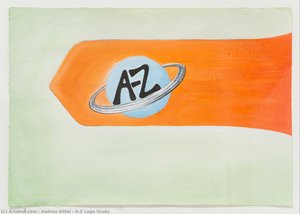
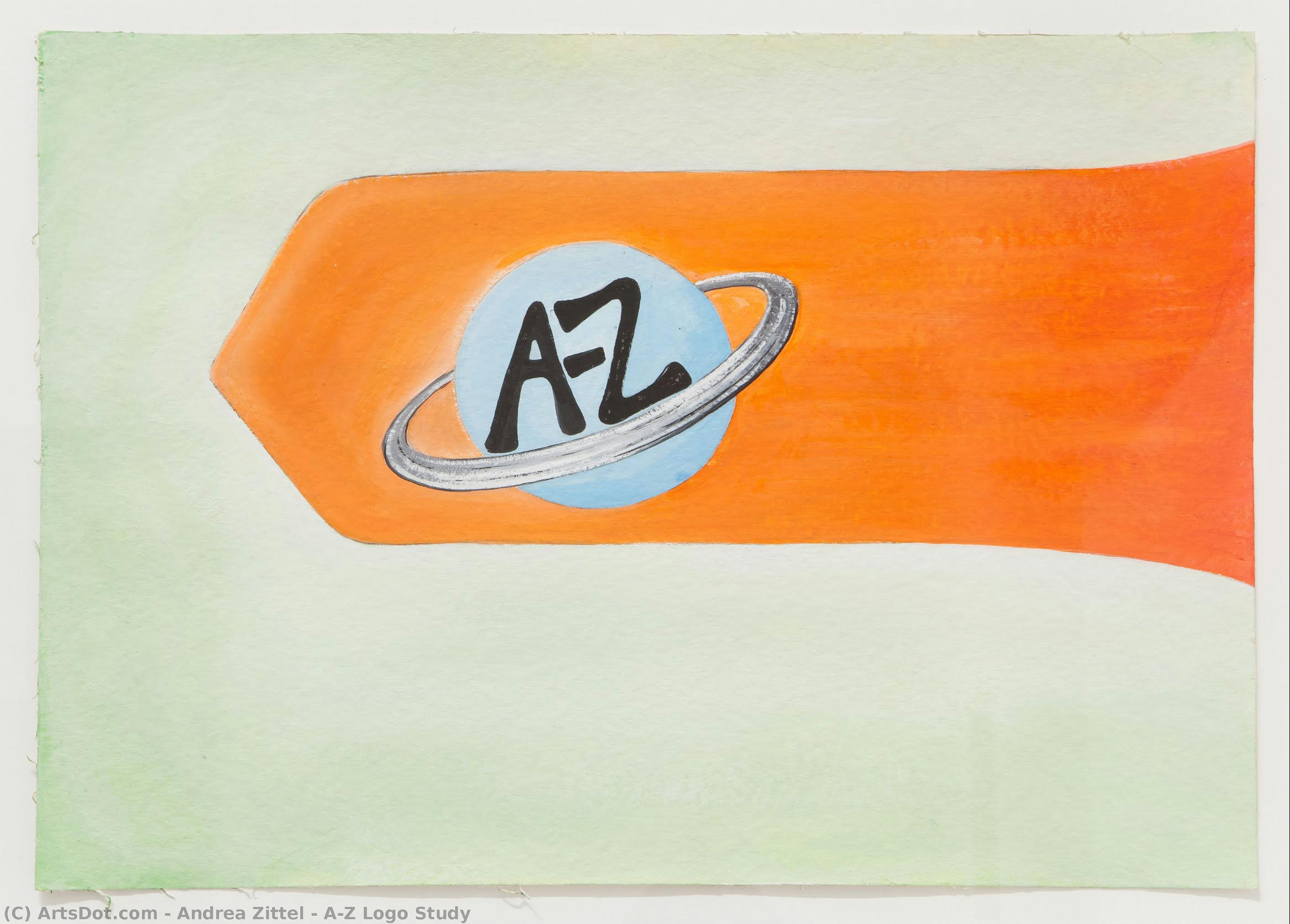
A-Z Logo Study
 Gouache
- WallArt
- Minimalist Conceptual Art
 1996
1996 96.0 x 71.0 cm
 MOMA - Museum of Modern Art
 Read More
Giclée / Art Print
Museum-quality giclée or canvas print with fast production and flexible finish options. ( Buy Hand Made Painting Buy Image)




P118B $10

P118H $10

P118W $10

P438Z $10

P508JH $12

P508YH $12

P805H $10

P805Z $10

P919BZ $10

P919G $10

P919XJ $10

P959ZH $10

P968JZ $12

W106C $8

W218G $10

W218JH $8

W218Y $10

W307PJ $10

W316G $10

W316PJ $8

W316Y $10

W398PJ $8

W4111J $10

W500HY $15

W500JH $15

W692G $12

W849H $8

W940BG $15

W953PJ $8




Pick from our preset sizes that match the artwork's original proportions.

You may enter your own dimensions to fit a specific frame or space. If your selected size does not match the original image's proportions, we will either crop the artwork or extend the image with a mirrored or solid-fill edge. A digital mockup will be sent for your approval before production begins.
Please note that the on-screen preview does not reflect the actual cropping or extension. Only the mockup will accurately show the final composition.
While custom sizes are available, we recommend selecting a dimension from the predefined list to preserve the original proportions.
Worldwide Delivery () in 2 weeks instead of standard 4/5 weeks. (17 August)

Free Worldwide Express Shipping

High-Quality Linen Canvas

Full Shipping Insurance

Customs Tax Refund Guarantee

True Color Matching Guarantee

60-Day Return Policy (Defects Only)

100% Money-Back Guarantee

Bulk Discount Offer
 Glass option is only available in size under 110 CM

A-Z Logo Study
Giclée / Art Print
Reproduction Size
-


Total Price
$ 63
Collectible Description
Exploring Minimalism and Spatial Resonance: Andrea Zittel’s “A-Z Logo Study”
Andrea Zittel's "A-Z Logo Study," created in 1996, stands as a cornerstone of minimalist art—a deceptively simple painting that speaks volumes about the artist’s preoccupation with fundamental questions concerning space and perception. More than just an aesthetic exercise, it represents a deliberate rejection of conventional artistic conventions, prioritizing transformation over mere representation within the realm of domestic interiors. The artwork itself is remarkably understated: a large expanse of orange pigment overlaid with a single blue circle bearing the stylized initials “AZ.” This seemingly reductive composition belies a profound conceptual depth rooted in Zittel’s exploration of how we experience our surroundings and what constitutes meaningful presence within them. The artist eschews grand narratives or elaborate visual cues, opting instead for a direct confrontation with color and form—a strategy that aligns perfectly with the broader movement toward pared-down aesthetics championed by artists like Donald Judd and Sol LeWitt during the late 1960s and early 1970s.- Technique: Zittel employs gouache and pencil on paper, a combination that lends itself to achieving subtle tonal variations and precise delineation of shapes. The meticulous application of pigment contributes to an almost sculptural quality, emphasizing the materiality of the artwork itself.
- Historical Context: “A-Z Logo Study” emerged during a period marked by significant shifts in artistic discourse—the rise of conceptual art challenged traditional notions of visual beauty and demanded that artists articulate their ideas through non-visual mediums. Zittel’s work reflects this intellectual climate, prioritizing conceptual rigor over decorative embellishment.
Related Artworks
Artist Biography
The Architecture of Existence: The Visionary World of Andrea Zittel
Andrea Zittel, born in Escondido, United States of America, in 1965, stands as a singular figure in contemporary art, recognized for her distinctive approach to artistic practice—a fusion of spatial exploration, sculptural experimentation, and a profound contemplation on the essence of existence. Her work delves into questions surrounding how we inhabit space and what imbues life with meaning, reflecting a core belief that art can fundamentally reshape our daily experiences. Rather than confining her creative output to the traditional confines of a canvas or a pedestal, Zittel has spent her career blurring the boundaries between fine art, functional design, and lived reality.
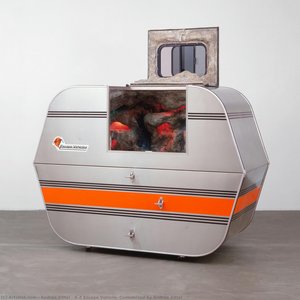
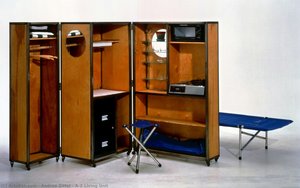
Zittel’s artistic journey began with an unwavering fascination for the intersection between art and everyday living. Reject and conventional notions of artistic creation, she prioritizes transforming utilitarian objects and environments into immersive artworks—a deliberate departure from traditional gallery settings. This ethos is powerfully embodied in her celebrated project “wagon station,” a mobile living unit meticulously designed to redefine the boundaries between architecture, design, and personal habitation. More than just a dwelling, it serves as a sculptural statement that interrogates our relationship with place and challenges us to reconsider conventional notions of comfort and convenience. Through works like the A-Z Escape Vehicle, she investigates how we inhabit space and imbues life with meaning, rejecting mass production in favor of experimental designs that challenge assumptions about individuality.
Minimalism, Materiality, and the Search for Meaning
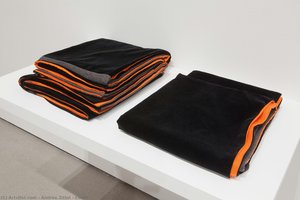
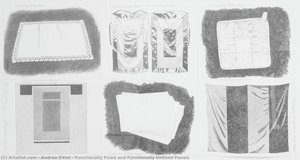
Her artistic style is characterized by an uncompromising commitment to minimalism—a deliberate stripping away of extraneous elements to reveal the core materiality and form of her creations. This aesthetic aligns seamlessly with Zittel's exploration of sustainability and self-sufficiency, mirroring a broader cultural preoccupation with reconnecting with nature amidst urbanization. Her work often utilizes texture and form to evoke quiet contemplation; for instance, in pieces such as Lavender Corduroy Personal Panel, she presents minimalist fabric sculptures that reflect on the nuances of daily life and the human experience through a captivating study of tactile surfaces.
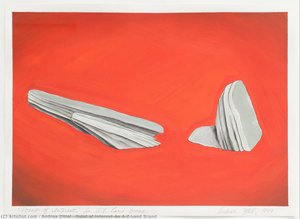
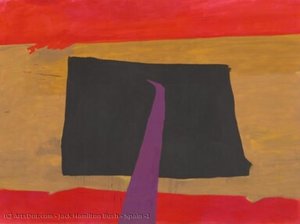
The influence of conceptual masters like Sol LeWitt and Agnes Martin is palpable in her work, particularly in her use of geometric abstraction to champion intellectual rigor and visual simplicity. Zittel’s ability to manipulate spatial perception is perhaps most striking in works such as Point of Interest—An A-Z Land Brand. In this gouache piece, the arrangement of large rocks against a bold red backdrop creates an illusion of floating, demonstrating her mastery over the psychological impact of composition and color. Her practice is not merely about looking at art, but about living within it, creating a dialogue between the viewer and the structural elements of their own environment.
Legacy and the Social Sculpture
Throughout her development, Zittel has expanded her reach through collaborations and large-scale installations that function as social sculptures. By engaging with themes of branding, land use, and personal autonomy, she creates a unique ecosystem where art becomes a tool for navigating the complexities of modern life. Her work continues to resonate within the contemporary landscape because it addresses the fundamental tension between our desire for stability and our need for mobility.
The historical significance of Andrea Zittel lies in her ability to transform the concept of the "art object" into an "artistic way of life." Her contributions can be summarized through several key pillars of her practice:
- Spatial Redefinition: The creation of mobile and modular living units that challenge traditional architectural norms.
- Conceptual Minimalism: A focus on the essential forms and materials that define our physical reality.
- Sustainable Living: An exploration of self-sufficiency and the reduction of unnecessary consumption through thoughtful design.
- Social Engagement: The use of art to interrogate social structures, mass production, and the way individuals claim their own space in the world.
As she continues to evolve her practice, Zittel remains a vital voice in the movement toward an integrated existence, where the distinction between the creator, the creation, and the inhabitant is beautifully and permanently dissolved.

andrea zittel
1965 - , United States of America
Quick Facts
- Artistic Movement Or Style: Minimalism
- Artists Or Movements Influenced By This Artist: ['Contemporary Art']
- Artists Who Influenced This Artist: ['Purvis Young']
- Date Of Birth: 1965
- Full Name: Andrea Zittel
- Nationality: American
- Notable Artworks:
- Sprawl I
- Lavender Corduroy Personal Panel
- Place Of Birth: Escondido, United States
Related Articles

Slate Blue Masterpieces: 10 Iconic Paintings & Timeless Home Decor Ideas
Immerse yourself in the captivating world of slate blue! Explore 10 iconic paintings by Monet, Van Gogh & Renoir. Discover their stories, techniques & find museum-quality art reproductions for your home at .
The Allure of Azure: Exploring the Symbolic & Aesthetic Depths of Blue in Art History
Explore the rich history of blue in art! Discover its symbolism, from ancient pigments to modern masterpieces by Kandinsky & Seurat. Uncover the psychological impact and cultural meanings behind this captivating hue.
Minimalist Masterpieces: 10 Artworks for Serene Home Decor | ArtsDot
Find serenity with 10 minimalist masterpieces! Explore Agnes Martin, Rothko & more. Discover the stories behind iconic abstract art, neutral palettes & calming designs. Museum-quality reproductions at ArtsDot.com – elevate your home decor today!
Henri Matisse's Masterpieces: Explore 25 Iconic Paintings & Art Decor Ideas
Journey through Henri Matisse's 25 most iconic paintings! Explore Fauvism, vibrant colors & the stories behind masterpieces like 'The Dance'. Find museum-quality art reproductions and curated decor ideas to elevate your space. Discover all masterpieces on ArtsDot.com.
Paul Klee's Masterpieces: Explore 25 Iconic Paintings & Prints | ArtsDot
Journey through Paul Klee's 25 most iconic paintings & prints. Explore his abstract style, Bauhaus influence, and vibrant color palettes. Find museum-quality art reproductions & decor ideas at ArtsDot.com. Discover all masterpieces online.