 Preview
 Send
Send Share
Share
 Details

 Download
 Similars
 X-Ray
X-Ray Diaporama
Sprawl I
 Acrylic On Canvas
- WallArt
- Minimalism
 2002
2002 161.0 x 125.0 cm
 MOMA - Museum of Modern Art
 Read More
Giclée / Art Print
Museum-quality giclée or canvas print with fast production and flexible finish options. ( Buy Hand Made Painting Buy Image)




P118B $10

P118H $10

P118W $10

P438Z $10

P508JH $12

P508YH $12

P805H $10

P805Z $10

P919BZ $10

P919G $10

P919XJ $10

P959ZH $10

P968JZ $12

W106C $8

W218G $10

W218JH $8

W218Y $10

W307PJ $10

W316G $10

W316PJ $8

W316Y $10

W398PJ $8

W4111J $10

W500HY $15

W500JH $15

W692G $12

W849H $8

W940BG $15

W953PJ $8




Pick from our preset sizes that match the artwork's original proportions.

You may enter your own dimensions to fit a specific frame or space. If your selected size does not match the original image's proportions, we will either crop the artwork or extend the image with a mirrored or solid-fill edge. A digital mockup will be sent for your approval before production begins.
Please note that the on-screen preview does not reflect the actual cropping or extension. Only the mockup will accurately show the final composition.
While custom sizes are available, we recommend selecting a dimension from the predefined list to preserve the original proportions.
Worldwide Delivery () in 2 weeks instead of standard 4/5 weeks. (18 August)

Free Worldwide Express Shipping

High-Quality Linen Canvas

Full Shipping Insurance

Customs Tax Refund Guarantee

True Color Matching Guarantee

60-Day Return Policy (Defects Only)

100% Money-Back Guarantee

Bulk Discount Offer
 Glass option is only available in size under 110 CM

Sprawl I
Giclée / Art Print
Reproduction Size
-


Total Price
$ 63
Collectible Description
The Echoes of Sprawl I: A Meditation on Urban Isolation
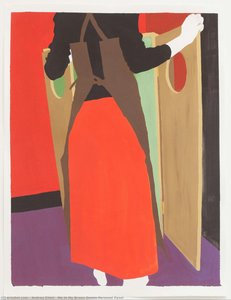
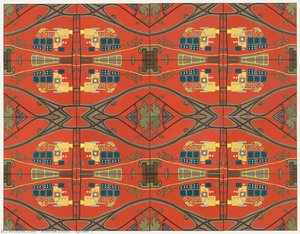
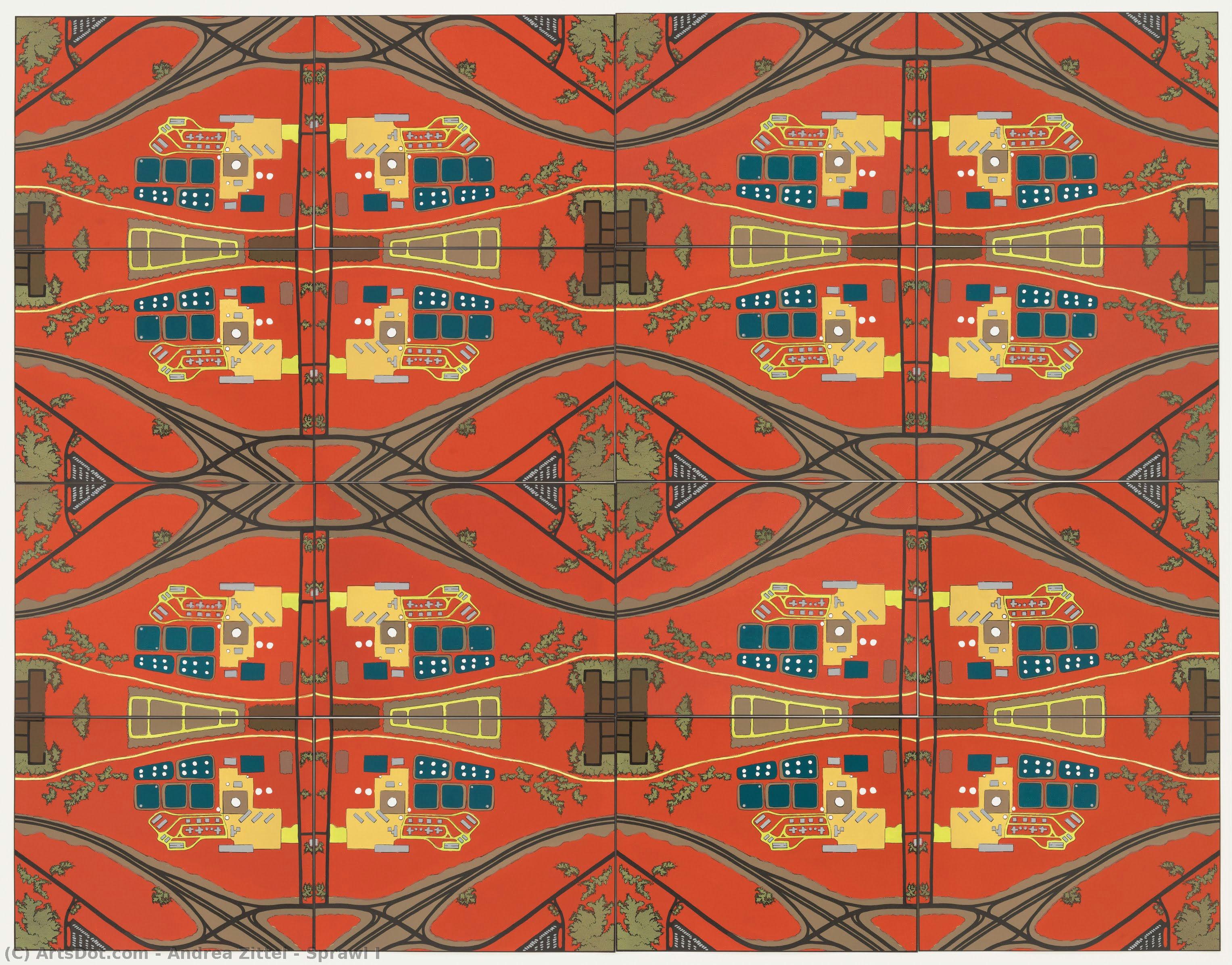
Andrea Zittel’s “Sprawl I,” painted in 2002, isn't merely a depiction of a landscape; it’s an invitation to contemplate the quiet solitude and subtle anxieties inherent within modern urban existence. The painting, measuring 161 x 125 cm, immediately draws the eye with its deceptively simple composition: a vibrant red background punctuated by stylized train and bus silhouettes against a backdrop of fragmented windows and a solitary clock. This seemingly straightforward arrangement belies a profound exploration of isolation, transportation, and the fractured nature of contemporary experience – themes that resonate deeply within Zittel’s broader body of work. The lithograph technique employed lends an almost clinical precision to the imagery, mirroring the detached observation characteristic of her approach to both art and life. It's as if Zittel has captured a fleeting moment of urban transit, distilled into its most essential elements – a sense of movement, a hint of disconnection, and the pervasive feeling of being perpetually on the move.A Dialogue with Minimalism and the American Landscape
Zittel’s artistic lineage is complex, drawing heavily from minimalist principles while simultaneously rejecting their rigid formalism. “Sprawl I” embodies this tension perfectly. The bold red background isn't a mere decorative element; it acts as a visual anchor, demanding attention and subtly suggesting an underlying sense of urgency or perhaps even warning. The train and bus icons, rendered with a deliberate lack of detail, aren’t representations of specific routes or destinations but rather archetypes of urban travel – symbols of the endless cycle of commuting and the relentless pursuit of connection that often leaves one feeling further from genuine human interaction. The inclusion of windows, fragmented and seemingly disconnected, reinforces this sense of separation, hinting at unseen lives unfolding behind closed curtains. This echoes a broader trend in American art history—a fascination with depicting the mundane, the overlooked, and the anxieties of modern life. The painting subtly references the vastness of the American landscape juxtaposed against the increasingly dense and fragmented urban environment, prompting viewers to consider their own relationship to both.Technique and Symbolism: A Layered Interpretation
The lithograph process itself is integral to the work’s impact. The meticulous detail achieved through multiple plates creates a surface that feels simultaneously smooth and textured – mirroring the complexities of urban life. Zittel's use of color—the assertive red against the muted tones of the background—is particularly striking. Red, often associated with danger, passion, or urgency, here seems to represent the relentless pace of modern existence. The clock, a recurring motif in Zittel’s work, serves as a potent symbol of time and its inescapable passage. It suggests that we are constantly racing against the clock, striving to achieve goals while simultaneously feeling increasingly disconnected from the present moment. The stylized train and bus icons aren't simply illustrations of transportation; they represent the systems—both physical and social—that govern our lives, often without our conscious awareness.Emotional Resonance: A Quiet Contemplation
Ultimately, “Sprawl I” isn’t a painting that shouts for attention; it invites quiet contemplation. It's a work that lingers in the mind long after it has been viewed, prompting viewers to reflect on their own experiences of urban life—the sense of isolation, the constant movement, and the yearning for connection. Zittel’s ability to distill complex emotions into such a deceptively simple composition is a testament to her artistic vision. It's a painting that speaks volumes about the challenges and rewards of navigating the modern world, offering a poignant reminder of the importance of slowing down and appreciating the small moments of beauty amidst the chaos. Reproductions of “Sprawl I” offer a valuable opportunity to bring this evocative artwork into any interior space, fostering a sense of thoughtful reflection and subtly acknowledging the complexities of contemporary life.Related Artworks

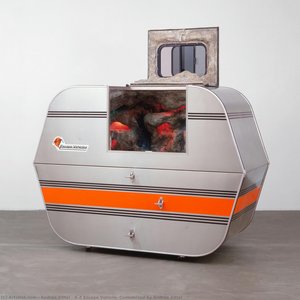
Artist Biography
The Architecture of Existence: The Visionary World of Andrea Zittel
Andrea Zittel, born in Escondido, United States of America, in 1965, stands as a singular figure in contemporary art, recognized for her distinctive approach to artistic practice—a fusion of spatial exploration, sculptural experimentation, and a profound contemplation on the essence of existence. Her work delves into questions surrounding how we inhabit space and what imbues life with meaning, reflecting a core belief that art can fundamentally reshape our daily experiences. Rather than confining her creative output to the traditional confines of a canvas or a pedestal, Zittel has spent her career blurring the boundaries between fine art, functional design, and lived reality.
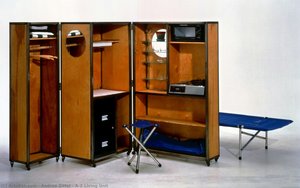
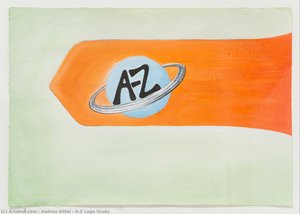
Zittel’s artistic journey began with an unwavering fascination for the intersection between art and everyday living. Reject and conventional notions of artistic creation, she prioritizes transforming utilitarian objects and environments into immersive artworks—a deliberate departure from traditional gallery settings. This ethos is powerfully embodied in her celebrated project “wagon station,” a mobile living unit meticulously designed to redefine the boundaries between architecture, design, and personal habitation. More than just a dwelling, it serves as a sculptural statement that interrogates our relationship with place and challenges us to reconsider conventional notions of comfort and convenience. Through works like the A-Z Escape Vehicle, she investigates how we inhabit space and imbues life with meaning, rejecting mass production in favor of experimental designs that challenge assumptions about individuality.
Minimalism, Materiality, and the Search for Meaning
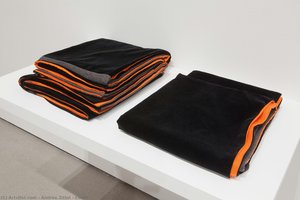
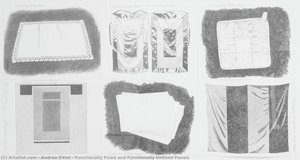
Her artistic style is characterized by an uncompromising commitment to minimalism—a deliberate stripping away of extraneous elements to reveal the core materiality and form of her creations. This aesthetic aligns seamlessly with Zittel's exploration of sustainability and self-sufficiency, mirroring a broader cultural preoccupation with reconnecting with nature amidst urbanization. Her work often utilizes texture and form to evoke quiet contemplation; for instance, in pieces such as Lavender Corduroy Personal Panel, she presents minimalist fabric sculptures that reflect on the nuances of daily life and the human experience through a captivating study of tactile surfaces.
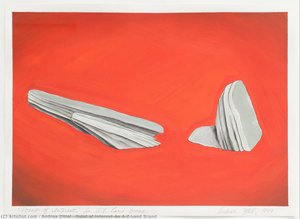
The influence of conceptual masters like Sol LeWitt and Agnes Martin is palpable in her work, particularly in her use of geometric abstraction to champion intellectual rigor and visual simplicity. Zittel’s ability to manipulate spatial perception is perhaps most striking in works such as Point of Interest—An A-Z Land Brand. In this gouache piece, the arrangement of large rocks against a bold red backdrop creates an illusion of floating, demonstrating her mastery over the psychological impact of composition and color. Her practice is not merely about looking at art, but about living within it, creating a dialogue between the viewer and the structural elements of their own environment.
Legacy and the Social Sculpture
Throughout her development, Zittel has expanded her reach through collaborations and large-scale installations that function as social sculptures. By engaging with themes of branding, land use, and personal autonomy, she creates a unique ecosystem where art becomes a tool for navigating the complexities of modern life. Her work continues to resonate within the contemporary landscape because it addresses the fundamental tension between our desire for stability and our need for mobility.
The historical significance of Andrea Zittel lies in her ability to transform the concept of the "art object" into an "artistic way of life." Her contributions can be summarized through several key pillars of her practice:
- Spatial Redefinition: The creation of mobile and modular living units that challenge traditional architectural norms.
- Conceptual Minimalism: A focus on the essential forms and materials that define our physical reality.
- Sustainable Living: An exploration of self-sufficiency and the reduction of unnecessary consumption through thoughtful design.
- Social Engagement: The use of art to interrogate social structures, mass production, and the way individuals claim their own space in the world.
As she continues to evolve her practice, Zittel remains a vital voice in the movement toward an integrated existence, where the distinction between the creator, the creation, and the inhabitant is beautifully and permanently dissolved.

andrea zittel
1965 - , United States of America
Quick Facts
- Artistic Movement Or Style: Minimalism
- Artists Or Movements Influenced By This Artist: ['Contemporary Art']
- Artists Who Influenced This Artist: ['Purvis Young']
- Date Of Birth: 1965
- Full Name: Andrea Zittel
- Nationality: American
- Notable Artworks:
- Sprawl I
- Lavender Corduroy Personal Panel
- Place Of Birth: Escondido, United States
Related Articles

Crimson Threads of Narrative: Exploring Symbolism & Representation in Artworks Featuring the Red Dress
Explore the rich symbolism of the red dress in art history! From ancient power displays to iconic portraits like Cézanne’s 'Madame Cezanne', discover the cultural and artistic significance behind this captivating color. Expert analysis & insights.
Mark Rothko's Masterpieces: 25 Paintings That Define Abstract Expressionism | ArtsDot
Explore 25 iconic Mark Rothko paintings that define Abstract Expressionism. Discover the stories, colors & emotions behind these masterpieces. Find museum-quality art reproductions and curated decor ideas at ArtsDot.com.
Minimalist Masterpieces: 10 Artworks for Serene Home Decor | ArtsDot
Find serenity with 10 minimalist masterpieces! Explore Agnes Martin, Rothko & more. Discover the stories behind iconic abstract art, neutral palettes & calming designs. Museum-quality reproductions at ArtsDot.com – elevate your home decor today!
Henri Matisse's Masterpieces: Explore 25 Iconic Paintings & Art Decor Ideas
Journey through Henri Matisse's 25 most iconic paintings! Explore Fauvism, vibrant colors & the stories behind masterpieces like 'The Dance'. Find museum-quality art reproductions and curated decor ideas to elevate your space. Discover all masterpieces on ArtsDot.com.

Andrea del Sarto: Florentine Grace, Technical Mastery & Artistic Ambition
Explore the life & art of Andrea del Sarto, a Florentine Renaissance master renowned for harmonious compositions & technical brilliance. Discover his frescoes, portraits, and lasting influence on art history.