 Preview
 Send
Send Share
Share
 Details

 Download
 Similars
 X-Ray
X-Ray Diaporama
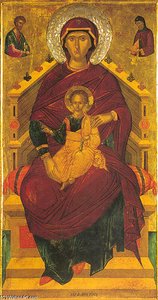
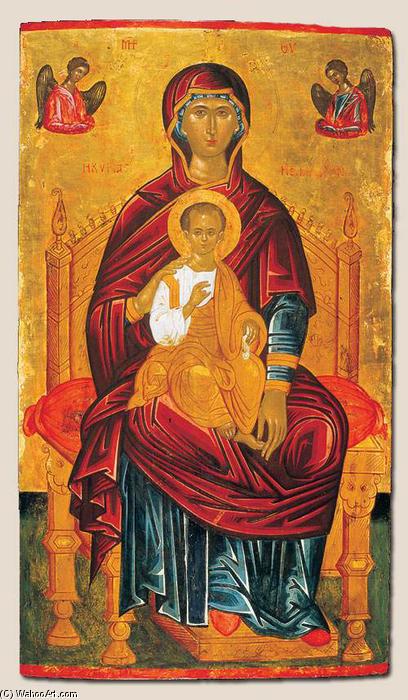
Mother of God Enthroned


 Read More
Hand Made Oil Reproduction
Hand-painted oil on canvas in your size and frame, made to order by our artists. ( Buy Print Buy Image)




P118B $10

P118H $10

P118W $10

P438Z $10

P508JH $12

P508YH $12

P805H $10

P805Z $10

P919BZ $10

P919G $10

P919XJ $10

P959ZH $10

P968JZ $12

W106C $8

W218G $10

W218JH $8

W218Y $10

W307PJ $10

W316G $10

W316PJ $8

W316Y $10

W398PJ $8

W4111J $10

W500HY $15

W500JH $15

W692G $12

W849H $8

W940BG $15

W953PJ $8




Pick from our preset sizes that match the artwork's original proportions.

You may enter your own dimensions to fit a specific frame or space. If your selected size does not match the original image's proportions, we will either crop the artwork or extend the painting with additional hand-painted elements. A digital mockup will be sent for your approval before production begins.
Please note that the on-screen preview does not reflect the actual cropping or extension. Only the mockup will accurately show the final composition.
While custom sizes are available, we recommend selecting a dimension from the predefined list to preserve the original proportions.
After order, ArtsDot.com team will email client for instructions and provide a mockup preview
Worldwide Delivery () in 3/4 weeks instead of standard 5 weeks. (17 August). No compromise on quality.

Free Worldwide Express Shipping

High-Quality Linen Canvas

Full Shipping Insurance

Customs Tax Refund Guarantee

True Color Matching Guarantee

60-Day Return Policy (Defects Only)

100% Money-Back Guarantee

Bulk Discount Offer
 Glass option is only available in size under 110 CM

Mother of God Enthroned
Reproduction Medium
Reproduction Size
-


Total Price
$ 263
Artwork Description
A Divine Encounter: Andreas Ritzos’ *Mother of God Enthroned*
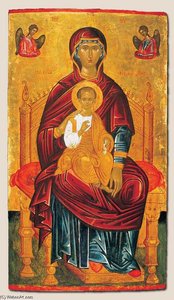
This exquisite icon, painted in 1480 by the celebrated Greek artist Andreas Ritzos, presents a breathtaking depiction of the *Theotokos* (Mother of God) and Christ Child. Rooted firmly within the Byzantine tradition, yet infused with the emerging stylistic nuances of the Cretan School, this artwork is a powerful testament to faith and artistic mastery. The composition centers on Mary seated regally upon an ornate throne, her gaze directed outward – inviting a personal connection with the viewer. She cradles the infant Jesus, radiating both maternal tenderness and divine authority. Ritzos’ skillful use of egg tempera and gold leaf creates a luminous surface that seems to emanate light, enhancing the spiritual atmosphere of the scene.The Language of Symbols & Style
Ritzos employs a rich visual vocabulary steeped in religious symbolism. The vibrant blue of Mary's *maphorion* (cloak) signifies her heavenly nature and purity, while the crimson inner garment alludes to Christ’s sacrifice. The gold background isn’t merely decorative; it represents the divine realm – an uncreated light beyond human comprehension. Maniera greca, a style prevalent in Cretan icon painting of the period, is evident in the elegant drapery folds, refined facial features, and meticulous detailing. Notice the three angels flanking the composition, each bearing a scroll inscribed with “ΕΥ ΣΟΙ” (“Hail to you”), a traditional greeting acknowledging Mary’s pivotal role in salvation history. The architectural elements – the columns and arches framing the central figures – lend depth and grandeur, evoking the majesty of both earthly and heavenly kingdoms.Andreas Ritzos & The Cretan School
Born in Heraklion, Crete in 1421, Andreas Ritzos was a leading figure in the flourishing artistic environment of the Cretan Renaissance. He skillfully blended Byzantine conventions with influences from Western European art, creating a distinctive style that resonated throughout the region. Ritzos’s work is characterized by its refined draftsmanship, harmonious color palettes, and profound spiritual depth. His influence extended to later artists, most notably El Greco, who absorbed elements of Ritzos's stylistic innovations during his own formative years in Crete. This icon exemplifies the high standards of craftsmanship and artistic expression that defined the Cretan School, a pivotal movement in post-Byzantine art.Emotional Resonance & Interior Design
*Mother of God Enthroned* transcends its religious function to become a deeply moving work of art. The serene expressions of Mary and Jesus evoke feelings of peace, reverence, and hope. The artwork’s rich colors and shimmering gold leaf create a focal point that draws the eye and invites contemplation. For interior design, this icon would lend an air of timeless elegance and spiritual depth to any space – from traditional living rooms to modern sanctuaries. Its vertical format makes it particularly well-suited for hallways or above fireplaces, while its golden tones complement a variety of color schemes. A high-quality reproduction captures the essence of Ritzos’s masterpiece, offering a beautiful and meaningful addition to any art collection.Related Artworks
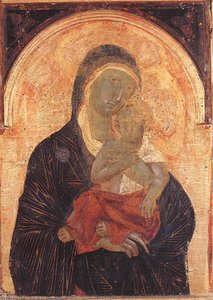
Artist Biography
Andreas Ritzos: A Master of the Cretan School
Andreas Ritzos (1421-1492) stands as a pivotal figure in the history of Greek art, particularly renowned for his contributions to the vibrant and influential Cretan School of icon painting. Born in Iraklion, Crete – a city steeped in Byzantine tradition yet increasingly exposed to Western European influences – Ritzos’s life coincided with a period of remarkable artistic transformation. His work represents a fascinating synthesis of deeply rooted Byzantine iconography with emerging Renaissance techniques, establishing him as one of the most significant artists bridging these two worlds. He wasn't merely a painter; he was a custodian and innovator, shaping the visual language of Orthodox Christianity in Crete for generations to come.
Ritzos’s early life remains somewhat shrouded in mystery, though it is known that his father, Nicholas Ritzo, was a skilled seaman and jeweler. This lineage likely instilled within him an appreciation for craftsmanship and detail – qualities that would become hallmarks of his artistic style. He received his initial training from Angelos Akotantos, a highly respected icon painter who served as a crucial mentor in shaping Ritzos’s early development. Akotantos's influence is evident in Ritzos’s adherence to the traditional maniera greca—a stylistic approach characterized by its emphasis on elegant drapery, idealized figures, and a restrained palette of gold, red, and blue. However, unlike many of his contemporaries who remained firmly rooted in established Byzantine conventions, Ritzos demonstrated a willingness to experiment with Venetian influences, particularly in terms of perspective and the depiction of natural forms.
The Maniera Greca and Artistic Style
At the heart of Ritzos’s artistic identity lies the ‘maniera greca,’ a term that encapsulates his distinctive approach to icon painting. This style wasn't simply imitation; it was a deliberate reimagining of Byzantine aesthetics, informed by both classical ideals and contemporary trends. The maniera greca is characterized by its graceful, flowing drapery—often rendered with an almost liquid quality—and the use of elongated figures that convey a sense of movement and dynamism. Ritzos masterfully employed gold leaf to create luminous backgrounds and highlight key elements within his compositions, imbuing them with a profound spiritual radiance.
Unlike some of his predecessors who favored stark contrasts and bold colors, Ritzos’s palette was generally more restrained, relying on subtle gradations of hue and the interplay of light and shadow to create depth and atmosphere. His meticulous attention to detail—evident in the rendering of facial features, hands, and garments—demonstrates a remarkable level of technical skill. Furthermore, Ritzos's work is distinguished by its psychological depth; his figures possess an expressive quality that invites viewers to contemplate their inner lives and spiritual journeys.
Notable Works: The Madonna and Child
Ritzos’s most celebrated works are undoubtedly his depictions of the Virgin Mary and Child. These paintings—including “Mother of God Enthroned” (1480) – exemplify his artistic prowess and represent some of the finest examples of Cretan icon painting. In these compositions, Ritzos skillfully captures the maternal tenderness and divine grace of the Theotokos, imbuing her image with an aura of serenity and compassion. The use of gold leaf to highlight Mary’s garments and halo further enhances the sacredness of the scene, while the carefully rendered details of the infant Christ—his tiny hands reaching out in a gesture of trust—evoke a powerful sense of connection between mother and child.
The “Jesus Hominum Salvator” (1470s), a tempera painting featuring the Christogram IHS, is another significant work. This icon showcases Ritzos’s innovative approach to incorporating symbolic elements into his compositions. The placement of the Christogram within the letters of the name ‘IHS’ demonstrates his artistic ingenuity and his ability to seamlessly blend traditional iconography with contemporary artistic trends. The intricate details of the figures—the weeping Virgin, the angel collecting the blood, and the bewildered guards—create a compelling narrative that invites viewers to contemplate the mysteries of faith and redemption.
Legacy and Influence
Andreas Ritzos’s influence on subsequent generations of Cretan icon painters is undeniable. His work served as a model for artists such as Georgios Klontzas, Nikolaos Tzafouris, and even El Greco—a testament to his enduring artistic legacy. El Greco, in particular, was deeply influenced by Ritzos's use of elongated figures, dramatic lighting, and expressive gestures. While El Greco ultimately developed his own distinctive style, the foundations of his art can be traced back to the innovations pioneered by Ritzos.
Ritzos’s legacy extends beyond his individual works; he played a crucial role in preserving and transmitting the traditions of Cretan icon painting during a period of profound cultural change. His dedication to craftsmanship, his artistic innovation, and his spiritual depth have ensured that his work continues to inspire and move viewers centuries after its creation. Sixty of his paintings survive today, offering a rare glimpse into the creative genius of this remarkable artist.
Andreas Ritzos
1421 - 1492 , Greece
Quick Facts
- Artistic Movement Or Style: Maniera Greca
- Artists Or Movements Influenced By This Artist:
- El Greco
- Georgios Klontzas
- Artists Who Influenced This Artist: ['Angelos Akotantos']
- Date Of Birth: 1421
- Date Of Death: 1492
- Full Name: Andreas Ritzos
- Nationality: Greek
- Notable Artworks:
- Mother of God Enthroned
- Jesus Hominum Salvator
- Place Of Birth: Heraklion, Greece
Related Articles
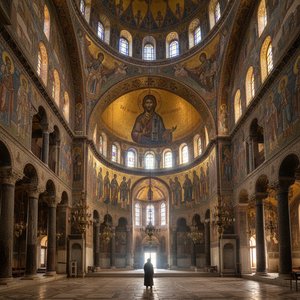
Illuminating Eternity: A Comprehensive Exploration of Byzantine Art's Legacy
Explore the rich history & stunning artistry of the Byzantine Empire! Discover iconic mosaics, profound symbolism, and lasting influence on Western art. A comprehensive guide for history lovers.

Giotto's Masterpieces: 25 Renaissance Artworks for Your Home | ArtsDot
Explore 25 breathtaking artworks by Giotto di Bondone, a Renaissance master. Discover the stories behind iconic frescoes & paintings like the Scrovegni Chapel cycle. Find museum-quality Giotto reproductions and elevate your home decor with ArtsDot.com.
National Gallery of Art's Masterpieces: 25 Iconic Paintings for Your Home Decor
Explore 25 iconic artworks from Washington DC's National Gallery of Art! Discover masterpieces by Cézanne, Matisse & Picasso. Find museum-quality art reproductions and elevate your home decor with timeless paintings. Explore the full collection online at ArtsDot.com.

Andy Warhol's Masterpieces: Explore 25 Iconic Artworks for Your Home | ArtsDot
Dive into the vibrant world of Andy Warhol! Explore 25 iconic Pop Art masterpieces – from Marilyn Monroe to Campbell's Soup Cans. Discover the stories behind these timeless paintings & find museum-quality art reproductions for your home at ArtsDot.com.
Alte Pinakothek's Masterpieces: 25 Iconic Paintings for Art Lovers | ArtsDot
Journey through Alte Pinakothek's 25 most iconic paintings! Explore masterpieces by Dürer, Rembrandt & Rubens. Discover art history, techniques & find museum-quality reproductions for your home at ArtsDot.com.