 Preview
 Send
Send Share
Share
 Details

 Download
 Similars
 X-Ray
X-Ray Diaporama
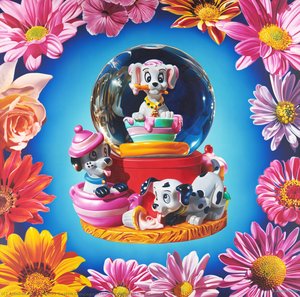
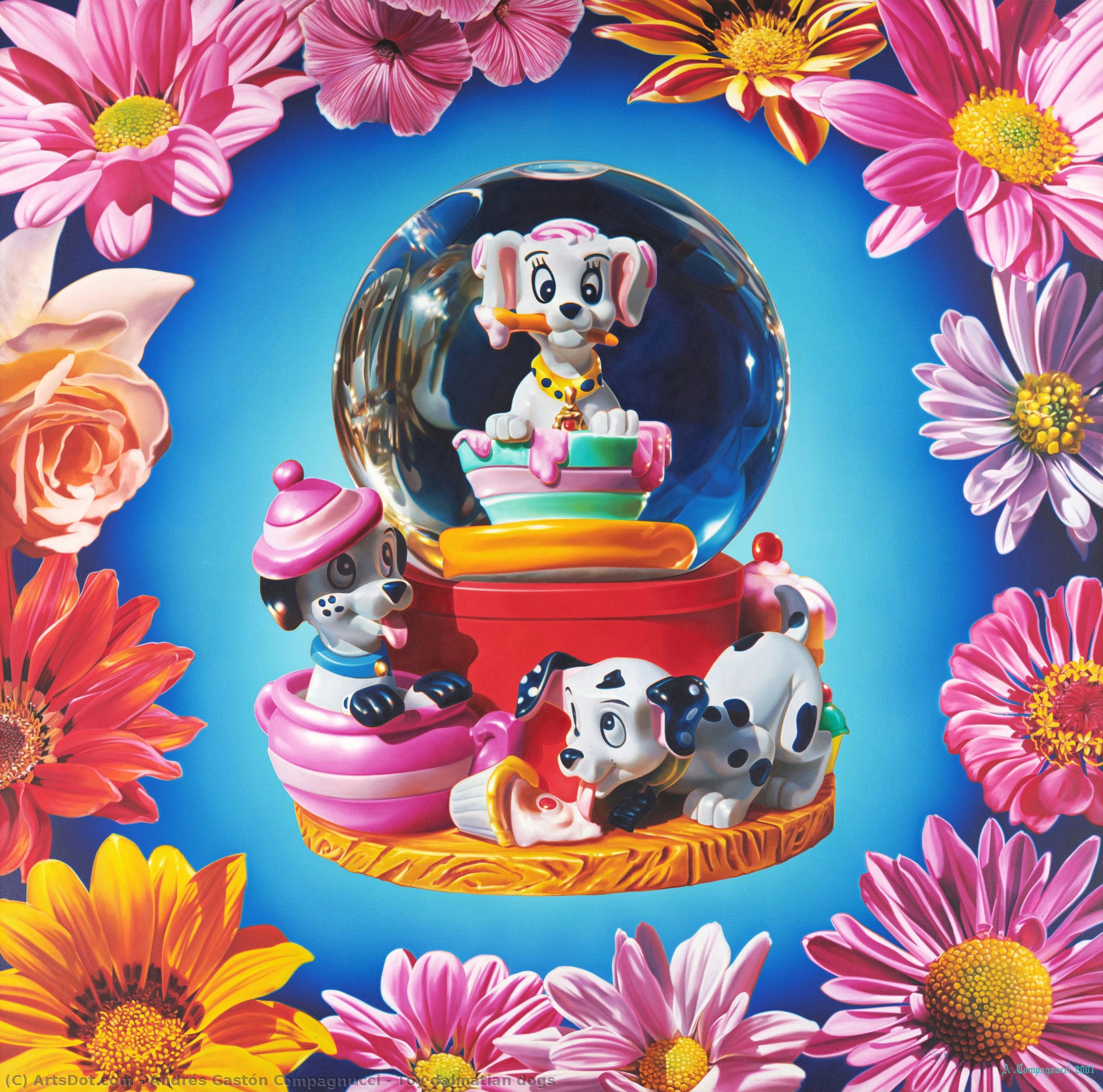
Toy dalmatian dogs
 Painting
- Contemporary Realism
 2001
2001 150.0 x 150.0 cm
 Municipal Museum of Art of La Plata
 Read More
Giclée / Art Print
Museum-quality giclée or canvas print with fast production and flexible finish options. ( Buy Hand Made Painting Buy Image)




P118B $10

P118H $10

P118W $10

P438Z $10

P508JH $12

P508YH $12

P805H $10

P805Z $10

P919BZ $10

P919G $10

P919XJ $10

P959ZH $10

P968JZ $12

W106C $8

W218G $10

W218JH $8

W218Y $10

W307PJ $10

W316G $10

W316PJ $8

W316Y $10

W398PJ $8

W4111J $10

W500HY $15

W500JH $15

W692G $12

W849H $8

W940BG $15

W953PJ $8




Pick from our preset sizes that match the artwork's original proportions.

You may enter your own dimensions to fit a specific frame or space. If your selected size does not match the original image's proportions, we will either crop the artwork or extend the image with a mirrored or solid-fill edge. A digital mockup will be sent for your approval before production begins.
Please note that the on-screen preview does not reflect the actual cropping or extension. Only the mockup will accurately show the final composition.
While custom sizes are available, we recommend selecting a dimension from the predefined list to preserve the original proportions.
Worldwide Delivery () in 2 weeks instead of standard 4/5 weeks. (21 August)

Free Worldwide Express Shipping

High-Quality Linen Canvas

Full Shipping Insurance

Customs Tax Refund Guarantee

True Color Matching Guarantee

60-Day Return Policy (Defects Only)

100% Money-Back Guarantee

Bulk Discount Offer
 Glass option is only available in size under 110 CM

Toy dalmatian dogs
Giclée / Art Print
Reproduction Size
-


Total Price
$ 63
Collectible Description
A Celebration of Canine Joy
This vibrant tableau, "Toy dalmatian dogs," is an immediate burst of pure, unadulterated joy rendered in paint. It captures a moment so fleeting—a gathering of playful companions amidst domestic delights—that it feels lifted directly from the heart of a sun-drenched afternoon fête. The composition centers around a delightful scene involving several Dalmatian dogs, each positioned with unique character. One dog rests regally atop a magnificent cake, suggesting a celebratory climax; another stands sentinel nearby, while a third lounges contentedly on the floor. These central figures are complemented by smaller details, such as a cup resting upon a dining table and an elegant vase anchoring the left side of the scene.
Mastery in Whimsical Detail
The artist, Andrés Gastón Compagnucci, demonstrates a remarkable skill in rendering texture and movement. One can almost feel the soft fur of the dalmatians and smell the sweet aroma emanating from the cake. The technique employed is rich and colorful, allowing the playfulness of the subject matter to shine through every brushstroke. It is a work that balances meticulous detail—the spots on the dogs, the china on the table—with an overall sense of spontaneous energy. This level of craftsmanship makes it not just a painting to be observed, but an atmosphere to be inhabited.
Symbolism of Companionship and Celebration
Beyond the surface gaiety, the artwork speaks volumes about companionship. The gathering of dogs, universally symbols of loyalty and fidelity, creates an immediate emotional resonance with the viewer. The cake itself is a universal signifier of milestones, joy, and shared experience. Together, these elements weave a narrative tapestry celebrating life's sweetest moments—the simple pleasure of togetherness. It evokes a nostalgic yearning for perfect, carefree days spent with beloved pets.
Bringing Playful Life to Your Space
For the collector or interior designer, this piece offers an unparalleled infusion of warmth and whimsy into any room. Its bright palette and lively subject matter make it a stunning focal point, perfectly suited for sunrooms, dining areas, or any space meant to feel uplifting and spirited. Owning a reproduction of "Toy dalmatian dogs" is acquiring more than just art; it is curating a feeling—a permanent echo of laughter and canine delight that elevates the everyday into something truly memorable.
Related Artworks
Artist Biography
John McKinstry: A Cornish Landscape Painter Forged in the Sixties
Born in Hertfordshire, England, in 1966, John McKinstry’s artistic journey began to take shape amidst the vibrant cultural shifts of the late 20th century. While his early life unfolded within the familiar landscapes of the British Midlands, a restless spirit and an innate fascination with the natural world ultimately led him to Cornwall, where he now resides and draws inspiration from the dramatic coastline and rolling hills.
McKinstry’s work is immediately recognizable for its tranquil yet powerful depictions of the Cornish countryside. He eschews grand, sweeping vistas in favor of intimate scenes – a weathered stone wall draped with ivy, a solitary sheep grazing on a windswept moor, or the shimmering surface of a secluded cove. His paintings aren't merely representations of place; they are carefully constructed meditations on light, texture, and the enduring relationship between humanity and the environment. The influence of early landscape painters like Turner and Constable is evident in his use of atmospheric perspective and his ability to capture fleeting moments of beauty, but McKinstry’s style possesses a distinctly contemporary sensibility.
McKinstry's artistic process is deeply rooted in observation and a commitment to traditional techniques. He works primarily with oil paints on canvas, employing a layered approach that builds up color and texture gradually. He meticulously studies his subjects *en plein air*, capturing the nuances of light and shadow directly from nature. This dedication to direct observation informs every brushstroke, resulting in paintings that feel both immediate and deeply considered.
The Echoes of 1966: A Generation Shaped by Change
McKinstry’s birth year, 1966, is a pivotal point in art history. It was a year marked by seismic shifts – the rise of Pop Art challenging traditional notions of beauty, the burgeoning psychedelic movement exploring altered states of consciousness, and the growing counterculture questioning established norms. While McKinstry's work doesn’t explicitly engage with these movements, it can be argued that his quiet contemplation of the natural world represents a subtle response to the anxieties and uncertainties of the era.
The events of 1966 – including the controversial exhibition of Aubrey Beardsley’s prints at the Victoria and Albert Museum, the formation of the Chicago Surrealist Group, and Jim Dine's legal battle over indecent works – all underscore a period of artistic experimentation and social upheaval. These developments created a fertile ground for artists to challenge conventions and explore new forms of expression. McKinstry’s work, with its understated elegance and focus on elemental beauty, can be seen as a counterpoint to the more overtly provocative trends of the time.
Technique and Materials: A Dialogue with Nature
McKinstry's mastery lies not only in his ability to capture the essence of a scene but also in his skillful manipulation of materials. He favors traditional oil paints, allowing them to blend and mingle on the canvas, creating a rich tapestry of color and texture. The layering technique he employs is deliberate, building up depth and luminosity through multiple applications of paint.
He often incorporates subtle variations in brushstroke – some areas rendered with broad, confident strokes, others with delicate washes – to mimic the irregularities of natural surfaces. The use of impasto—thickly applied paint—adds a tactile quality to his work, inviting viewers to reach out and touch the canvas. The choice of colors is equally important; McKinstry’s palette is predominantly muted, reflecting the subtle hues of the Cornish landscape – ochres, browns, greens, and blues – creating a sense of harmony and tranquility.
Recognition and Legacy
While McKinstry's work may not always command the attention of the mainstream art world, it has garnered critical acclaim within specialist circles. His paintings have been exhibited in numerous galleries across the UK and internationally, and he is increasingly recognized for his unique vision and technical skill.
His commitment to capturing the quiet beauty of the Cornish landscape—a region steeped in history and mythology—has established him as a significant voice in contemporary British art. McKinstry’s work invites viewers to slow down, observe with care, and reconnect with the natural world – a message that resonates powerfully in an increasingly fast-paced and disconnected society.
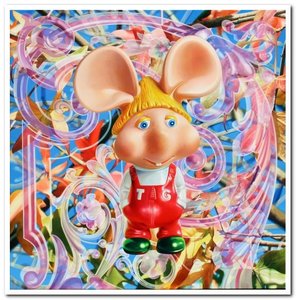
andrés gastón compagnucci
1966 - , Argentina
Quick Facts
- Artistic Movement Or Style: Landscape artist
- Date Of Birth: 1966
- Full Name: John McKinstry
- Nationality: British
- Notable Artworks: ['Various landscape pieces']
- Place Of Birth: Hertfordshire, UK
Related Articles
Animalia: Exploring the Enduring Presence of Animals in Art & Interior Design
Explore the rich history of animal symbolism in art, from ancient mythology to modern masterpieces. Discover how animals have inspired artists for centuries and learn how to incorporate these powerful motifs into your home décor.
Immortalizing Companionship: The Art of Pet Portraiture as a Contemporary Expression of Human-Animal Bonds
Commission a timeless pet portrait from skilled artists at ArtsDot. Preserve your beloved companion's memory with museum-quality, hand-painted artwork. Explore styles & request a custom piece today!
Playful Masterpieces: Top 10 Artworks for a Joyful Home | ArtsDot
Find joy & inspiration! Explore 10 playful masterpieces by Monet, Matisse & more. Discover art history, vibrant colors & uplifting stories behind these iconic paintings. Museum-quality reproductions at ArtsDot.com – explore the full collection online!
Beastly Brushstrokes: A Historical Journey Through Animal Painting & Aesthetic Movements
Explore the rich history of animal painting across cultures & movements. Discover iconic artists, symbolism, collecting trends & expert art consultation at ArtsDot.com.
F.A.Q.: Pet Portraits - A Guide for Elite Collectors
Commission a stunning custom pet portrait from . Our expert artists create heirloom-quality oil paintings from your photos – preserving cherished memories with timeless elegance for discerning collectors.