 Preview
 Send
Send Share
Share
 Details

 Download
 Similars
 X-Ray
X-Ray Diaporama
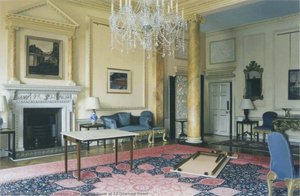
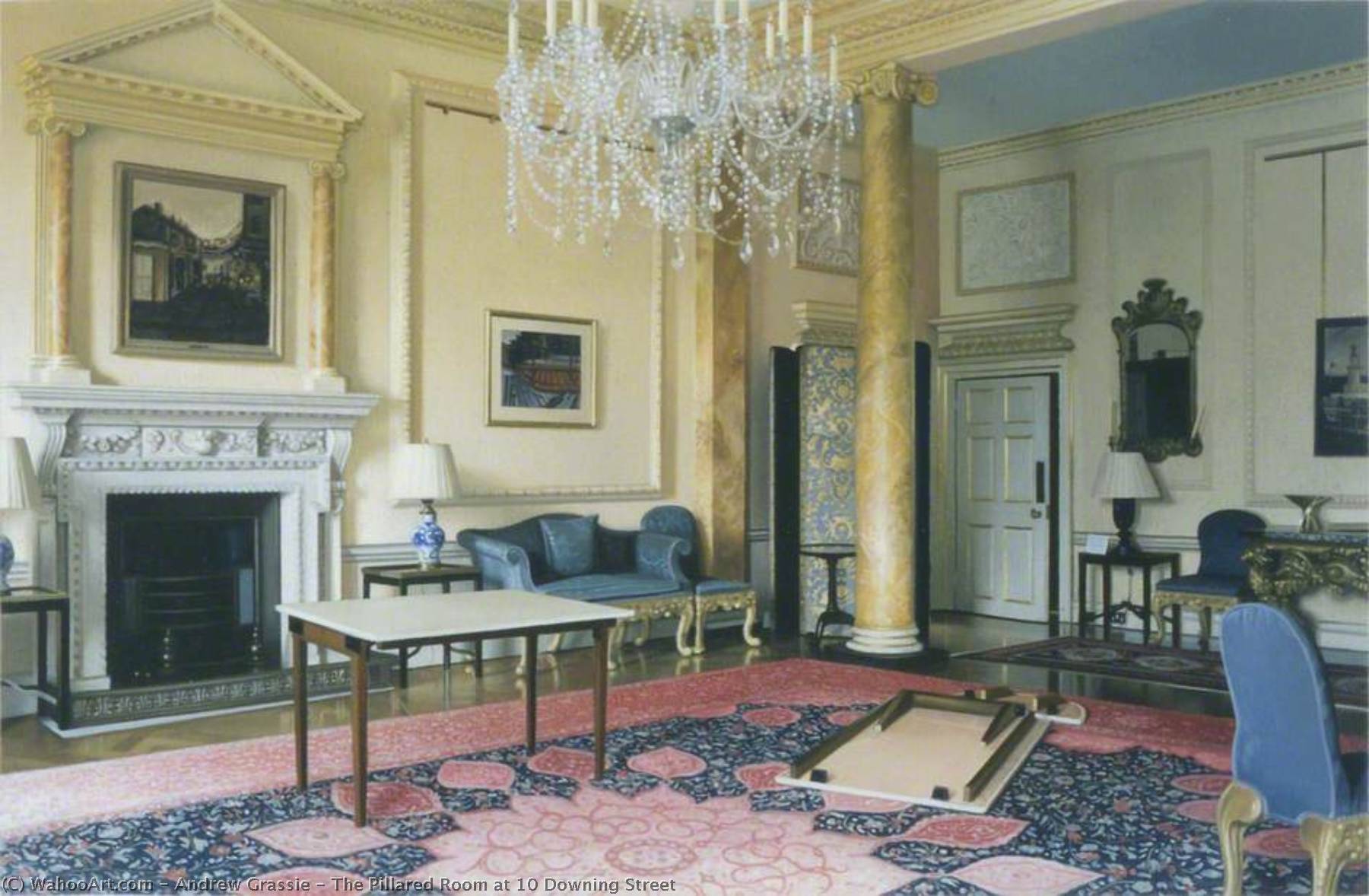
The Pillared Room at 10 Downing Street
 2002
2002 24.0 x 32.0 cm
 Government Art Collection
 Read More
Hand Made Oil Reproduction
Hand-painted oil on canvas in your size and frame, made to order by our artists. ( Buy Print Buy Image)




































Pick from our preset sizes that match the artwork's original proportions.

You may enter your own dimensions to fit a specific frame or space. If your selected size does not match the original image's proportions, we will either crop the artwork or extend the painting with additional hand-painted elements. A digital mockup will be sent for your approval before production begins.
Please note that the on-screen preview does not reflect the actual cropping or extension. Only the mockup will accurately show the final composition.
While custom sizes are available, we recommend selecting a dimension from the predefined list to preserve the original proportions.
After order, ArtsDot.com team will email client for instructions and provide a mockup preview
Worldwide Delivery () in 3/4 weeks instead of standard 5 weeks. (3 September). No compromise on quality.

Free Worldwide Express Shipping

High-Quality Linen Canvas

Full Shipping Insurance

Customs Tax Refund Guarantee

True Color Matching Guarantee

60-Day Return Policy (Defects Only)

100% Money-Back Guarantee

Bulk Discount Offer
 Glass option is only available in size under 110 CM

The Pillared Room at 10 Downing Street
Reproduction Medium
Reproduction Size
-


Total Price
$ 263
Related Artworks









Artist Biography
The Meticulous Mirror: The Art of Andrew Grassie
Born in Edinburgh in 1966, Andrew Grassie has carved a singular niche within the landscape of contemporary art through a practice that is as much about philosophical inquiry as it is about technical mastery. His journey, shaped by the rigorous academic environments of St Martins School of Art and the Royal College of Art, led him to develop a method that challenges the very boundaries between reality and representation. Grassie does not merely paint subjects; he interrogates the act of seeing itself, creating works that serve as complex, self-referential loops of observation and execution.
At the heart of Grassie’s oeuvre lies his celebrated technique of Extreme Replication. Eschewing the traditional spontaneity of oil painting, he utilizes egg tempera—a medium deeply rooted in Renaissance traditions—to meticulously recreate photographic copies on paper. This process is far from a simple imitation; it is a profound meditation on materiality and the limitations of the lens. By translating the mechanical precision of photography into the luminous, tactile language of tempera, Grass andie creates a tension between the frozen moment of the photograph and the painstaking, human labor of the brushstroke. His work often explores the concept of the re-presentation, where the subject is not the original scene, but rather the photographic record of that scene.
A Dialogue with Space and Process
Grassie’s career reached a significant milestone in 2004 when he was awarded a Special Merit at the 23rd John Moores Painting Prize. The winning work, The Making of the Painting, serves as a quintessential example of his conceptual depth. Rather than presenting a finished, external subject, the piece functions as a self-portrait of the studio space itself—a meta-narrative that collapses the distance between the artist’s presence and the canvas. This ability to turn the artistic process inward has allowed him to explore themes of authorship and the illusion of authenticity, often leaving viewers in a state of productive disorientation.
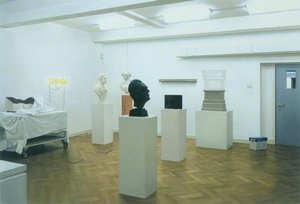
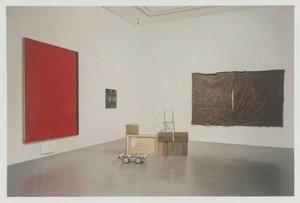
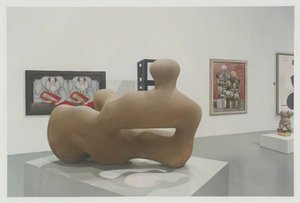
His explorations have frequently extended into the realm of the institutional and the architectural. Through series that examine gallery interiors or even imaginary "rehangs" of museum collections, Grassie treats the white cube of the gallery as a living subject. His 2005 solo exhibition at Tate Britain, part of the prestigious Art Now series, showcased his ability to manipulate space and perception, using tiny, detailed paintings to reimagine the very walls that held them. These works, often described as possessing a certain melancholy or bureaucratic irony, invite us to consider how much of our experience of art is dictated by the architecture and curation surrounding it.
Legacy and Artistic Significance
The enduring significance of Andrew Grassie lies in his refusal to accept the photograph as a transparent window to the world. Instead, he treats the image as a layer of artifice to be peeled back through the slow, rhythmic application of tempera. His work occupies a unique intersection of several artistic movements and concerns:
- Conceptualism: The use of self-referential themes to question the nature of the artwork.
- Technical Tradition: The revival and reimagining of egg tempera for contemporary subject matter.
- Minimalist Influence: A fascination with geometric forms, studio spaces, and the aesthetics of sculpture.
- Institutional Critique: An investigation into how gallery environments shape our perception of art.
Today, Grassie’s works are held in some of the most prestigious collections in the world, including the Tate and the United Kingdom Government Art Collection. As a lecturer at the City and Guilds of London Art School, he continues to influence the next generation of artists, embodying a spirit of inquiry that remains as vital and provocative as ever. His paintings remain hauntingly beautiful, standing as monuments to the intricate, often invisible dialogue between the eye, the hand, and the image.
andrew grassie
1966 -
Quick Facts
- Artistic Movement Or Style: Photorealism
- Artists Or Movements Influenced By This Artist: ['Minimalist Sculpture']
- Artists Who Influenced This Artist:
- Vermeer
- Ladybird Books
- Date Of Birth: 1966
- Full Name: Andrew Grassie
- Nationality: Scottish
- Notable Artworks:
- The Making of the Painting
- Small copies of photographs of 1960s minimalist sculpture
- Place Of Birth: Edinburgh, Scotland