

 Preview
 Send
Send Share
Share
 Details

 Download
 Similars
 X-Ray
X-Ray Diaporama
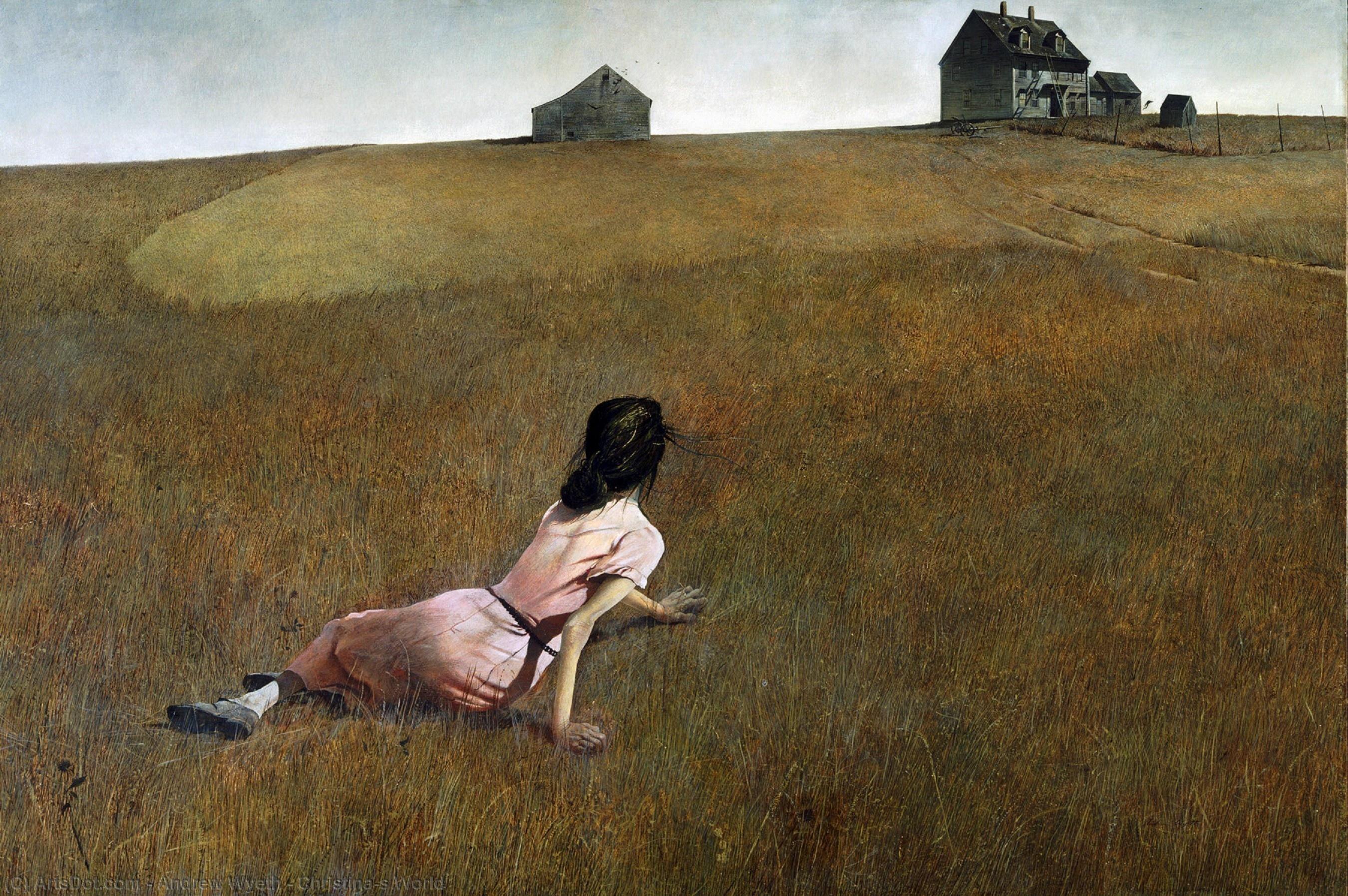
Christina's World
 Tempera On Panel
- American Regionalism
 1948
1948- Modern
 82.0 x 121.0 cm
 Read More
Purchase a high-resolution, enhanced digital image, far superior to the online preview.
Each file is meticulously prepared by our in-house specialists using advanced tools and expert manual retouching. We ensure every image has exceptional clarity, precise color accuracy, and fine detail.
The final file is delivered via email within 72 hours, optimized for immediate use in professional, editorial, and print environments. This is the same quality trusted by top-tier design studios, publishers, and galleries.
Digital Image
Download a high-resolution file for personal display, printing, and creative projects. ( Buy Print Buy Hand Made Painting)
Included in Every Digital Image Order
Expert Digital Delivery, Guaranteed
When you choose ArtsDot.com, you're not just getting an image - you're receiving a professionally enhanced digital artwork, crafted with precision and backed by a satisfaction guarantee. Here's everything that comes with your order, automatically:

Fast Email Delivery
Your high-resolution digital image file will be emailed to you within 72 hours of ordering - ready for immediate use.

AI-Enhanced Digital File
Your artwork is professionally optimized using advanced AI tools and manual editing, ensuring maximum detail, clarity, and color accuracy.

Free Lifetime Re-Delivery
Accidentally deleted or lost your file? No worries - we'll resend it to you anytime, free of charge.

No Import Fees - Ever
Enjoy your artwork instantly with zero customs, duties, or delivery fees - digital downloads are always tax-free.

Color Accuracy Guarantee
We ensure your digital image reflects the original colors as closely as possible using professional tools and color management.

60-Day Satisfaction Guarantee
If you're not satisfied with your digital image, we'll revise it or refund 100% within 60 days - no questions asked.

100% Money-Back Guarantee
Not satisfied? Get a full refund within 60 days of receiving your digital file - no questions asked.

Bulk Order Discounts
Buy 3 images, save 10% - Buy 5, save 15% - Buy 10+, save 20%. Great for creative projects, galleries, and agencies.
Collectible Description
A Masterpiece of American Realism
Painted in 1948, this iconic work by Andrew Wyeth transcends mere representation, becoming a poignant meditation on longing, isolation, and the human condition. It depicts a young woman, identified as Anna Christina Olson, lying in a field, her gaze fixed upon a distant farmhouse – a scene imbued with both serenity and melancholic yearning.
The Story Behind the Image
Wyeth’s connection to his subject was deeply personal. He observed Olson, who suffered from a degenerative muscular disorder, navigating her world by crawling across the fields surrounding her family home in Cushing, Maine. Rather than portraying hardship, Wyeth sought to capture Olson's indomitable spirit and her unwavering connection to the land she loved. The painting isn’t simply *of* Christina; it is an exploration of her inner world.
Technical Brilliance & Artistic Style
Executed in egg tempera on panel, the artwork showcases Wyeth’s meticulous technique and mastery of detail. Tempera allows for precise layering and a luminous quality, evident in the subtle gradations of color within the golden-brown grasses and weathered structures. The style firmly resides within American Realism, leaning towards Regionalism with its focus on rural life and landscapes. However, it also carries echoes of Social Realism through its empathetic portrayal of everyday people.
Symbolism & Emotional Resonance
The composition is rich in symbolic meaning. The vastness of the field emphasizes Olson’s vulnerability yet simultaneously suggests a sense of freedom. Her prone position can be interpreted as surrender, resilience, or simply a quiet contemplation of life. The distant farmhouse represents home, community, and perhaps an unattainable ideal. Wyeth deliberately avoids depicting Olson's face, inviting viewers to project their own emotions and experiences onto the figure, fostering a deeply personal connection with the artwork.
Historical Significance & Lasting Appeal
Initially met with mixed reactions, this painting quickly ascended to become one of the most recognizable images in 20th-century American art. Now housed in the Museum of Modern Art (MoMA) in New York City, it continues to captivate audiences worldwide. Its enduring appeal lies in its universal themes and Wyeth’s ability to evoke profound emotion through a deceptively simple scene.
Bringing This Masterpiece Home
A reproduction of this artwork offers more than just aesthetic beauty; it introduces a powerful narrative into any space. Its muted color palette complements a variety of interior styles, from farmhouse chic to modern minimalism. Whether displayed in a living room, study, or bedroom, it serves as a constant reminder of the strength of the human spirit and the enduring power of art.
Related Artworks




Artist Biography
Early Life and Family Influences
- Birth and Background: Andrew Newell Wyeth was born on July 12, 1917, in Chadds Ford, Pennsylvania, to illustrator N.C. Wyeth and Carolyn Bockius Wyeth.
- Family of Artists: He grew up in a family deeply immersed in the arts. His father was a renowned illustrator, and several of his siblings also pursued artistic careers including Henriette Wyeth Hurd, Carolyn Wyeth, and Nathaniel Wyeth.
- Home-Schooled Education: Due to frail health, Andrew received a home education from his father, N.C. Wyeth. This fostered a close relationship with his father and allowed for an intensely focused artistic development.
- Early Artistic Development: His father served as his primary instructor, encouraging him to observe nature closely and develop his own unique style. He began drawing at a very young age, demonstrating remarkable talent early on.
Artistic Style and Techniques
- Regionalism: Wyeth is often associated with the American Regionalist movement, which emphasized depictions of rural America during the 1930s. However, his work transcended simple regional representation.
- Realism: His paintings are characterized by a meticulous realism, capturing details and textures with remarkable precision. He strived to portray subjects as they appeared in reality.
- Egg Tempera and Watercolor: Wyeth primarily used egg tempera for his larger works, a medium known for its luminosity and detail. He also frequently employed watercolor for smaller studies and sketches.
- Chiaroscuro: A notable aspect of his style is the use of chiaroscuro – the dramatic contrast between light and dark – to create mood and depth in his paintings.
Major Works and Themes
- Christina’s World (1948): Arguably his most famous work, "Christina's World" depicts a woman crawling through a field towards a farmhouse. It is celebrated for its emotional power and exploration of themes like isolation, perseverance, and the human condition.
- Other Notable Paintings: Other significant works include “Distant Thunder,” “The Cliffs," “Herring Cove,” "Sledding Hill" and numerous portraits and landscapes depicting rural Pennsylvania and coastal Maine.
- Recurring Themes: Wyeth’s art frequently explores themes of isolation, memory, the passage of time, and the beauty found in everyday life. His subjects often reflect a sense of quiet contemplation and introspection.
- Models and Inspiration: He drew inspiration from the people and landscapes around him, particularly Christina Olson, who became a frequent model, and the Cushing, Maine area where he spent summers.
Influences and Legacy
- Winslow Homer: Wyeth admired the work of Winslow Homer, another prominent American realist painter known for his depictions of marine subjects and rural life.
- Henry David Thoreau: The writings of Henry David Thoreau, particularly his emphasis on nature and self-reliance, deeply influenced Wyeth’s artistic philosophy.
- King Vidor's "The Big Parade": He credited King Vidor's film “The Big Parade” as a significant influence on his understanding of family dynamics and storytelling through visual imagery.
- Critical Reception: While initially met with mixed reviews, Wyeth’s work gained widespread recognition and acclaim over time. He became one of the most celebrated American artists of the 20th century.
- Historical Significance: Andrew Wyeth's art is considered a significant contribution to American realism, capturing the essence of rural life and exploring universal themes with profound emotional depth. His legacy continues to inspire artists and captivate audiences worldwide.
Later Years and Death
- Continued Artistic Production: Throughout his later years, Wyeth continued to paint prolifically, exploring new subjects and refining his techniques.
- Recognition and Awards: He received numerous awards and honors throughout his career, including the National Medal of Arts in 1998.
- Death: Andrew Wyeth died on January 16, 2009, at his home in Cushing, Maine, at the age of 91. His death marked the end of an era in American art.

Andrew Newell Wyeth
1917 - 2009 , United States of America
Quick Facts
- Artistic Movement Or Style: Regionalism, Realism
- Artists Who Influenced This Artist:
- Winslow Homer
- Henry David Thoreau
- Date Of Birth: July 12, 1917
- Date Of Death: January 16, 2009
- Full Name: Andrew Newell Wyeth
- Nationality: American
- Notable Artworks:
- Christina’s World
- Distant Thunder
- The Cliffs
- Herring Cove
- Sledding Hill
- Place Of Birth: Chadds Ford, United States

