 Preview
 Send
Send Share
Share
 Details

 Download
 Similars
 X-Ray
X-Ray Diaporama
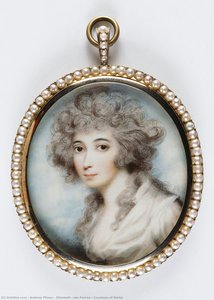
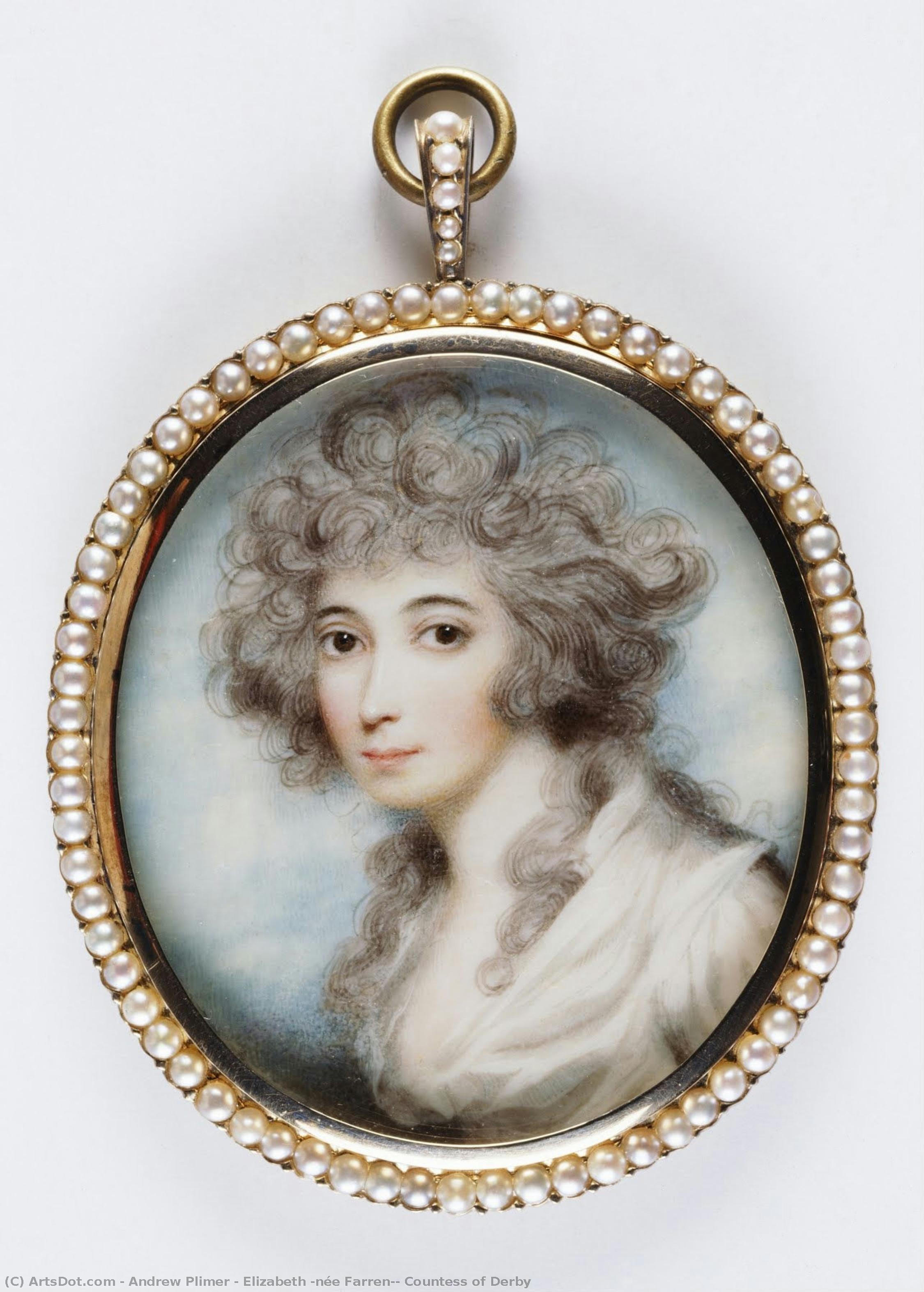
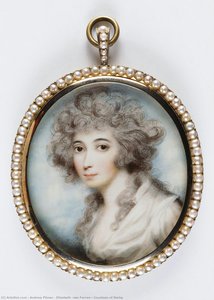
Elizabeth (née Farren), Countess of Derby
 1797
1797 5.0 x 4.0 cm
 Read More
Giclée / Art Print
Museum-quality giclée or canvas print with fast production and flexible finish options. ( Buy Hand Made Painting Buy Image)




































Pick from our preset sizes that match the artwork's original proportions.

You may enter your own dimensions to fit a specific frame or space. If your selected size does not match the original image's proportions, we will either crop the artwork or extend the image with a mirrored or solid-fill edge. A digital mockup will be sent for your approval before production begins.
Please note that the on-screen preview does not reflect the actual cropping or extension. Only the mockup will accurately show the final composition.
While custom sizes are available, we recommend selecting a dimension from the predefined list to preserve the original proportions.
Worldwide Delivery () in 2 weeks instead of standard 4/5 weeks. (23 August)

Free Worldwide Express Shipping

High-Quality Linen Canvas

Full Shipping Insurance

Customs Tax Refund Guarantee

True Color Matching Guarantee

60-Day Return Policy (Defects Only)

100% Money-Back Guarantee

Bulk Discount Offer
 Glass option is only available in size under 110 CM

Elizabeth (née Farren), Countess of Derby
Giclée / Art Print
Reproduction Size
-


Total Price
$ 63
Collectible Description
Related Artworks




Artist Biography
Andrew Plimer: The Miniature Master of Victorian London
The world of 18th and 19th-century portraiture was dominated by grand canvases depicting the wealthy and powerful, yet within this landscape flourished a quieter, more intimate art form – the miniature. Andrew Plimer (1763-1837) stands as one of its most distinguished practitioners, a British artist whose exquisite portraits, often no larger than a hand’s breadth, captured the essence of his subjects with remarkable skill and sensitivity. His legacy isn't solely defined by technical mastery; it resides in the subtle narratives he wove into each tiny scene, reflecting the social dynamics and personal lives of those who commissioned him.
Plimer’s early life remains somewhat shrouded in anecdotal detail, a characteristic often associated with artists of his era. Born in Wellington, Shropshire – though initially documented as being born in Bridgwater, Somerset – he was the younger son of Nathaniel Plimer, a clockmaker, and his wife. This lineage instilled within him an appreciation for craftsmanship and precision, qualities that would undoubtedly inform his artistic development. A pivotal moment arrived around 1781 when, alongside his elder brother Nathaniel, he abandoned their family home and embarked on a nomadic existence with a troupe of travelling performers. This unconventional upbringing—a blend of rural life, theatrical spectacle, and the skills of observation—likely shaped his later approach to portraiture, fostering an ability to capture fleeting expressions and subtle character traits.
Crucially, Plimer’s artistic journey was inextricably linked to Richard Cosway (1742-1821), a celebrated miniature painter and a prominent figure in London's artistic circles. Initially apprenticed as a manservant to Cosway, he quickly demonstrated an aptitude for the medium, leading to formal training under the master himself. This association proved invaluable, exposing Plimer to Cosway’s refined techniques – particularly his mastery of color and composition—and introducing him to the world of aristocratic patronage. The influence is evident in Plimer's work; while retaining a distinct personality, his portraits often share a similar elegance and sophistication with those produced by his mentor.
A Life Dedicated to Miniature Painting
Plimer’s career blossomed during the Regency period, a time of considerable social change and artistic innovation. He established himself as a respected miniature painter, exhibiting at the Royal Academy from 1768 until 1810, and again in 1819. His subjects were predominantly members of the upper classes – nobility, gentry, and wealthy merchants—reflecting the demand for intimate portraits among those who sought to immortalize themselves and their families. Unlike the grand historical paintings of the era, miniature portraits offered a more personal and accessible form of artistic representation, capturing not just likeness but also mood and character.
His most celebrated work, the “Three Daughters of Sir John Rushout,” exemplifies Plimer’s skill in conveying emotion and detail within a remarkably small format. The painting is notable for its delicate rendering of fabric textures, the subtle expressions on the girls' faces, and the overall sense of familial warmth. Other significant portraits include those of Sir John Sinclair, a prominent Scottish landowner, and Colonel Kemeys-Tynte, showcasing his ability to capture both formal dignity and individual personality.
Technique and Style
Plimer’s technique was characterized by meticulous observation, refined draftsmanship, and a masterful use of color. He employed a delicate palette, favoring muted tones and subtle gradations to create a sense of depth and realism within the miniature format. His brushwork was remarkably fine, allowing him to capture minute details – the texture of lace, the sheen of silk, the sparkle in a subject’s eyes—with astonishing accuracy. Unlike some of his contemporaries who relied on idealized representations, Plimer often depicted his subjects with a degree of realism, capturing their imperfections and idiosyncrasies.
A key element of Plimer's style was his ability to convey personality through subtle gestures and expressions. He wasn’t simply reproducing likenesses; he was attempting to capture the essence of his subjects—their character, mood, and social standing. This is particularly evident in portraits where the sitter is engaged in a conversation or activity, suggesting a dynamic and engaging scene within the confines of the miniature.
Legacy and Historical Significance
Andrew Plimer’s contribution to the history of portraiture lies not only in his technical skill but also in his ability to capture the spirit of his age. His miniatures offer valuable insights into the social customs, fashion trends, and artistic sensibilities of Victorian London. His work is now highly prized by collectors and museums alike, representing a significant example of miniature painting from the 18th and 19th centuries.
Despite not achieving the widespread fame of some of his contemporaries, Plimer’s legacy endures through his exquisite portraits—testaments to his talent, dedication, and ability to transform a small canvas into a window onto another world. His work continues to fascinate art historians and collectors alike, reminding us of the enduring power of miniature painting to capture beauty, emotion, and the essence of human experience.
Quick Facts
- Artistic Movement Or Style: Portrait miniaturist
- Artists Who Influenced This Artist: ['Richard Cosway],\n "Artists or movements influenced by this artist": ["Portraiture"]\n}']
- Date Of Birth: December 29, 1763
- Date Of Death: January 29, 1837
- Full Name: Andrew Plimer
- Nationality: British
- Notable Artworks: ['Three daughters of Rushout']
- Place Of Birth: Wellington, Shropshire