 Preview
 Send
Send Share
Share
 Details

 Download
 Similars
 X-Ray
X-Ray Diaporama
 Stats
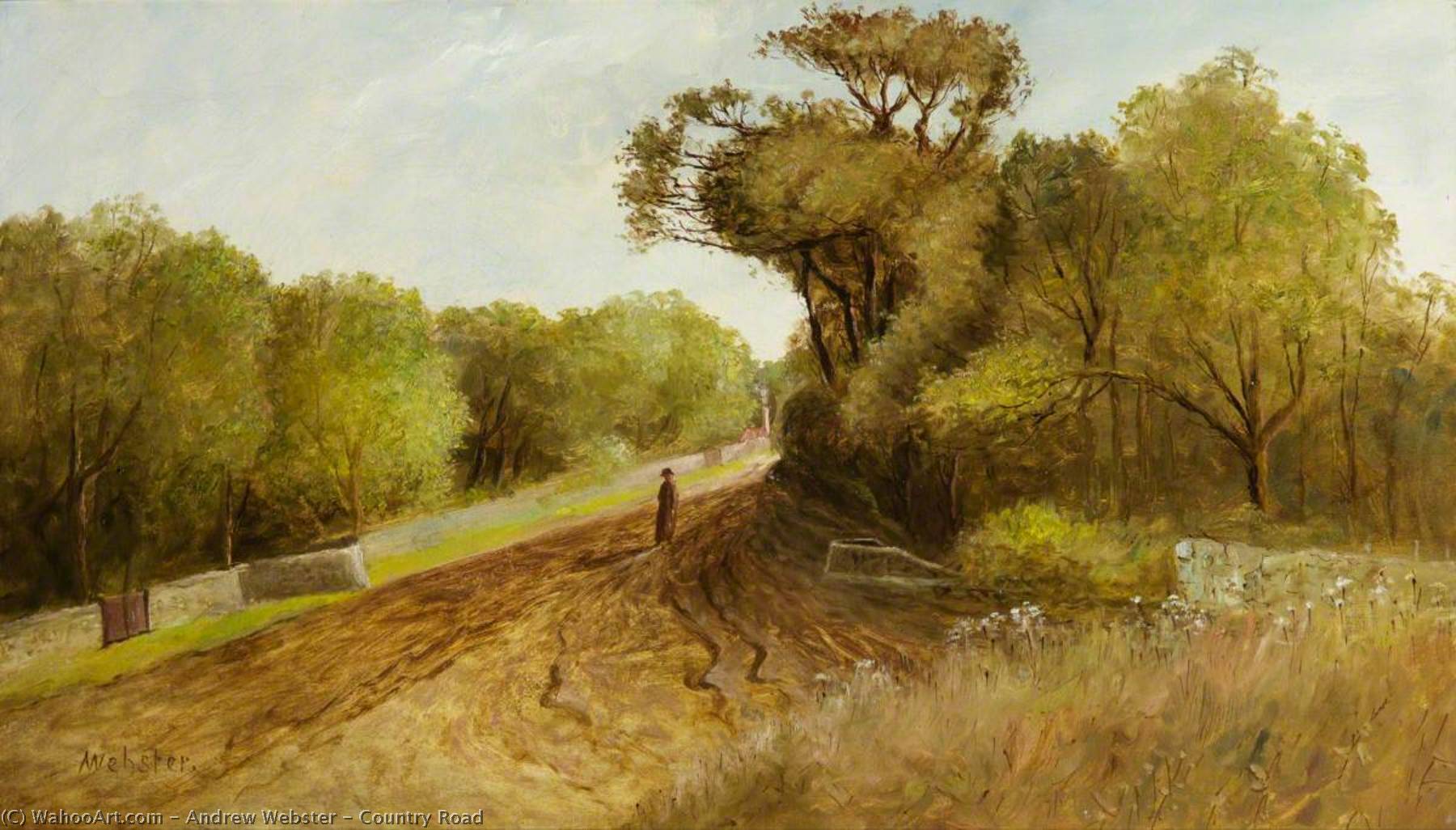
StatsCountry Road
 51.0 x 92.0 cm
 Fraserburgh Library
 Read More
Giclée / Art Print
Museum-quality giclée or canvas print with fast production and flexible finish options. ( Buy Hand Made Painting Switch to Digital Image)




































Pick from our preset sizes that match the artwork's original proportions.

You may enter your own dimensions to fit a specific frame or space. If your selected size does not match the original image's proportions, we will either crop the artwork or extend the image with a mirrored or solid-fill edge. A digital mockup will be sent for your approval before production begins.
Please note that the on-screen preview does not reflect the actual cropping or extension. Only the mockup will accurately show the final composition.
While custom sizes are available, we recommend selecting a dimension from the predefined list to preserve the original proportions.
Worldwide Delivery () in 2 weeks instead of standard 4/5 weeks. (9 September)

Free Worldwide Express Shipping

High-Quality Linen Canvas

Full Shipping Insurance

Customs Tax Refund Guarantee

True Color Matching Guarantee

100-Day Return Policy (Defects Only)

100% Money-Back Guarantee

Bulk Discount Offer
 Glass option is only available in size under 110 CM

Country Road
Giclée / Art Print
Reproduction Size
-


Total Price
$ 63
Related Artworks









Artist Biography
The Soul of the Scottish Coastline
Andrew Webster, born in 1938, stands as one of Scotland’s most evocative marine artists, a painter whose work serves as a visceral bridge between the viewer and the rugged, salt-sprayed reality of the North Sea. His artistic journey began in Dundee, where he refined his craft at the Duncan Grant Studios. It was during this formative period that Webster absorbed the transformative influences of Impressionism and Cubism, yet he resisted the urge to simply mimic these movements. Instead, he synthesized their lessons into a highly personal language of light and texture. His technique became famously disciplined, characterized by a meticulous layering of paint that often integrated encaustic wax alongside traditional oils. This unique approach allowed him to create surfaces with an extraordinary depth and luminosity, making his canvases feel less like static images and more like living, breathing windows into the maritime world.
For Webster, the act of painting was never merely about achieving photographic accuracy; it was a pursuit of emotional truth. He sought to capture the very essence of the atmosphere—the heavy mist clinging to a cliffside, the rhythmic violence of a crashing wave, and the pervasive scent of salt air that defines the Scottish coast. This dedication to the "feeling" of a place allowed his work to transcend simple landscape painting, moving into the realm of atmospheric storytelling. His breakthrough in the mid-1960s arrived through a profound series of works centered on Fraserburgh Harbour. In these pieces, he established himself as a master of maritime dynamism, portraying not just the structural elements of the harbor, but its very spirit: the weathered resilience of the fishing community and the ceaseless, churning energy of the sea.
A Legacy of Light and Tradition
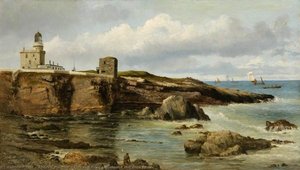
The significance of Webster’s work lies in his ability to marry technical brilliance with a deep respect for local heritage. He was an artist who looked beyond the horizon, painstakingly researching Scottish folklore and maritime history to infuse his compositions with cultural weight. This connection to the land and its legends is perhaps most beautifully realized in his depictions of the Kinnaird Head Lighthouse. In these works, the lighthouse becomes more than a navigational aid; it stands as a sentinel of human endurance against the elemental forces of nature. His ability to manipulate light—making it appear to flicker through sea spray or glow against a darkening sky—has earned him international recognition and a permanent place in the hearts of those moved by the Scottish landscape.
Throughout his career, Webster’s evolution has been marked by an increasing mastery over the interplay of color and movement. His paintings are celebrated for their ability to convey the following elements:
- The Texture of the Sea: Through complex layering, he captures the churning, opaque quality of the North Sea.
- Atmospheric Depth: The use of light and shadow to create a sense of immense, often misty, coastal space.
- Human Connection: The subtle inclusion of maritime life, from the movement of boats to the presence of those who work the waters.
- Historical Resonance: A profound sense of place that honors the traditions of Fraserburgh and the surrounding coastlines.
Today, the works of Andrew Webster continue to captivate audiences, serving as a testament to a lifetime spent observing the delicate balance between the permanence of the land and the restless energy of the ocean. His legacy remains etched in the luminous textures of his canvases, reminding us that true art does not just show us a scene, but invites us to feel its very soul.
Quick Facts
- Artistic Movement Or Style: Maritime Painting
- Full Name: Andrew Webster
- Nationality: Scottish
- Notable Artworks:
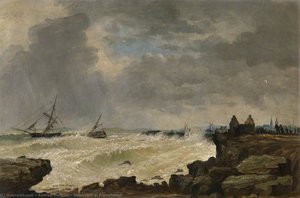
- Shipwreck at Fraserburgh
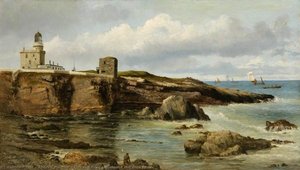
- Kinnaird Head Lighthouse and Wine Tower
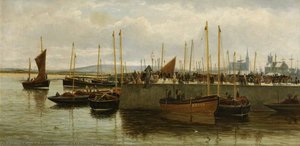
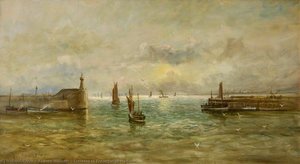
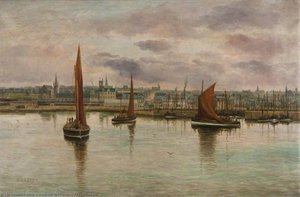
- Fraserburgh Harbour
- Place Of Birth: Arbroath, Scotland