 Preview
 Send
Send Share
Share
 Details

 Download
 Similars
 X-Ray
X-Ray Diaporama
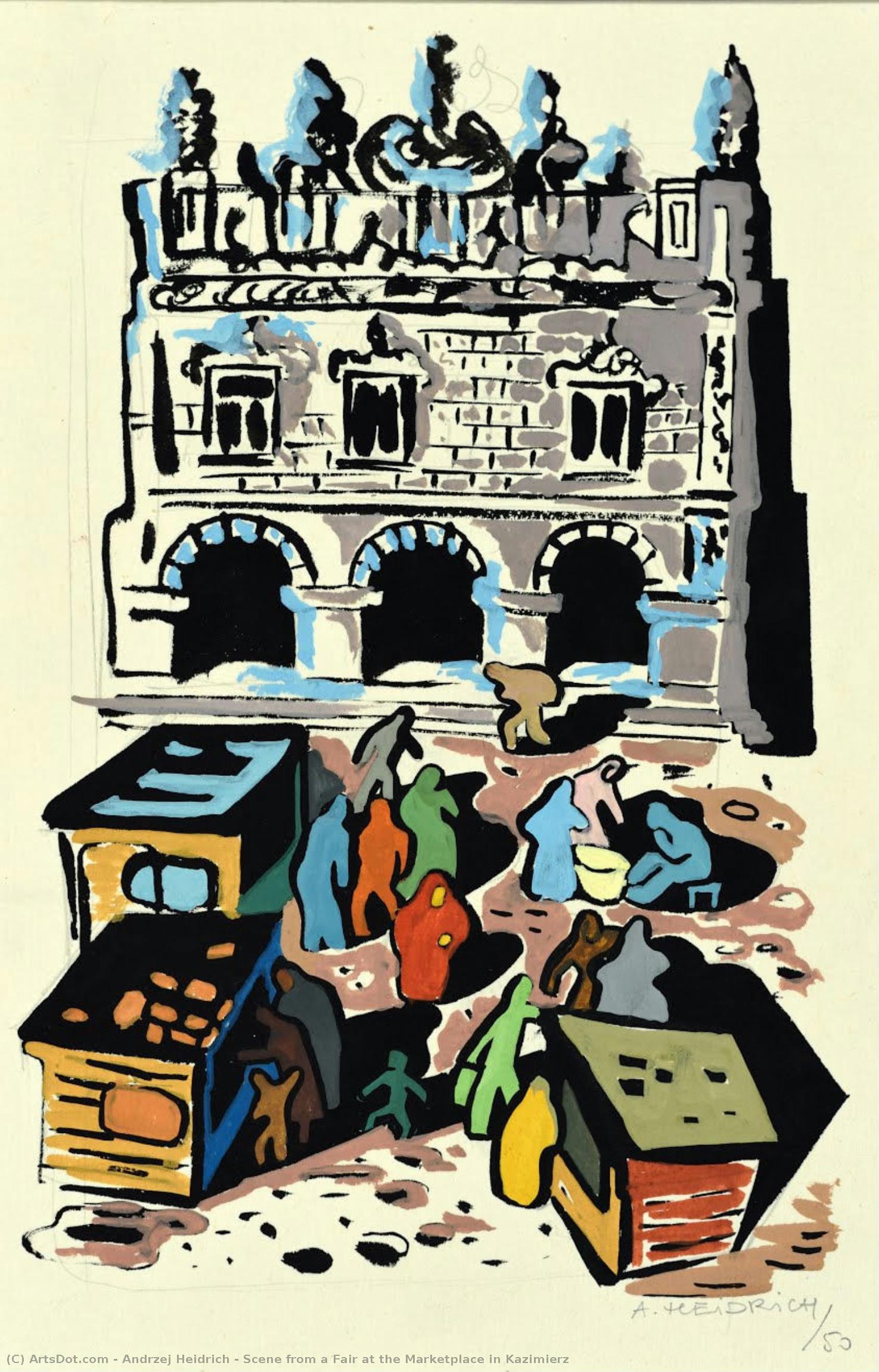
Scene from a Fair at the Marketplace in Kazimierz


 Read More
Hand Made Oil Reproduction
Hand-painted oil on canvas in your size and frame, made to order by our artists. ( Buy Print Buy Image)




































Pick from our preset sizes that match the artwork's original proportions.

You may enter your own dimensions to fit a specific frame or space. If your selected size does not match the original image's proportions, we will either crop the artwork or extend the painting with additional hand-painted elements. A digital mockup will be sent for your approval before production begins.
Please note that the on-screen preview does not reflect the actual cropping or extension. Only the mockup will accurately show the final composition.
While custom sizes are available, we recommend selecting a dimension from the predefined list to preserve the original proportions.
After order, ArtsDot.com team will email client for instructions and provide a mockup preview
Worldwide Delivery () in 3/4 weeks instead of standard 5 weeks. (30 August). No compromise on quality.

Free Worldwide Express Shipping

High-Quality Linen Canvas

Full Shipping Insurance

Customs Tax Refund Guarantee

True Color Matching Guarantee

60-Day Return Policy (Defects Only)

100% Money-Back Guarantee

Bulk Discount Offer
 Glass option is only available in size under 110 CM

Scene from a Fair at the Marketplace in Kazimierz
Reproduction Medium
Reproduction Size
-


Total Price
$ 263
Related Artworks









Artist Biography
The Architect of Polish Identity
Andrzej Ryszard Heidrich was far more than a mere graphic artist; he was the silent architect of Poland's visual identity, a master who etched the nation's soul onto the very paper that passed through its citizens' hands. Born in Warsaw in 1928, amidst the profound shadows and reconstruction following World War II, Heidrich’s early life was shaped by a landscape of both devastation and rebirth. His formative years at the Szkoła Rodziny Wojskowej instilled in him a disciplined precision and a deep-seated reverence for history—elements that would later become the hallmarks of his monumental work. As he moved through the prestigious halls of the Academy of Fine Arts, graduating with honors in 1954, he began to refine a technique that blended the meticulousness of typography with the evocative power of classical illustration.
His artistic journey was deeply rooted in the tradition of storytelling. One of his earliest significant forays into the world of design involved illustrating Molière’s theatrical masterpiece, “Tartuffe”. This project served as a profound introduction to the art of composition, teaching him how to capture complex human emotions and dramatic tension within a single frame. This ability to translate narrative depth into visual clarity would become his greatest strength, whether he was designing the delicate curves of a new typeface or the intricate security features of a national currency.
A Legacy in Ink and Paper
The mid-20th century marked a period of extraordinary prolificity for Heidrich, particularly through his long-standing relationship with the Czytelnik Publishing House. Serving as the Chief Graphic Designer from 1974 to 1989, he became a vital collaborator for some of Poland's most luminous literary voices. His hands shaped the visual presence of authors such as Stanisław Lem, Ryszard Kapuściński, Jarosław Iwaszkiewicz, and Leszek Kołakowski. Through his book covers and illustrations, he did not merely decorate pages; he provided a visual gateway into the profound philosophical and historical worlds these writers inhabited.
However, it is perhaps his contribution to the National Bank of Poland that secured his place in the permanent consciousness of the Polish people. Since 1960, Heidrich had been entrusted with the daunting responsibility of designing the nation's banknotes. His work was a masterclass in combining artistry with utility, creating symbols of stability and patriotism. The 500 złoty note from 1974, featuring the legendary military leader Tadeusz Kościuszko, stands as a testament to his ability to weave national heroism into the fabric of daily commerce. His designs were not just currency; they were portable monuments that celebrated Polish history, culture, and resilience.
The Precision of a Master Designer
Beyond the grand scale of banknotes and book covers, Heidrich’s genius extended to the microscopic precision of type design and philately. He possessed an innate fascination with the architecture of letters, a passion that culminated in the creation of the Bona Nova font in 1971. His work also graced the much smaller canvas of postage stamps, where he captured everything from the majesty of historical figures like Nicolaus Copernicus to the delicate beauty of medicinal plants and butterflies. This versatility demonstrated a rare range, moving seamlessly between the monumental and the minute.
The significance of Andrzej Heidrich lies in his ability to harmonize the technical demands of graphic design with a profound sense of national duty. His life's work served as a visual bridge between Poland's turbulent past and its enduring cultural aspirations. Through his mastery of line, texture, and typography, he ensured that even in the most mundane transactions, the beauty and history of his homeland were always within reach.
andrzej heidrich
1928 - 2019 , Poland
Quick Facts
- Artistic Movement Or Style: Graphic Art
- Artists Or Movements Influenced By This Artist: ['Polish Illustration']
- Artists Who Influenced This Artist:
- Jan Matejko
- Józef Mehoffer
- Date Of Birth: November 6, 1928
- Date Of Death: October 20, 2019
- Full Name: Andrzej Ryszard Heidrich
- Nationality: Polish
- Notable Artworks:
- Kościuszko Banknote
- Lem Illustrations
- Kapuściński Cover
- Place Of Birth: Warsaw, Poland