 Send
Send Share
Share
 Details

 Download
 Similars
 Diaporama
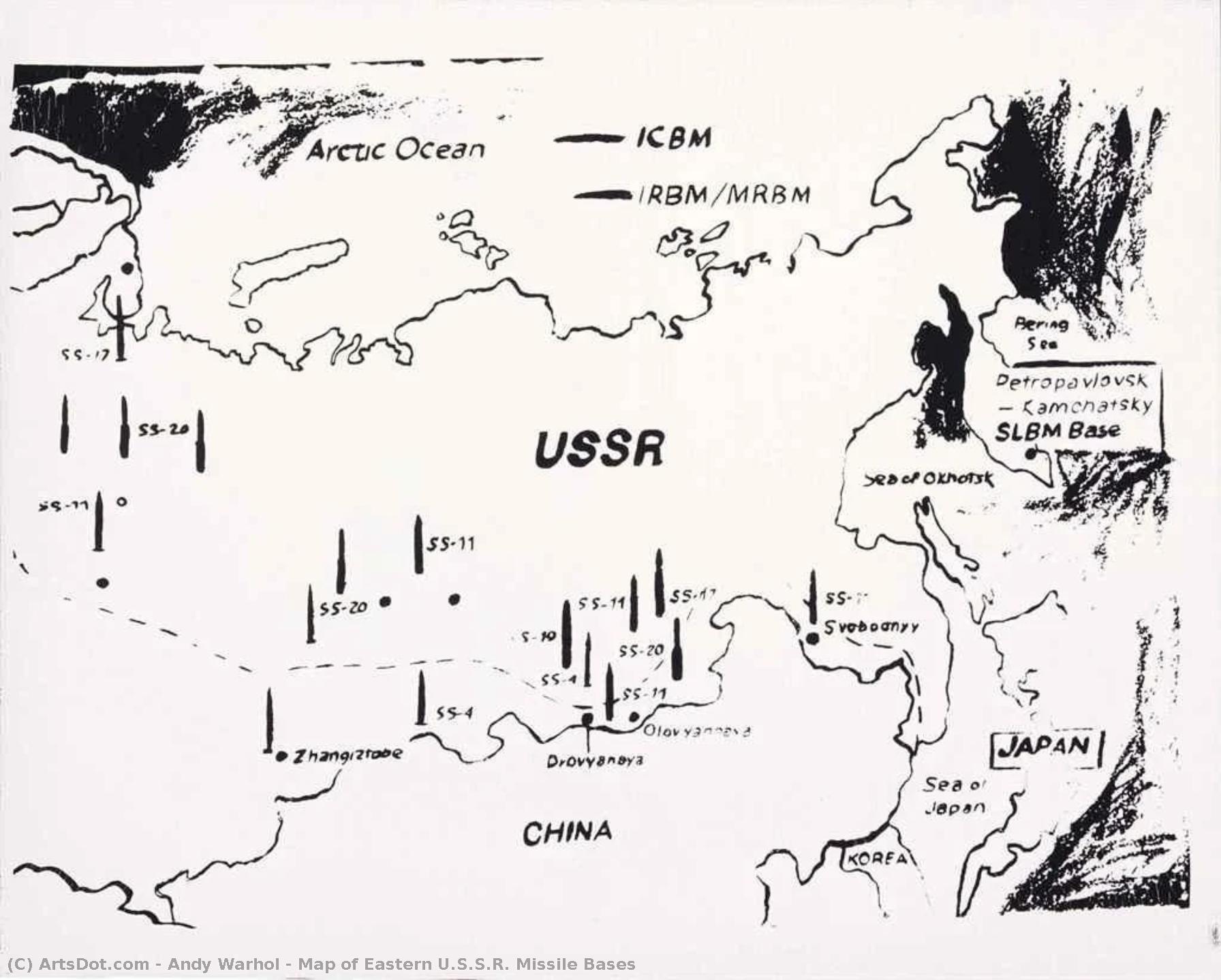
Map of Eastern U.S.S.R. Missile Bases


 Read More
Hand Made Oil Reproduction
Hand-painted oil on canvas in your size and frame, made to order by our artists. ( Buy Print Buy Image)




































Pick from our preset sizes that match the artwork's original proportions.

You may enter your own dimensions to fit a specific frame or space. If your selected size does not match the original image's proportions, we will either crop the artwork or extend the painting with additional hand-painted elements. A digital mockup will be sent for your approval before production begins.
Please note that the on-screen preview does not reflect the actual cropping or extension. Only the mockup will accurately show the final composition.
While custom sizes are available, we recommend selecting a dimension from the predefined list to preserve the original proportions.
After order, ArtsDot.com team will email client for instructions and provide a mockup preview
Worldwide Delivery () in 3/4 weeks instead of standard 5 weeks. (17 August). No compromise on quality.

Free Worldwide Express Shipping

High-Quality Linen Canvas

Full Shipping Insurance

Customs Tax Refund Guarantee

True Color Matching Guarantee

60-Day Return Policy (Defects Only)

100% Money-Back Guarantee

Bulk Discount Offer
 Glass option is only available in size under 110 CM

Map of Eastern U.S.S.R. Missile Bases
Reproduction Medium
Reproduction Size
-


Total Price
$ 263
Artwork Description
A Cold War Cartography: Unveiling "Map of Eastern U.S.S.R. Missile Bases"
This meticulously rendered hand-painted reproduction captures the chilling essence of geopolitical tension during the height of the Cold War – a stark and unsettling document titled “Map of Eastern U.S.S.R. Missile Bases.” Created in 1986, this artwork transcends mere cartography; it’s a visual embodiment of fear, strategic calculation, and the ever-present threat of nuclear annihilation. The image, reminiscent of classified intelligence reports, immediately commands attention with its stark black and white palette and deliberately austere aesthetic. It speaks not of beauty or artistic flourish, but of urgent information – a precise record of power, vulnerability, and the terrifying potential for global destruction.
Documentary Precision: Style and Technique
- Graphic Minimalism: The composition is defined by its ruthless clarity. Thick, bold lines delineate coastlines, borders, and the locations of missile silos – a deliberate rejection of decorative elements in favor of conveying maximum information.
- Hand-Drawn Authenticity: The artwork’s foundation lies in a photographic reproduction of a hand-drawn map, likely created with ink or pencil on paper. This technique imbues the piece with an undeniable sense of historical authenticity and the tangible quality of original documentation.
- Geometric Simplicity: Circles representing missile sites, straight lines defining boundaries, and curved lines depicting coastlines create a powerfully reductive visual language, emphasizing the strategic positioning of these weapons systems. The grainy texture, achieved through printing processes, adds to this sense of raw, unfiltered data.
Symbolism of Strategic Anxiety
More than just a map, “Map of Eastern U.S.S.R. Missile Bases” is laden with symbolic weight. The sheer density of missile sites – meticulously labeled with designations like ‘SS-20’ and ‘ICBM’ – represents the overwhelming scale of the nuclear arms race. Each dot on the map embodies a potential catastrophe, a chilling reminder of humanity's capacity for self-destruction. The top-down perspective, devoid of depth or illusionistic space, further amplifies this sense of unease, presenting the viewer with an unyielding, inescapable view of strategic vulnerability.
Historical Context and Artistic Legacy
Created by Andy Warhol in 1986, this artwork reflects his fascination with popular imagery and his ability to distill complex social and political narratives into striking visual forms. While Warhol is often associated with Pop Art’s embrace of mass culture, this piece demonstrates a darker side of his artistic exploration – confronting the anxieties of the Cold War era. The meticulous detail and documentary style align with a broader trend in art history—the use of graphic representation to convey information and evoke emotional responses. The artwork's creation coincided with heightened tensions between the United States and the Soviet Union, making it a potent symbol of the era’s fears.
A Statement for Your Space
This hand-painted reproduction offers more than just a decorative element; it’s an artifact of a pivotal moment in history. Its stark aesthetic and powerful symbolism make it a compelling addition to any collection or interior design scheme, prompting reflection on themes of power, conflict, and the enduring legacy of the Cold War. Its graphic precision and historical significance ensure its place as a conversation starter and a testament to the anxieties that shaped the 20th century.
Related Artworks

Artist Biography
A Life Immersed in the American Image
Andy Warhol, born Andrew Warhola Jr. in 1928 amidst the industrial heartland of Pittsburgh, Pennsylvania, was a figure destined to redefine the boundaries of art and celebrity. His early life was marked by both hardship and burgeoning creativity. A childhood illness, Sydenham's chorea – often called St. Vitus’ Dance – confined him indoors for extended periods, fostering an intense inner world where artistic expression became a vital outlet. This period wasn’t one of isolation, however; his mother nurtured his talent with art supplies and a steady stream of popular imagery—comic books and movie magazines—that would later become foundational to his iconic style. He excelled at the Carnegie Institute of Technology, graduating in 1949 with a degree in Pictorial Design, before embarking on a journey to New York City, driven by an ambition to establish himself as a commercial illustrator. This initial foray into the world of advertising and magazine work proved crucial, honing his skills in visual communication and instilling a deep understanding of mass production—elements that would become central tenets of his artistic philosophy. His distinctive line drawings quickly gained recognition, securing him success with fashion publications and establishing a reputation for a unique aesthetic sensibility.
The Birth of Pop and the Factory Years
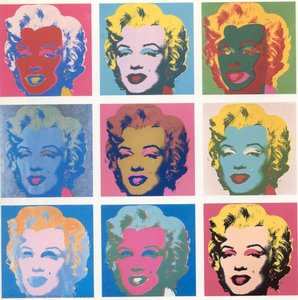
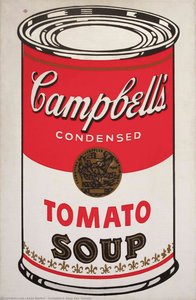
By the 1960s, Warhol had begun to transcend the realm of commercial art, emerging as a pivotal figure in the burgeoning Pop Art movement. This was a revolutionary moment in art history, challenging traditional notions of what constituted “high” art by embracing popular culture—advertising, comic books, and mass-produced objects—as legitimate subjects for artistic exploration. Warhol didn’t merely depict these elements; he elevated them, transforming everyday items into iconic symbols of American consumerism. His groundbreaking works from this period, such as Campbell’s Soup Cans (1962) and Marilyn Diptych (1962), were not simply paintings; they were statements about the pervasive influence of mass media and the commodification of image. The silkscreen printing technique he adopted was instrumental in this process, allowing for the mechanical reproduction of images—a deliberate mirroring of the consumer culture he so keenly observed. This method wasn’t just a technical choice; it was a conceptual one, emphasizing repetition, standardization, and the blurring of lines between art and production. Central to Warhol's artistic universe was “The Factory,” his studio space in New York City. More than just a workspace, The Factory became a vibrant hub for artists, musicians, filmmakers, socialites, and anyone drawn to its atmosphere of experimentation and collaboration. It was a scene—a breeding ground for new ideas and a testament to Warhol’s belief that art should be accessible and engaged with the world around it.
Celebrity, Disaster, and the Exploration of American Obsessions
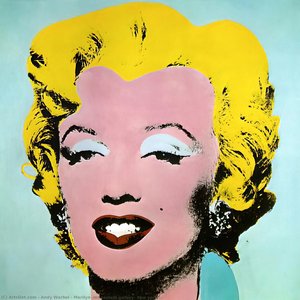
Warhol's artistic vision extended beyond consumer goods to encompass the realms of celebrity, death, and disaster—themes that resonated deeply within the evolving cultural landscape of the 1960s and 70s. His portraits of iconic figures like Marilyn Monroe, Elvis Presley, and Elizabeth Taylor weren’t simply flattering representations; they were explorations of fame, image, and the often-fragile nature of celebrity. He captured not just their likenesses but also the aura surrounding them—the manufactured glamour and the underlying vulnerability. Simultaneously, he confronted darker aspects of American society with his “Disaster” series, depicting images of car crashes, electric chairs, and riots. These works were unsettling and provocative, forcing viewers to confront uncomfortable truths about violence and mortality. He wasn’t offering commentary in a traditional sense; rather, he was presenting these images with a detached objectivity, allowing the viewer to draw their own conclusions. This approach—often characterized by repetition and bold colors—created striking visual effects that were both captivating and disturbing. Beyond painting, Warhol ventured into filmmaking, producing experimental works like Sleep (1963) and Chelsea Girls (1966), which further pushed the boundaries of artistic expression. He also collaborated with The Velvet Underground, designing their iconic banana album cover—a testament to his influence extending beyond the fine art world into music and popular culture.
A Lasting Legacy: Warhol’s Impact on Art and Culture
Andy Warhol's impact on the art world is immeasurable. He challenged conventional definitions of art, blurring the lines between high and low culture, and paving the way for new artistic movements like Conceptualism and Performance Art. His exploration of consumerism, celebrity culture, and mass media continues to resonate with audiences today, as these themes remain central to contemporary society. Warhol wasn’t just an artist; he was a cultural phenomenon—a visionary who understood the power of image and its ability to shape perception. He openly embraced his identity as a gay man at a time when such openness was rare, becoming a symbol of liberation and challenging societal norms. His influence can be seen in countless areas, from contemporary art and fashion to music and film. Major museums worldwide—including The Andy Warhol Museum in his hometown of Pittsburgh—exhibit his works, ensuring that his legacy continues to inspire and provoke generations of artists and viewers. He fundamentally altered the way we think about art, transforming it from a rarefied pursuit into something accessible, democratic, and deeply intertwined with the everyday experiences of modern life. His assertion that “everyone will be world-famous for 15 minutes” remains eerily prescient in our age of social media and instant celebrity—a testament to his enduring insight into the human condition and the ever-evolving nature of fame.
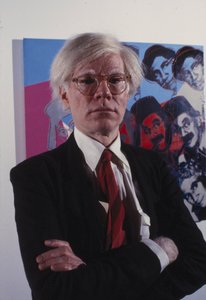
Andy Warhol
1928 - 1987 , United States of America
Quick Facts
- Artistic Movement Or Style: Pop Art
- Artists Or Movements Influenced By This Artist:
- Contemporary art
- Fashion
- Film
- Music
- Date Of Birth: August 6, 1928
- Date Of Death: February 22, 1987
- Full Name: Andy Warhol
- Nationality: American
- Notable Artworks:
- Campbell’s Soup Cans
- Marilyn Diptych
- Che Guevara
- Velvet Underground cover
- Place Of Birth: Pittsburgh, USA
Related Articles
Andy Warhol's Masterpieces: Explore 25 Iconic Artworks for Your Home | ArtsDot
Dive into the vibrant world of Andy Warhol! Explore 25 iconic Pop Art masterpieces – from Marilyn Monroe to Campbell's Soup Cans. Discover the stories behind these timeless paintings & find museum-quality art reproductions for your home at ArtsDot.com.

Dark Masterpieces: 10 Iconic Paintings Dominated by Black Tones |
Explore 10 iconic paintings dominated by black tones, from Rembrandt’s chiaroscuro to Goya's dark expressions. Discover the stories behind these masterpieces & find museum-quality art reproductions for your home at .
Lamp Black & Masterpieces: 10 Paintings That Define Shadow & Light |
Delve into the captivating world of 'Lamp Black' tones with 10 iconic paintings by masters like Rembrandt & Caravaggio. Explore Baroque chiaroscuro, dramatic lighting & shadow in art history. Find museum-quality reproductions at
Pop Art Icons: 10 Masterpieces That Revolutionized Modern Decor |
Explore 10 defining Pop Art masterpieces – from Warhol’s iconic Marilyn to Lichtenstein's bold dots. Discover the stories behind these revolutionary artworks & find museum-quality reproductions for your home at .
Beyond Imitation: The Strategic Role of Fine Art Reproductions in Contemporary Gallery Practices
Explore the strategic role of fine art reproductions in today's galleries. Discover how they cultivate collectors, enhance education & expand access to art. Expert insights for discerning buyers and professionals.