 Preview
 Send
Send Share
Share
 Details

 Download
 Similars
 X-Ray
X-Ray Diaporama
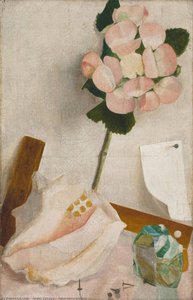
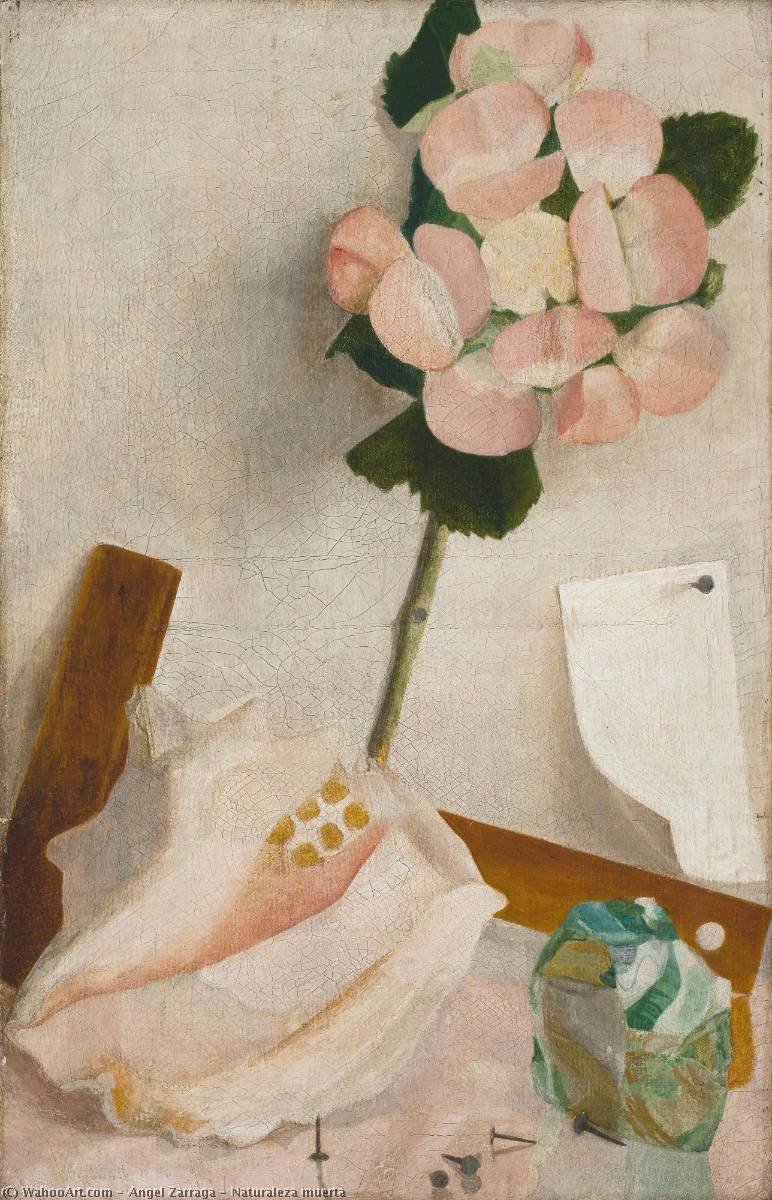
Naturaleza muerta
 62.0 x 40.0 cm
 Read More
Hand Made Oil Reproduction
Hand-painted oil on canvas in your size and frame, made to order by our artists. ( Buy Print Buy Image)




































Pick from our preset sizes that match the artwork's original proportions.

You may enter your own dimensions to fit a specific frame or space. If your selected size does not match the original image's proportions, we will either crop the artwork or extend the painting with additional hand-painted elements. A digital mockup will be sent for your approval before production begins.
Please note that the on-screen preview does not reflect the actual cropping or extension. Only the mockup will accurately show the final composition.
While custom sizes are available, we recommend selecting a dimension from the predefined list to preserve the original proportions.
After order, ArtsDot.com team will email client for instructions and provide a mockup preview
Worldwide Delivery () in 3/4 weeks instead of standard 5 weeks. (28 August). No compromise on quality.

Free Worldwide Express Shipping

High-Quality Linen Canvas

Full Shipping Insurance

Customs Tax Refund Guarantee

True Color Matching Guarantee

60-Day Return Policy (Defects Only)

100% Money-Back Guarantee

Bulk Discount Offer
 Glass option is only available in size under 110 CM

Naturaleza muerta
Reproduction Medium
Reproduction Size
-


Total Price
$ 263
Related Artworks









Artist Biography
The Soul of Modernity: The Life and Legacy of Ángel Zárraga
In the vibrant tapestry of early 20th-century art, few threads are as complex or as luminous as those woven by Ángel Zárraga. Born in 1886 in Victoria de Durango, Mexico, Zárraga was a painter who existed at the intersection of two worlds: the deep-rooted traditions of his Mexican heritage and the avant-garde revolutions of Europe. The son of Dr. Fernando Zárraga, his upbringing provided him with the intellectual curiosity and the means to embark on a transformative journey across the Atlantic. This international odyssey, beginning in 1904, would eventually allow him to bridge the gap between classical mastery and the fractured, experimental beauty of Modernism.
Zárraga’s artistic education was a rigorous pursuit of excellence that spanned continents. After honing his foundational skills at the Escuela Nacional de Bellas Artes in Mexico City, he immersed himself in the prestigious Royal Academies of Belgium and traveled through Spain, France, and Italy. These travels were not merely academic; they were spiritual encounters with the masters. The structural clarity of Giotto and the textural, rhythmic innovations of Cézanne became the bedrock of his visual language. By the time he debuted at the Museo del Prado in 1906 and participated in the prestigious Venice Biennale of 1909, Zárraga had already begun to establish himself as a formidable presence in the international art scene.
A Synthesis of Cubism and Realism
As the twentieth century progressed, Zárraga’s style underwent a profound metamorphosis. He did not merely adopt new trends; he absorbed them into his unique aesthetic. Influenced by the radical shifts brought about by Picasso and Braque, he began to experiment with the geometric fragmentation of Cubism. Yet, unlike many of his contemporaries who abandoned the human form entirely, Zárraga maintained an unwavering commitment to realism and a profound sense of anatomical grace. This tension between the structured, fractured planes of Cubist thought and the soft, emotive reality of his subjects created a style that was both intellectually stimulating and deeply moving.
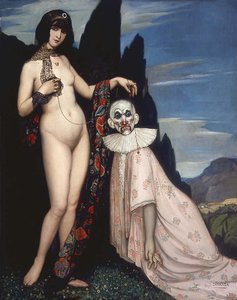
His mastery is perhaps most evident in his monumental mural works, where he demonstrated an ability to command vast architectural spaces. His commissions for the Château de Vert-cœur and the Cité Internationale Universitaire de Paris stand as testaments to his technical prowess. In these large-scale compositions, one can observe a seamless blend of symbolic depth and classical beauty. Whether he was exploring the surrealist undertones in works like French La femme et le pantin or capturing the quiet dignity of figures in his easel paintings, Zárraga’s work always retained a sense of poetic mystery and textural richness.
The Final Act and Enduring Significance
Despite his immense success and international acclaim, the later years of Zárraga’s life were marked by the turbulent shifts of global history. The collapse of the international art market and the hardships brought about by World War II took a heavy toll on his spirit. Returning to Mexico in 1941, he sought solace in his homeland, contributing significant murals to the Club de Banqueros and the Monterrey Cathedral. These late works served as a homecoming, reconnecting his European-refined technique with the cultural landscape of his birth.
Ángel Zárraga passed away in 1946, leaving behind a legacy that continues to resonate within the halls of art history. He remains a pivotal figure who refused to be confined by a single movement, instead choosing to navigate the fluid boundaries between Cubism, Realism, and Modernism. His life’s work serves as a bridge—connecting the old world with the new, and the traditions of Mexico with the innovations of Europe. Today, his contributions are celebrated not just for their aesthetic beauty, but for their profound ability to capture the evolving identity of a modernizing world.
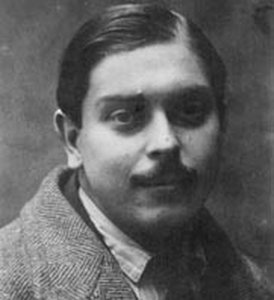
Angel Zárraga
1886 - 1946
Quick Facts
- Artistic Movement Or Style: Cubist, Realist
- Artists Or Movements Influenced By This Artist: ['European Modernism']
- Artists Who Influenced This Artist:
- Cézanne
- Giotto
- Date Of Birth: 1886
- Date Of Death: 1946
- Full Name: Ángel Zárraga Argüelles
- Nationality: Mexican
- Notable Artworks:
- Untitled (ARCUJ3)
- French La femme et le pantin
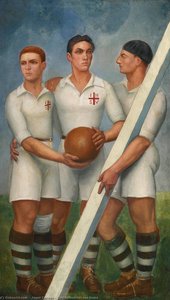
- Tres futbolistas con boina
- Place Of Birth: Victoria de Durango, Mexico