

 Preview
 Send
Send Share
Share
 Details

 Download
 Similars
 X-Ray
X-Ray Diaporama
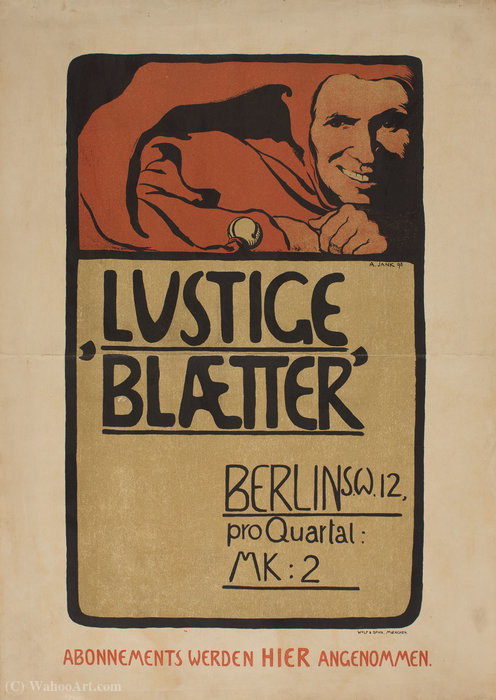
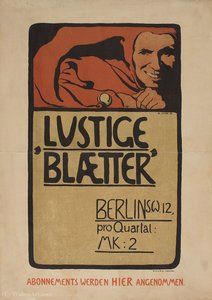
'Lustige Blaetter', (46 x 32 CM) (1898)
 Read More
Hand Made Oil Reproduction
Hand-painted oil on canvas in your size and frame, made to order by our artists. ( Buy Print Buy Image)




































Pick from our preset sizes that match the artwork's original proportions.

You may enter your own dimensions to fit a specific frame or space. If your selected size does not match the original image's proportions, we will either crop the artwork or extend the painting with additional hand-painted elements. A digital mockup will be sent for your approval before production begins.
Please note that the on-screen preview does not reflect the actual cropping or extension. Only the mockup will accurately show the final composition.
While custom sizes are available, we recommend selecting a dimension from the predefined list to preserve the original proportions.
After order, ArtsDot.com team will email client for instructions and provide a mockup preview
Worldwide Delivery () in 3/4 weeks instead of standard 5 weeks. (16 August). No compromise on quality.

Free Worldwide Express Shipping

High-Quality Linen Canvas

Full Shipping Insurance

Customs Tax Refund Guarantee

True Color Matching Guarantee

60-Day Return Policy (Defects Only)

100% Money-Back Guarantee

Bulk Discount Offer
 Glass option is only available in size under 110 CM

'Lustige Blaetter', (46 x 32 CM) (1898)
Reproduction Medium
Reproduction Size
-


Total Price
$ 263
Related Artworks
Artist Biography
Angelo Jank (1868 – 1940): The Horse Painter of Munich Secession
Angelo Jank emerged as a prominent figure in German art during the late nineteenth and early twentieth centuries, inextricably linked to the vibrant artistic movement known as the Munich Secession. Born in Munich on October 30th, 1868, Jank’s formative years coincided with a period of profound intellectual and aesthetic upheaval—a rejection of academic conventions in favor of expressive individualism and bold experimentation.
- Early Training & Influences: Jank honed his artistic skills at the Gymnasium Wilhelmstraße, absorbing influences from classical sculpture and Impressionist painting. Notably, he studied under Ludwig von Löfftz and Paul Hoecker at the Academy of Fine Arts Munich, where he embraced a stylistic approach rooted in realism but imbued with emotional depth—a characteristic that would define much of his oeuvre.
- The Secession & Artistic Vision: Joining the Munich Secession in 1898 was pivotal to Jank’s artistic trajectory. This group championed avant-garde ideas and challenged established artistic norms, advocating for a new aesthetic language centered on color and form. Jank's paintings reflected this spirit, prioritizing dynamic compositions and capturing the energy of movement—particularly evident in his depictions of horses and riders.
- Notable Works & Techniques: Jank’s artistic output spanned numerous projects, including murals at the Justizpalast (Justice Palace) and monumental scenes commemorating historical events for the Reichstag Building in Berlin. His masterful brushwork combined meticulous observation with expressive gesture, conveying both anatomical accuracy and psychological nuance. Recurring themes explored include heroic narratives, equestrian portraits, and landscapes imbued with symbolic resonance.
- Teaching & Legacy: Jank’s dedication to artistic education extended beyond his professorship at the Academy of Fine Arts Munich, where he mentored influential artists like Louis Grelle and Karl Gattermann Jr., fostering a new generation of painters committed to innovation and stylistic exploration. His students continued to develop distinctive styles influenced by Jank's emphasis on realism combined with emotive intensity.
- Personal Life & Artistic Circle: Jank married Baroness Anna von Thüngen, establishing a family rooted in aristocratic tradition. His daughter Angela married Prince Albrecht of Oettingen-Spielberg, furthering the artistic connections within his social sphere. He also engaged in an affair with Marie Schnür, resulting in a son named Klaus—a child whose legitimacy was secured through marriage to Franz Marc. Jank’s enduring legacy resides not only in his artworks but also in his role as a catalyst for artistic dialogue and stylistic evolution during a transformative era of German art history.
Among Jank's celebrated paintings are “Lustige Blaetter” (1898), which showcases his masterful depiction of horses and riders, and “Sant’Angelo a Nilo,” reflecting the grandeur of Neapolitan Baroque architecture.
His contribution to Munich Secession solidified his place as one of the most important artists of his time.
angelo jank
1868 - 1940
Quick Facts
- Artistic Movement Or Style: Munich Secession
- Artists Or Movements Influenced By This Artist: ['Louis Grell']
- Artists Who Influenced This Artist:
- Ludwig von Löfftz
- Paul Hoecker
- Date Of Birth: October 30, 1868
- Full Name: Angelo Jank
- Nationality: German
- Notable Artworks:
- Lustige Blaetter
- Sant'Angelo a Nilo
- Place Of Birth: Munich, Germany

