 Preview
 Send
Send Share
Share
 Details

 Download
 Similars
 X-Ray
X-Ray Diaporama
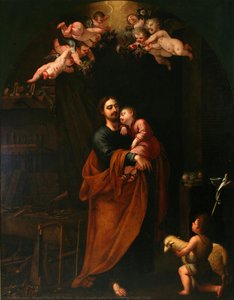
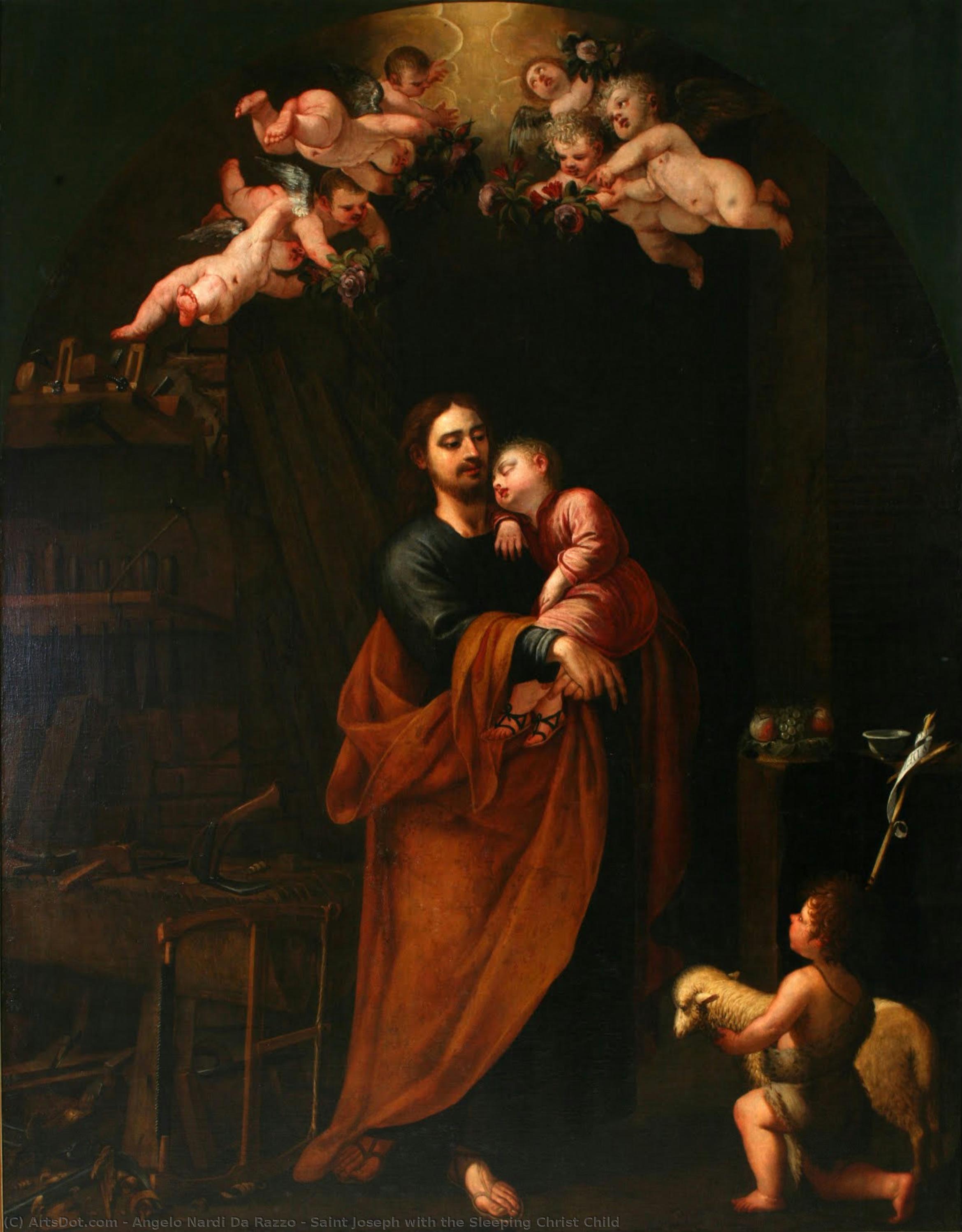
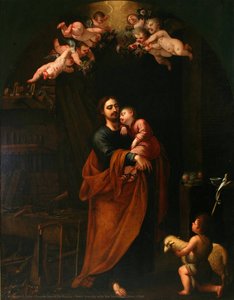
Saint Joseph with the Sleeping Christ Child

 Read More
Hand Made Oil Reproduction
Hand-painted oil on canvas in your size and frame, made to order by our artists. ( Buy Print Buy Image)




































Pick from our preset sizes that match the artwork's original proportions.

You may enter your own dimensions to fit a specific frame or space. If your selected size does not match the original image's proportions, we will either crop the artwork or extend the painting with additional hand-painted elements. A digital mockup will be sent for your approval before production begins.
Please note that the on-screen preview does not reflect the actual cropping or extension. Only the mockup will accurately show the final composition.
While custom sizes are available, we recommend selecting a dimension from the predefined list to preserve the original proportions.
After order, ArtsDot.com team will email client for instructions and provide a mockup preview
Worldwide Delivery () in 3/4 weeks instead of standard 5 weeks. (21 August). No compromise on quality.

Free Worldwide Express Shipping

High-Quality Linen Canvas

Full Shipping Insurance

Customs Tax Refund Guarantee

True Color Matching Guarantee

60-Day Return Policy (Defects Only)

100% Money-Back Guarantee

Bulk Discount Offer
 Glass option is only available in size under 110 CM

Saint Joseph with the Sleeping Christ Child
Reproduction Medium
Reproduction Size
-


Total Price
$ 263
Artwork Description
Related Artworks
Artist Biography
The Florentine Wanderer: The Life and Legacy of Angelo Nardi da Razzo
In the grand, sweeping narrative of the Baroque era, certain names shine with an undiminating brilliance, while others linger like a soft, evocative shadow across the canvas of history. Angelo Nardi da Razzo belongs to that second, more mysterious category—a painter whose brush captured the spiritual fervor and dramatic tension of the seventeenth century. Born in 1584 in the small Italian town of Vaglia, Nardi’s origins were rooted in a noble Florentine family that had been displaced by the rise of the Medici. This sense of displacement perhaps fueled his nomadic artistic journey, which would eventually lead him from the sun-drenched landscapes of Tuscany to the vibrant, bustling courts of Spain.
Nardi’s early years were defined by a rigorous immersion in the artistic currents of the Counter-Reformation. His formative training likely took place within a circle of masters dedicated to the renewal of Catholic imagery, including figures such as Ludovico Cigoli and Domenico Passignano. These mentors instilled in him a profound respect for the precision of drawing and the emotional weight of religious narrative. However, it was his time in Venice, between 1600 and 1607, that truly transformed his palette. In the Venetian Republic, Nardi encountered a world of luminous color and atmospheric light, an influence that would later allow him to marry the structural discipline of Tuscan Mannerism with a breathtaking, fluid colorism.
A Spanish Triumph: The Madrid Years
The true chapter of Nardi’s greatness unfolded far from his Italian birthplace. Upon settling in Madrid around 1607, he began to weave himself into the very fabric of the Spanish Golden Age. His arrival coincided with a period of intense religious and royal patronage, providing him with the perfect stage to showcase his evolving style. By 1615, Nardi was already receiving prestigious commissions, including works celebrating the diplomatic unions between the Spanish and French royal houses. Though many of these early triumphs were tragically lost to the devastating fire at the Royal Alcázar of Madrid in 1734, their impact on his reputation was indelible.
Nardi’s ascent within the Spanish court was marked by both skill and social grace. In 1625, he was honored with the title of painter to the King, a distinction that placed him among the most respected artists of his era. His work during this period often focused on the profound needs of the religious orders, such as his monumental series for the Convento de las Bernardas in Alcalá de Henares. In these pieces, one can observe the maturation of his technique: a masterful ability to direct the viewer's eye through dramatic chiaroscuro and a soulful, humanistic approach to sacred figures. He was not merely a decorator of altars but a storyteller of the divine, capable of rendering the Annunciation or the Life of Mary Magdalene with a palpable, breathing reality.
Artistic Connections and Historical Significance
One cannot discuss the career of Angelo Nardi without acknowledging his proximity to the giants of Spanish art. He moved within the same prestigious circles as Diego Velázquez, even serving as a witness in the legal proceedings regarding Velázquez’s admission into the Order of Santiago. This connection highlights Nardi's standing within the high-society artistic community of Madrid. While he participated in the great competitions of the day—notably the contest for the 'expulsion of the Moriscos' alongside masters like Carducho and Cajés—his style remained uniquely his own, a sophisticated blend of Italian structural integrity and Spanish emotional intensity.
As the decades progressed, Nardi’s work became a bridge between eras. While he began within the refined traditions of late Mannerism, his later compositions embraced the full, dramatic potential of the Baroque. His legacy is found in the enduring strength of his religious altarpieces and his ability to infuse the rigid requirements of Counter-Reformation art with a sense of light and movement. Though time has obscured some of his greatest achievements, the surviving works held in institutions like the Museo del Prado serve as a testament to a painter who successfully navigated the complexities of two great European cultures, leaving behind a trail of luminous, enduring beauty.
angelo nardi da razzo
1584 - 1664 , Italy
Quick Facts
- Artistic Movement Or Style: Dutch Golden Age painting
- Artists Or Movements Influenced By This Artist: ['Vanitas paintings']
- Artists Who Influenced This Artist:
- Jacques de Gheyn II
- Cornelius van der Voort
- Date Of Birth: 1584
- Date Of Death: 1657
- Full Name: David Bailly
- Nationality: Dutch
- Notable Artworks:
- Boy with a Basket of Fruit
- The Musicians
- Self-portraits
- Place Of Birth: Leiden, Netherlands