 Preview
 Send
Send Share
Share
 Details

 Download
 Similars
 X-Ray
X-Ray Diaporama
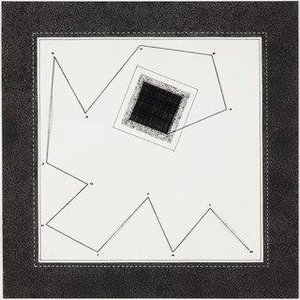
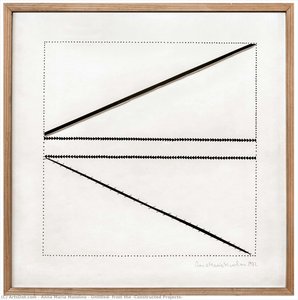
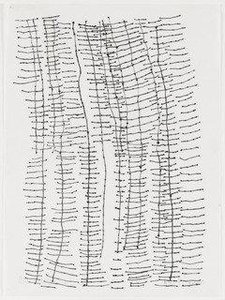
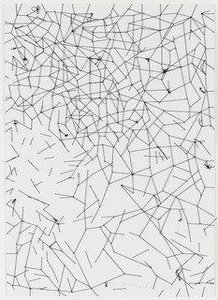
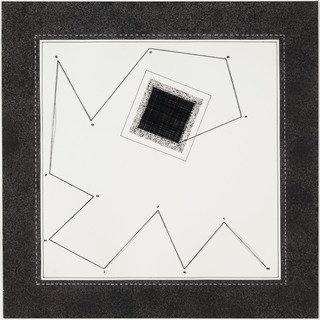
Desde A até M (From A to M) From the series Mapas Mentais (Mental Maps)
 1999
1999 50.0 x 50.0 cm
 Read More
Hand Made Oil Reproduction
Hand-painted oil on canvas in your size and frame, made to order by our artists. ( Buy Print Buy Image)




































Pick from our preset sizes that match the artwork's original proportions.

You may enter your own dimensions to fit a specific frame or space. If your selected size does not match the original image's proportions, we will either crop the artwork or extend the painting with additional hand-painted elements. A digital mockup will be sent for your approval before production begins.
Please note that the on-screen preview does not reflect the actual cropping or extension. Only the mockup will accurately show the final composition.
While custom sizes are available, we recommend selecting a dimension from the predefined list to preserve the original proportions.
After order, ArtsDot.com team will email client for instructions and provide a mockup preview
Worldwide Delivery () in 3/4 weeks instead of standard 5 weeks. (27 August). No compromise on quality.

Free Worldwide Express Shipping

High-Quality Linen Canvas

Full Shipping Insurance

Customs Tax Refund Guarantee

True Color Matching Guarantee

60-Day Return Policy (Defects Only)

100% Money-Back Guarantee

Bulk Discount Offer
 Glass option is only available in size under 110 CM

Desde A até M (From A to M) From the series Mapas Mentais (Mental Maps)
Reproduction Medium
Reproduction Size
-


Total Price
$ 263
Related Artworks





Artist Biography
A Journey of Displacement and Identity
The life of Anna Maria Maiolino is a profound tapestry woven from threads of migration, cultural intersection, and the search for selfhood. Born in 1942 in Scalea, Calabria, her early years were shaped by the dual heritage of an Italian father and an Ecuadorian mother. This sense of being between worlds followed her when, as a young child in 1954, she emigrated to Venezuela. It was here that her artistic sensibilities first began to take root, nurtured by the vibrant landscapes of South America before her family relocated to Rio de Janeiro in 1960. In the bustling heart of Brazil, Maiolino immersed herself in the rigorous training of the Escola Nacional de Belas Artes, mastering the tactile disciplines of painting and woodcut. These formative years were not merely about technical acquisition; they were a period of intense intellectual awakening, as she found herself at the epicenter of a transformative era in Latin American art history.
As she matured, Maiolino became a vital participant in the radical shifts defining the Brazilian avant-garde. During the 1960s and 1970s, she moved within circles of legendary figures such as Lygia Clark and Lygia Pape, contributing to movements like Neo-Concretism and the New Brazilian Objectivity. Her work during this period served as a silent yet potent form of resistance against the oppressive shadows of the Brazilian military regime and the widening chasm of urban inequality. Through her art, she sought to navigate the complexities of political tension and social upheaval, using the medium itself to challenge the status quo.
The Evolution of Form and Concept
In 1968, a pivotal shift occurred when Maiolino moved to New York, an experience that fundamentally recalibrated her artistic trajectory. Immersed in the international currents of Minimalism and Conceptualism, she began to explore the delicate, often charged interaction between the physical object and the perceiving viewer. This period was marked by a stripping away of the superfluous, focusing instead on the raw essence of material and the psychological space between art and audience. Her time in New York was further enriched by a scholarship at the International Graphic Center workshop at Pratt University, a recommendation earned through the support of the esteemed Luis Camnological.
Upon her return to Brazil in late 1971, Maiolino underwent a profound stylistic metamorphosis. She turned toward drawing as an intimate mode of self-expression, emphasizing the visceral gesture and the physical process of creation. This era saw the birth of works that blurred the lines between documentation and art, such as:
- Mental Maps (1971–74): Explorations of internal landscapes and cognitive structures.
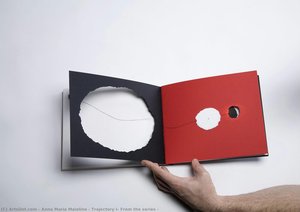
- Book Objects (1971-76): Reimagining the printed word through sculptural and tactile interventions.
- Drawing Objects (1971-76): Where the act of mark-making becomes a physical presence in space.
Legacy and Materiality
The enduring significance of Anna Maria Maiolino lies in her ability to bridge the gap between the political and the personal, the cerebral and the tactile. Her mastery over diverse media—ranging from the delicate precision of drawing to the heavy, earthbound reality of clay sculpting—allows her to speak to the fundamental human condition. She treats materials not merely as tools, but as active participants in a dialogue about language, the body, and memory. In her hands, earth becomes a vessel for history, and the gesture becomes a political statement.
Today, Maiolino stands as a titan of contemporary art, a pioneer whose work continues to challenge how we perceive the boundaries of the self and the structures of power. Her legacy is found in every crack of her sculpted clay and every intentional stroke of her drawings, reminding us that art is an ongoing process of becoming, much like the migratory and metamorphic life she has so beautifully embodied.

anna maria maiolino
1942 - , Italy
Quick Facts
- Artistic Movement Or Style: Neo-Concretism, Minimalism, Conceptualism
- Artists Who Influenced This Artist:
- Lygia Clark
- Lygia Pape
- Date Of Birth: 1942
- Full Name: Anna Maria Maiolino
- Nationality: Brazilian
- Notable Artworks:
- Mental Maps
- Book Objects
- Drawing Objects
- Place Of Birth: Scalea, Italy