

 Preview
 Send
Send Share
Share
 Details

 Download
 Similars
 X-Ray
X-Ray Diaporama
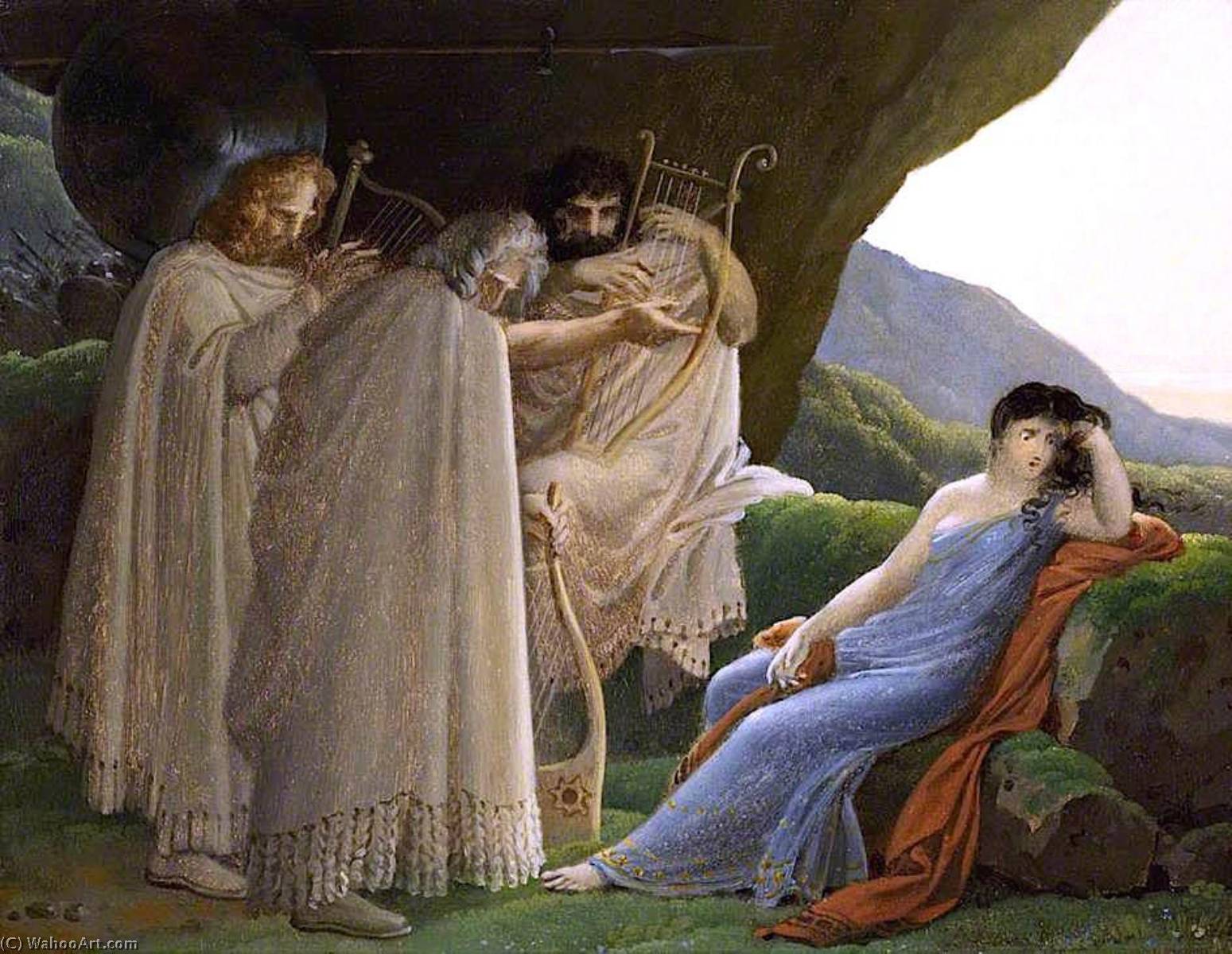
Malvina Mourning the Death of her Fiancé Oscar


 Read More
Purchase a high-resolution, enhanced digital image, far superior to the online preview.
Each file is meticulously prepared by our in-house specialists using advanced tools and expert manual retouching. We ensure every image has exceptional clarity, precise color accuracy, and fine detail.
The final file is delivered via email within 72 hours, optimized for immediate use in professional, editorial, and print environments. This is the same quality trusted by top-tier design studios, publishers, and galleries.
Digital Image
Download a high-resolution file for personal display, printing, and creative projects. ( Buy Print Buy Hand Made Painting)
Included in Every Digital Image Order
Expert Digital Delivery, Guaranteed
When you choose ArtsDot.com, you're not just getting an image - you're receiving a professionally enhanced digital artwork, crafted with precision and backed by a satisfaction guarantee. Here's everything that comes with your order, automatically:

Fast Email Delivery
Your high-resolution digital image file will be emailed to you within 72 hours of ordering - ready for immediate use.

AI-Enhanced Digital File
Your artwork is professionally optimized using advanced AI tools and manual editing, ensuring maximum detail, clarity, and color accuracy.

Free Lifetime Re-Delivery
Accidentally deleted or lost your file? No worries - we'll resend it to you anytime, free of charge.

No Import Fees - Ever
Enjoy your artwork instantly with zero customs, duties, or delivery fees - digital downloads are always tax-free.

Color Accuracy Guarantee
We ensure your digital image reflects the original colors as closely as possible using professional tools and color management.

100-Day Satisfaction Guarantee
If you're not satisfied with your digital image, we'll revise it or refund 100% within 100 days - no questions asked.

100% Money-Back Guarantee
Not satisfied? Get a full refund within 100 days of receiving your digital file - no questions asked.

Bulk Order Discounts
Buy 3 images, save 10% - Buy 5, save 15% - Buy 10+, save 20%. Great for creative projects, galleries, and agencies.
Malvina Mourning the Death of her Fiancé Oscar: A Study in Romantic Grief
Anne-Louis Girodet’s “Malvina Mourning the Death of her Fiancé Oscar” is not merely a depiction of sorrow; it's a carefully constructed tableau of grief, steeped in the burgeoning emotionalism of early Romanticism. Painted around 1800, this oil on panel work transcends simple mourning to become a profound meditation on loss, memory, and the ethereal realm between life and death. The scene unfolds within a dramatic, almost theatrical setting – a rugged, rocky overhang that provides both shelter and a sense of isolation, mirroring Malvina’s solitary state. The muted palette—primarily blues, grays, and browns—contributes to an atmosphere of somber contemplation, while strategically placed highlights draw the eye to key figures and elements within the composition. Girodet masterfully employs chiaroscuro, using dramatic contrasts between light and shadow to heighten the emotional intensity and create a sense of depth and mystery.A Classical Narrative with Romantic Undertones
The painting draws heavily from classical mythology and literary sources, specifically referencing Ossian’s epic poem “Berrathon.” The story centers on Fingal, a legendary hero, mourning the death of his beloved Malvina. Girodet skillfully adapts this narrative for his own artistic vision, imbuing it with the hallmarks of Romanticism—a heightened focus on emotion, individualism, and the sublime beauty of nature. Unlike the rigid formality of Neoclassicism, which dominated much of the preceding era, Girodet introduces a palpable sense of vulnerability and emotional turbulence into his subject matter. The figures are not idealized; they are rendered with a raw honesty that reflects the painful reality of loss. The inclusion of the musicians, scroll-bearer, and staff-holder adds layers of symbolic meaning, suggesting the attempt to process grief through art, remembrance, and ritual.Symbolism and the Ethereal Realm
Girodet’s genius lies in his ability to imbue seemingly simple elements with profound symbolism. The setting itself—the rocky overhang—represents a liminal space, a threshold between the earthly realm of death and the spiritual world. The figures are bathed in an almost otherworldly light, hinting at Malvina's ascent into the heavens or perhaps her presence as a spectral memory. The three musicians – playing stringed instruments, holding scrolls, and carrying a staff – represent different approaches to dealing with grief: music for solace, literature for remembrance, and ritual for honoring the departed. Notably, Malvina herself is depicted in a state of profound stillness, her head resting on her hand—a universal gesture of sorrow and contemplation. The overall effect is one of haunting beauty and melancholic grace.Technique and Artistic Innovation
Girodet’s technical skill is evident in the meticulous detail with which he renders the figures' clothing, the textures of the rocks, and the folds of the drapery. However, it’s his innovative use of light and shadow—a hallmark of Romanticism—that truly elevates this painting. He employs a technique known as “tenebrism,” where strong contrasts between dark and light create dramatic effects and heighten the emotional impact of the scene. Furthermore, Girodet's handling of color is remarkably subtle, using muted tones to evoke a sense of quiet sadness rather than overwhelming grief. The composition itself—the diagonal lines created by the figures and the rocky overhang—draws the viewer’s eye through the painting, creating a dynamic and engaging visual experience.A Legacy of Emotional Depth
“Malvina Mourning the Death of her Fiancé Oscar” remains a powerful testament to the transformative power of Romanticism. It is a work that invites viewers to contemplate the complexities of grief, the beauty of loss, and the enduring nature of memory. Reproductions of this evocative painting continue to resonate with audiences today, offering a glimpse into the artistic sensibilities of a pivotal era in art history. Its haunting imagery and profound emotional depth make it a valuable addition to any collection or a source of inspiration for interior designers seeking to create spaces that evoke both beauty and melancholy.Related Artworks

Artist Biography
A Bridge Between Worlds: The Life and Art of Anne-Louis Girodet
Anne-Louis Girodet de Roussy-Trioson, a name perhaps less instantly recognizable than his teacher Jacques-Louis David, nevertheless occupies a pivotal position in the transition from Neoclassicism to Romanticism. Born in Montargis, France, in 1767, Girodet’s artistic journey was one of both rigorous academic training and burgeoning emotional expression—a delicate balance that defined his unique style and secured his place as a significant figure in French art. His early life was marked by loss; the deaths of both parents left his upbringing to a guardian, Benoît-François Trioson, a physician who would later become his adoptive father and whose influence remained constant throughout Girodet’s career. This familial connection ultimately led to the artist adopting “Trioson” as part of his name in 1806, signifying a deep personal bond alongside his artistic identity. Initially drawn to architecture, Girodet soon found himself captivated by painting, entering David's studio and immersing himself in the prevailing Neoclassical aesthetic—an emphasis on clarity, precision, and moral gravitas. This foundation proved crucial, instilling within him a mastery of form and composition that would remain evident even as his work began to diverge from strict classical principles. His triumph at the Prix de Rome with a depiction of the story of Joseph and his brethren at the young age of 22 signaled a promising future, and his subsequent years in Italy (1789-1793) were formative, resulting in acclaimed works like *Hippocrate refusant les presents d'Artaxerxes* and *Endymion-dormant*.From Neoclassical Rigor to Romantic Sensibility
Girodet’s artistic evolution wasn’t a sudden break from the past, but rather a gradual infusion of new sensibilities into the established framework of Neoclassicism. While he retained the clarity and precision characteristic of David's school, his work increasingly embraced emotional intensity and explored themes previously considered unconventional. This shift is particularly evident in pieces like *Scène de déluge* (The Deluge), a monumental canvas showcasing dramatic action and raw emotion, and *Atala au tombeau*, a poignant portrayal of tragic beauty that resonated deeply with the growing Romantic fascination with pathos and exoticism. However, it was perhaps *Pygmalion et Galatée*, an ambitious project consuming eight years of his life, that most fully exemplifies Girodet’s artistic vision. Now housed in the Louvre, this work demonstrates not only meticulous attention to detail but also a willingness to delve into mythological themes with a heightened sense of psychological complexity and sensuality. His talent extended beyond mythological and literary subjects; he was sought after for portraits, including those of members of the Bonaparte family, where he skillfully balanced Neoclassical formality with an attempt to capture individual character. *La révolte du Caire*, depicting a historical event, further showcased his ability to convey dynamic action and emotional depth.A Pioneer of Erotic Undertones and Literary Inspirations
What truly set Girodet apart from many of his contemporaries was his willingness to incorporate elements of eroticism into his paintings—a daring move that challenged artistic norms and paved the way for later artists to explore similar themes with greater freedom. This wasn’t mere sensationalism; rather, it reflected a broader Romantic interest in passion, desire, and the complexities of human experience. His fascination with literature also profoundly influenced his art. He didn't simply illustrate stories; he sought to capture their emotional core, often choosing subjects that allowed for dramatic expression and psychological exploration. The influence of writers like Chateaubriand is particularly noticeable, as seen in portraits and scenes inspired by the author’s works. This literary bent distinguished him from artists solely focused on historical or mythological narratives, adding another layer of intellectual depth to his creations. Girodet's *Ossian and the French Generals* stands as a testament to this fusion of literature and art, blending imagery drawn from Macpherson’s Ossianic poems with portraits of fallen heroes—a unique and evocative composition that captured the spirit of its time.Legacy and Enduring Influence
Despite sometimes being overshadowed by his more politically prominent contemporaries like David, Anne-Louis Girodet left an indelible mark on the art world. His contribution to the early Romantic movement is undeniable; he helped bridge the gap between the rational order of Neoclassicism and the emotional intensity of Romanticism. He was a respected member of both the Académie de peinture and the Institut de France, receiving honors including the Légion d'honneur—acknowledgements of his artistic merit and societal standing. His works continue to be admired for their technical brilliance, dramatic power, and psychological insight. They can be found in prestigious museums such as the Musée Girodet in his hometown of Montargis, dedicated to his life and work, and the Louvre in Paris, ensuring that his legacy endures for generations to come. Girodet’s willingness to challenge conventions and explore new artistic territories makes him a compelling figure—a true pioneer who helped shape the course of French painting. He remains a vital link between two defining movements in art history, demonstrating that innovation often arises from a thoughtful synthesis of tradition and experimentation.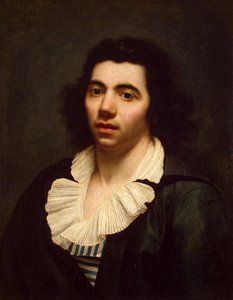
Anne-Louis Girodet
1767 - 1824 , France
Quick Facts
- Artistic Movement Or Style: Neoclassicism & Romanticism
- Artists Or Movements Influenced By This Artist: ['Early Romanticism']
- Artists Who Influenced This Artist: ['Jacques-Louis David']
- Date Of Birth: 1767
- Date Of Death: 1824
- Full Name: Anne-Louis Girodet de Roussy-Trioson
- Nationality: French
- Notable Artworks:
- Scène de déluge
- Atala au tombeau
- Pygmalion et Galatée
- La révolte du Caire
- Place Of Birth: Montargis, France