 Preview
 Send
Send Share
Share
 Details

 Download
 Similars
 X-Ray
X-Ray Diaporama
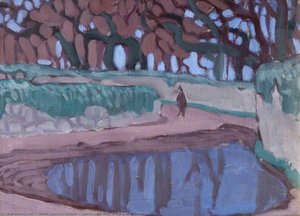
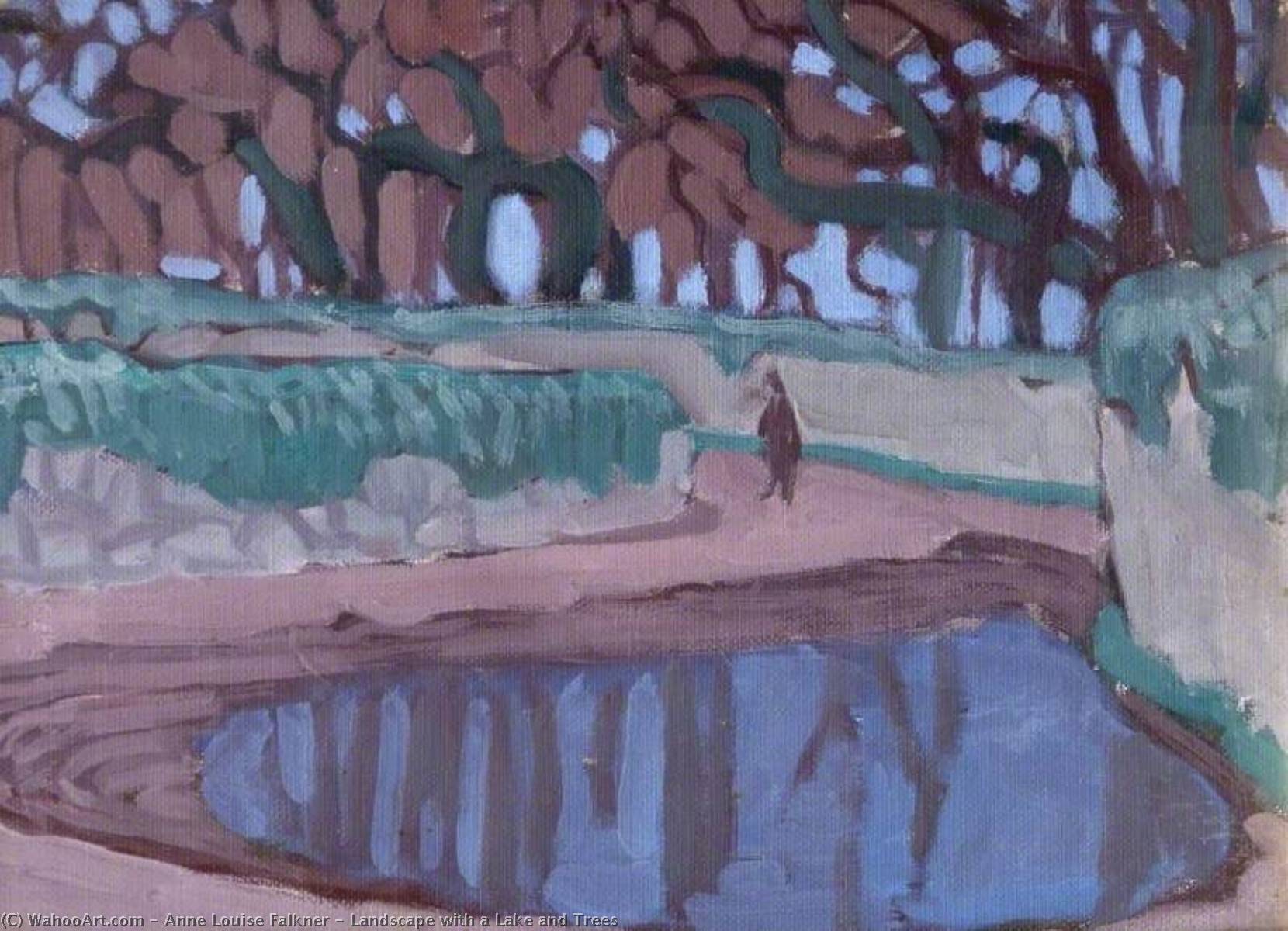
Landscape with a Lake and Trees
 24.0 x 33.0 cm
 Read More
Hand Made Oil Reproduction
Hand-painted oil on canvas in your size and frame, made to order by our artists. ( Buy Print Buy Image)




































Pick from our preset sizes that match the artwork's original proportions.

You may enter your own dimensions to fit a specific frame or space. If your selected size does not match the original image's proportions, we will either crop the artwork or extend the painting with additional hand-painted elements. A digital mockup will be sent for your approval before production begins.
Please note that the on-screen preview does not reflect the actual cropping or extension. Only the mockup will accurately show the final composition.
While custom sizes are available, we recommend selecting a dimension from the predefined list to preserve the original proportions.
After order, ArtsDot.com team will email client for instructions and provide a mockup preview
Worldwide Delivery () in 3/4 weeks instead of standard 5 weeks. (28 August). No compromise on quality.

Free Worldwide Express Shipping

High-Quality Linen Canvas

Full Shipping Insurance

Customs Tax Refund Guarantee

True Color Matching Guarantee

60-Day Return Policy (Defects Only)

100% Money-Back Guarantee

Bulk Discount Offer
 Glass option is only available in size under 110 CM

Landscape with a Lake and Trees
Reproduction Medium
Reproduction Size
-


Total Price
$ 263
Related Artworks








Artist Biography
A Visionary of Rural Breton Landscapes
Anne Louise Falkner, born in the quiet dignity of Dorchester, Dorset, in 1862, was a British painter whose brush captured the soul of the European countryside. The daughter of Reverend William Falkner and Eliza Symonds, her early life was steeped in an atmosphere where the arts were deeply cherished, providing a fertile ground for her burgeoning creative spirit. This familial devotion to culture was further enriched by her connection to the literary world, as her sister, John Meade Falkner, rose to prominence as a celebrated novelist. Such a rich heritage of storytelling and observation undoubtedly shaped Anne’s ability to translate the silent narratives of nature onto canvas.
Her formal artistic journey took a decisive turn in 1889 when she entered the prestigious Slade School of Fine Art in London. It was within these walls that Falkner immersed herself in the revolutionary techniques of Impressionism, learning to master the interplay of light and shadow. This rigorous training provided her with the technical vocabulary necessary to move beyond mere representation, allowing her to pursue a more emotive and atmospheric style. As she matured as an artist, she became part of a vibrant movement of creators drawn to the rugged beauty of St Ives Bay during the early 20th century, finding herself in the company of luminaries such as Gwen John and Dame Laura Knight.
The Symbiosis of Light and Landscape
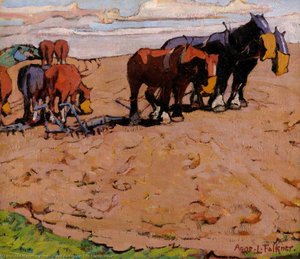
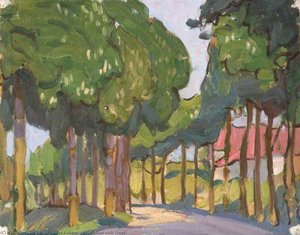
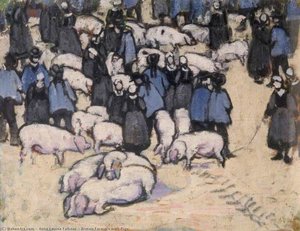
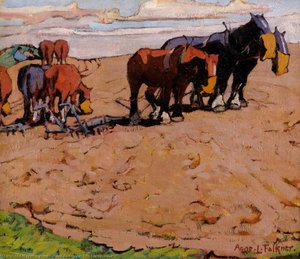
Falkner’s artistic evolution was marked by a profound connection to the landscapes of Brittany and Cornwall. Her work often centered on the rhythmic simplicity of rural life, particularly scenes featuring Breton farmers tending to their livestock. In these compositions, she achieved a remarkable balance between meticulous detail and the loose, expressive brushstrokes characteristic of the Impressionist tradition. She possessed an uncanny ability to capture the subtle tonal gradations of the sky and the shifting textures of the earth, creating canvases that seemed to breathe with the vitality of the natural world.
A significant chapter of her life was defined by her creative partnership with Leslie Hervey. This alliance was more than a romantic or social bond; it was a professional synergy that saw them sharing studio spaces and exhibiting their works together, notably at the Beaux Arts. During the hardships of World War I, their shared commitment to their craft remained steadfast. As her career progressed into the 1920s, Falkner’s presence expanded into the French art scene, where she frequently exhibited at the prestigious Salon d’Automne, even serving as its Secretary—a testament to her standing within the international community of painters.
Legacy and Artistic Significance
The enduring allure of Anne Louise Falkner’s work lies in its ability to evoke a sense of profound tranquility and timelessness. Her paintings are not merely records of places, but emotional evocations of a way of life that was intimately tied to the cycles of nature. Through her mastery of color palettes that mirrored the soft hues of Breton fields and the dramatic light of Cornish coasts, she invited viewers into a world of pastoral peace.
Her contributions to the landscape tradition can be summarized through several key elements of her career:
- Technical Mastery: Her ability to blend the precision of observational drawing with the atmospheric freedom of Impressionist brushwork.
- Cultural Connection: Her role in the St Ives artistic colony and her integration into the French Salon d’Automne.
- Thematic Depth: A dedicated focus on the dignity of rural labor and the evocative power of the natural landscape.
- Historical Resilience: Maintaining a prolific output and professional presence through periods of significant global upheaval, including World War I.
Though she passed away in Paris in 1933, Falkner’s legacy remains etched in the vibrant textures of her landscapes, reminding us of a period when art sought to find the extraordinary within the quiet, everyday beauty of the rural world.
anne louise falkner
1862 - 1933
Quick Facts
- Artistic Movement Or Style: Post-Impressionism
- Artists Or Movements Influenced By This Artist: ['St Ives Colony']
- Artists Who Influenced This Artist: ['Robert Polhill Bevan']
- Date Of Birth: 1862
- Date Of Death: 1933
- Full Name: Anne Louise Falkner
- Nationality: British
- Notable Artworks:
- Breton Farmers with Pigs
- Street Scene with Trees and Carts
- Place Of Birth: Dorchester, Dorset