 Preview
 Send
Send Share
Share
 Details

 Download
 Similars
 X-Ray
X-Ray Diaporama
 Stats
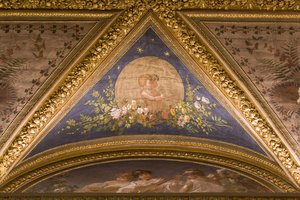
StatsGemini, zodiac sign - Detail of the vault


 Read More
Giclée / Art Print
Museum-quality giclée or canvas print with fast production and flexible finish options. ( Buy Hand Made Painting Switch to Digital Image)




P118B $10

P118H $10

P118W $10

P438Z $10

P508JH $12

P508YH $12

P805H $10

P805Z $10

P919BZ $10

P919G $10

P919XJ $10

P959ZH $10

P968JZ $12

W106C $8

W218G $10

W218JH $8

W218Y $10

W307PJ $10

W316G $10

W316PJ $8

W316Y $10

W398PJ $8

W4111J $10

W500HY $15

W500JH $15

W692G $12

W849H $8

W940BG $15

W953PJ $8




Pick from our preset sizes that match the artwork's original proportions.

You may enter your own dimensions to fit a specific frame or space. If your selected size does not match the original image's proportions, we will either crop the artwork or extend the image with a mirrored or solid-fill edge. A digital mockup will be sent for your approval before production begins.
Please note that the on-screen preview does not reflect the actual cropping or extension. Only the mockup will accurately show the final composition.
While custom sizes are available, we recommend selecting a dimension from the predefined list to preserve the original proportions.
Worldwide Delivery () in 2 weeks instead of standard 4/5 weeks. (9 September)

Free Worldwide Express Shipping

High-Quality Linen Canvas

Full Shipping Insurance

Customs Tax Refund Guarantee

True Color Matching Guarantee

100-Day Return Policy (Defects Only)

100% Money-Back Guarantee

Bulk Discount Offer
 Glass option is only available in size under 110 CM

Gemini, zodiac sign - Detail of the vault
Giclée / Art Print
Reproduction Size
-


Total Price
$ 63
A Celestial Vision in Miniature
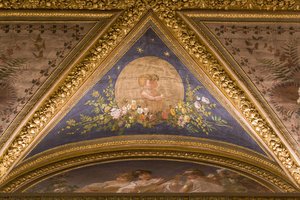
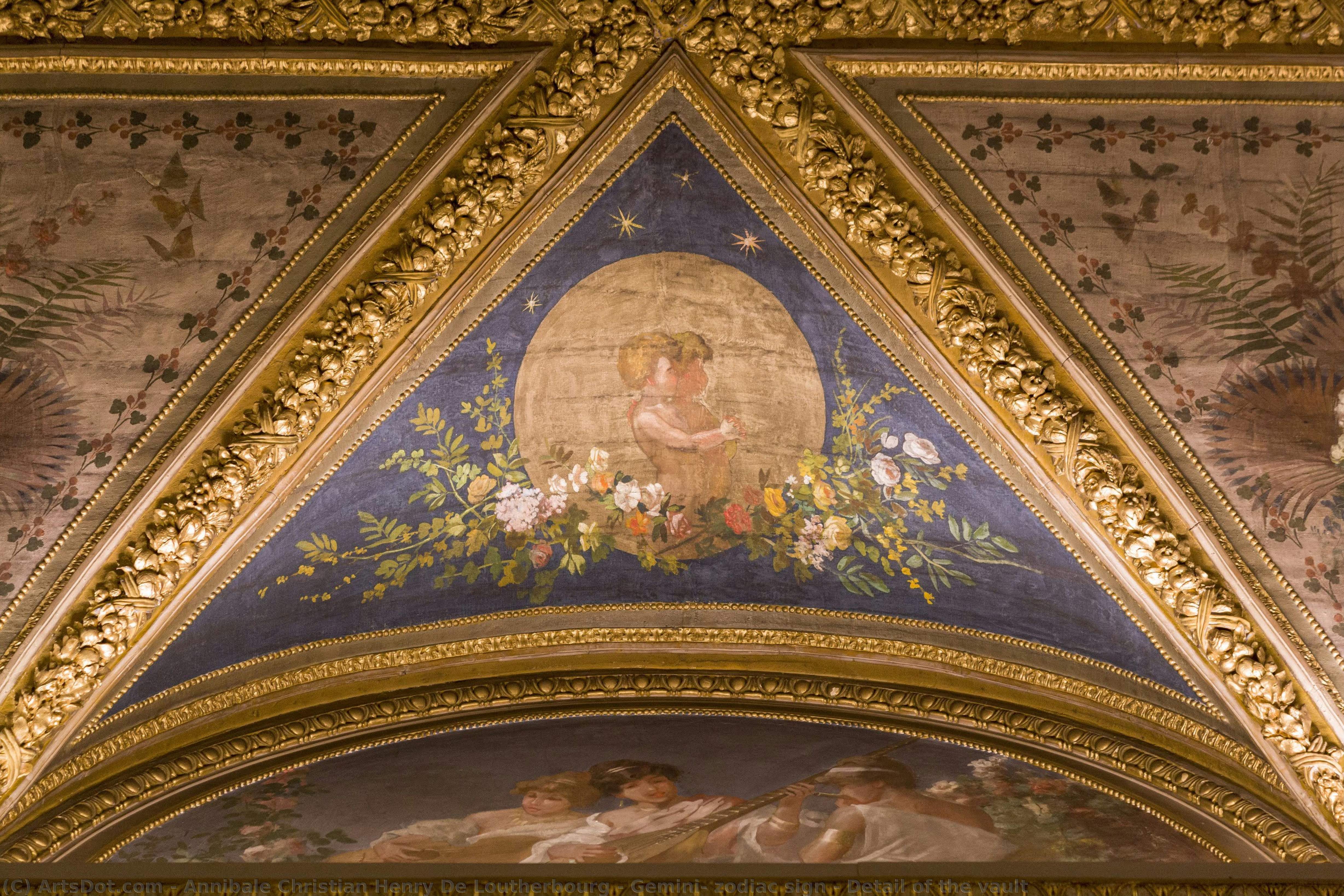
In the delicate, luminous strokes of Annibale Christian Henry de Loutherbourg, we encounter a fragment of the infinite. His work, Gemini, zodiac sign - Detail of the vault, serves as a breathtaking window into a celestial realm where the boundaries between the earthly and the divine dissolve. This particular detail from a larger mural captures a moment of profound cosmic connection, presenting a scene that feels both intimately human and grandly mythological. As we gaze upon the figures draped in pristine white, we are not merely observing a painting; we are witnessing a choreographed dance of light and shadow, a silent hymn to the stars that has resonated since its creation in the late 18th century.
The composition is a masterclass in balanced complexity. At the heart of this vignette, two figures stand bathed in the warmth of a radiant sun, their upward gazes suggesting a deep, spiritual yearning for enlightenment. The man and woman, rendered with the exquisite precision characteristic of de Loutherbourg’s miniature style, embody the duality inherent in the Gemini sign—the union of opposites, the harmony of intellect and emotion. Surrounding these central protagonists is a tapestry of secondary figures, scattered like stardust across the vault, creating a sense of depth that pulls the viewer into the very fabric of the heavens. The interplay of light upon their white garments creates a shimmering effect, as if the sun itself is woven into the texture of the paint.
The Artistry of the Romantic Transition
To understand this piece is to understand the pivotal era in which de Loutherbourg worked. Moving through the transition from the structured elegance of Neoclassicism to the emotive, turbulent energy of Romanticism, the artist utilized a technique that favored clarity of form alongside atmospheric depth. His mastery of detail allows for an intricate narrative to unfold within a small space, making each brushstroke feel intentional and heavy with meaning. The use of light in this work is not merely decorative; it is a structural element that guides the eye through the celestial hierarchy, from the brilliant solar center to the more shadowed, distant figures inhabiting the periphery of the vault.
For the discerning collector or interior designer, this artwork offers more than just aesthetic beauty; it provides a focal point of intellectual and emotional gravity. The subtle use of tempera-like textures and the soft, ethereal palette make it an ideal centerpiece for spaces designed to inspire contemplation and wonder. Whether placed in a grand library or a contemporary living space, the Gemini detail acts as a conversation piece that bridges the gap between historical grandeur and modern sophistication. It is a work that invites the viewer to look upward, reminding us of our eternal connection to the zodiac and the timeless beauty of the cosmos.
Related Artworks


Artist Biography
Annibale Christian Henry de Loutherbourg: A Miniature Master of the Romantic Era
Born in France in 1765, Annibale Christian Henry de Loutherbourg was a figure both intriguing and somewhat obscured by the shadows of his renowned family. While his father, Philippe Jacques de Loutherbourg, enjoyed considerable fame as an Anglo-French landscape painter, Annibale carved out his own distinct artistic path, primarily through the captivating world of miniature painting. His life spanned a pivotal period in art history – the late 18th and early 19th centuries – witnessing and subtly influencing the transition from Neoclassicism to the burgeoning Romanticism. His journey took him from the Parisian ateliers to the American colonies, ultimately establishing him as a specialist in exquisitely detailed miniature portraits and scenes, particularly those imbued with mythological and astrological themes.
Early Life and Artistic Training
Annibale’s artistic education began formally at the École des Beaux-Arts in Paris. There, he honed his skills under the tutelage of Antoine Vestier, a prominent Neoclassical painter known for his meticulous draftsmanship and academic approach. However, it was the influence of his father, Philippe Jacques de Loutherbourg, who arguably shaped Annibale’s early artistic sensibilities. Philippe's fascination with ancient Rome and classical mythology undoubtedly permeated Annibale’s work, particularly in his later depictions of zodiacal signs and mythological narratives. The family’s connection to the British art world also exposed Annibale to a broader range of influences, including English portraiture and decorative arts.
A Specialist in Miniature: Technique and Subject Matter
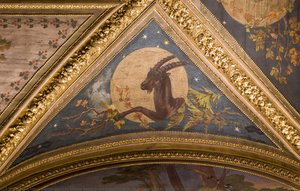
Annibale Christian Henry de Loutherbourg distinguished himself through his exceptional mastery of tempera painting – a medium prized for its luminosity and ability to capture subtle details. This technique, combined with his remarkable precision, allowed him to create miniature paintings of astonishing intricacy. His subjects frequently revolved around the cosmos: detailed representations of zodiac signs, astrological charts, and scenes from classical mythology. The “Capricorn, zodiac sign - Detail of the vault” and “Gemini, zodiac sign - Detail of the vault,” showcased on ArtsDot.com, exemplify this skill – opulent renderings filled with gold leaf and intricate geometric patterns, reflecting a deep understanding of both artistic technique and symbolic representation. These works weren’t merely decorative; they were miniature narratives, inviting viewers to contemplate the mysteries of the heavens and the stories of ancient gods and heroes.
Museum Collections and Legacy
Despite his relatively short career, Annibale Christian Henry de Loutherbourg's work has been recognized by several prestigious institutions. His paintings are held in collections at the Musée Thomas-Henry in Octeville, France – a fine arts museum dedicated to showcasing art from the 15th to 19th centuries – and the Metropolitan Museum of Art in New York, where his miniature portraits offer a glimpse into the artistic tastes of the era. Furthermore, his works are readily available for reproduction through ArtsDot.com, offering collectors access to high-quality canvas prints and oil-painted replicas. The Musée Thomas-Henry provides valuable context, housing around 300 artworks from that period, while the Metropolitan Museum’s collection highlights the enduring appeal of his miniature style. The website ArtsDot.com serves as a vital conduit for appreciating and acquiring these artistic treasures.
Connections and Further Exploration
Annibale Christian Henry de Loutherbourg's work is often linked to the broader artistic landscape of his time, including the influence of Antoine Vestier and the legacy of his father. His fascination with mythology and astrology reflects a wider trend during the late 18th and early 19th centuries – a renewed interest in classical antiquity and esoteric knowledge. For further research, exploring resources like ArtsDot.com provides valuable biographical information and links to related artists such as Philippe Jacques de Loutherbourg and Antoine Vestier. The Buffalo AKG Art Museum and the Musée d'ethnographie de Neuchâtel also offer insights into 19th-century art and global cultural contexts.
annibale christian henry de loutherbourg
1765 - 1813 , France
Quick Facts
- Artistic Movement Or Style: Miniaturist, Tempera
- Artists Who Influenced This Artist: ['Antoine Vestier']
- Date Of Birth: 1765, France
- Date Of Death: 1813
- Full Name: Annibale Christian Henry de Loutherbourg
- Nationality: French
- Notable Artworks:
- Capricorn - Detail
- Gemini - Detail
- Place Of Birth: France
Related Articles

From Jungle Scenes to Gold Leaf Geometry: A Guide to Today's Most Requested Mural Styles
Explore today's top mural styles for hotels & commercial spaces! Discover trends, expert insights, & custom design solutions. Elevate your space with .
Transforming Spaces: How Custom Murals Forge Brand Identity & Enhance Customer Experience
Elevate your brand & spaces with custom murals. Explore expert insights on design, artists, materials & installation. Transform environments – discover ArtsDot.com's bespoke solutions.

White on Canvas: 10 Masterpieces & Timeless Elegance for Your Home Decor
Explore 10 iconic white paintings by Monet, Whistler & Rothko! Discover the stories behind these serene masterpieces and their impact on art history. Find museum-quality reproductions for your home decor at .
Anchoring Interior Design with Murals: A Comprehensive Guide for Hotel Designers
Elevate your hotel's design with impactful murals! Our expert guide explores anchoring interior spaces, thematic storytelling & durable solutions for luxury hospitality. Discover bespoke art options & elevate the guest experience.

Elevating Interiors: How Murals are Redefining Kitchens and Bathrooms
Transform your kitchen & bathroom with stunning murals! Explore design trends, durable materials & expert advice. Elevate your interiors with ArtsDot.com's bespoke mural solutions.