

 Preview
 Send
Send Share
Share
 Details

 Download
 Similars
 X-Ray
X-Ray Diaporama
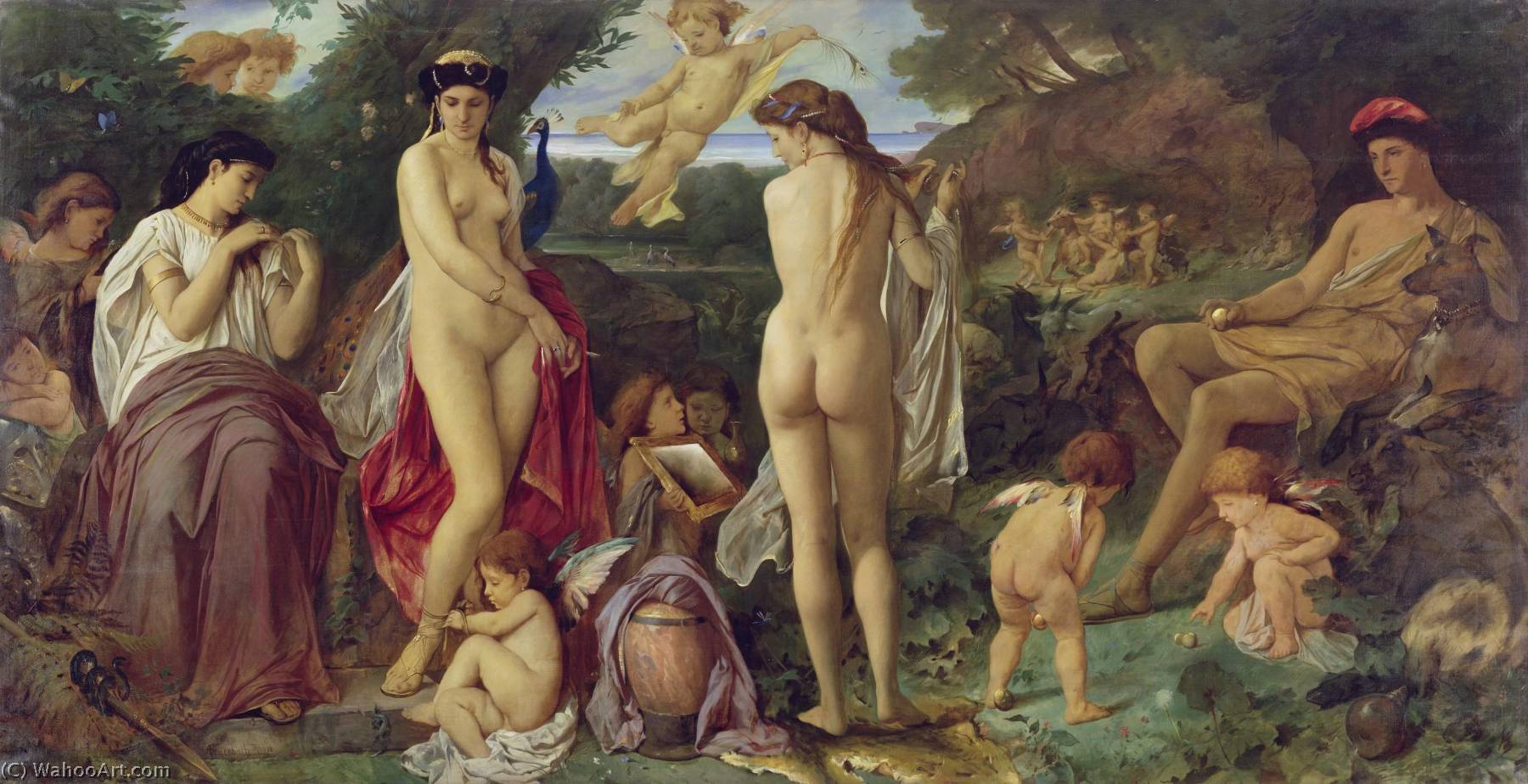
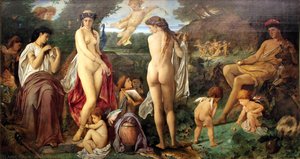
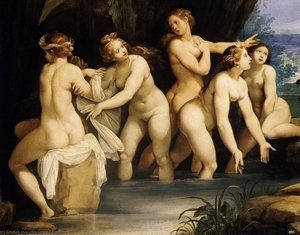
The Judgment of Paris
 Oil On Canvas
- WallArt
- Neoclassicism
 1870
1870- 19th Century
 228.0 x 443.0 cm
 Hamburger Kunsthalle
 Read More
Purchase a high-resolution, enhanced digital image, far superior to the online preview.
Each file is meticulously prepared by our in-house specialists using advanced tools and expert manual retouching. We ensure every image has exceptional clarity, precise color accuracy, and fine detail.
The final file is delivered via email within 72 hours, optimized for immediate use in professional, editorial, and print environments. This is the same quality trusted by top-tier design studios, publishers, and galleries.
Digital Image
Download a high-resolution file for personal display, printing, and creative projects. ( Buy Print Buy Hand Made Painting)
Included in Every Digital Image Order
Expert Digital Delivery, Guaranteed
When you choose ArtsDot.com, you're not just getting an image - you're receiving a professionally enhanced digital artwork, crafted with precision and backed by a satisfaction guarantee. Here's everything that comes with your order, automatically:

Fast Email Delivery
Your high-resolution digital image file will be emailed to you within 72 hours of ordering - ready for immediate use.

AI-Enhanced Digital File
Your artwork is professionally optimized using advanced AI tools and manual editing, ensuring maximum detail, clarity, and color accuracy.

Free Lifetime Re-Delivery
Accidentally deleted or lost your file? No worries - we'll resend it to you anytime, free of charge.

No Import Fees - Ever
Enjoy your artwork instantly with zero customs, duties, or delivery fees - digital downloads are always tax-free.

Color Accuracy Guarantee
We ensure your digital image reflects the original colors as closely as possible using professional tools and color management.

60-Day Satisfaction Guarantee
If you're not satisfied with your digital image, we'll revise it or refund 100% within 60 days - no questions asked.

100% Money-Back Guarantee
Not satisfied? Get a full refund within 60 days of receiving your digital file - no questions asked.

Bulk Order Discounts
Buy 3 images, save 10% - Buy 5, save 15% - Buy 10+, save 20%. Great for creative projects, galleries, and agencies.
Collectible Description
A Vision of Classical Grace
In the grand tapestry of nineteenth-century art, few works capture the ethereal intersection of myth and melancholy as profoundly as Anselm Feuerbach’s The Judgment of Paris. This monumental oil on canvas, measuring an imposing 228 x 443 cm, serves as a breathtaking window into the soul of Neoclassicism. The scene unfolds with a delicate, almost dreamlike stillness, presenting a gathering of figures that seem to exist between the realms of legend and memory. At its heart, the composition explores the tension of choice and destiny, as naked female forms stand in poised, sculptural arrangement. There is a haunting quality to their gazes; some look toward the viewer with an inviting warmth, while others remain lost in internal contemplation, creating a psychological depth that transcends mere mythological retelling.
Feuerbach, often celebrated as the "Poet of Classical Form," masterfully employs a technique that breathes life into the static beauty of antiquity. The artist’s brushwork is deliberate yet fluid, lending a soft, luminous quality to the skin of the figures and the surrounding landscape. This mastery of light and shadow—the subtle chiaroscuro—is balanced by an expansive sense of atmosphere. Scattered throughout the composition, a lively array of birds takes flight and rests upon the earth, introducing a rhythmic movement that prevents the large-scale work from feeling heavy or stagnant. These avian elements act as small, pulsing notes of life against the timeless, monumental presence of the human figures, weaving a complex web of motion and stillness.
Symbolism and the Romantic Spirit
Beyond its surface beauty, The Judgment of Paris is a profound meditation on the coexistence of innocence and fate. The inclusion of children within the scene adds a layer of poignant vulnerability, suggesting the cyclical nature of life and the enduring presence of purity amidst the weight of divine decision. The birds, appearing both in the heavens and upon the ground, serve as symbolic messengers, bridging the gap between the earthly and the divine. For the discerning collector or interior designer, this painting offers more than just a visual centerpiece; it provides an emotional anchor. Its complex layers of meaning—ranging from the classical ideals of beauty to the Romantic preoccupation with longing—make it a piece that invites endless re-examination.
For those seeking to elevate a sophisticated living space or a curated gallery, a high-quality reproduction of this masterpiece brings with it an aura of intellectual prestige and timeless elegance. The sheer scale of the original work allows for a dramatic impact in large-scale installations, where its soft palette and classical subject matter can harmonize with both traditional and contemporary decor. To possess such a work is to invite the quiet, contemplative power of Feuerbach’s vision into one's environment, fostering an atmosphere of cultured serenity and historical depth.
Related Artworks


Artist Biography
The Poet of Classical Form: The Life and Vision of Anselm Feuerbach
Anselm Feuerbach (1829-1880) stands as a monumental figure in the tapestry of German Romanticism and Neoclassicism, embodying a rare and harmonious fusion of these two powerful artistic currents. Born in Speyer to an intellectually profound lineage—his father, Joseph Anselm Ritter von Feuer डूबing, was a renowned archaeologist—Feuerbach was destined for a life steeped in the study of antiquity. This ancestral connection to the classical world profoundly shaped his artistic sensibilities from his earliest years. His formal education began at the Düsseldorf Academy between 1845 and 1848, where the rigorous tutelage of masters such as Johann Wilhelm Schirmer and Wilhelm von Schadow instilled in him a foundational understanding of classical aesthetics and the meticulous precision of sculptural craftsmanship.
The trajectory of his development was marked by a restless search for a visual language that could bridge the gap between the emotional depth of Romanticism and the structural purity of Neoclassicism. After honing his skills at the Munich Academy, Feuerbach sought inspiration beyond German borders, establishing himself in Antwerp to master the vibrant Venetian colorism under Gustave Wappers. His journey through Paris in 1851 provided a pivotal moment of artistic breakthrough; it was here that he produced Hafiz at the Fountain (1852). This breathtaking work, which infused Arabic poetry with classical idealism, served as a testament to his unique ability to synthesize disparate cultural influences into a singular, transcendent vision.
A Pilgrimage Through Light and Antiquity
Driven by an insatiable fascination with the Italian Renaissance, Feuerbach embarked on a spiritual and artistic pilgrimage to Italy. His immersion in Venice allowed him to absorb the expressive dynamism and rich palette of the Venetian masters, while his time in Florence and Rome cemented his dedication to humanist ideals. During his long residency in Rome, which lasted until 1873, he became a central figure among the Deutschrömer—a group of German artists living in Italy that included luminaries like Arnold Böcklin and Hans von Marées. This period was characterized by an intense focus on the dignity of the human form and the evocative power of mythological themes.
His technique was a sophisticated blend of several key elements:
- Classical Idealism: A commitment to the purity of line and the balanced composition found in Greek antiquity.
- Venetian Colorism: The use of luminous, emotive color to breathe life into static forms.
- Poetic Narrative: An ability to translate literary themes, from Greek myths to Persian poetry, into visual masterpieces.
Legacy and Historical Significance
The work of Anselm Feuerbach remains a profound meditation on the enduring beauty of the classical past. He did not merely imitate the ancients; rather, he reinterpreted their spirit for a modern era, creating compositions that feel both timeless and deeply personal. His paintings, often characterized by elegant figure compositions and a sense of melancholic stillness, continue to captivate audiences with their quiet intensity. By weaving together the structural rigor of Neoclassicism with the soulful lyricism of Romanticism, Feuerbach secured his place as one of the most significant painters of the 19th century, leaving behind a legacy that celebrates the eternal dialogue between humanity and myth.
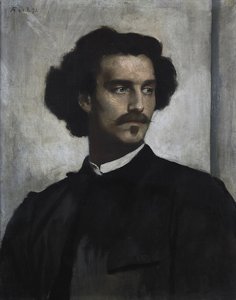
Anselm Feuerbach
1829 - 1880
Quick Facts
- Artistic Movement Or Style: Neoclassical
- Artists Or Movements Influenced By This Artist: ['Arnold Böcklin']
- Artists Who Influenced This Artist:
- Johann Wilhelm Schirmer
- Gustav Wappers
- Thomas Couture
- Date Of Birth: 1829
- Date Of Death: 1880
- Full Name: Anselm Friedrich Feuerbach
- Nationality: German
- Notable Artworks:
- Hafiz at the Fountain
- Peonies
- Untitled (AQR3S4)
- Place Of Birth: Speyer, Germany

